Integrated Distributed-Bragg-Reflector Thermally Tunable Quantum Cascade Lasers
Ph.D. Dissertation Defense
Fabrication and Operation of Integrated Distributed-Bragg-Reflector
Thermally Tunable Quantum Cascade Lasers
Liwei Cheng
10:00am Friday, 22 June 2012
Center for Advanced Studied in Photonics Research Conference Room
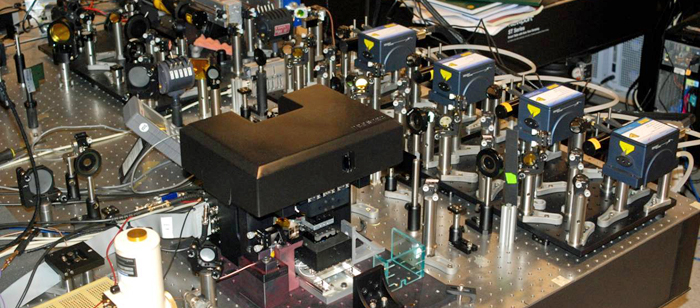
Quantum cascade lasers (QCLs) that emit in the mid-infrared (IR) range between 3 and 10 μm of the electromagnetic spectrum play an important role in optical gas sensing and molecular spectroscopic applications because several important environmental molecules such as CO, CO2, CH4, and NH3 are known to exhibit strong absorption lines in this mid-IR range. To differentiate such fine absorption features as narrow as a few angstroms, a single-mode QCL with an extremely narrow spectral linewidth, broadly tunable over the molecular absorption fingerprints and operating at sufficient optical power at room temperature, is highly desirable. We present, in this dissertation, two major studies on mid-IR QCLs, one being an improvement in device performance through a buried-heterostructure (BH) regrowth study, and the other being a realization of single-mode tunable QCLs integrated with distributed-Bragg-reflector (DBR) grating and thermal tuning mechanism.
Efficient heat dissipation in the QCL active region, which is crucial for high optical-power operation, can be effectively achieved using BH waveguides laterally embedded with InP grown by metal-organic chemical vapor disposition. We have experimentally studied the effects of the structural features of mesas, such as mesa orientation, geometry, sidewall-etched profile, and the length of the oxide overhang, on the BH regrowth. We find that the mesa oriented in the [01 1 ] direction with smoothly etched sidewalls produces a satisfactory planar growth profile and uniform lateral growth coverage and that a mesa-height–to–overhang-length ratio between 2.5 and 3.0 is effective in reducing anomalous growth in the vicinity of oxide edges. As a result, high-power QCLs capable of producing multi-hundred milliwatts at room temperature at ~4.6 μm and ~7.9 μm through reproducible BH regrowth results have been demonstrated.
We have also demonstrated single-mode tunable QCLs operating at ~7.9 μm with an internal DBR grating structure and thermal tuning scheme incorporated. A special flip-chip bonding configuration and device assembly utilizing two copper heatsinks—one for the gain section and the other for the DBR grating section—were devised and constructed to achieve separate temperature controls in both sections. A miniature thermoelectric (TE) cooler dedicated to the DBR grating section was implemented to control the DBR grating temperature while the gain section was kept at a different temperature to achieve single-wavelength tuning. Under ±1000 mA bias conditions, a quasi-single-wavelength tuning range of ~7.2 cm-1 was realized across the TE cooler temperature span, combined with an additional temperature contrast of 56 °C between the two heatsinks (gain/DBR = 10/66 °C) owing to the implementation of additional temperature-controlling elements. We have also developed a two-dimensional thermal model to investigate the thermal dynamics in the device, including the temperature distribution and thermal dependency of each section, and the thermal response time, which ultimately dictates the wavelength tuning speed. We find that a 250-μm passive section located between the gain and DBR grating section can significantly improve temperature uniformity in both the sections as it absorbs most temperature gradients. Further, a swift thermal response time of ~7 ms is simulated if the DBR grating section is directly bonded on the miniature TE cooler.
More importantly, we have realized a monolithic photonic integration platform, both thermally and electrically, for mid-IR QCLs. The QCLs fabricated in this dissertation possess two major functionalities. The gain section, an active component, is electrically pumped to provide optical gain and is kept at a temperature different from the DBR grating section, and the DBR grating section, a passive component, provides optical feedback for single-wavelength emission and subsequently tunes the emission wavelength through a local temperature variation. Such thermal and optoelectronic integration opens new perspectives for mid-IR QC technology.
Committee: Drs. Fow-Sen Choa, Anthony Johnson, Li Yan, Ryan Robucci, Terrance Worchesky and Jocob Khurgin
]]>
Ph.D. Dissertation Defense Fabrication and Operation of Integrated Distributed-Bragg-Reflector Thermally Tunable Quantum Cascade Lasers Liwei Cheng 10:00am Friday, 22 June 2012 Center...
http://www.csee.umbc.edu/2012/06/integrated-distributed-bragg-reflector-thermally-tunable-quantum-cascade-lasers/
https://beta.my.umbc.edu/api/v0/pixel/news/15327/guest@my.umbc.edu/4bd29284a2149fd8dfbf59694e368e09/api/pixel
computer-engineering
electrical-engineering
graduate
news
research
talks
Computer Science and Electrical Engineering
https://beta.my.umbc.edu/groups/csee
https://assets3-beta.my.umbc.edu/system/shared/avatars/groups/000/000/099/d117dca133c64bf78a4b7696dd007189/xsmall.png?1314043393
https://assets1-beta.my.umbc.edu/system/shared/avatars/groups/000/000/099/d117dca133c64bf78a4b7696dd007189/original.png?1314043393
https://assets1-beta.my.umbc.edu/system/shared/avatars/groups/000/000/099/d117dca133c64bf78a4b7696dd007189/xxlarge.png?1314043393
https://assets4-beta.my.umbc.edu/system/shared/avatars/groups/000/000/099/d117dca133c64bf78a4b7696dd007189/xlarge.png?1314043393
https://assets3-beta.my.umbc.edu/system/shared/avatars/groups/000/000/099/d117dca133c64bf78a4b7696dd007189/large.png?1314043393
https://assets1-beta.my.umbc.edu/system/shared/avatars/groups/000/000/099/d117dca133c64bf78a4b7696dd007189/medium.png?1314043393
https://assets2-beta.my.umbc.edu/system/shared/avatars/groups/000/000/099/d117dca133c64bf78a4b7696dd007189/small.png?1314043393
https://assets3-beta.my.umbc.edu/system/shared/avatars/groups/000/000/099/d117dca133c64bf78a4b7696dd007189/xsmall.png?1314043393
https://assets3-beta.my.umbc.edu/system/shared/avatars/groups/000/000/099/d117dca133c64bf78a4b7696dd007189/xxsmall.png?1314043393
Computer Science and Electrical Engineering
2
0
true
Mon, 18 Jun 2012 11:50:55 -0400
Ahmad Abbas takes home DIY/Hacker prize at Baltimore Hackathon
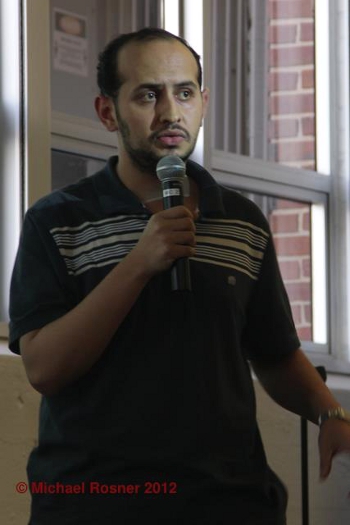 In its second year, the Baltimore Hackathon invites teams or individuals to build a hardware or software project from start to finish. Sporting the slogan "Meet People. Build Stuff. Have Fun.", this year's competition was held in Tide Point from June 8–10.
Among the more than ninety participants was UMBC student Ahmad Abbas, who took home the competition's DIY/Hacker prize for his hardware project. Originally from Egypt, Ahmad is finishing up his Master's degree in Computer Engineering under the supervision of Dr. Mohamed Younis in the ESNet Lab. He hopes to graduate this summer and begin Ph.D. studies at UMBC this Fall.
In the interview below, Ahmad talks about his experience at the Baltimore Hackathon and explains what made it "one of the most exciting experiences of [his] life."
How did you hear about the Baltimore Hackathon? I heard about the Baltimore Hackathon 2012 after reading a post by Dr.Tim Finin on myUMBC on Wednesday, just two days before the competition, and I decided to join at the same day.
What is the Baltimore Hackathon? The Hackathon is a competition where you work individually or on teams with the purpose of building hardware or software in a single weekend. Participants may submit an existing project as well, but they need to indicate this before entering the competition.
In a few words, explain your winning project. When I registered, I wasn't sure about my project's idea. My idea was to build a digital camera using 1.3 MPixel CMOS camera sensor, 2.4" LCD and SD card. I decided later, during the competition, to build shields, daughter boards, for Arduino kits. These boards can be connected to Arduino kits and used in different projects.
Where did you come up with the idea? I came up with this ides because I am skilled in designing and implementing electronic circuits. Some people need these circuits to build their own projects, but they can't design or implement it. I build these circuits to help them. This idea was not only for the competition. I built my first Arduino shield last semester in Dr.Ryan Robucci's class. It is an FPGA board that can be connected to Arduino kits. This board was one of my boards in the competition, too.
 I designed another two boards during the competition. One of them was a WiFi board for Arduino and the second was a Camera board for the Arduino. I built the WiFi, but I couldn't finish the camera board. Also, I built another USB enabled kit using a low-cost micro-controller and a small number of components. Last board was a DIY digital camera, which was the original idea. I designed the board but I didn't have time to build it.
Describe the Baltimore Hackathon. Was it stressful? Exciting? Were you intimidated by the other competitors, or did you collaborate and support one another? The Baltimore Hackathon turned out to be one of the most exciting experiences of my life. Although I was highly stressed during the competition, I was inspired by all the creative and hardworking participants. In order to reduce the stress, participants played different games, where I earned the title of "ping pong master" and a prize to go with the title.
I had the fortune over the course of the competition to meet Gary Mauler, Founder of Robot Fest and DIY Expo, and Amy Hurst, Assistant Professor of Human-Centered Computing at UMBC. Gary provided me with insights on how to move forward with my passion for building hardware.
The Hackathon would not have been such an incredible experience if it were not for the organizers and volunteers who made it possible. I would like to personally thank Jason, Kafu, Paris, and John.
Did you think you would win, or was the award a pleasant surprise? I won the Hacker DIY prize which comes with $500. I expected to win a prize because most of the participants were doing software projects.
]]>
In its second year, the Baltimore Hackathon invites teams or individuals to build a hardware or software project from start to finish. Sporting the slogan "Meet People. Build Stuff. Have Fun.",...
http://www.csee.umbc.edu/2012/06/ahmad-abbas-takes-home-diyhacker-prize-at-baltimore-hackathon/
https://beta.my.umbc.edu/api/v0/pixel/news/15325/guest@my.umbc.edu/e7f41c7e745bee3104a8457461095166/api/pixel
news
other
Computer Science and Electrical Engineering
https://beta.my.umbc.edu/groups/csee
https://assets3-beta.my.umbc.edu/system/shared/avatars/groups/000/000/099/d117dca133c64bf78a4b7696dd007189/xsmall.png?1314043393
https://assets1-beta.my.umbc.edu/system/shared/avatars/groups/000/000/099/d117dca133c64bf78a4b7696dd007189/original.png?1314043393
https://assets1-beta.my.umbc.edu/system/shared/avatars/groups/000/000/099/d117dca133c64bf78a4b7696dd007189/xxlarge.png?1314043393
https://assets4-beta.my.umbc.edu/system/shared/avatars/groups/000/000/099/d117dca133c64bf78a4b7696dd007189/xlarge.png?1314043393
https://assets3-beta.my.umbc.edu/system/shared/avatars/groups/000/000/099/d117dca133c64bf78a4b7696dd007189/large.png?1314043393
https://assets1-beta.my.umbc.edu/system/shared/avatars/groups/000/000/099/d117dca133c64bf78a4b7696dd007189/medium.png?1314043393
https://assets2-beta.my.umbc.edu/system/shared/avatars/groups/000/000/099/d117dca133c64bf78a4b7696dd007189/small.png?1314043393
https://assets3-beta.my.umbc.edu/system/shared/avatars/groups/000/000/099/d117dca133c64bf78a4b7696dd007189/xsmall.png?1314043393
https://assets3-beta.my.umbc.edu/system/shared/avatars/groups/000/000/099/d117dca133c64bf78a4b7696dd007189/xxsmall.png?1314043393
Computer Science and Electrical Engineering
22
11
true
Mon, 18 Jun 2012 09:13:33 -0400
Mon, 18 Jun 2012 09:13:33 -0400
Meet the Students: Kavita Krishnaswamy
![]() Born in Tamil Nadu, India and raised in Columbia, MD, Kavita got her B.S. in Computer Science and Mathematics. In 2001, Kavita joined UMBC's graduate program in Computer Science to pursue her Ph.D. When she's not studying, Kavita likes to watch movies and listen to audio books.
Born in Tamil Nadu, India and raised in Columbia, MD, Kavita got her B.S. in Computer Science and Mathematics. In 2001, Kavita joined UMBC's graduate program in Computer Science to pursue her Ph.D. When she's not studying, Kavita likes to watch movies and listen to audio books.
About Kavita…
When did you know you wanted to study Computer Science?
I decided on majoring in Computer Science since high school but discovered my passion for computer science research during the completion of my undergraduate years.
Are you part of any labs, clubs or organizations on campus?
I am a member of the Cognition, Robotics, and Learning (CORAL) lab of Dr. Tim Oates.
What are you researching for your thesis?
My research goals are to provide assistance and increase independence for people with disabilities using machine learning, artificial intelligence, and robotic technologies to improve their quality of life. In particular, my research is focused on path planning and the development of an accessible robotic interface to assist users with activities of daily living. For example, I am currently investigating the use of brain computer interfaces, speech recognition, and facial gestures to control an interface for repositioning the arms of disabled users to strengthen their muscles and relieve pressure on the joints.
I am extremely grateful for the research support of the Louis Stokes Alliance for Minority Participation Bridge to the Doctorate fellowship, National Academy of Sciences Ford Foundation Predoctoral fellowship, and National Science Foundation Graduate Research Fellowship. These fellowships are instrumental in facilitating my research career in many ways and making it possible for me to be one step closer to achieving my goals to assist people with disabilities and the elderly.
Have you had any internships?
This summer I will begin an internship at Knexus Research to conduct artificial intelligence and robotics research.
Last summer, I participated in an AccessComputing Internship as a robotics interaction researcher working with Dr. Tim Oates. I implemented an accessible web interface to control a simulated robotic hand using WebGL. I also designed an interface with 3D graphical models, animations, and special effects using Blender and JavaScript.
I have also interned at IBM business consulting services and the University of Maryland School Of Medicine in the past.
 What are your plans after graduation?
After graduate school, I plan to be a full-time researcher. I hope to advance technology development and increase diversity as a leader in computing, accessibility, and robotics.
What is your dream job?
In my dream job, I want to emphasize the importance of an inclusive environment for all by conducting research in academia or the industry. I want to increase the active participation of underrepresented minority groups in the community locally, nationwide, and internationally via research, especially people with disabilities, in order to improve their quality of life.
On UMBC and CSEE…
Why did you choose UMBC?
I chose UMBC for my graduate studies because I valued the more one-to-one teacher-student interactions compared to other colleges in Maryland, the size and accessibility of the campus was not too big or too small to accommodate my needs with a disability using a wheelchair, my positive experience in the Meyerhoff Scholarship Program as a UMBC undergraduate, and because I strongly believe that UMBC nurtures an environment for high-quality research and development in technology.
What was your first impression of UMBC?
I was on the UMBC campus during the Meyerhoff selection week for the first time. I was very impressed with the diversity of people from many different cultures and backgrounds all come together for the common goal of succeeding and pushing each other to succeed at UMBC. A diverse environment offers not only a greater learning experience, but also a greater social experience.
I love the positive energy of the campus. I always will remember the first time I heard our college president Dr. Freeman Hrabowski's favorite words by Langston Hughes, "Hold fast to dreams, for if dreams die, life is a broken winged bird that cannot fly." Those words broadened my perspective and gave me the confidence that success was guaranteed with hard work and sincerely giving your best efforts.
What was your first Computer Science Course?
My first computing course was CMSC 104: Problem Solving & Computer Programming with Dr. Chintan Patel.
What was your favorite Computer Science Course?
My favorite and recommended undergraduate courses are:
- CMSC 451: Automata Theory and Formal Languages that helped me understand the theoretical principles of Computer Science.
- CMSC 437: Graphical User Interface Programming gave me a perspective on the development of creative interfaces with a focus on the front end-user.
- CMSC 466: Electronic Commerce Technology provided me an opportunity to appreciate web technologies and applications for purchasing items online and understand the infrastructure of online shopping sites, such as Amazon and eBay.
My favorite and recommended graduate courses are:
- CMSC 601: Research Skills For Computer Science taught me how to thoroughly plan a research project and perform a literature review.
- CMSC 679: Introduction to Robotics presented an avenue to design, construct, program, and control an actual, real robot in the class project and learn about the latest robot technologies.
- CMSC 661: Principles of Database Systems offered a practical perspective of real-life data management techniques and procedures for maximizing efficiency.
 What do you like about the Computer Science and Electrical Engineering (CSEE) Department?
The Computer Science and Electrical Engineering Department is a positive place filled with wonderful professors that are very devoted to their students and really want students to learn. Everybody in the department is very passionate about academia and research.
How would you describe the professors in the department?
Professors are well-experienced, friendly, supportive, and leaders in their field. They are always willing to spend time with the students to help them grasp the material and eager to offer advice.
What advice would you give to incoming graduate students?
Computing is a promising field. Technology keeps growing every year so computer science jobs will always be in high demand. If you’re interested in a career in computing, take some time to figure out and plan your goals and discussed them with your professors, seniors, and peers in the department. Also, learn about the research work of those around you to learn from them and share your own experience with them so they can also learn from you.
Find a mentor in a computing field who can help you learn more about what it’s like. Learn more by browsing technical websites, like the Institute of Electrical and Electronics Engineers (IEEE) Spectrum and Wired.com—they are a rich source of inspiration and a way to keep up to date with current technology trends. Also, practice your programming skills—they’re important!
Come join us! You won't regret the best decision in your life. You could make very significant contributions in this field and be acknowledged for your abilities.
]]>
Born in Tamil Nadu, India and raised in Columbia, MD, Kavita got her B.S. in Computer Science and Mathematics. In 2001, Kavita joined UMBC's graduate program in Computer Science to pursue her...
http://www.csee.umbc.edu/2012/06/meet-the-students-kavita-krishnaswamy/
https://beta.my.umbc.edu/api/v0/pixel/news/15321/guest@my.umbc.edu/b91f48d4339f5ac6ed927b49f3f668b6/api/pixel
meet-the-students
news
other
Computer Science and Electrical Engineering
https://beta.my.umbc.edu/groups/csee
https://assets3-beta.my.umbc.edu/system/shared/avatars/groups/000/000/099/d117dca133c64bf78a4b7696dd007189/xsmall.png?1314043393
https://assets1-beta.my.umbc.edu/system/shared/avatars/groups/000/000/099/d117dca133c64bf78a4b7696dd007189/original.png?1314043393
https://assets1-beta.my.umbc.edu/system/shared/avatars/groups/000/000/099/d117dca133c64bf78a4b7696dd007189/xxlarge.png?1314043393
https://assets4-beta.my.umbc.edu/system/shared/avatars/groups/000/000/099/d117dca133c64bf78a4b7696dd007189/xlarge.png?1314043393
https://assets3-beta.my.umbc.edu/system/shared/avatars/groups/000/000/099/d117dca133c64bf78a4b7696dd007189/large.png?1314043393
https://assets1-beta.my.umbc.edu/system/shared/avatars/groups/000/000/099/d117dca133c64bf78a4b7696dd007189/medium.png?1314043393
https://assets2-beta.my.umbc.edu/system/shared/avatars/groups/000/000/099/d117dca133c64bf78a4b7696dd007189/small.png?1314043393
https://assets3-beta.my.umbc.edu/system/shared/avatars/groups/000/000/099/d117dca133c64bf78a4b7696dd007189/xsmall.png?1314043393
https://assets3-beta.my.umbc.edu/system/shared/avatars/groups/000/000/099/d117dca133c64bf78a4b7696dd007189/xxsmall.png?1314043393
Computer Science and Electrical Engineering
9
0
true
Mon, 18 Jun 2012 09:05:11 -0400
talk: Via on Multi-Antenna Spectrum Sensing, 6/22
Multi-antenna Spectrum Sensing: From GLRTs to LMPITs
Dr. Javier Via
University of Cantabria, Spain
2:00pm Friday 22 June 2012, ITE 325b
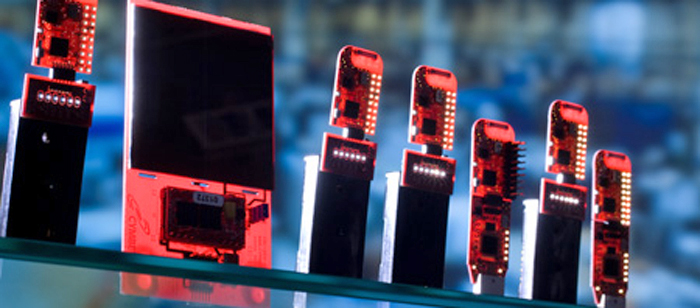
Spectrum Sensing represents one of the critical aspects of the Cognitive Radio paradigm, where spectral monitors need to determine the presence or absence of primary users under very low SNR conditions. In this talk, we briefly revisit the main spectrum sensing techniques, with special emphasis in multi-antenna detectors, and we will see that the heuristic eigenvalue-based approaches can be outperformed by making use of some important results in the hypothesis testing literature. In particular, we will consider two related hypothesis testing problems, and derive the locally (under low SNR) best detectors among those preserving the problem invariances. Interestingly, this challenging task can be accomplished thanks to Wijsman's theorem, which allows us to obtain the optimal test statistic without the explicit knowledge of the maximal invariant distributions.
Javier Vía received his Telecommunication Engineer Degree and his Ph.D. in Electrical Engineering from the University of Cantabria, Spain in 2002 and 2007, respectively. In 2002 he joined the Department of Communications Engineering, University of Cantabria, Spain, where he is currently an Associate Professor. He has spent visiting periods at Stanford University, Hong Kong University of Science and Technology, and more recently at SUNY at Buffalo. Prof. Vía has actively participated in several European and Spanish research projects. His current research interests include hypothesis testing and spectrum sensing, quaternion signal processing, and financial engineering.
Host: Tulay Adali
]]>
Multi-antenna Spectrum Sensing: From GLRTs to LMPITs Dr. Javier Via University of Cantabria, Spain 2:00pm Friday 22 June 2012, ITE 325b Spectrum Sensing represents one of the critical...
http://www.csee.umbc.edu/2012/06/talk-via-on-multi-antenna-spectrum-sensing/
https://beta.my.umbc.edu/api/v0/pixel/news/15318/guest@my.umbc.edu/6078e88b2086516832633e962b4c2333/api/pixel
electrical-engineering
graduate
news
research
talks
Computer Science and Electrical Engineering
https://beta.my.umbc.edu/groups/csee
https://assets3-beta.my.umbc.edu/system/shared/avatars/groups/000/000/099/d117dca133c64bf78a4b7696dd007189/xsmall.png?1314043393
https://assets1-beta.my.umbc.edu/system/shared/avatars/groups/000/000/099/d117dca133c64bf78a4b7696dd007189/original.png?1314043393
https://assets1-beta.my.umbc.edu/system/shared/avatars/groups/000/000/099/d117dca133c64bf78a4b7696dd007189/xxlarge.png?1314043393
https://assets4-beta.my.umbc.edu/system/shared/avatars/groups/000/000/099/d117dca133c64bf78a4b7696dd007189/xlarge.png?1314043393
https://assets3-beta.my.umbc.edu/system/shared/avatars/groups/000/000/099/d117dca133c64bf78a4b7696dd007189/large.png?1314043393
https://assets1-beta.my.umbc.edu/system/shared/avatars/groups/000/000/099/d117dca133c64bf78a4b7696dd007189/medium.png?1314043393
https://assets2-beta.my.umbc.edu/system/shared/avatars/groups/000/000/099/d117dca133c64bf78a4b7696dd007189/small.png?1314043393
https://assets3-beta.my.umbc.edu/system/shared/avatars/groups/000/000/099/d117dca133c64bf78a4b7696dd007189/xsmall.png?1314043393
https://assets3-beta.my.umbc.edu/system/shared/avatars/groups/000/000/099/d117dca133c64bf78a4b7696dd007189/xxsmall.png?1314043393
Computer Science and Electrical Engineering
0
0
true
Sat, 16 Jun 2012 09:22:02 -0400
MS defense: DNSSEC and PKI

MS Thesis Defense
An Operational Study of DNSSEC and its Practical
Application in Establishing a Secure PKI Framework
Colin Roby
4:00pm 19 June 2012, ITE 325b
With the recent completion of signing the DNS Root and various TLD (top level domain), DNSSEC is gradually progressing towards an internet-wide adoption. The extension of DNSSEC security measures addresses many of the security flaws plagued the underlying DNS architecture since its inception. Once widely deployed, DNSSEC will pave the way for extending security service to a wide range of applications. This study focuses on the practicability of current iteration of DNSSEC implementation. Through a virtual network configuration which mimics a typical corporate environment, we explore viable options to establish a secure PKI framework based on DNSSEC in spite of its current limitations. In this endeavour, we propose a simple yet effective method to combine a corporate existing LDAP based directory service with DNSSEC to form a PKI key exchange infrastructure – one which is intuitive to administer and easy to scale to any large corporate network. We demonstrate the advantage of such a PKI framework in one area of its application – the common use of email. Using a prototype email client application, we illustrate how such a framework can promote and facilitate a more secure email system in terms of authenticity, integrity and confidentiality.
Committee: Dr. Deepinder Sidhu (Chair), Dr. Chein-I Chang, Dr. Yun Peng
]]>
MS Thesis Defense An Operational Study of DNSSEC and its Practical Application in Establishing a Secure PKI Framework Colin Roby 4:00pm 19 June 2012, ITE 325b With the recent completion...
http://www.csee.umbc.edu/2012/06/ms-defense-dnssec-and-pki/
https://beta.my.umbc.edu/api/v0/pixel/news/15317/guest@my.umbc.edu/544046f53aae3b14c5032446dd5076a7/api/pixel
computer-science
cybersecurity
graduate
news
research
talks
Computer Science and Electrical Engineering
https://beta.my.umbc.edu/groups/csee
https://assets3-beta.my.umbc.edu/system/shared/avatars/groups/000/000/099/d117dca133c64bf78a4b7696dd007189/xsmall.png?1314043393
https://assets1-beta.my.umbc.edu/system/shared/avatars/groups/000/000/099/d117dca133c64bf78a4b7696dd007189/original.png?1314043393
https://assets1-beta.my.umbc.edu/system/shared/avatars/groups/000/000/099/d117dca133c64bf78a4b7696dd007189/xxlarge.png?1314043393
https://assets4-beta.my.umbc.edu/system/shared/avatars/groups/000/000/099/d117dca133c64bf78a4b7696dd007189/xlarge.png?1314043393
https://assets3-beta.my.umbc.edu/system/shared/avatars/groups/000/000/099/d117dca133c64bf78a4b7696dd007189/large.png?1314043393
https://assets1-beta.my.umbc.edu/system/shared/avatars/groups/000/000/099/d117dca133c64bf78a4b7696dd007189/medium.png?1314043393
https://assets2-beta.my.umbc.edu/system/shared/avatars/groups/000/000/099/d117dca133c64bf78a4b7696dd007189/small.png?1314043393
https://assets3-beta.my.umbc.edu/system/shared/avatars/groups/000/000/099/d117dca133c64bf78a4b7696dd007189/xsmall.png?1314043393
https://assets3-beta.my.umbc.edu/system/shared/avatars/groups/000/000/099/d117dca133c64bf78a4b7696dd007189/xxsmall.png?1314043393
Computer Science and Electrical Engineering
2
0
true
Sat, 16 Jun 2012 08:46:27 -0400
College Park announces new Cybersecurity honors program

UMBC's sister school to the south, the University of Maryland, College Park just announced plans for a new honors program in Cybersecurity called Advanced Cybersecurity Experience for Students (ACES) that they will debut in Fall 2013.
Unlike UMBC's graduate Cybersecurity program, ACES is designed for undergraduate students from a range of majors including Computer Science, Engineering, Business, Public Policy, and the social sciences, says a UMD press release.
The Northrop Grumman corporation is supporting the program with a $1.1 million grant. They'll also supply guest lecturers and internship opportunities for students who want to gain some industry experience. The curriculum features courses like cybersercurity forensics, reverse engineering, secure coding, criminology, and law and public policy. Designed to graduate about 45 students per year, the program's aim is to encourage creative problem solving for Cybersecurity problems of the future, says a Baltimore Sun article.
Sound good? Undergraduates at UMBC may eventually be able to take advantage of College Park's new program. According to the UMD press release, over the next few years, College Park hopes to have universities across the University System of Maryland participate in the program through distance education programs, online course offerings, and competitions.
]]>
UMBC's sister school to the south, the University of Maryland, College Park just announced plans for a new honors program in Cybersecurity called Advanced Cybersecurity Experience for...
http://www.csee.umbc.edu/2012/06/college-park-announces-new-cybersecurity-honors-program/
https://beta.my.umbc.edu/api/v0/pixel/news/15289/guest@my.umbc.edu/f06c9e6f5946863ddbfe8f2db3ee179f/api/pixel
cybersecurity
news
Computer Science and Electrical Engineering
https://beta.my.umbc.edu/groups/csee
https://assets3-beta.my.umbc.edu/system/shared/avatars/groups/000/000/099/d117dca133c64bf78a4b7696dd007189/xsmall.png?1314043393
https://assets1-beta.my.umbc.edu/system/shared/avatars/groups/000/000/099/d117dca133c64bf78a4b7696dd007189/original.png?1314043393
https://assets1-beta.my.umbc.edu/system/shared/avatars/groups/000/000/099/d117dca133c64bf78a4b7696dd007189/xxlarge.png?1314043393
https://assets4-beta.my.umbc.edu/system/shared/avatars/groups/000/000/099/d117dca133c64bf78a4b7696dd007189/xlarge.png?1314043393
https://assets3-beta.my.umbc.edu/system/shared/avatars/groups/000/000/099/d117dca133c64bf78a4b7696dd007189/large.png?1314043393
https://assets1-beta.my.umbc.edu/system/shared/avatars/groups/000/000/099/d117dca133c64bf78a4b7696dd007189/medium.png?1314043393
https://assets2-beta.my.umbc.edu/system/shared/avatars/groups/000/000/099/d117dca133c64bf78a4b7696dd007189/small.png?1314043393
https://assets3-beta.my.umbc.edu/system/shared/avatars/groups/000/000/099/d117dca133c64bf78a4b7696dd007189/xsmall.png?1314043393
https://assets3-beta.my.umbc.edu/system/shared/avatars/groups/000/000/099/d117dca133c64bf78a4b7696dd007189/xxsmall.png?1314043393
Computer Science and Electrical Engineering
2
1
true
Wed, 13 Jun 2012 08:21:16 -0400
Mon, 18 Jun 2012 08:57:13 -0400
How LinkedIn should have protected your password

Coulda, Woulda, Shoulda.
If you have a LinkedIn account, you probably noticed the news that 6.5 million of their passwords were leaked. While the passwords were encrypted, it's still a major problem for all LinkedIn users. In his column in the latest issue of ACM Queue, LinkedIn Password Leak: Salt Their Hide, security expert Poul-Henning Kamp, explains the flaws in LinkedIn's password management process and the simple steps that can make it much more secure.
Of course, this is more than just about LinkedIn. Similar password leaks from eHarmoney and last.fm were reported this week. If you use any of these popular Web services, you probably should change your password, especially if you use the same password on other Internet sites and services.
If you find this interesting, you should check out the monthly ACM Queue magazine. It is a good resource for people interested in computing and software engineering. Here's how it describes its mission.
"Queue is the ACM's magazine for practicing software engineers. Written by engineers for engineers, Queue focuses on the technical problems and challenges that loom ahead, helping readers to sharpen their own thinking and pursue innovative solutions. Queue does not focus on either industry news or the latest "solutions." Rather, Queue takes a critical look at current and emerging technologies, highlighting problems that are likely to arise and posing questions that software engineers should be thinking about."
Update 6/9: The League of Legends reports that their password database was compromised. It’s not clear how they were storing the passwords.
]]>
Coulda, Woulda, Shoulda. If you have a LinkedIn account, you probably noticed the news that 6.5 million of their passwords were leaked. While the passwords were encrypted, it's still a major...
http://www.csee.umbc.edu/2012/06/how-linkedin-should-have-protected-your-password/
https://beta.my.umbc.edu/api/v0/pixel/news/15239/guest@my.umbc.edu/5a3db1abd4276ea2a64e2486de743e18/api/pixel
computer-science
cybersecurity
news
students
Computer Science and Electrical Engineering
https://beta.my.umbc.edu/groups/csee
https://assets3-beta.my.umbc.edu/system/shared/avatars/groups/000/000/099/d117dca133c64bf78a4b7696dd007189/xsmall.png?1314043393
https://assets1-beta.my.umbc.edu/system/shared/avatars/groups/000/000/099/d117dca133c64bf78a4b7696dd007189/original.png?1314043393
https://assets1-beta.my.umbc.edu/system/shared/avatars/groups/000/000/099/d117dca133c64bf78a4b7696dd007189/xxlarge.png?1314043393
https://assets4-beta.my.umbc.edu/system/shared/avatars/groups/000/000/099/d117dca133c64bf78a4b7696dd007189/xlarge.png?1314043393
https://assets3-beta.my.umbc.edu/system/shared/avatars/groups/000/000/099/d117dca133c64bf78a4b7696dd007189/large.png?1314043393
https://assets1-beta.my.umbc.edu/system/shared/avatars/groups/000/000/099/d117dca133c64bf78a4b7696dd007189/medium.png?1314043393
https://assets2-beta.my.umbc.edu/system/shared/avatars/groups/000/000/099/d117dca133c64bf78a4b7696dd007189/small.png?1314043393
https://assets3-beta.my.umbc.edu/system/shared/avatars/groups/000/000/099/d117dca133c64bf78a4b7696dd007189/xsmall.png?1314043393
https://assets3-beta.my.umbc.edu/system/shared/avatars/groups/000/000/099/d117dca133c64bf78a4b7696dd007189/xxsmall.png?1314043393
Computer Science and Electrical Engineering
7
0
true
Fri, 08 Jun 2012 09:20:24 -0400
Fri, 08 Jun 2012 09:20:24 -0400
Baltimore Hackathon: meet people, build stuff, have fun

The Second Baltimore Hackathon will be held this weekend, starting at 6:00pm Friday June 8 and ending at 6:00pm Sunday. At a hackathon people get together to build a hardware or software project from idea to prototype, in this case in one weekend. You can do it individually or as a team. You can come as part of a team or find one when you get there. It’s a great way to meet people and have fun.
The hackathon will take place at Advertising.com‘s offices in Tide Point (1020 Hull Street, 1st Floor Ivory Building, Baltimore, MD 21230).
You can register online (tickets are limited) for just $10, which includes a t-shirt and food for the weekend. Significant prizes will be awarded in six different categories: technical complexity, smart design, civic service, aesthetics, crowd favorite, and hacker/DIY.
See the Baltimore Hackathon site for more information.
]]>
The Second Baltimore Hackathon will be held this weekend, starting at 6:00pm Friday June 8 and ending at 6:00pm Sunday. At a hackathon people get together to build a hardware or software project...
http://www.csee.umbc.edu/2012/06/baltimore-hackathon-meet-people-build-stuff-have-fun/
https://beta.my.umbc.edu/api/v0/pixel/news/15227/guest@my.umbc.edu/1db8e82c38711a70ddd716fc8b07ec35/api/pixel
events
graduate
news
students
undergraduate
Computer Science and Electrical Engineering
https://beta.my.umbc.edu/groups/csee
https://assets3-beta.my.umbc.edu/system/shared/avatars/groups/000/000/099/d117dca133c64bf78a4b7696dd007189/xsmall.png?1314043393
https://assets1-beta.my.umbc.edu/system/shared/avatars/groups/000/000/099/d117dca133c64bf78a4b7696dd007189/original.png?1314043393
https://assets1-beta.my.umbc.edu/system/shared/avatars/groups/000/000/099/d117dca133c64bf78a4b7696dd007189/xxlarge.png?1314043393
https://assets4-beta.my.umbc.edu/system/shared/avatars/groups/000/000/099/d117dca133c64bf78a4b7696dd007189/xlarge.png?1314043393
https://assets3-beta.my.umbc.edu/system/shared/avatars/groups/000/000/099/d117dca133c64bf78a4b7696dd007189/large.png?1314043393
https://assets1-beta.my.umbc.edu/system/shared/avatars/groups/000/000/099/d117dca133c64bf78a4b7696dd007189/medium.png?1314043393
https://assets2-beta.my.umbc.edu/system/shared/avatars/groups/000/000/099/d117dca133c64bf78a4b7696dd007189/small.png?1314043393
https://assets3-beta.my.umbc.edu/system/shared/avatars/groups/000/000/099/d117dca133c64bf78a4b7696dd007189/xsmall.png?1314043393
https://assets3-beta.my.umbc.edu/system/shared/avatars/groups/000/000/099/d117dca133c64bf78a4b7696dd007189/xxsmall.png?1314043393
Computer Science and Electrical Engineering
3
0
true
Wed, 06 Jun 2012 17:22:18 -0400
Dr.desJardins and Dr. Rheingans in USA Today College on the importance of understanding how computers work

Should an introductory Computer Science course fall within the cadre of General Education Requirements (GEP)—like Math, Science, and English—that are required of all undergrads?
According to a USA Today College article, the answer is yes.
In the article, Computer Science and Electrical Engineering professors Marie desJardins and Penny Rheingans talk about the importance of having, at least, a basic knowledge of how computers work, especially in a world that is quickly evolving in the hands of technology:
“Inevitably, by the time today’s college students are middle-aged, technology will be unimaginably faster, more powerful and more integrated into our daily lives,” said desJardins, “and the people who understand how it works are the ones who will be helping society to take advantage of it and use it to improve people’s lives.”
For non-technical students who recoil at the thought of taking a computer course, Dr. Rheingans is an example of what can happen when you take a chance. Originally planning to major in the social sciences, says the article, a computer science course during Dr. Rheingans' first semester changed her entire career projection:
“I found computing to be both incredibly frustrating and incredibly addicting,” Rheingans said in an email. “I love the challenge of building something to solve a problem and the satisfaction of figuring out why my creation isn’t working and fixing it.”
Check out the entire article, “The Power of Computing,” to hear more of what professors desJardins and Rheingans have to say about the increasing importance of computer science comprehension.
]]>
Should an introductory Computer Science course fall within the cadre of General Education Requirements (GEP)—like Math, Science, and English—that are required of all undergrads? According to a...
http://www.csee.umbc.edu/2012/06/dr-desjardins-and-dr-rheingans-in-usa-today-college-on-the-importance-of-understanding-how-computers-work/
https://beta.my.umbc.edu/api/v0/pixel/news/15201/guest@my.umbc.edu/20eecfd6dc9611fb3bde0fbc5404d935/api/pixel
faculty-and-staff
news
undergraduate
Computer Science and Electrical Engineering
https://beta.my.umbc.edu/groups/csee
https://assets3-beta.my.umbc.edu/system/shared/avatars/groups/000/000/099/d117dca133c64bf78a4b7696dd007189/xsmall.png?1314043393
https://assets1-beta.my.umbc.edu/system/shared/avatars/groups/000/000/099/d117dca133c64bf78a4b7696dd007189/original.png?1314043393
https://assets1-beta.my.umbc.edu/system/shared/avatars/groups/000/000/099/d117dca133c64bf78a4b7696dd007189/xxlarge.png?1314043393
https://assets4-beta.my.umbc.edu/system/shared/avatars/groups/000/000/099/d117dca133c64bf78a4b7696dd007189/xlarge.png?1314043393
https://assets3-beta.my.umbc.edu/system/shared/avatars/groups/000/000/099/d117dca133c64bf78a4b7696dd007189/large.png?1314043393
https://assets1-beta.my.umbc.edu/system/shared/avatars/groups/000/000/099/d117dca133c64bf78a4b7696dd007189/medium.png?1314043393
https://assets2-beta.my.umbc.edu/system/shared/avatars/groups/000/000/099/d117dca133c64bf78a4b7696dd007189/small.png?1314043393
https://assets3-beta.my.umbc.edu/system/shared/avatars/groups/000/000/099/d117dca133c64bf78a4b7696dd007189/xsmall.png?1314043393
https://assets3-beta.my.umbc.edu/system/shared/avatars/groups/000/000/099/d117dca133c64bf78a4b7696dd007189/xxsmall.png?1314043393
Computer Science and Electrical Engineering
12
2
true
Tue, 05 Jun 2012 09:28:36 -0400
Google’s Blockly visual programming environment
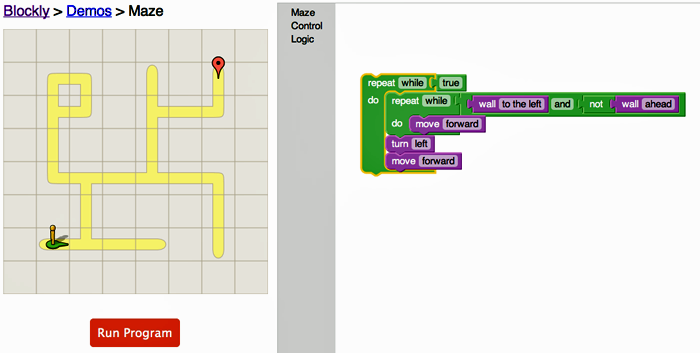
Blockly is new web-based, graphical programming language developed by Google. It's graphical in the style of Scratch in that you create a program not as a linguistic object, but by selecting and composing icons that represent control flow constructs, operations, functions, variables and values. It's Web based in that both the program development and program interpreter components are written in javascript run in your browser runs in your browser. There is also the capability of compiling your Blockly program into Javascript, Dart or Python. You can inspect or checkout the Blockly source code from the Blockly source repository or try the Maze demo. In that demo, you construct a Blockly program to solve a simple maze, moving the agent to the designated target.
This is work in progress and there's lots more to make it a good language for instruction or to adapt it for actual use in a special environment. But it is fun to play with and is a good way to engage young people with learning how to program computers. It could also be adapted to provide an interface to allow non-programmars to write simple procedures to control devices or define workflows. You can read more about it in an article on Wired
]]>
Blockly is new web-based, graphical programming language developed by Google. It's graphical in the style of Scratch in that you create a program not as a linguistic object, but by selecting and...
http://www.csee.umbc.edu/2012/06/googles-blockly-visual-programming-environment/
https://beta.my.umbc.edu/api/v0/pixel/news/15176/guest@my.umbc.edu/6647eff6a2ad687e8c4fe61f5cbcaed6/api/pixel
computer-science
fyi
students
undergraduate
Computer Science and Electrical Engineering
https://beta.my.umbc.edu/groups/csee
https://assets3-beta.my.umbc.edu/system/shared/avatars/groups/000/000/099/d117dca133c64bf78a4b7696dd007189/xsmall.png?1314043393
https://assets1-beta.my.umbc.edu/system/shared/avatars/groups/000/000/099/d117dca133c64bf78a4b7696dd007189/original.png?1314043393
https://assets1-beta.my.umbc.edu/system/shared/avatars/groups/000/000/099/d117dca133c64bf78a4b7696dd007189/xxlarge.png?1314043393
https://assets4-beta.my.umbc.edu/system/shared/avatars/groups/000/000/099/d117dca133c64bf78a4b7696dd007189/xlarge.png?1314043393
https://assets3-beta.my.umbc.edu/system/shared/avatars/groups/000/000/099/d117dca133c64bf78a4b7696dd007189/large.png?1314043393
https://assets1-beta.my.umbc.edu/system/shared/avatars/groups/000/000/099/d117dca133c64bf78a4b7696dd007189/medium.png?1314043393
https://assets2-beta.my.umbc.edu/system/shared/avatars/groups/000/000/099/d117dca133c64bf78a4b7696dd007189/small.png?1314043393
https://assets3-beta.my.umbc.edu/system/shared/avatars/groups/000/000/099/d117dca133c64bf78a4b7696dd007189/xsmall.png?1314043393
https://assets3-beta.my.umbc.edu/system/shared/avatars/groups/000/000/099/d117dca133c64bf78a4b7696dd007189/xxsmall.png?1314043393
Computer Science and Electrical Engineering
2
0
true
Sun, 03 Jun 2012 15:34:00 -0400
Sun, 03 Jun 2012 15:34:00 -0400
