talk: SPARCLE: Practical Homomorphic Encryption, 12pm Fri 4/27

UMBC Cyber Defense Lab
SPARCLE: Practical Homomorphic Encryption
Russ Fink
Senior Scientist
Johns Hopkins University / Applied Physics Laboratory
12:00–1:00pm Friday, April 27, 2018, ITE 237, UMBC
In the newly coined Privacy Age, researchers are building systems with homomorphic algorithms that enable “never decrypt” operations on sensitive data in applications such as computational private information retrieval (cPIR). The trouble is, the leading algorithms incur significant computational and space challenges, relegating them mainly to large cloud computing platforms. We have invented a special-purpose, ring-homomorphic (aka, “fully homomorphic”) algorithm that, owing to some specializing assumptions, trades general-purpose cryptographic utility for linear performance in speed and space.
We will present the cryptosystem and discuss several current challenges. We will also throw in a fun, simple, tactile concept demonstration of PIR for those just generally curious about what all this is, hopefully demystifying how you can enable a server to search for something without knowing what it’s looking for, and without knowing what (if any) results it found.
Russ Fink (UMBC ’10) is a senior scientist at the Johns Hopkins University / Applied Physics Laboratory. His current research interests include private information retrieval, applied cryptography, and cyber security.
Host: Alan T. Sherman, *protected email*
The post talk: SPARCLE: Practical Homomorphic Encryption, 12pm Fri 4/27 appeared first on Department of Computer Science and Electrical Engineering.
]]>
UMBC Cyber Defense Lab SPARCLE: Practical Homomorphic Encryption Russ Fink Senior Scientist Johns Hopkins University / Applied Physics Laboratory 12:00–1:00pm Friday, April 27, 2018, ITE...
https://www.csee.umbc.edu/2018/04/umbc-cybersecurity-talk-sparcle-practical-homomorphic-encryption-12pm-fri-4-27/
https://beta.my.umbc.edu/api/v0/pixel/news/76057/guest@my.umbc.edu/ddd021406cf0d2d9753550e1189845d6/api/pixel
alumni
computer-science
cybersecurity
news
talks
UMBC Cybersecurity Institute Group
https://beta.my.umbc.edu/groups/cybersecurity
https://assets3-beta.my.umbc.edu/system/shared/avatars/groups/000/000/485/196da6a7ec6f4c31eab2e474c17a9ab7/xsmall.png?1734891477
https://assets3-beta.my.umbc.edu/system/shared/avatars/groups/000/000/485/196da6a7ec6f4c31eab2e474c17a9ab7/original.png?1734891477
https://assets4-beta.my.umbc.edu/system/shared/avatars/groups/000/000/485/196da6a7ec6f4c31eab2e474c17a9ab7/xxlarge.png?1734891477
https://assets4-beta.my.umbc.edu/system/shared/avatars/groups/000/000/485/196da6a7ec6f4c31eab2e474c17a9ab7/xlarge.png?1734891477
https://assets2-beta.my.umbc.edu/system/shared/avatars/groups/000/000/485/196da6a7ec6f4c31eab2e474c17a9ab7/large.png?1734891477
https://assets3-beta.my.umbc.edu/system/shared/avatars/groups/000/000/485/196da6a7ec6f4c31eab2e474c17a9ab7/medium.png?1734891477
https://assets3-beta.my.umbc.edu/system/shared/avatars/groups/000/000/485/196da6a7ec6f4c31eab2e474c17a9ab7/small.png?1734891477
https://assets3-beta.my.umbc.edu/system/shared/avatars/groups/000/000/485/196da6a7ec6f4c31eab2e474c17a9ab7/xsmall.png?1734891477
https://assets3-beta.my.umbc.edu/system/shared/avatars/groups/000/000/485/196da6a7ec6f4c31eab2e474c17a9ab7/xxsmall.png?1734891477
UMBC Center for Cybersecurity
1
0
true
Wed, 25 Apr 2018 14:09:26 -0400
The UMBC Cyber Defense Lab presents
Classifying Malware using Data Compression
Charles Nicholas, UMBC
12:00–1:00pm Friday, 20 April 2018, ITE 229
Comparing large binary objects can be tricky and expensive. We describe a method for comparing such strings, using ideas form data compression, that is both fast and effective. We present results from experiments applying this method, which we refer to as LZJD, to the areas of malware classification and digital forensics.
Charles Nicholas (*protected email*) earned his B.S. in Computer Science from the University of Michigan – Flint in 1979, and the M.S. and Ph.D. degrees in Computer Science from Ohio State University in 1982 and 1988, respectively. He joined the Computer Science Department at UMBC in 1988. His research interests include electronic document processing, intelligent information systems, and software engineering. In recent years he has focused on the problems of storing and retrieving information from large collections of documents. Intelligent software agents are an important aspect of this work. Host: Alan T. Sherman, *protected email*
The UMBC Cyber Defense Lab meets biweekly Fridays. All meetings are open to the public.
The post 🗣 talk: Classifying Malware using Data Compression, 12-1 Fri 4/20, ITE229 appeared first on Department of Computer Science and Electrical Engineering.
]]>
The UMBC Cyber Defense Lab presents Classifying Malware using Data Compression Charles Nicholas, UMBC 12:00–1:00pm Friday, 20 April 2018, ITE 229 Comparing large binary objects can be...
https://www.csee.umbc.edu/2018/04/talk-classifying-malware-using-data-compression-umbc-nicholas-cybersecurity/
https://beta.my.umbc.edu/api/v0/pixel/news/75698/guest@my.umbc.edu/af742b2d5bd0e690e50299c23c102811/api/pixel
ai
cybersecurity
data-science
machine-learning
news
talks
UMBC Cybersecurity Institute Group
https://beta.my.umbc.edu/groups/cybersecurity
https://assets3-beta.my.umbc.edu/system/shared/avatars/groups/000/000/485/196da6a7ec6f4c31eab2e474c17a9ab7/xsmall.png?1734891477
https://assets3-beta.my.umbc.edu/system/shared/avatars/groups/000/000/485/196da6a7ec6f4c31eab2e474c17a9ab7/original.png?1734891477
https://assets4-beta.my.umbc.edu/system/shared/avatars/groups/000/000/485/196da6a7ec6f4c31eab2e474c17a9ab7/xxlarge.png?1734891477
https://assets4-beta.my.umbc.edu/system/shared/avatars/groups/000/000/485/196da6a7ec6f4c31eab2e474c17a9ab7/xlarge.png?1734891477
https://assets2-beta.my.umbc.edu/system/shared/avatars/groups/000/000/485/196da6a7ec6f4c31eab2e474c17a9ab7/large.png?1734891477
https://assets3-beta.my.umbc.edu/system/shared/avatars/groups/000/000/485/196da6a7ec6f4c31eab2e474c17a9ab7/medium.png?1734891477
https://assets3-beta.my.umbc.edu/system/shared/avatars/groups/000/000/485/196da6a7ec6f4c31eab2e474c17a9ab7/small.png?1734891477
https://assets3-beta.my.umbc.edu/system/shared/avatars/groups/000/000/485/196da6a7ec6f4c31eab2e474c17a9ab7/xsmall.png?1734891477
https://assets3-beta.my.umbc.edu/system/shared/avatars/groups/000/000/485/196da6a7ec6f4c31eab2e474c17a9ab7/xxsmall.png?1734891477
UMBC Center for Cybersecurity
1
0
true
Sun, 15 Apr 2018 18:08:07 -0400
Sun, 15 Apr 2018 18:08:07 -0400

The UMBC Cyber Defense Lab presents
Human Factors in Cyber Security
Dr. Josiah Dykstra
Cyber Security Researcher, US Department of Defense
12:00–1:00pm Friday, 13 April 2018, ITE 229, UMBC
Humans play many roles in the effectiveness of cyber security. While users are often blamed for security compromises, human strengths and weaknesses also affect people who perform design, implementation, configuration, monitoring, analysis, and response. The fields of human computer interaction generally, and usable security specifically, have drawn attention and research to some aspects of human factors, but many opportunities remain for future work.
In this talk, I describe several of my research projects related to human factors in cyber security. The first was a study of how individual differences affect cyber security behavior, and active follow-on research to predict users who might become victimized. The second was a study of stress and fatigue in security operations centers, including a new survey instrument for collecting data in tactical environments. The third was a research prototype using augmented reality to assist humans in cyber security analysis, and an analysis of preliminary results.
Finally, I will present and invite discussion about a new idea for improving security by making it “disappear.” Despite decades of tools and techniques for secure development, and valiant work at adoption and usability, it is clear that many users cannot or will not avail themselves of appropriate cyber security options. It may be time to rethink the amount of interaction required for most users, and if hands-off, behind-the-scenes cyber defense should be the norm.
Josiah Dykstra serves as a Senior Executive Service government civilian and Subject Matter Expert for Computer Network Operations research in the Laboratory for Telecommunication Sciences within the Research Directorate of the National Security Agency. His research includes human augmentation, cyber risk assessment, and cyber effects. He is an active collaborator with academic, industry, and government researchers around the country. Dykstra earned the PhD degree in computer science at UMBC in 2013 studying under Alan T. Sherman. Dr. Dykstra is the author of the 2016 O’Reilly book, Essential Cybersecurity Science, Fellow of the American Academy of Forensic Sciences, and winner of the Presidential Early Career Award for Scientists and Engineers.
Host: Alan T. Sherman, *protected email*
The UMBC Cyber Defense Lab meets biweekly Fridays. All meetings are open to the public.
The post 🗣️ talk: Human Factors in Cyber Security, 12-1 Fri 4/13, ITE 229, UMBC appeared first on Department of Computer Science and Electrical Engineering.
]]>
The UMBC Cyber Defense Lab presents Human Factors in Cyber Security Dr. Josiah Dykstra Cyber Security Researcher, US Department of Defense 12:00–1:00pm Friday, 13 April 2018, ITE 229, UMBC...
https://www.csee.umbc.edu/2018/04/umbc-talk-human-factors-in-cybersecurity-josiah-dykstra-hci/
https://beta.my.umbc.edu/api/v0/pixel/news/75472/guest@my.umbc.edu/ae3856ee524c6c1193b62d7d794add15/api/pixel
computer-science
cybersecurity
news
talks
UMBC Cybersecurity Institute Group
https://beta.my.umbc.edu/groups/cybersecurity
https://assets3-beta.my.umbc.edu/system/shared/avatars/groups/000/000/485/196da6a7ec6f4c31eab2e474c17a9ab7/xsmall.png?1734891477
https://assets3-beta.my.umbc.edu/system/shared/avatars/groups/000/000/485/196da6a7ec6f4c31eab2e474c17a9ab7/original.png?1734891477
https://assets4-beta.my.umbc.edu/system/shared/avatars/groups/000/000/485/196da6a7ec6f4c31eab2e474c17a9ab7/xxlarge.png?1734891477
https://assets4-beta.my.umbc.edu/system/shared/avatars/groups/000/000/485/196da6a7ec6f4c31eab2e474c17a9ab7/xlarge.png?1734891477
https://assets2-beta.my.umbc.edu/system/shared/avatars/groups/000/000/485/196da6a7ec6f4c31eab2e474c17a9ab7/large.png?1734891477
https://assets3-beta.my.umbc.edu/system/shared/avatars/groups/000/000/485/196da6a7ec6f4c31eab2e474c17a9ab7/medium.png?1734891477
https://assets3-beta.my.umbc.edu/system/shared/avatars/groups/000/000/485/196da6a7ec6f4c31eab2e474c17a9ab7/small.png?1734891477
https://assets3-beta.my.umbc.edu/system/shared/avatars/groups/000/000/485/196da6a7ec6f4c31eab2e474c17a9ab7/xsmall.png?1734891477
https://assets3-beta.my.umbc.edu/system/shared/avatars/groups/000/000/485/196da6a7ec6f4c31eab2e474c17a9ab7/xxsmall.png?1734891477
UMBC Center for Cybersecurity
1
0
true
Sun, 08 Apr 2018 16:27:11 -0400
Sun, 08 Apr 2018 16:27:11 -0400
talk: Cybersecurity as a Team Sport – Understanding Counsel’s Role, 6pm Wed 4/4
Allison Bender J.D.
6:00-8:00pm Wednesday, 4 April 2018
The Universities at Shady Grove
Building III (Camille Kendall Academic Center) Room 4230
9636 Gudelsky Drive, Rockville, Maryland 20850
Directions/Parking
In this presentation by seasoned incident response counsel, Allison Bender, you will gain a risk-informed perspective on the role of counsel in cybersecurity governance and incident response. Also, learn strategies for more effective communication and cooperation with other cybersecurity stakeholders (e.g., IT, IT Security, HR, Communications, business leaders, senior executives and the board); and take away practical tips for prioritizing efforts that help tame the chaos of cybersecurity incident response while maintaining privilege as appropriate.
Allison Bender counsels Fortune 50 companies and startups in a range of industries on cybersecurity and privacy matters in the U.S. and internationally. Drawing from her roots in government, national security, and R&D, she helps clients navigate legal issues associated with emerging technologies and aids clients in strategically managing legal, financial, and reputational cybersecurity risks. Allison translates technical, operational, legal, and policy issues to create practical solutions for clients’ legal challenges. Her cybersecurity and national security preparedness counseling is informed by over 80 incident response efforts. When drafting corporate policies and considering product design options, Allison’s advice is seasoned in the management of breaches involving personal data, intellectual property, payment card information, export controlled technical data, and other regulated information. Her experience also extends to counseling on cybersecurity and national security due diligence in mergers and acquisitions, vendor management, and transactions. From DHS, Allison brings experience in incident response as well as cybersecurity policy, information sharing, liability, and incentives. She was the primary operational legal counsel for the federal response to the Heartbleed vulnerability, the USIS-KeyPoint data breach, and the Healthcare.gov data breach.
Hosts: Dr. Behnam Shariati (*protected email*) and the UMBC Graduate Cybersecurity Association at USG
The UMBC Graduate Cybersecurity Association at USG is an organization created and managed by UMBC Cybersecurity graduate students at Shady Grove. The mission of Cybersecurity Association is to promote the study of Cybersecurity and to raise Cybersecurity awareness and knowledge in the community through panel discussions, conferences, and Cyber competitions. Also, the Cybersecurity Association aspires to create a supportive and positive learning environment in which every member has the opportunity to network, learn, and grow.
The post talk: Cybersecurity as a Team Sport – Understanding Counsel’s Role, 6pm Wed 4/4 appeared first on Department of Computer Science and Electrical Engineering.
]]>
The UMBC at Shady Grove Cybersecurity Program Presents Cybersecurity as a Team Sport – Understanding Counsel’s Role Allison Bender J.D. 6:00-8:00pm Wednesday, 4 April 2018 The Universities...
https://www.csee.umbc.edu/2018/03/talk-cybersecurity-team-sport-understanding-counsels-role/
https://beta.my.umbc.edu/api/v0/pixel/news/75116/guest@my.umbc.edu/2f5b7b7cf26b697d3ec816f5139a17d5/api/pixel
csee
cybersecurity
news
talks
UMBC Cybersecurity Institute Group
https://beta.my.umbc.edu/groups/cybersecurity
https://assets3-beta.my.umbc.edu/system/shared/avatars/groups/000/000/485/196da6a7ec6f4c31eab2e474c17a9ab7/xsmall.png?1734891477
https://assets3-beta.my.umbc.edu/system/shared/avatars/groups/000/000/485/196da6a7ec6f4c31eab2e474c17a9ab7/original.png?1734891477
https://assets4-beta.my.umbc.edu/system/shared/avatars/groups/000/000/485/196da6a7ec6f4c31eab2e474c17a9ab7/xxlarge.png?1734891477
https://assets4-beta.my.umbc.edu/system/shared/avatars/groups/000/000/485/196da6a7ec6f4c31eab2e474c17a9ab7/xlarge.png?1734891477
https://assets2-beta.my.umbc.edu/system/shared/avatars/groups/000/000/485/196da6a7ec6f4c31eab2e474c17a9ab7/large.png?1734891477
https://assets3-beta.my.umbc.edu/system/shared/avatars/groups/000/000/485/196da6a7ec6f4c31eab2e474c17a9ab7/medium.png?1734891477
https://assets3-beta.my.umbc.edu/system/shared/avatars/groups/000/000/485/196da6a7ec6f4c31eab2e474c17a9ab7/small.png?1734891477
https://assets3-beta.my.umbc.edu/system/shared/avatars/groups/000/000/485/196da6a7ec6f4c31eab2e474c17a9ab7/xsmall.png?1734891477
https://assets3-beta.my.umbc.edu/system/shared/avatars/groups/000/000/485/196da6a7ec6f4c31eab2e474c17a9ab7/xxsmall.png?1734891477
UMBC Center for Cybersecurity
2
0
true
Tue, 27 Mar 2018 22:35:32 -0400
talk: Creating Educational Cybersecurity Assessment Tools, 12pm Fri 3/9
The UMBC Cyber Defense Lab presents
Creating Educational Cybersecurity Assessment Tools
Alan T. Sherman
Department of Computer Science and Electrical Engineering
University of Maryland, Baltimore County
12:00–1:00pm Friday, March 9, 2018, ITE 229, UMBC
The Cybersecurity Assessment Tools (CATS) Project provides rigorous evidence-based instruments for assessing and evaluating educational practices. The first CAT will be a Cybersecurity Concept Inventory (CCI) that measures how well students understand basic concepts in cybersecurity (especially adversarial thinking) after a first course in the field. The second CAT will be a Cybersecurity Curriculum Assessment (CCA) that measures how well students understand core concepts after completing a full cybersecurity curriculum. These tools can help identify pedagogies and content that are effective in teaching cybersecurity.
In fall 2014, we carried out a Delphi process that identified core concepts of cybersecurity. In spring 2016, we interviewed twenty-six students to uncover their understandings and misconceptions about these concepts. In fall 2016, we generated our first assessment tool—-a draft CCI, comprising approximately thirty multiple-choice questions. Each question targets a concept; incorrect answers are based on observed misconceptions from the interviews. In fall 2017, we began drafting CCA questions. This year we are validating the draft CCI using cognitive interviews, expert reviews, and psychometric testing. In this talk, I highlight our progress to date in developing the CCI and CCA. Audience members will be given an opportunity to answer sample questions.
Presently there is no rigorous, research-based method for measuring the quality of cybersecurity instruction. Validated assessment tools are needed so that cybersecurity educators have trusted methods for discerning whether efforts to improve student preparation are successful.
Joint work with Linda Oliva, David DeLatte, Enis Golaszewski, Geet Parekh, Konstantinos Patsourakos, Dhananjay Phatak, Travis Scheponik (UMBC); Geoffrey Herman, Dong San Choi, Julia Thompson (University of Illinois at Urbana-Champaign)
Alan T. Sherman is a professor of computer science at UMBC in the CSEE Department and Director of UMBC’s Center for Information Security and Assurance. His main research interest is high-integrity voting systems. He has carried out research in election systems, algorithm design, cryptanalysis, theoretical foundations for cryptography, applications of cryptography, and cybersecurity education. Dr. Sherman is also an editor for Cryptologia and a private consultant performing security analyses. Sherman earned the PhD degree in computer science at MIT in 1987 studying under Ronald L. Rivest. www.csee.umbc.edu/~sherman
Support for this research was provided in part by the National Security Agency under grants H98230-15-1-0294 and H98230-15-1-0273 and by the National Science Foundation under SFS grant 1241576.
The post talk: Creating Educational Cybersecurity Assessment Tools, 12pm Fri 3/9 appeared first on Department of Computer Science and Electrical Engineering.
]]>
The UMBC Cyber Defense Lab presents Creating Educational Cybersecurity Assessment Tools Alan T. Sherman Department of Computer Science and Electrical Engineering University of Maryland,...
https://www.csee.umbc.edu/2018/03/talk-umbc-creating-educational-cybersecurity-assessment-tools/
https://beta.my.umbc.edu/api/v0/pixel/news/74657/guest@my.umbc.edu/91bd7edf5610385a524077e8ba7c9efc/api/pixel
cybersecurity
news
talks
UMBC Cybersecurity Institute Group
https://beta.my.umbc.edu/groups/cybersecurity
https://assets3-beta.my.umbc.edu/system/shared/avatars/groups/000/000/485/196da6a7ec6f4c31eab2e474c17a9ab7/xsmall.png?1734891477
https://assets3-beta.my.umbc.edu/system/shared/avatars/groups/000/000/485/196da6a7ec6f4c31eab2e474c17a9ab7/original.png?1734891477
https://assets4-beta.my.umbc.edu/system/shared/avatars/groups/000/000/485/196da6a7ec6f4c31eab2e474c17a9ab7/xxlarge.png?1734891477
https://assets4-beta.my.umbc.edu/system/shared/avatars/groups/000/000/485/196da6a7ec6f4c31eab2e474c17a9ab7/xlarge.png?1734891477
https://assets2-beta.my.umbc.edu/system/shared/avatars/groups/000/000/485/196da6a7ec6f4c31eab2e474c17a9ab7/large.png?1734891477
https://assets3-beta.my.umbc.edu/system/shared/avatars/groups/000/000/485/196da6a7ec6f4c31eab2e474c17a9ab7/medium.png?1734891477
https://assets3-beta.my.umbc.edu/system/shared/avatars/groups/000/000/485/196da6a7ec6f4c31eab2e474c17a9ab7/small.png?1734891477
https://assets3-beta.my.umbc.edu/system/shared/avatars/groups/000/000/485/196da6a7ec6f4c31eab2e474c17a9ab7/xsmall.png?1734891477
https://assets3-beta.my.umbc.edu/system/shared/avatars/groups/000/000/485/196da6a7ec6f4c31eab2e474c17a9ab7/xxsmall.png?1734891477
UMBC Center for Cybersecurity
1
0
true
Fri, 09 Mar 2018 07:30:42 -0500
talk: Circuit Complexity of One-Way Boolean Functions, 12pm Fri 2/23, ITE229

The UMBC Cyber Defense Lab presents
Experimentally Measuring the Circuit Complexity
of One-Way Boolean Functions
Brian Weber, CSEE, UMBC
12:00–1:00pm, Friday, 23 February 2018, ITE 229
I present preliminary results from an exhaustive search for one-way functions in certain classes of small Boolean functions. One-way functions are functions that are easy to compute but hard to invert. They are vital for cryptography, yet no one has proven their existence for arbitrary input sizes. For any bounded circuit model of computation, it is possible to search exhaustively over all possible Boolean functions of restricted size and thereby determine for the searched class the maximum disparity between the complexity of any function and its inverse. Throughout, we assume a circuit model in which each gate has fan-in 2 and fan-out 1.
In his 1985 dissertation at MIT, Steven Boyack carried out the first such search. For any positive integers n and M, let Fn,M denote the set of Boolean functions with n inputs and Moutputs. Using circuit size as the complexity measure, Boyack searched the space of every combinatorial function in F3,3 by searching each of 52 equivalency classes of functions in this space. He found that every function class in this space has an identically sized inverse. He was able to prove that functions do exist with more complex inverses outside the space he searched, but not by more than a constant factor.
In spring 2017, using circuit depth as the complexity measure, I searched all injective functions up to F8,8 whose coordinate functions are in F2,1. A coordinate function in this context refers to the function that computes an individual output bit. In addition, I searched up to F4,4 allowing coordinate functions in F3,1. In the space I searched, the most one-way function has fixed depth of 1, and an inverse depth exactly equal to the input size of the function. That is, for each 2 < n < 9, the hardest inverse in the space I searched has a depth of n, where n is the number of input bits. In addition, a search space allowing a larger fan-in for the coordinate functions did not yield functions less invertible than were found in the original search space.
Brian Weber is a senior BS/MS computer engineering student and SFS scholar at UMBC. He hopes to extend the work presented here into his Master’s thesis next year. Email: *protected email*
Host: Alan T. Sherman, *protected email*Support for this research was provided in part by the National Science Foundation under SFS grant 1241576.
The UMBC Cyber Defense Lab meets biweekly Fridays. All meetings are open to the public.
The post talk: Circuit Complexity of One-Way Boolean Functions, 12pm Fri 2/23, ITE229 appeared first on Department of Computer Science and Electrical Engineering.
]]>
The UMBC Cyber Defense Lab presents Experimentally Measuring the Circuit Complexity of One-Way Boolean Functions Brian Weber, CSEE, UMBC 12:00–1:00pm, Friday, 23 February 2018, ITE 229 I...
https://www.csee.umbc.edu/2018/02/umbc-talk-experimentally-measuring-circuit-complexity-one-way-boolean-functions/
https://beta.my.umbc.edu/api/v0/pixel/news/74246/guest@my.umbc.edu/186a018dd105cdb013ccb23caf98fdaa/api/pixel
computer-science
cybersecurity
news
sfs
talks
UMBC Cybersecurity Institute Group
https://beta.my.umbc.edu/groups/cybersecurity
https://assets3-beta.my.umbc.edu/system/shared/avatars/groups/000/000/485/196da6a7ec6f4c31eab2e474c17a9ab7/xsmall.png?1734891477
https://assets3-beta.my.umbc.edu/system/shared/avatars/groups/000/000/485/196da6a7ec6f4c31eab2e474c17a9ab7/original.png?1734891477
https://assets4-beta.my.umbc.edu/system/shared/avatars/groups/000/000/485/196da6a7ec6f4c31eab2e474c17a9ab7/xxlarge.png?1734891477
https://assets4-beta.my.umbc.edu/system/shared/avatars/groups/000/000/485/196da6a7ec6f4c31eab2e474c17a9ab7/xlarge.png?1734891477
https://assets2-beta.my.umbc.edu/system/shared/avatars/groups/000/000/485/196da6a7ec6f4c31eab2e474c17a9ab7/large.png?1734891477
https://assets3-beta.my.umbc.edu/system/shared/avatars/groups/000/000/485/196da6a7ec6f4c31eab2e474c17a9ab7/medium.png?1734891477
https://assets3-beta.my.umbc.edu/system/shared/avatars/groups/000/000/485/196da6a7ec6f4c31eab2e474c17a9ab7/small.png?1734891477
https://assets3-beta.my.umbc.edu/system/shared/avatars/groups/000/000/485/196da6a7ec6f4c31eab2e474c17a9ab7/xsmall.png?1734891477
https://assets3-beta.my.umbc.edu/system/shared/avatars/groups/000/000/485/196da6a7ec6f4c31eab2e474c17a9ab7/xxsmall.png?1734891477
UMBC Center for Cybersecurity
1
0
true
Thu, 22 Feb 2018 22:28:33 -0500
talk: Results of the 2018 SFS Research Study at UMBC, 12pm Fri 2/9, ITE228
The UMBC Cyber Defense Lab presents
Results from the January 2018 SFS Research Study at UMBC
Enis Golaszewski
Department of Information Systems
University of Maryland, Baltimore County
12:00–1:00pm, Friday, 9 February 2018, ITE 228 (or nearby)
January 22-26, 2018, UMBC SFS scholars worked collaboratively to analyze the security of a targeted aspect of the UMBC computer system. The focus of this year’s study was the WebAdmin module that enables users to perform various functions on their accounts, including changing the password. Students identified vulnerabilities involving failure to sanitize user input properly and suggested mitigations. Participants comprised BS, MS, MPS, and PhD students studying computer science, computer engineering, information systems, and cybersecurity, including SFS scholars who transferred from Montgomery College and Prince George’s Community College to complete their four-year degrees at UMBC. We hope that other universities can benefit from our motivational and educational strategy of cooperating with the university’s IT staff to engage students in active project-based learning centering on focused questions about the university computer system.
This project was supported in part by the National Science Foundation under SFS grant 1241576.
Enis Golaszewski (*protected email*) is a PhD student and SFS scholar in computer science working with Dr. Sherman on blockchain, protocol analysis, and the security of software-defined networks.
Host: Alan T. Sherman, *protected email*
The post talk: Results of the 2018 SFS Research Study at UMBC, 12pm Fri 2/9, ITE228 appeared first on Department of Computer Science and Electrical Engineering.
]]>
The UMBC Cyber Defense Lab presents Results from the January 2018 SFS Research Study at UMBC Enis Golaszewski Department of Information Systems University of Maryland, Baltimore County...
https://www.csee.umbc.edu/2018/02/talk-results-2018-research-study-umbc-cybersecurity-security/
https://beta.my.umbc.edu/api/v0/pixel/news/73664/guest@my.umbc.edu/ceecd69001ec678793247f539105a2f0/api/pixel
computer-science
cybersecurity
students
talks
UMBC Cybersecurity Institute Group
https://beta.my.umbc.edu/groups/cybersecurity
https://assets3-beta.my.umbc.edu/system/shared/avatars/groups/000/000/485/196da6a7ec6f4c31eab2e474c17a9ab7/xsmall.png?1734891477
https://assets3-beta.my.umbc.edu/system/shared/avatars/groups/000/000/485/196da6a7ec6f4c31eab2e474c17a9ab7/original.png?1734891477
https://assets4-beta.my.umbc.edu/system/shared/avatars/groups/000/000/485/196da6a7ec6f4c31eab2e474c17a9ab7/xxlarge.png?1734891477
https://assets4-beta.my.umbc.edu/system/shared/avatars/groups/000/000/485/196da6a7ec6f4c31eab2e474c17a9ab7/xlarge.png?1734891477
https://assets2-beta.my.umbc.edu/system/shared/avatars/groups/000/000/485/196da6a7ec6f4c31eab2e474c17a9ab7/large.png?1734891477
https://assets3-beta.my.umbc.edu/system/shared/avatars/groups/000/000/485/196da6a7ec6f4c31eab2e474c17a9ab7/medium.png?1734891477
https://assets3-beta.my.umbc.edu/system/shared/avatars/groups/000/000/485/196da6a7ec6f4c31eab2e474c17a9ab7/small.png?1734891477
https://assets3-beta.my.umbc.edu/system/shared/avatars/groups/000/000/485/196da6a7ec6f4c31eab2e474c17a9ab7/xsmall.png?1734891477
https://assets3-beta.my.umbc.edu/system/shared/avatars/groups/000/000/485/196da6a7ec6f4c31eab2e474c17a9ab7/xxsmall.png?1734891477
UMBC Center for Cybersecurity
1
0
true
Sun, 04 Feb 2018 21:08:32 -0500
talk: Towards Hardware Cybersecurity, 11am Tue 2/20, ITE325, UMBC
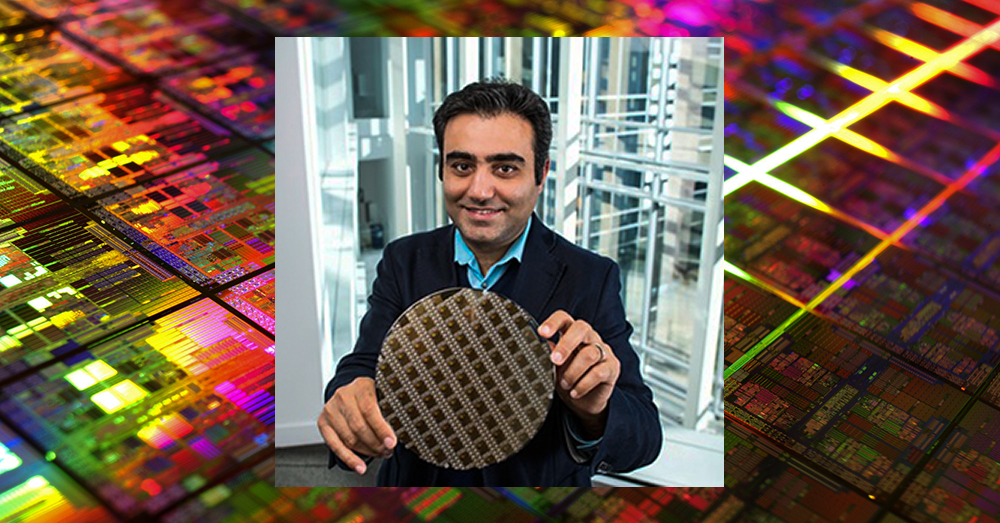
Towards Hardware Cybersecurity
11:00am-12:00pm Tuesday, 20 Febuary 2018, ITE 325, UMBC
Electronic system security, trust and reliability has become an increasingly critical area of concern for modern society. Secure hardware systems, platforms, as well as supply chains are critical to industry and government sectors such as national defense, healthcare, transportation, and finance.
Traditionally, authenticity and integrity of data has been protected with various security protocol at the software level with the underlying hardware assumed to be secure, and reliable. This assumption however is no longer true with an increasing number of attacks reported on the hardware. Counterfeiting electronic components, inserting hardware trojans, and cloning integrated circuits are just few out of many malicious byproducts of hardware vulnerabilities, which need to be urgently addressed.
In the first part of this talk I will address the security and vulnerability challenges in the horizontal integrated hardware development process. I will then present the concept of hybrid spin-transfer torque CMOS look up table based design which is our latest effort on developing a cost-effective solution to prevent physical reverse engineering attacks.
In the second part of my talk I will present how information at the hardware level can be used to address some of the major challenges of software security vulnerabilities monitoring and detection methods. I will first discuss these challenges and will then show how the use of data at the hardware architecture level in combination with an effective machine learning based predictor helps protecting systems against various classes of hardware vulnerability attacks.
I will conclude the talk by emphasizing the importance of this emerging area and proposing a research agenda for the future.
Dr. Houman Homayoun is an Assistant Professor in the Department of Electrical and Computer Engineering at George Mason University. He also holds a courtesy appointment with the Department of Computer Science as well as Information Science and Technology Department. He is the director of GMU’s Accelerated, Secure, and Energy-Efficient Computing Laboratory (ASEEC). Prior to joining GMU, Houman spent two years at the University of California, San Diego, as NSF Computing Innovation (CI) Fellow awarded by the CRA-CCC. Houman graduated in 2010 from University of California, Irvine with a Ph.D. in Computer Science. He was a recipient of the four-year University of California, Irvine Computer Science Department chair fellowship. Houman received the MS degree in computer engineering in 2005 from University of Victoria and BS degree in electrical engineering in 2003 from Sharif University of Technology. Houman conducts research in hardware security and trust, big data computing, and heterogeneous computing, where he has published more than 80 technical papers in the prestigious conferences and journals on the subject. Since 2012 he leads ten research projects, a total of $7.2 million in funding, supported by DARPA, AFRL, NSF, NIST, and GM on the topics of hardware security and trust, big data computing, heterogeneous architectures, and biomedical computing. Houman received the 2016 GLSVLSI conference best paper award for developing a manycore accelerator for wearable biomedical computing. Since 2017 he has been serving as an Associate Editor of IEEE Transactions on VLSI. He is currently serving as technical program co-chair of 2018 GLSVLSI conference.
The post talk: Towards Hardware Cybersecurity, 11am Tue 2/20, ITE325, UMBC appeared first on Department of Computer Science and Electrical Engineering.
]]>
Towards Hardware Cybersecurity Professor Houman Homayoun George Mason University 11:00am-12:00pm Tuesday, 20 Febuary 2018, ITE 325, UMBC Electronic system security, trust and reliability...
https://www.csee.umbc.edu/2018/02/talk-umbc-towards-hardware-cybersecurity-homayoun/
https://beta.my.umbc.edu/api/v0/pixel/news/73663/guest@my.umbc.edu/346faa5a3054d6e7d0b17a902843a9e0/api/pixel
computer-engineering
computer-science
cybersecurity
data-science
events
talks
UMBC Cybersecurity Institute Group
https://beta.my.umbc.edu/groups/cybersecurity
https://assets3-beta.my.umbc.edu/system/shared/avatars/groups/000/000/485/196da6a7ec6f4c31eab2e474c17a9ab7/xsmall.png?1734891477
https://assets3-beta.my.umbc.edu/system/shared/avatars/groups/000/000/485/196da6a7ec6f4c31eab2e474c17a9ab7/original.png?1734891477
https://assets4-beta.my.umbc.edu/system/shared/avatars/groups/000/000/485/196da6a7ec6f4c31eab2e474c17a9ab7/xxlarge.png?1734891477
https://assets4-beta.my.umbc.edu/system/shared/avatars/groups/000/000/485/196da6a7ec6f4c31eab2e474c17a9ab7/xlarge.png?1734891477
https://assets2-beta.my.umbc.edu/system/shared/avatars/groups/000/000/485/196da6a7ec6f4c31eab2e474c17a9ab7/large.png?1734891477
https://assets3-beta.my.umbc.edu/system/shared/avatars/groups/000/000/485/196da6a7ec6f4c31eab2e474c17a9ab7/medium.png?1734891477
https://assets3-beta.my.umbc.edu/system/shared/avatars/groups/000/000/485/196da6a7ec6f4c31eab2e474c17a9ab7/small.png?1734891477
https://assets3-beta.my.umbc.edu/system/shared/avatars/groups/000/000/485/196da6a7ec6f4c31eab2e474c17a9ab7/xsmall.png?1734891477
https://assets3-beta.my.umbc.edu/system/shared/avatars/groups/000/000/485/196da6a7ec6f4c31eab2e474c17a9ab7/xxsmall.png?1734891477
UMBC Center for Cybersecurity
1
0
true
Sun, 04 Feb 2018 19:08:51 -0500
Sat, 17 Feb 2018 19:08:51 -0500
talk: PKI in the Defense Information Systems Agency, 12-1 Fri 12/1, ITE228

UMBC Cyber Defense Lab
PKI in the Defense Information Systems Agency (DISA)
Phil Scheffler
Chief Engineer – Joint Enablers
ID2 – Cyber Development Directorate
Defense Information Systems Agency
12:00–1pm, Dec 1, 2017, ITE 228
As a combat support agency within the Department of Defense, DISA faces unlimited challenges with Public-Key Infrastructure (PKI). Chief Engineer Phil Scheffler will shed some light on DoD PKI at the Defense Information Systems Agency (DISA), and challenges deploying PKI across such a large enterprise.
Philip Scheffler is the Chief Engineer for the ID2 Joint Enablers Division in DISA’s Cyber Development Directorate. He joined DISA in 2010 as an NSA Information Assurance Scholar on the Public Key Enablement team. Over the past 7 years, Phil has been the technical lead for various PKI initiatives for the DoD. Mr. Scheffler has a B.A. in Economics from Brandeis University and a M.S in Computer Science from Boston University.
Host: Alan T. Sherman, *protected email*
The post talk: PKI in the Defense Information Systems Agency, 12-1 Fri 12/1, ITE228 appeared first on Department of Computer Science and Electrical Engineering.
]]>
UMBC Cyber Defense Lab PKI in the Defense Information Systems Agency (DISA) Phil Scheffler Chief Engineer – Joint Enablers ID2 – Cyber Development Directorate Defense Information...
https://www.csee.umbc.edu/2017/11/umbc-talk-pki-defense-information-systems-agency/
https://beta.my.umbc.edu/api/v0/pixel/news/72611/guest@my.umbc.edu/56139280fe936ae540e898bc5ad6771f/api/pixel
cybersecurity
news
talks
UMBC Cybersecurity Institute Group
https://beta.my.umbc.edu/groups/cybersecurity
https://assets3-beta.my.umbc.edu/system/shared/avatars/groups/000/000/485/196da6a7ec6f4c31eab2e474c17a9ab7/xsmall.png?1734891477
https://assets3-beta.my.umbc.edu/system/shared/avatars/groups/000/000/485/196da6a7ec6f4c31eab2e474c17a9ab7/original.png?1734891477
https://assets4-beta.my.umbc.edu/system/shared/avatars/groups/000/000/485/196da6a7ec6f4c31eab2e474c17a9ab7/xxlarge.png?1734891477
https://assets4-beta.my.umbc.edu/system/shared/avatars/groups/000/000/485/196da6a7ec6f4c31eab2e474c17a9ab7/xlarge.png?1734891477
https://assets2-beta.my.umbc.edu/system/shared/avatars/groups/000/000/485/196da6a7ec6f4c31eab2e474c17a9ab7/large.png?1734891477
https://assets3-beta.my.umbc.edu/system/shared/avatars/groups/000/000/485/196da6a7ec6f4c31eab2e474c17a9ab7/medium.png?1734891477
https://assets3-beta.my.umbc.edu/system/shared/avatars/groups/000/000/485/196da6a7ec6f4c31eab2e474c17a9ab7/small.png?1734891477
https://assets3-beta.my.umbc.edu/system/shared/avatars/groups/000/000/485/196da6a7ec6f4c31eab2e474c17a9ab7/xsmall.png?1734891477
https://assets3-beta.my.umbc.edu/system/shared/avatars/groups/000/000/485/196da6a7ec6f4c31eab2e474c17a9ab7/xxsmall.png?1734891477
UMBC Center for Cybersecurity
1
0
true
Wed, 29 Nov 2017 21:37:22 -0500
talk: An Introduction to Quantum Cryptography, Noon Friday 11/17, ITE231
The UMBC Cyber Defense Lab presents
An Introduction to Quantum Cryptography:
Or, How Alice Outwits Eve
Sam Lomonaco, CSEE, UMBC
12:00–1:00pm, Friday, 17 November 2017, ITE 231, UMBC
Alice and Bob wish to communicate without the archvillainess Eve eavesdropping on their conversation. Alice decides to take two college courses, one in cryptography, the other in quantum mechanics. During the courses, she discovers she can use what she has learned to devise a cryptographic communication system that automatically detects whether or not Eve is up to her villainous eavesdropping. Some of the topics discussed are Heisenberg’s Uncertainty Principle, the Vernam cipher, the BB84 and B92 cryptographic protocols. The talk ends with a discussion of some of Eve’s possible eavesdropping strategies, i.e., opaque eavesdropping, translucent eavesdropping, and translucent eavesdropping with entanglement.
Samuel J. Lomonaco Jr. received his PhD in mathematics from Princeton University. He has been a full professor of computer science and electrical engineering at the University of Maryland, Baltimore County (UMBC) since 1985, serving as founding chair of the CS Department from 1985 to 1991. Representative Awards, Accomplishments, and Honors include: (1) He was a visiting key research scientist at the Mathematical Sciences Research Institute (MSRI) at the University of California at Berkley in 2004. (2) He was a senior LaGrange fellow at the Institute for Scientific Exchange in Torino, Italy in 2005. (3) For contributions made to the development of the programming language Ada, he received an award from the United States Under Secretary of Defense for Research and Engineering, Dr. Richard DeLauer. (4) He was the first to introduce quantum information science to the American Mathematical Society (AMS) by organizing and giving a two-day AMS short course on quantum computation at the Annual Meeting of the AMS in Washington, DC, in January 2000. (5) He published four books on quantum computation and information science. (6) He accepted an invitation to be a guest editor of the Journal of Quantum Information Processing for a special issue on topological quantum computation.
Host: Alan T. Sherman, *protected email*
The post talk: An Introduction to Quantum Cryptography, Noon Friday 11/17, ITE231 appeared first on Department of Computer Science and Electrical Engineering.
]]>
The UMBC Cyber Defense Lab presents An Introduction to Quantum Cryptography: Or, How Alice Outwits Eve Sam Lomonaco, CSEE, UMBC 12:00–1:00pm, Friday, 17 November 2017, ITE 231, UMBC Alice...
https://www.csee.umbc.edu/2017/11/umbc-introduction-quantum-cryptography-lomonaco/
https://beta.my.umbc.edu/api/v0/pixel/news/72612/guest@my.umbc.edu/54e3ce4738d132a9095207c57d198708/api/pixel
computer-engineering
computer-science
cybersecurity
news
talks
UMBC Cybersecurity Institute Group
https://beta.my.umbc.edu/groups/cybersecurity
https://assets3-beta.my.umbc.edu/system/shared/avatars/groups/000/000/485/196da6a7ec6f4c31eab2e474c17a9ab7/xsmall.png?1734891477
https://assets3-beta.my.umbc.edu/system/shared/avatars/groups/000/000/485/196da6a7ec6f4c31eab2e474c17a9ab7/original.png?1734891477
https://assets4-beta.my.umbc.edu/system/shared/avatars/groups/000/000/485/196da6a7ec6f4c31eab2e474c17a9ab7/xxlarge.png?1734891477
https://assets4-beta.my.umbc.edu/system/shared/avatars/groups/000/000/485/196da6a7ec6f4c31eab2e474c17a9ab7/xlarge.png?1734891477
https://assets2-beta.my.umbc.edu/system/shared/avatars/groups/000/000/485/196da6a7ec6f4c31eab2e474c17a9ab7/large.png?1734891477
https://assets3-beta.my.umbc.edu/system/shared/avatars/groups/000/000/485/196da6a7ec6f4c31eab2e474c17a9ab7/medium.png?1734891477
https://assets3-beta.my.umbc.edu/system/shared/avatars/groups/000/000/485/196da6a7ec6f4c31eab2e474c17a9ab7/small.png?1734891477
https://assets3-beta.my.umbc.edu/system/shared/avatars/groups/000/000/485/196da6a7ec6f4c31eab2e474c17a9ab7/xsmall.png?1734891477
https://assets3-beta.my.umbc.edu/system/shared/avatars/groups/000/000/485/196da6a7ec6f4c31eab2e474c17a9ab7/xxsmall.png?1734891477
UMBC Center for Cybersecurity
1
0
true
Wed, 15 Nov 2017 08:10:40 -0500