Global Impact, Promise & Perils of Blockchain
UMBC Professors Haibin Zhang (Computer Science and Electrical Engineering) and Karuna Joshi (Information Systems) will be panelists for an event focused on the impact, promise and perils of blockchain technologies at the bwtech@UMBC Research & Technology Park. The event will take place from 8:15 to 11:15am on Tuesday, March 20 2018 at and will include breakfast and time for networking. They will be joined on the panel by Marcus Edwards, from Northrop Grumman’s Cyber & Intelligence Mission Solutions, Steve Cook of Verizon Enterprise Solutions, Sean Manion of Science Distributed and moderator Razvan Miutescu of Whiteford, Taylor & Preston, LLP. For more information and tickets are available on eventbrite.
8:15 – 11:15 Tuesday, March 20, 2018
bwtech@UMBC Research & Technology Park
5520 Research Park Drive, Baltimore, MD 21228
Cryptocurrency market capitalizations have soared over the past year and new innovative blockchain applications are continuing to emerge seemingly by the day. However, the average end-user is left to singularly make sense of a vast and global marketplace that is rapidly converging the core tenets of economics and technology development. The future prospects of traditional business and financial models is uncertain as blockchain technology leaves key decision makers in an untenable position to either adopt and adapt or simply be left behind. Industry and academic experts in the field will discuss the pros and cons and opportunities and challenges of this disruptive technology movement.
The post 🗣️ CyberInnovation Briefing: Global Impact, Promise & Perils of Blockchain appeared first on Department of Computer Science and Electrical Engineering.
]]>
Global Impact, Promise & Perils of Blockchain UMBC Professors Haibin Zhang (Computer Science and Electrical Engineering) and Karuna Joshi (Information Systems) will be panelists for an event...
https://www.csee.umbc.edu/2018/03/umbc-cyberinnovation-briefing-global-impact-promise-perils-of-blockchain/
https://beta.my.umbc.edu/api/v0/pixel/news/74886/guest@my.umbc.edu/071b57ec9d7f66fc52ec392277325cb1/api/pixel
computer-science
cybersecurity
data-science
events
faculty-and-staff
news
UMBC Cybersecurity Institute Group
https://beta.my.umbc.edu/groups/cybersecurity
https://assets3-beta.my.umbc.edu/system/shared/avatars/groups/000/000/485/196da6a7ec6f4c31eab2e474c17a9ab7/xsmall.png?1734891477
https://assets3-beta.my.umbc.edu/system/shared/avatars/groups/000/000/485/196da6a7ec6f4c31eab2e474c17a9ab7/original.png?1734891477
https://assets4-beta.my.umbc.edu/system/shared/avatars/groups/000/000/485/196da6a7ec6f4c31eab2e474c17a9ab7/xxlarge.png?1734891477
https://assets4-beta.my.umbc.edu/system/shared/avatars/groups/000/000/485/196da6a7ec6f4c31eab2e474c17a9ab7/xlarge.png?1734891477
https://assets2-beta.my.umbc.edu/system/shared/avatars/groups/000/000/485/196da6a7ec6f4c31eab2e474c17a9ab7/large.png?1734891477
https://assets3-beta.my.umbc.edu/system/shared/avatars/groups/000/000/485/196da6a7ec6f4c31eab2e474c17a9ab7/medium.png?1734891477
https://assets3-beta.my.umbc.edu/system/shared/avatars/groups/000/000/485/196da6a7ec6f4c31eab2e474c17a9ab7/small.png?1734891477
https://assets3-beta.my.umbc.edu/system/shared/avatars/groups/000/000/485/196da6a7ec6f4c31eab2e474c17a9ab7/xsmall.png?1734891477
https://assets3-beta.my.umbc.edu/system/shared/avatars/groups/000/000/485/196da6a7ec6f4c31eab2e474c17a9ab7/xxsmall.png?1734891477
UMBC Center for Cybersecurity
1
0
true
Fri, 16 Mar 2018 08:34:37 -0400
Fri, 16 Mar 2018 08:34:37 -0400
UMBC Cyber Dawgs Capture The Flag Cybersecurity Competition, Sunday March 11
UMBC Cyber Dawgs
Capture The Flag Cybersecurity Competition
The national champion UMBC Cyber Dawgs will hold the second annual computer security Capture The Flag (CTF) competition on Sunday, March 11th from 11am-7pm in the UC Ballroom. This CTF event is a Jeopardy-style competition where teams of four people use their laptops to discover answers to questions about cybersecurity, including network forensics, reverse engineering, reconnaissance, and cryptography. Each question has a point value based upon its difficulty and whichever team has the most points at the end wins!
The competition is open to all current UMBC students and student from a few other nearby schools. Both beginners and experts are welcome to participate.
Prizes will be awarded to the top teams. There will also be door prizes for randomly selected participants as well as T-Shirts for everyone. Some prizes from last year include Raspberry Pis, a Wireless Pineapple Nano, a YARD Stick One, and a Chromebook! Lunch and dinner (Lima’s Chicken) will be provided for everyone.
Students who are interested must register online in advance and bring a laptop to the event. Please note any dietary restrictions on the registration form as well as your T-Shirt size. See the event website for more information
The post UMBC Cyber Dawgs Capture The Flag Cybersecurity Competition, Sunday March 11 appeared first on Department of Computer Science and Electrical Engineering.
]]>
UMBC Cyber Dawgs Capture The Flag Cybersecurity Competition The national champion UMBC Cyber Dawgs will hold the second annual computer security Capture The Flag (CTF) competition on Sunday,...
https://www.csee.umbc.edu/2018/02/umbc-cyber-dawgs-capture-flag-cybersecurity-competition-sunday-march-11-2018/
https://beta.my.umbc.edu/api/v0/pixel/news/74319/guest@my.umbc.edu/2e5232853dad24355b1c4efb82961c8a/api/pixel
computer-engineering
computer-science
cybersecurity
data-science
events
students
UMBC Cybersecurity Institute Group
https://beta.my.umbc.edu/groups/cybersecurity
https://assets3-beta.my.umbc.edu/system/shared/avatars/groups/000/000/485/196da6a7ec6f4c31eab2e474c17a9ab7/xsmall.png?1734891477
https://assets3-beta.my.umbc.edu/system/shared/avatars/groups/000/000/485/196da6a7ec6f4c31eab2e474c17a9ab7/original.png?1734891477
https://assets4-beta.my.umbc.edu/system/shared/avatars/groups/000/000/485/196da6a7ec6f4c31eab2e474c17a9ab7/xxlarge.png?1734891477
https://assets4-beta.my.umbc.edu/system/shared/avatars/groups/000/000/485/196da6a7ec6f4c31eab2e474c17a9ab7/xlarge.png?1734891477
https://assets2-beta.my.umbc.edu/system/shared/avatars/groups/000/000/485/196da6a7ec6f4c31eab2e474c17a9ab7/large.png?1734891477
https://assets3-beta.my.umbc.edu/system/shared/avatars/groups/000/000/485/196da6a7ec6f4c31eab2e474c17a9ab7/medium.png?1734891477
https://assets3-beta.my.umbc.edu/system/shared/avatars/groups/000/000/485/196da6a7ec6f4c31eab2e474c17a9ab7/small.png?1734891477
https://assets3-beta.my.umbc.edu/system/shared/avatars/groups/000/000/485/196da6a7ec6f4c31eab2e474c17a9ab7/xsmall.png?1734891477
https://assets3-beta.my.umbc.edu/system/shared/avatars/groups/000/000/485/196da6a7ec6f4c31eab2e474c17a9ab7/xxsmall.png?1734891477
UMBC Center for Cybersecurity
1
0
true
Mon, 26 Feb 2018 23:53:40 -0500
talk: Circuit Complexity of One-Way Boolean Functions, 12pm Fri 2/23, ITE229

The UMBC Cyber Defense Lab presents
Experimentally Measuring the Circuit Complexity
of One-Way Boolean Functions
Brian Weber, CSEE, UMBC
12:00–1:00pm, Friday, 23 February 2018, ITE 229
I present preliminary results from an exhaustive search for one-way functions in certain classes of small Boolean functions. One-way functions are functions that are easy to compute but hard to invert. They are vital for cryptography, yet no one has proven their existence for arbitrary input sizes. For any bounded circuit model of computation, it is possible to search exhaustively over all possible Boolean functions of restricted size and thereby determine for the searched class the maximum disparity between the complexity of any function and its inverse. Throughout, we assume a circuit model in which each gate has fan-in 2 and fan-out 1.
In his 1985 dissertation at MIT, Steven Boyack carried out the first such search. For any positive integers n and M, let Fn,M denote the set of Boolean functions with n inputs and Moutputs. Using circuit size as the complexity measure, Boyack searched the space of every combinatorial function in F3,3 by searching each of 52 equivalency classes of functions in this space. He found that every function class in this space has an identically sized inverse. He was able to prove that functions do exist with more complex inverses outside the space he searched, but not by more than a constant factor.
In spring 2017, using circuit depth as the complexity measure, I searched all injective functions up to F8,8 whose coordinate functions are in F2,1. A coordinate function in this context refers to the function that computes an individual output bit. In addition, I searched up to F4,4 allowing coordinate functions in F3,1. In the space I searched, the most one-way function has fixed depth of 1, and an inverse depth exactly equal to the input size of the function. That is, for each 2 < n < 9, the hardest inverse in the space I searched has a depth of n, where n is the number of input bits. In addition, a search space allowing a larger fan-in for the coordinate functions did not yield functions less invertible than were found in the original search space.
Brian Weber is a senior BS/MS computer engineering student and SFS scholar at UMBC. He hopes to extend the work presented here into his Master’s thesis next year. Email: *protected email*
Host: Alan T. Sherman, *protected email*Support for this research was provided in part by the National Science Foundation under SFS grant 1241576.
The UMBC Cyber Defense Lab meets biweekly Fridays. All meetings are open to the public.
The post talk: Circuit Complexity of One-Way Boolean Functions, 12pm Fri 2/23, ITE229 appeared first on Department of Computer Science and Electrical Engineering.
]]>
The UMBC Cyber Defense Lab presents Experimentally Measuring the Circuit Complexity of One-Way Boolean Functions Brian Weber, CSEE, UMBC 12:00–1:00pm, Friday, 23 February 2018, ITE 229 I...
https://www.csee.umbc.edu/2018/02/umbc-talk-experimentally-measuring-circuit-complexity-one-way-boolean-functions/
https://beta.my.umbc.edu/api/v0/pixel/news/74246/guest@my.umbc.edu/186a018dd105cdb013ccb23caf98fdaa/api/pixel
computer-science
cybersecurity
news
sfs
talks
UMBC Cybersecurity Institute Group
https://beta.my.umbc.edu/groups/cybersecurity
https://assets3-beta.my.umbc.edu/system/shared/avatars/groups/000/000/485/196da6a7ec6f4c31eab2e474c17a9ab7/xsmall.png?1734891477
https://assets3-beta.my.umbc.edu/system/shared/avatars/groups/000/000/485/196da6a7ec6f4c31eab2e474c17a9ab7/original.png?1734891477
https://assets4-beta.my.umbc.edu/system/shared/avatars/groups/000/000/485/196da6a7ec6f4c31eab2e474c17a9ab7/xxlarge.png?1734891477
https://assets4-beta.my.umbc.edu/system/shared/avatars/groups/000/000/485/196da6a7ec6f4c31eab2e474c17a9ab7/xlarge.png?1734891477
https://assets2-beta.my.umbc.edu/system/shared/avatars/groups/000/000/485/196da6a7ec6f4c31eab2e474c17a9ab7/large.png?1734891477
https://assets3-beta.my.umbc.edu/system/shared/avatars/groups/000/000/485/196da6a7ec6f4c31eab2e474c17a9ab7/medium.png?1734891477
https://assets3-beta.my.umbc.edu/system/shared/avatars/groups/000/000/485/196da6a7ec6f4c31eab2e474c17a9ab7/small.png?1734891477
https://assets3-beta.my.umbc.edu/system/shared/avatars/groups/000/000/485/196da6a7ec6f4c31eab2e474c17a9ab7/xsmall.png?1734891477
https://assets3-beta.my.umbc.edu/system/shared/avatars/groups/000/000/485/196da6a7ec6f4c31eab2e474c17a9ab7/xxsmall.png?1734891477
UMBC Center for Cybersecurity
1
0
true
Thu, 22 Feb 2018 22:28:33 -0500
UMBC’s Haibin Zhang shares tips to secure data in the cloud
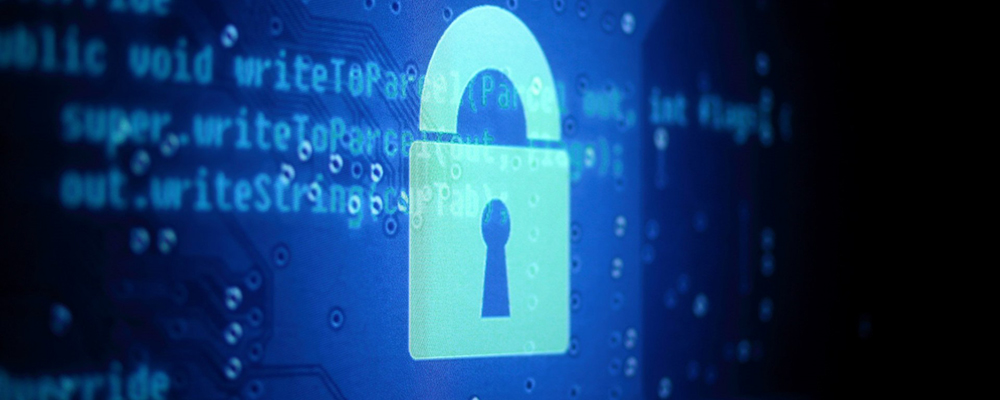
UMBC’s Haibin Zhang shares tips to secure data in the cloud
As more consumers rely on cloud-based data storage for everything from family photos to financial information, both experts and general users have voiced concerns about cloud security. In a new Conversation article recently published by Scientific American, Haibin Zhang, assistant professor of computer science and electrical engineering, explains precautions consumers can take to protect their files in the cloud.
Zhang explains that data stored and secured using commercial cloud storage systems is encrypted, which means that without the key, the information looks like a series of meaningless characters. Encryption keys have the potential to be misused, if they end up in the wrong hands, which can compromise the security of files stored in a cloud.
“Just like regular keys, if someone else has them, they might be stolen or misused without the data owner knowing,” says Zhang. “And some services might have flaws in their security practices that leave users’ data vulnerable.”
Zhang notes that some cloud services allow customers to maintain their encryption key themselves, which give the consumer the control in ensuring that their data remains safe. Other services keep the encryption keys internally and manage the security for their customers. He says that while each option has benefits, it is important to recognize that “some services might have flaws in their security practices that leave users’ data vulnerable.”
To keep data secure in the cloud, Zhang suggests using enhanced security features offered by cloud storage companies and taking additional precautions that are available to individual customers. He recommends that people use a cloud storage service that allows customers to encrypt their data before uploading it for storage, and to rely on services that have been “validated by independent security researchers.”
Read “How secure is your data when it’s stored in the cloud?” in The Conversation for Zhang’s additional recommendations on securing data on the cloud. The piece also appeared in Scientific American, and has so far been read nearly 20,000 times.
Adapted from a UMBC News article by Megan Hanks. Photo by Yuri Samoilov, CC by 2.0.
The post UMBC’s Haibin Zhang shares tips to secure data in the cloud appeared first on Department of Computer Science and Electrical Engineering.
]]>
UMBC’s Haibin Zhang shares tips to secure data in the cloud As more consumers rely on cloud-based data storage for everything from family photos to financial information, both experts and...
https://www.csee.umbc.edu/2018/02/umbc-haibin-zhang-tips-secure-data-cloud-cybersecurity-computer-security/
https://beta.my.umbc.edu/api/v0/pixel/news/73767/guest@my.umbc.edu/ac1cc011dc557e189defafd6aae1fa07/api/pixel
computer-science
cybersecurity
faculty-and-staff
UMBC Cybersecurity Institute Group
https://beta.my.umbc.edu/groups/cybersecurity
https://assets3-beta.my.umbc.edu/system/shared/avatars/groups/000/000/485/196da6a7ec6f4c31eab2e474c17a9ab7/xsmall.png?1734891477
https://assets3-beta.my.umbc.edu/system/shared/avatars/groups/000/000/485/196da6a7ec6f4c31eab2e474c17a9ab7/original.png?1734891477
https://assets4-beta.my.umbc.edu/system/shared/avatars/groups/000/000/485/196da6a7ec6f4c31eab2e474c17a9ab7/xxlarge.png?1734891477
https://assets4-beta.my.umbc.edu/system/shared/avatars/groups/000/000/485/196da6a7ec6f4c31eab2e474c17a9ab7/xlarge.png?1734891477
https://assets2-beta.my.umbc.edu/system/shared/avatars/groups/000/000/485/196da6a7ec6f4c31eab2e474c17a9ab7/large.png?1734891477
https://assets3-beta.my.umbc.edu/system/shared/avatars/groups/000/000/485/196da6a7ec6f4c31eab2e474c17a9ab7/medium.png?1734891477
https://assets3-beta.my.umbc.edu/system/shared/avatars/groups/000/000/485/196da6a7ec6f4c31eab2e474c17a9ab7/small.png?1734891477
https://assets3-beta.my.umbc.edu/system/shared/avatars/groups/000/000/485/196da6a7ec6f4c31eab2e474c17a9ab7/xsmall.png?1734891477
https://assets3-beta.my.umbc.edu/system/shared/avatars/groups/000/000/485/196da6a7ec6f4c31eab2e474c17a9ab7/xxsmall.png?1734891477
UMBC Center for Cybersecurity
2
0
true
Wed, 07 Feb 2018 14:14:06 -0500
talk: Results of the 2018 SFS Research Study at UMBC, 12pm Fri 2/9, ITE228
The UMBC Cyber Defense Lab presents
Results from the January 2018 SFS Research Study at UMBC
Enis Golaszewski
Department of Information Systems
University of Maryland, Baltimore County
12:00–1:00pm, Friday, 9 February 2018, ITE 228 (or nearby)
January 22-26, 2018, UMBC SFS scholars worked collaboratively to analyze the security of a targeted aspect of the UMBC computer system. The focus of this year’s study was the WebAdmin module that enables users to perform various functions on their accounts, including changing the password. Students identified vulnerabilities involving failure to sanitize user input properly and suggested mitigations. Participants comprised BS, MS, MPS, and PhD students studying computer science, computer engineering, information systems, and cybersecurity, including SFS scholars who transferred from Montgomery College and Prince George’s Community College to complete their four-year degrees at UMBC. We hope that other universities can benefit from our motivational and educational strategy of cooperating with the university’s IT staff to engage students in active project-based learning centering on focused questions about the university computer system.
This project was supported in part by the National Science Foundation under SFS grant 1241576.
Enis Golaszewski (*protected email*) is a PhD student and SFS scholar in computer science working with Dr. Sherman on blockchain, protocol analysis, and the security of software-defined networks.
Host: Alan T. Sherman, *protected email*
The post talk: Results of the 2018 SFS Research Study at UMBC, 12pm Fri 2/9, ITE228 appeared first on Department of Computer Science and Electrical Engineering.
]]>
The UMBC Cyber Defense Lab presents Results from the January 2018 SFS Research Study at UMBC Enis Golaszewski Department of Information Systems University of Maryland, Baltimore County...
https://www.csee.umbc.edu/2018/02/talk-results-2018-research-study-umbc-cybersecurity-security/
https://beta.my.umbc.edu/api/v0/pixel/news/73664/guest@my.umbc.edu/ceecd69001ec678793247f539105a2f0/api/pixel
computer-science
cybersecurity
students
talks
UMBC Cybersecurity Institute Group
https://beta.my.umbc.edu/groups/cybersecurity
https://assets3-beta.my.umbc.edu/system/shared/avatars/groups/000/000/485/196da6a7ec6f4c31eab2e474c17a9ab7/xsmall.png?1734891477
https://assets3-beta.my.umbc.edu/system/shared/avatars/groups/000/000/485/196da6a7ec6f4c31eab2e474c17a9ab7/original.png?1734891477
https://assets4-beta.my.umbc.edu/system/shared/avatars/groups/000/000/485/196da6a7ec6f4c31eab2e474c17a9ab7/xxlarge.png?1734891477
https://assets4-beta.my.umbc.edu/system/shared/avatars/groups/000/000/485/196da6a7ec6f4c31eab2e474c17a9ab7/xlarge.png?1734891477
https://assets2-beta.my.umbc.edu/system/shared/avatars/groups/000/000/485/196da6a7ec6f4c31eab2e474c17a9ab7/large.png?1734891477
https://assets3-beta.my.umbc.edu/system/shared/avatars/groups/000/000/485/196da6a7ec6f4c31eab2e474c17a9ab7/medium.png?1734891477
https://assets3-beta.my.umbc.edu/system/shared/avatars/groups/000/000/485/196da6a7ec6f4c31eab2e474c17a9ab7/small.png?1734891477
https://assets3-beta.my.umbc.edu/system/shared/avatars/groups/000/000/485/196da6a7ec6f4c31eab2e474c17a9ab7/xsmall.png?1734891477
https://assets3-beta.my.umbc.edu/system/shared/avatars/groups/000/000/485/196da6a7ec6f4c31eab2e474c17a9ab7/xxsmall.png?1734891477
UMBC Center for Cybersecurity
1
0
true
Sun, 04 Feb 2018 21:08:32 -0500
talk: Towards Hardware Cybersecurity, 11am Tue 2/20, ITE325, UMBC
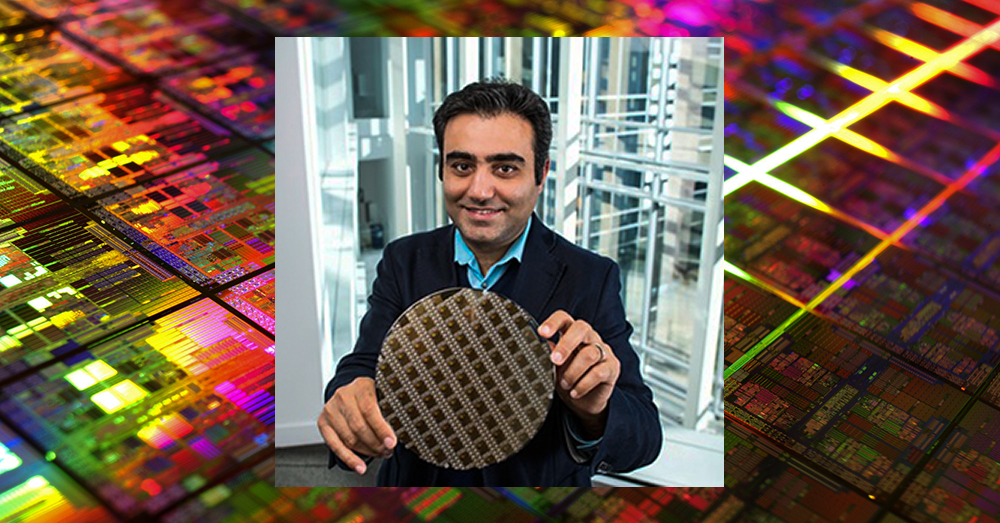
Towards Hardware Cybersecurity
11:00am-12:00pm Tuesday, 20 Febuary 2018, ITE 325, UMBC
Electronic system security, trust and reliability has become an increasingly critical area of concern for modern society. Secure hardware systems, platforms, as well as supply chains are critical to industry and government sectors such as national defense, healthcare, transportation, and finance.
Traditionally, authenticity and integrity of data has been protected with various security protocol at the software level with the underlying hardware assumed to be secure, and reliable. This assumption however is no longer true with an increasing number of attacks reported on the hardware. Counterfeiting electronic components, inserting hardware trojans, and cloning integrated circuits are just few out of many malicious byproducts of hardware vulnerabilities, which need to be urgently addressed.
In the first part of this talk I will address the security and vulnerability challenges in the horizontal integrated hardware development process. I will then present the concept of hybrid spin-transfer torque CMOS look up table based design which is our latest effort on developing a cost-effective solution to prevent physical reverse engineering attacks.
In the second part of my talk I will present how information at the hardware level can be used to address some of the major challenges of software security vulnerabilities monitoring and detection methods. I will first discuss these challenges and will then show how the use of data at the hardware architecture level in combination with an effective machine learning based predictor helps protecting systems against various classes of hardware vulnerability attacks.
I will conclude the talk by emphasizing the importance of this emerging area and proposing a research agenda for the future.
Dr. Houman Homayoun is an Assistant Professor in the Department of Electrical and Computer Engineering at George Mason University. He also holds a courtesy appointment with the Department of Computer Science as well as Information Science and Technology Department. He is the director of GMU’s Accelerated, Secure, and Energy-Efficient Computing Laboratory (ASEEC). Prior to joining GMU, Houman spent two years at the University of California, San Diego, as NSF Computing Innovation (CI) Fellow awarded by the CRA-CCC. Houman graduated in 2010 from University of California, Irvine with a Ph.D. in Computer Science. He was a recipient of the four-year University of California, Irvine Computer Science Department chair fellowship. Houman received the MS degree in computer engineering in 2005 from University of Victoria and BS degree in electrical engineering in 2003 from Sharif University of Technology. Houman conducts research in hardware security and trust, big data computing, and heterogeneous computing, where he has published more than 80 technical papers in the prestigious conferences and journals on the subject. Since 2012 he leads ten research projects, a total of $7.2 million in funding, supported by DARPA, AFRL, NSF, NIST, and GM on the topics of hardware security and trust, big data computing, heterogeneous architectures, and biomedical computing. Houman received the 2016 GLSVLSI conference best paper award for developing a manycore accelerator for wearable biomedical computing. Since 2017 he has been serving as an Associate Editor of IEEE Transactions on VLSI. He is currently serving as technical program co-chair of 2018 GLSVLSI conference.
The post talk: Towards Hardware Cybersecurity, 11am Tue 2/20, ITE325, UMBC appeared first on Department of Computer Science and Electrical Engineering.
]]>
Towards Hardware Cybersecurity Professor Houman Homayoun George Mason University 11:00am-12:00pm Tuesday, 20 Febuary 2018, ITE 325, UMBC Electronic system security, trust and reliability...
https://www.csee.umbc.edu/2018/02/talk-umbc-towards-hardware-cybersecurity-homayoun/
https://beta.my.umbc.edu/api/v0/pixel/news/73663/guest@my.umbc.edu/346faa5a3054d6e7d0b17a902843a9e0/api/pixel
computer-engineering
computer-science
cybersecurity
data-science
events
talks
UMBC Cybersecurity Institute Group
https://beta.my.umbc.edu/groups/cybersecurity
https://assets3-beta.my.umbc.edu/system/shared/avatars/groups/000/000/485/196da6a7ec6f4c31eab2e474c17a9ab7/xsmall.png?1734891477
https://assets3-beta.my.umbc.edu/system/shared/avatars/groups/000/000/485/196da6a7ec6f4c31eab2e474c17a9ab7/original.png?1734891477
https://assets4-beta.my.umbc.edu/system/shared/avatars/groups/000/000/485/196da6a7ec6f4c31eab2e474c17a9ab7/xxlarge.png?1734891477
https://assets4-beta.my.umbc.edu/system/shared/avatars/groups/000/000/485/196da6a7ec6f4c31eab2e474c17a9ab7/xlarge.png?1734891477
https://assets2-beta.my.umbc.edu/system/shared/avatars/groups/000/000/485/196da6a7ec6f4c31eab2e474c17a9ab7/large.png?1734891477
https://assets3-beta.my.umbc.edu/system/shared/avatars/groups/000/000/485/196da6a7ec6f4c31eab2e474c17a9ab7/medium.png?1734891477
https://assets3-beta.my.umbc.edu/system/shared/avatars/groups/000/000/485/196da6a7ec6f4c31eab2e474c17a9ab7/small.png?1734891477
https://assets3-beta.my.umbc.edu/system/shared/avatars/groups/000/000/485/196da6a7ec6f4c31eab2e474c17a9ab7/xsmall.png?1734891477
https://assets3-beta.my.umbc.edu/system/shared/avatars/groups/000/000/485/196da6a7ec6f4c31eab2e474c17a9ab7/xxsmall.png?1734891477
UMBC Center for Cybersecurity
1
0
true
Sun, 04 Feb 2018 19:08:51 -0500
Sat, 17 Feb 2018 19:08:51 -0500
talk: An Introduction to Quantum Cryptography, Noon Friday 11/17, ITE231
The UMBC Cyber Defense Lab presents
An Introduction to Quantum Cryptography:
Or, How Alice Outwits Eve
Sam Lomonaco, CSEE, UMBC
12:00–1:00pm, Friday, 17 November 2017, ITE 231, UMBC
Alice and Bob wish to communicate without the archvillainess Eve eavesdropping on their conversation. Alice decides to take two college courses, one in cryptography, the other in quantum mechanics. During the courses, she discovers she can use what she has learned to devise a cryptographic communication system that automatically detects whether or not Eve is up to her villainous eavesdropping. Some of the topics discussed are Heisenberg’s Uncertainty Principle, the Vernam cipher, the BB84 and B92 cryptographic protocols. The talk ends with a discussion of some of Eve’s possible eavesdropping strategies, i.e., opaque eavesdropping, translucent eavesdropping, and translucent eavesdropping with entanglement.
Samuel J. Lomonaco Jr. received his PhD in mathematics from Princeton University. He has been a full professor of computer science and electrical engineering at the University of Maryland, Baltimore County (UMBC) since 1985, serving as founding chair of the CS Department from 1985 to 1991. Representative Awards, Accomplishments, and Honors include: (1) He was a visiting key research scientist at the Mathematical Sciences Research Institute (MSRI) at the University of California at Berkley in 2004. (2) He was a senior LaGrange fellow at the Institute for Scientific Exchange in Torino, Italy in 2005. (3) For contributions made to the development of the programming language Ada, he received an award from the United States Under Secretary of Defense for Research and Engineering, Dr. Richard DeLauer. (4) He was the first to introduce quantum information science to the American Mathematical Society (AMS) by organizing and giving a two-day AMS short course on quantum computation at the Annual Meeting of the AMS in Washington, DC, in January 2000. (5) He published four books on quantum computation and information science. (6) He accepted an invitation to be a guest editor of the Journal of Quantum Information Processing for a special issue on topological quantum computation.
Host: Alan T. Sherman, *protected email*
The post talk: An Introduction to Quantum Cryptography, Noon Friday 11/17, ITE231 appeared first on Department of Computer Science and Electrical Engineering.
]]>
The UMBC Cyber Defense Lab presents An Introduction to Quantum Cryptography: Or, How Alice Outwits Eve Sam Lomonaco, CSEE, UMBC 12:00–1:00pm, Friday, 17 November 2017, ITE 231, UMBC Alice...
https://www.csee.umbc.edu/2017/11/umbc-introduction-quantum-cryptography-lomonaco/
https://beta.my.umbc.edu/api/v0/pixel/news/72612/guest@my.umbc.edu/54e3ce4738d132a9095207c57d198708/api/pixel
computer-engineering
computer-science
cybersecurity
news
talks
UMBC Cybersecurity Institute Group
https://beta.my.umbc.edu/groups/cybersecurity
https://assets3-beta.my.umbc.edu/system/shared/avatars/groups/000/000/485/196da6a7ec6f4c31eab2e474c17a9ab7/xsmall.png?1734891477
https://assets3-beta.my.umbc.edu/system/shared/avatars/groups/000/000/485/196da6a7ec6f4c31eab2e474c17a9ab7/original.png?1734891477
https://assets4-beta.my.umbc.edu/system/shared/avatars/groups/000/000/485/196da6a7ec6f4c31eab2e474c17a9ab7/xxlarge.png?1734891477
https://assets4-beta.my.umbc.edu/system/shared/avatars/groups/000/000/485/196da6a7ec6f4c31eab2e474c17a9ab7/xlarge.png?1734891477
https://assets2-beta.my.umbc.edu/system/shared/avatars/groups/000/000/485/196da6a7ec6f4c31eab2e474c17a9ab7/large.png?1734891477
https://assets3-beta.my.umbc.edu/system/shared/avatars/groups/000/000/485/196da6a7ec6f4c31eab2e474c17a9ab7/medium.png?1734891477
https://assets3-beta.my.umbc.edu/system/shared/avatars/groups/000/000/485/196da6a7ec6f4c31eab2e474c17a9ab7/small.png?1734891477
https://assets3-beta.my.umbc.edu/system/shared/avatars/groups/000/000/485/196da6a7ec6f4c31eab2e474c17a9ab7/xsmall.png?1734891477
https://assets3-beta.my.umbc.edu/system/shared/avatars/groups/000/000/485/196da6a7ec6f4c31eab2e474c17a9ab7/xxsmall.png?1734891477
UMBC Center for Cybersecurity
1
0
true
Wed, 15 Nov 2017 08:10:40 -0500
talk: A Practitioner’s Introduction to Deep Learning, 1pm Fri 11/17
ACM Tech Talk Series
A Practitioner’s Introduction to Deep Learning
Ashwin Kumar Ganesan, PhD student
1:00-2:00pm Friday, 17 November 2017, ITE325, UMBC
In recent years, Deep Neural Networks have been highly successful at performing a number of tasks in computer vision, natural language processing and artificial intelligence in general. The remarkable performance gains have led to universities and industries investing heavily in this space. This investment creates a thriving open source ecosystem of tools & libraries that aid the design of new architectures, algorithm research as well as data collection.
This talk (and hands-on session) introduce people to some of the basics of machine learning, neural networks and discusses some of the popular neural network architectures. We take a dive into one of the popular libraries, Tensorflow, and an associated abstraction library Keras.
To participate in the hands-on aspects of the workshop, bring a laptop computer with Python installed and install the following libraries using pip. For windows or (any other OS) consider doing an installation of anaconda that has all the necessary libraries.
- numpy, scipy & scikit-learn
- tensorflow / tensoflow-gpu (The first one is the GPU version)
- matplotlib for visualizations (if necessary)
- jupyter & ipython (We will use python2.7 in our experiments)
Following are helpful links:
Contact Nisha Pillai (NPillai1 at umbc.edu) with any questions regarding this event.
The post talk: A Practitioner’s Introduction to Deep Learning, 1pm Fri 11/17 appeared first on Department of Computer Science and Electrical Engineering.
]]>
ACM Tech Talk Series A Practitioner’s Introduction to Deep Learning Ashwin Kumar Ganesan, PhD student 1:00-2:00pm Friday, 17 November 2017, ITE325, UMBC In recent years, Deep Neural...
https://www.csee.umbc.edu/2017/11/practitioner-introduction-deep-learning-umbc-acm-teck-talk/
https://beta.my.umbc.edu/api/v0/pixel/news/72613/guest@my.umbc.edu/e6c0244a9107e67e192737ee9aca6200/api/pixel
computer-engineering
computer-science
cybersecurity
data-science
events
graduate
news
research
students
UMBC Cybersecurity Institute Group
https://beta.my.umbc.edu/groups/cybersecurity
https://assets3-beta.my.umbc.edu/system/shared/avatars/groups/000/000/485/196da6a7ec6f4c31eab2e474c17a9ab7/xsmall.png?1734891477
https://assets3-beta.my.umbc.edu/system/shared/avatars/groups/000/000/485/196da6a7ec6f4c31eab2e474c17a9ab7/original.png?1734891477
https://assets4-beta.my.umbc.edu/system/shared/avatars/groups/000/000/485/196da6a7ec6f4c31eab2e474c17a9ab7/xxlarge.png?1734891477
https://assets4-beta.my.umbc.edu/system/shared/avatars/groups/000/000/485/196da6a7ec6f4c31eab2e474c17a9ab7/xlarge.png?1734891477
https://assets2-beta.my.umbc.edu/system/shared/avatars/groups/000/000/485/196da6a7ec6f4c31eab2e474c17a9ab7/large.png?1734891477
https://assets3-beta.my.umbc.edu/system/shared/avatars/groups/000/000/485/196da6a7ec6f4c31eab2e474c17a9ab7/medium.png?1734891477
https://assets3-beta.my.umbc.edu/system/shared/avatars/groups/000/000/485/196da6a7ec6f4c31eab2e474c17a9ab7/small.png?1734891477
https://assets3-beta.my.umbc.edu/system/shared/avatars/groups/000/000/485/196da6a7ec6f4c31eab2e474c17a9ab7/xsmall.png?1734891477
https://assets3-beta.my.umbc.edu/system/shared/avatars/groups/000/000/485/196da6a7ec6f4c31eab2e474c17a9ab7/xxsmall.png?1734891477
UMBC Center for Cybersecurity
1
0
true
Tue, 14 Nov 2017 14:56:17 -0500
talk: Bill Fisher (NCCOE) on IoT Security @ USG 10/30 6-8PM

The UMBC Cybersecurity program at USG Speaker Series Presents
The Internet of Things (IoT)
With speaker
William (Bill) Fisher, NCCoE Security Engineer
Monday, October 30th 6:00-8:00 pm
The Internet of Things (IoT) is the inevitable result of years of Moore’s law – compact, cheap, chip platforms that can take ordinarily house hold items and make them data generating and collection devices that users can manage with their smart phone, web browser or their favorite automation platform. Physical proximity is no longer needed for things like cameras, door locks or thermostats. Instead users remotely access all of these “things” while on the go, even sharing some of their favorite things with friends and family, who need not own the thing, but simply be granted access through a web portal or mobile application. Like many technology trends before it, the IoT has brought great innovation but also great security challenges. These challenges go beyond standards and technology to economic and market forces that hinder security best practices, even for some of the most basic cyber hygiene. Join Bill Fisher of the National Cybersecurity Center of Excellence for a presentation on these challenges and basic mitigations organizations can put into place to help alleviate the risk that the IoT devices pose to consumers and the enterprise.
Speaker Bio:
Bill Fisher is a security engineer at the National Cybersecurity Center of Excellence (NCCoE). In this role, he is responsible for leading a team of engineers that work collaboratively with industry partners to address cybersecurity business challenges facing the nation. He leads the center’s Attribute Based Access Control (ABAC) project, Mobile Application Single Sign On (SSO) for the Public Safety and First Responder Sector, and is part of the ITL Cybersecurity for IoT program. Prior to his work at the NCCoE, Mr. Fisher was a program security advisor for the System High Corporation in support of the Network Security Deployment division at the Department of Homeland Security. He holds a bachelor’s degree in business administration from American University and a master’s degree in cybersecurity from Johns Hopkins University.
Host: Dr. Behnam Shariati (*protected email*) and UMBC Graduate Cybersecurity Association at USG
The post talk: Bill Fisher (NCCOE) on IoT Security @ USG 10/30 6-8PM appeared first on Department of Computer Science and Electrical Engineering.
]]>
The UMBC Cybersecurity program at USG Speaker Series Presents The Internet of Things (IoT) With speaker William (Bill) Fisher, NCCoE Security Engineer Building III – Room 4230...
https://www.csee.umbc.edu/2017/10/talk-bill-fisher-nccoe-iot-security-usg-1030-6-8pm/
https://beta.my.umbc.edu/api/v0/pixel/news/72617/guest@my.umbc.edu/85d6e62ef63ac2033b32c576bc185d28/api/pixel
computer-science
csee
cybersecurity
events
news
talks
UMBC Cybersecurity Institute Group
https://beta.my.umbc.edu/groups/cybersecurity
https://assets3-beta.my.umbc.edu/system/shared/avatars/groups/000/000/485/196da6a7ec6f4c31eab2e474c17a9ab7/xsmall.png?1734891477
https://assets3-beta.my.umbc.edu/system/shared/avatars/groups/000/000/485/196da6a7ec6f4c31eab2e474c17a9ab7/original.png?1734891477
https://assets4-beta.my.umbc.edu/system/shared/avatars/groups/000/000/485/196da6a7ec6f4c31eab2e474c17a9ab7/xxlarge.png?1734891477
https://assets4-beta.my.umbc.edu/system/shared/avatars/groups/000/000/485/196da6a7ec6f4c31eab2e474c17a9ab7/xlarge.png?1734891477
https://assets2-beta.my.umbc.edu/system/shared/avatars/groups/000/000/485/196da6a7ec6f4c31eab2e474c17a9ab7/large.png?1734891477
https://assets3-beta.my.umbc.edu/system/shared/avatars/groups/000/000/485/196da6a7ec6f4c31eab2e474c17a9ab7/medium.png?1734891477
https://assets3-beta.my.umbc.edu/system/shared/avatars/groups/000/000/485/196da6a7ec6f4c31eab2e474c17a9ab7/small.png?1734891477
https://assets3-beta.my.umbc.edu/system/shared/avatars/groups/000/000/485/196da6a7ec6f4c31eab2e474c17a9ab7/xsmall.png?1734891477
https://assets3-beta.my.umbc.edu/system/shared/avatars/groups/000/000/485/196da6a7ec6f4c31eab2e474c17a9ab7/xxsmall.png?1734891477
UMBC Center for Cybersecurity
1
0
true
Mon, 16 Oct 2017 11:47:51 -0400
talk: Keith Mayes on Attacks on Smart Cards, RFIDs and Embedded System
Attacks on Smart Cards, RFIDs and Embedded Systems
Prof. Keith Mayes
Royal Holloway University of London
10-11:00am Tuesday, 10 October 2017, ITE 325, UMBC
Smart Cards and RFIDs exist with a range of capabilities and are used in their billions throughout the world. The simpler devices have poor security, however, for many years, high-end smart cards have successfully been used in a range of systems such as banking, passports, mobile communication, satellite TV etc. Fundamental to their success is a specialist design to offer remarkable resistance to a wide range of attacks, including physical, side-channel and fault. This talk describes a range of known attacks and the countermeasures that are employed to defeat them.
Prof. Keith Mayes is the Head of the School of Mathematics and Information Security at Royal Holloway University of London. He received his BSc (Hons) in Electronic Engineering in 1983 from the University of Bath, and his PhD degree in Digital Image Processing in 1987. He is an active researcher/author with 100+ publications in numerous conferences, books and journals. His interests include the design of secure protocols, communications architectures and security tokens as well as associated attacks/countermeasures. He is a Fellow of the Institution of Engineering and Technology, a Founder Associate Member of the Institute of Information Security Professionals, a Member of the Licensing Executives Society and a member of the editorial board of the Journal of Theoretical and Applied Electronic Commerce Research (JTAER).
The post talk: Keith Mayes on Attacks on Smart Cards, RFIDs and Embedded System appeared first on Department of Computer Science and Electrical Engineering.
]]>
Attacks on Smart Cards, RFIDs and Embedded Systems Prof. Keith Mayes Royal Holloway University of London 10-11:00am Tuesday, 10 October 2017, ITE 325, UMBC Smart Cards and RFIDs exist...
https://www.csee.umbc.edu/2017/10/talk-keith-mayes-attacks-smart-cards-rfids-embedded-system-cybersecurity-rfid/
https://beta.my.umbc.edu/api/v0/pixel/news/72618/guest@my.umbc.edu/f693b6777313d350fc774fad7d734ed2/api/pixel
computer-engineering
computer-science
cybersecurity
events
news
talks
UMBC Cybersecurity Institute Group
https://beta.my.umbc.edu/groups/cybersecurity
https://assets3-beta.my.umbc.edu/system/shared/avatars/groups/000/000/485/196da6a7ec6f4c31eab2e474c17a9ab7/xsmall.png?1734891477
https://assets3-beta.my.umbc.edu/system/shared/avatars/groups/000/000/485/196da6a7ec6f4c31eab2e474c17a9ab7/original.png?1734891477
https://assets4-beta.my.umbc.edu/system/shared/avatars/groups/000/000/485/196da6a7ec6f4c31eab2e474c17a9ab7/xxlarge.png?1734891477
https://assets4-beta.my.umbc.edu/system/shared/avatars/groups/000/000/485/196da6a7ec6f4c31eab2e474c17a9ab7/xlarge.png?1734891477
https://assets2-beta.my.umbc.edu/system/shared/avatars/groups/000/000/485/196da6a7ec6f4c31eab2e474c17a9ab7/large.png?1734891477
https://assets3-beta.my.umbc.edu/system/shared/avatars/groups/000/000/485/196da6a7ec6f4c31eab2e474c17a9ab7/medium.png?1734891477
https://assets3-beta.my.umbc.edu/system/shared/avatars/groups/000/000/485/196da6a7ec6f4c31eab2e474c17a9ab7/small.png?1734891477
https://assets3-beta.my.umbc.edu/system/shared/avatars/groups/000/000/485/196da6a7ec6f4c31eab2e474c17a9ab7/xsmall.png?1734891477
https://assets3-beta.my.umbc.edu/system/shared/avatars/groups/000/000/485/196da6a7ec6f4c31eab2e474c17a9ab7/xxsmall.png?1734891477
UMBC Center for Cybersecurity
1
0
true
Fri, 06 Oct 2017 21:46:20 -0400