CodeBot'25 Workshop: Can We Trust AI-Generated Code?Workshop Feb. 25-26, 2025 in Columbia, MD and online
Can We Trust AI-Generated Code?
Workshop sponsored by UMBC & Army Research Laboratory
Feb. 25-26, 2025 UMBC Training Centers, Columbia, MD & online
position paper deadline extended to 1/20/2025
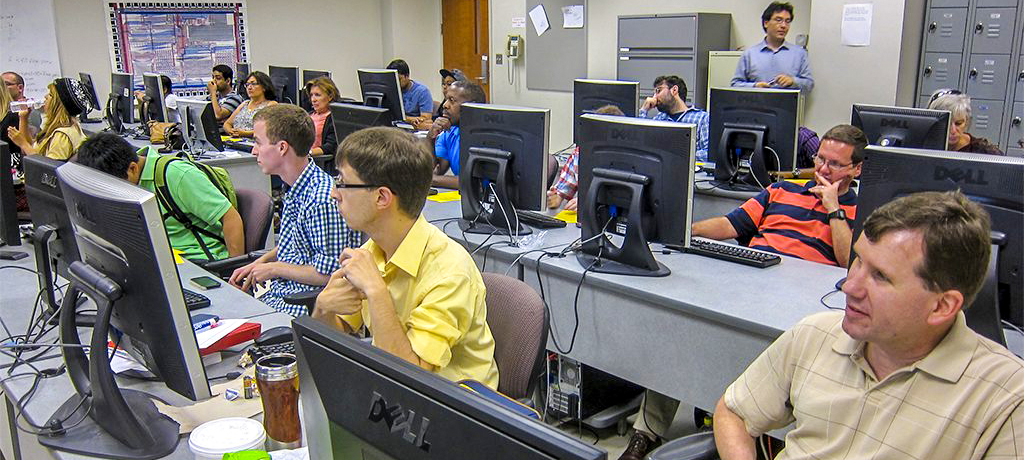
The era of generative AI is upon us, and chatbots such as chatGPT are being used by programmers at all levels of experience to produce code. Some generative AI systems, such as Gemini Code Assist, specialize in code generation. Unfortunately, AI-generated code often contains errors in the form of functionality that fails to meet specifications or vulnerabilities that can be exploited by hackers. People have been working on program verification and secure coding for sixty years, but even so, the skill needed to find such errors is possessed by only a fraction of software engineers, and these skills are not being passed on to student programmers as they should be.
The goal of this FREE workshop is to gather and produce actionable ideas and suggestions that may be of use to the IT profession. The workshop will consist of invited speakers, panels, and open discussion.
We invite would-be participants to submit short position papers offering comments, observations, experiences, and suggestions that pertain to any or all of the following workshop themes:
What is or could be done to make AI-generated code more trustworthy, from the perspective of functionality and/or cybersecurity?
How can we do better at instilling the ideas and tools of secure development into the software profession?
Being able to produce quality code, with or without the aid of AI, seems to be related to system skills in general. How can we do better at giving students these skills before (or as) they enter the workplace?
Position papers should limited to three pages and submitted according to this template. Submit your position paper via email to codebot25@umbc.edu after registeringfor the workshop.
The organizing committee will select several papers for live presentation at the workshop. Selection will be based on relevance to the workshop themes, technical merit, and perceived interest to the audience. Position papers that are mere marketing pieces will not be considered, but descriptions of hardware and software solutions tying into the themes described above are welcome. Limited travel support may be available for non-local speakers. Position papers and summaries of the discussions that follow will make up the core of the workshop report.
UMBC students, both graduate or undergraduate, are welcome to submit position papers that describe their own personal experience and observations with AI-generated code in their own words. Students may include their resumes with position papers if they wish to have their work/resume circulated to other attendees. Domestic and international students are welcome to participate in this workshop.
Important Dates:
Position paper submission deadline: January 20, 2025
Notice of acceptance: January 31, 2025 Registration deadline: February 18, 2025 (no registration fee, but space is limited) Workshop dates: February 25-26, 2025
The workshop will take place at UMBC Training Centers, 6996 Columbia Gateway Dr #100, Columbia, MD 21046
In-person space is limited, so register early! Based on RSVPs received, the organizing committee reserves the right to be selective in whom it selects to join the in-person meeting.
Instructions for virtual participation will be made available prior to the workshop.
Organizing Committee: Prajna Bhandary, UMBC Mike De Lucia, Army Research Laboratory Richard Forno, UMBC Lindsay Gaughan, UMBC Training Centers Cynthia Matuszek, UMBC Charles Nicholas, UMBC Steve Simske, Colorado State University Larry Wagoner, Dept. of Defense Linda Kidder Yarlott, UMBC Paul Yu, Army Research Laboratory
]]>
Can We Trust AI-Generated Code? Workshop sponsored by UMBC & Army Research Laboratory Feb. 25-26, 2025 UMBC Training Centers, Columbia, MD & online position paper deadline extended...https://beta.my.umbc.edu/api/v0/pixel/news/146467/guest@my.umbc.edu/3963cf670aae6c0ef88607f359dd9477/api/pixelaiassistantcodebotcodinggenaillmworkshopUMBC Cybersecurity Institute Grouphttps://beta.my.umbc.edu/groups/cybersecurityhttps://assets3-beta.my.umbc.edu/system/shared/avatars/groups/000/000/485/196da6a7ec6f4c31eab2e474c17a9ab7/xsmall.png?1734891477https://assets3-beta.my.umbc.edu/system/shared/avatars/groups/000/000/485/196da6a7ec6f4c31eab2e474c17a9ab7/original.png?1734891477https://assets4-beta.my.umbc.edu/system/shared/avatars/groups/000/000/485/196da6a7ec6f4c31eab2e474c17a9ab7/xxlarge.png?1734891477https://assets4-beta.my.umbc.edu/system/shared/avatars/groups/000/000/485/196da6a7ec6f4c31eab2e474c17a9ab7/xlarge.png?1734891477https://assets2-beta.my.umbc.edu/system/shared/avatars/groups/000/000/485/196da6a7ec6f4c31eab2e474c17a9ab7/large.png?1734891477https://assets3-beta.my.umbc.edu/system/shared/avatars/groups/000/000/485/196da6a7ec6f4c31eab2e474c17a9ab7/medium.png?1734891477https://assets3-beta.my.umbc.edu/system/shared/avatars/groups/000/000/485/196da6a7ec6f4c31eab2e474c17a9ab7/small.png?1734891477https://assets3-beta.my.umbc.edu/system/shared/avatars/groups/000/000/485/196da6a7ec6f4c31eab2e474c17a9ab7/xsmall.png?1734891477https://assets3-beta.my.umbc.edu/system/shared/avatars/groups/000/000/485/196da6a7ec6f4c31eab2e474c17a9ab7/xxsmall.png?1734891477UMBC Cybersecurity Institutehttps://assets3-beta.my.umbc.edu/system/shared/thumbnails/news/000/146/467/e786a1f9c39521096c70fd762406108e/xxlarge.jpg?1736288331https://assets3-beta.my.umbc.edu/system/shared/thumbnails/news/000/146/467/e786a1f9c39521096c70fd762406108e/xlarge.jpg?1736288331https://assets4-beta.my.umbc.edu/system/shared/thumbnails/news/000/146/467/e786a1f9c39521096c70fd762406108e/large.jpg?1736288331https://assets2-beta.my.umbc.edu/system/shared/thumbnails/news/000/146/467/e786a1f9c39521096c70fd762406108e/medium.jpg?1736288331https://assets4-beta.my.umbc.edu/system/shared/thumbnails/news/000/146/467/e786a1f9c39521096c70fd762406108e/small.jpg?1736288331https://assets1-beta.my.umbc.edu/system/shared/thumbnails/news/000/146/467/e786a1f9c39521096c70fd762406108e/xsmall.jpg?1736288331https://assets2-beta.my.umbc.edu/system/shared/thumbnails/news/000/146/467/e786a1f9c39521096c70fd762406108e/xxsmall.jpg?173628833100trueTue, 07 Jan 2025 17:22:27 -05006th International Country-to-Country Capture the Flag CompetitionStudents register by February 1, 2025
C2C-CTF 2025 is organized and hosted by Northeastern University and will take place in person on its campus in Boston, Massachusetts. The organizing committee invites students at all levels from universities in the UK, USA, Japan, Israel, EU, and Australia to apply to participate.
Students can register online and participate individually in an online qualifying event from February 7 to 9, 2025. Students who qualify for the final competition will be organized into teams of five members from different universities to encourage international academic collaboration. These teams will compete in person at the final event in Boston from July 7 to 9, 2025.
The organizers will hold webinars as part of the competition and educational process, during which students will learn about and discuss cybersecurity issues.
A goal is to create diverse teams for the competition by selecting competitors from a broad range of backgrounds, nationalities, languages, genders, experiences, and cybersecurity skills. We seek motivated and resourceful participants who enjoy a tough, intellectual challenge in a cooperative international context -- we are not merely looking for experts who have won other hacking competitions, although those students are also welcome and strongly encouraged to participate.
Interested students should apply here by February 1, 2025.
UMBC Cybersecurity Institute
]]>
The International Cyber Security Center of Excellence and Northeastern University invite students to participate in the 6th International Country-to-Country (C2C) Capture the Flag (CTF)...https://www.c2c-ctf-2025.org/https://beta.my.umbc.edu/api/v0/pixel/news/146399/guest@my.umbc.edu/712ba63526fea829fb9c0f0f8efe3271/api/pixelcapture-the-flagctfcybersecurityeventincs-coeUMBC Cybersecurity Institute Grouphttps://beta.my.umbc.edu/groups/cybersecurityhttps://assets3-beta.my.umbc.edu/system/shared/avatars/groups/000/000/485/196da6a7ec6f4c31eab2e474c17a9ab7/xsmall.png?1734891477https://assets3-beta.my.umbc.edu/system/shared/avatars/groups/000/000/485/196da6a7ec6f4c31eab2e474c17a9ab7/original.png?1734891477https://assets4-beta.my.umbc.edu/system/shared/avatars/groups/000/000/485/196da6a7ec6f4c31eab2e474c17a9ab7/xxlarge.png?1734891477https://assets4-beta.my.umbc.edu/system/shared/avatars/groups/000/000/485/196da6a7ec6f4c31eab2e474c17a9ab7/xlarge.png?1734891477https://assets2-beta.my.umbc.edu/system/shared/avatars/groups/000/000/485/196da6a7ec6f4c31eab2e474c17a9ab7/large.png?1734891477https://assets3-beta.my.umbc.edu/system/shared/avatars/groups/000/000/485/196da6a7ec6f4c31eab2e474c17a9ab7/medium.png?1734891477https://assets3-beta.my.umbc.edu/system/shared/avatars/groups/000/000/485/196da6a7ec6f4c31eab2e474c17a9ab7/small.png?1734891477https://assets3-beta.my.umbc.edu/system/shared/avatars/groups/000/000/485/196da6a7ec6f4c31eab2e474c17a9ab7/xsmall.png?1734891477https://assets3-beta.my.umbc.edu/system/shared/avatars/groups/000/000/485/196da6a7ec6f4c31eab2e474c17a9ab7/xxsmall.png?1734891477UMBC Cybersecurity Institutehttps://assets2-beta.my.umbc.edu/system/shared/thumbnails/news/000/146/399/0c41450906b18985e43fa7f5cd625e82/xxlarge.jpg?1734879110https://assets3-beta.my.umbc.edu/system/shared/thumbnails/news/000/146/399/0c41450906b18985e43fa7f5cd625e82/xlarge.jpg?1734879110https://assets4-beta.my.umbc.edu/system/shared/thumbnails/news/000/146/399/0c41450906b18985e43fa7f5cd625e82/large.jpg?1734879110https://assets4-beta.my.umbc.edu/system/shared/thumbnails/news/000/146/399/0c41450906b18985e43fa7f5cd625e82/medium.jpg?1734879110https://assets1-beta.my.umbc.edu/system/shared/thumbnails/news/000/146/399/0c41450906b18985e43fa7f5cd625e82/small.jpg?1734879110https://assets1-beta.my.umbc.edu/system/shared/thumbnails/news/000/146/399/0c41450906b18985e43fa7f5cd625e82/xsmall.jpg?1734879110https://assets1-beta.my.umbc.edu/system/shared/thumbnails/news/000/146/399/0c41450906b18985e43fa7f5cd625e82/xxsmall.jpg?173487911030trueSun, 22 Dec 2024 10:58:07 -0500Salt Typhoon and its attacks on US telecommunications networks
UMBC’s Dr. Richard Forno describes Salt Typhoon, the Chinese threat actor group, and its recent attack on US telecommunications networks in an article in the latest issue of UMBC Magazine. Sen. Mark Warner, chair of the Senate Intelligence Committee, has called it the “worst telecom hack in our nation’s history” and noted that it makes prior cyberattacks by Russian operatives look like “child’s play” by comparison.
This attack comes on the heels of reports that the FBI and Cybersecurity and Infrastructure Security Agency were assisting telephone companies with countering other China-connected compromises of their networks. The earlier hacking was part of an attack targeting people in the Washington area in government or political roles, including candidates for the 2024 presidential election.
But Salt Typhoon is not just targeting Americans. Research from security vendor Trend Micro shows that attacks by Salt Typhoon compromised other critical infrastructure worldwide in recent years.
]]>
UMBC’s Dr. Richard Forno describes Salt Typhoon, the Chinese threat actor group, and its recent attack on US telecommunications networks in an article in the latest issue of UMBC Magazine. Sen....https://umbc.edu/stories/what-is-salt-typhoon-a-security-expert-explains-the-chinese-hackers-and-their-attack-on-us-telecommunications-networks/https://beta.my.umbc.edu/api/v0/pixel/news/146256/guest@my.umbc.edu/e96480f3936db5438c3d469e87412bcc/api/pixelcyberattacksalt-typhoontelecommunicationthreat-actorUMBC Cybersecurity Institute Grouphttps://beta.my.umbc.edu/groups/cybersecurityhttps://assets3-beta.my.umbc.edu/system/shared/avatars/groups/000/000/485/196da6a7ec6f4c31eab2e474c17a9ab7/xsmall.png?1734891477https://assets3-beta.my.umbc.edu/system/shared/avatars/groups/000/000/485/196da6a7ec6f4c31eab2e474c17a9ab7/original.png?1734891477https://assets4-beta.my.umbc.edu/system/shared/avatars/groups/000/000/485/196da6a7ec6f4c31eab2e474c17a9ab7/xxlarge.png?1734891477https://assets4-beta.my.umbc.edu/system/shared/avatars/groups/000/000/485/196da6a7ec6f4c31eab2e474c17a9ab7/xlarge.png?1734891477https://assets2-beta.my.umbc.edu/system/shared/avatars/groups/000/000/485/196da6a7ec6f4c31eab2e474c17a9ab7/large.png?1734891477https://assets3-beta.my.umbc.edu/system/shared/avatars/groups/000/000/485/196da6a7ec6f4c31eab2e474c17a9ab7/medium.png?1734891477https://assets3-beta.my.umbc.edu/system/shared/avatars/groups/000/000/485/196da6a7ec6f4c31eab2e474c17a9ab7/small.png?1734891477https://assets3-beta.my.umbc.edu/system/shared/avatars/groups/000/000/485/196da6a7ec6f4c31eab2e474c17a9ab7/xsmall.png?1734891477https://assets3-beta.my.umbc.edu/system/shared/avatars/groups/000/000/485/196da6a7ec6f4c31eab2e474c17a9ab7/xxsmall.png?1734891477UMBC Cybersecurity Institutehttps://assets4-beta.my.umbc.edu/system/shared/thumbnails/news/000/146/256/a19f0207a709fea452bc348235271f45/xxlarge.jpg?1734044656https://assets3-beta.my.umbc.edu/system/shared/thumbnails/news/000/146/256/a19f0207a709fea452bc348235271f45/xlarge.jpg?1734044656https://assets2-beta.my.umbc.edu/system/shared/thumbnails/news/000/146/256/a19f0207a709fea452bc348235271f45/large.jpg?1734044656https://assets2-beta.my.umbc.edu/system/shared/thumbnails/news/000/146/256/a19f0207a709fea452bc348235271f45/medium.jpg?1734044656https://assets4-beta.my.umbc.edu/system/shared/thumbnails/news/000/146/256/a19f0207a709fea452bc348235271f45/small.jpg?1734044656https://assets4-beta.my.umbc.edu/system/shared/thumbnails/news/000/146/256/a19f0207a709fea452bc348235271f45/xsmall.jpg?1734044656https://assets4-beta.my.umbc.edu/system/shared/thumbnails/news/000/146/256/a19f0207a709fea452bc348235271f45/xxsmall.jpg?173404465600trueThu, 12 Dec 2024 18:54:07 -0500CodeBot '25: Can We Trust AI-Generated Code? 2/25-26Workshop Feb. 25-26, 2025 in Columbia, MD and online
Can We Trust AI-Generated Code?
Workshop sponsored by UMBC & Army Research Laboratory
Feb. 25-26, 2025 UMBC Training Centers, Columbia, MD & online
The era of generative AI is upon us, and chatbots such as chatGPT are being used by programmers at all levels of experience to produce code. Some generative AI systems, such as Gemini Code Assist, specialize in code generation. Unfortunately, AI-generated code often contains errors in the form of functionality that fails to meet specifications or vulnerabilities that can be exploited by hackers. People have been working on program verification and secure coding for sixty years, but even so, the skill needed to find such errors is possessed by only a fraction of software engineers, and these skills are not being passed on to student programmers as they should be.
The goal of this FREE workshop is to gather and produce actionable ideas and suggestions that may be of use to the IT profession. The workshop will consist of invited speakers, panels, and open discussion.
We invite would-be participants to submit short position papers offering comments, observations, experiences, and suggestions that pertain to any or all of the following workshop themes:
What is or could be done to make AI-generated code more trustworthy, from the perspective of functionality and/or cybersecurity?
How can we do better at instilling the ideas and tools of secure development into the software profession?
Being able to produce quality code, with or without the aid of AI, seems to be related to system skills in general. How can we do better at giving students these skills before (or as) they enter the workplace?
Position papers should limited to three pages and submitted according to this template. The organizing committee will select several papers for live presentation at the workshop. Selection will be based on relevance to the workshop themes, technical merit, and perceived interest to the audience. Position papers that are mere marketing pieces will not be considered, but descriptions of hardware and software solutions tying into the themes described above are welcome. Limited travel support may be available for non-local speakers. Position papers and summaries of the discussions that follow will make up the core of the workshop report.
UMBC students, both graduate or undergraduate, are welcome to submit position papers that describe their own personal experience and observations with AI-generated code in their own words. Students may include their resumes with position papers if they wish to have their work/resume circulated to other attendees. Domestic and international students are welcome to participate in this workshop.
Important Dates: Position paper submission deadline: January 7, 2025 Notice of acceptance: January 31, 2025 Registration deadline: February 18, 2025 (no registration fee, but space is limited) Workshop dates: February 25-26, 2025
The workshop will take place at UMBC Training Centers, 6996 Columbia Gateway Dr #100, Columbia, MD 21046
In-person space is limited, so register early! Based on RSVPs received, the organizing committee reserves the right to be selective in whom it selects to join the in-person meeting.
Instructions for virtual participation will be made available prior to the workshop.
Organizing Committee: Prajna Bhandary, UMBC Mike De Lucia, Army Research Laboratory Richard Forno, UMBC Lindsay Gaughan, UMBC Training Centers Cynthia Matuszek, UMBC Charles Nicholas, UMBC Steve Simske, Colorado State University Larry Wagoner, Dept. of Defense Linda Kidder Yarlott, UMBC Paul Yu, Army Research Laboratory
UMBC Cybersecurity Institute
]]>
Can We Trust AI-Generated Code? Workshop sponsored by UMBC & Army Research Laboratory Feb. 25-26, 2025 UMBC Training Centers, Columbia, MD & online The era of generative AI is upon us,...https://beta.my.umbc.edu/api/v0/pixel/news/146246/guest@my.umbc.edu/d5167d07b6a032b83194a6f4a657be2e/api/pixelaicodeprogrammingtrustUMBC Cybersecurity Institute Grouphttps://beta.my.umbc.edu/groups/cybersecurityhttps://assets3-beta.my.umbc.edu/system/shared/avatars/groups/000/000/485/196da6a7ec6f4c31eab2e474c17a9ab7/xsmall.png?1734891477https://assets3-beta.my.umbc.edu/system/shared/avatars/groups/000/000/485/196da6a7ec6f4c31eab2e474c17a9ab7/original.png?1734891477https://assets4-beta.my.umbc.edu/system/shared/avatars/groups/000/000/485/196da6a7ec6f4c31eab2e474c17a9ab7/xxlarge.png?1734891477https://assets4-beta.my.umbc.edu/system/shared/avatars/groups/000/000/485/196da6a7ec6f4c31eab2e474c17a9ab7/xlarge.png?1734891477https://assets2-beta.my.umbc.edu/system/shared/avatars/groups/000/000/485/196da6a7ec6f4c31eab2e474c17a9ab7/large.png?1734891477https://assets3-beta.my.umbc.edu/system/shared/avatars/groups/000/000/485/196da6a7ec6f4c31eab2e474c17a9ab7/medium.png?1734891477https://assets3-beta.my.umbc.edu/system/shared/avatars/groups/000/000/485/196da6a7ec6f4c31eab2e474c17a9ab7/small.png?1734891477https://assets3-beta.my.umbc.edu/system/shared/avatars/groups/000/000/485/196da6a7ec6f4c31eab2e474c17a9ab7/xsmall.png?1734891477https://assets3-beta.my.umbc.edu/system/shared/avatars/groups/000/000/485/196da6a7ec6f4c31eab2e474c17a9ab7/xxsmall.png?1734891477UMBC and Army Research Laboratory00trueThu, 12 Dec 2024 13:16:07 -0500Thu, 12 Dec 2024 13:18:11 -0500AI Lunchbox: Security Risk in AI/ML, 12/1212:00-1:00 pm EST, Thursday, December 12, 2024
In the AI Lunchbox session Security Risk in AI/ML, participants will learn about attacks on AI models and how to defend against them. Designed for a general audience, this presentation will teach participants how to incorporate AI security risk into their organizational strategy and AI development workflows. Randy Abernethy from RX-M, LLC will be a speaker. The session will be held online from 12 to 1 p.m. EST on December 12, 2024. Register here to receive a link to the event from the UMBC Training Centers Center for Applied AI.
UMBC Cybersecurity Institute
]]>
In the AI Lunchbox session Security Risk in AI/ML, participants will learn about attacks on AI models and how to defend against them. Designed for a general audience, this presentation will teach...https://beta.my.umbc.edu/api/v0/pixel/news/146242/guest@my.umbc.edu/4dedc88a7fdb994c7c9d405ab1ebd828/api/pixelairisksecurityUMBC Cybersecurity Institute Grouphttps://beta.my.umbc.edu/groups/cybersecurityhttps://assets3-beta.my.umbc.edu/system/shared/avatars/groups/000/000/485/196da6a7ec6f4c31eab2e474c17a9ab7/xsmall.png?1734891477https://assets3-beta.my.umbc.edu/system/shared/avatars/groups/000/000/485/196da6a7ec6f4c31eab2e474c17a9ab7/original.png?1734891477https://assets4-beta.my.umbc.edu/system/shared/avatars/groups/000/000/485/196da6a7ec6f4c31eab2e474c17a9ab7/xxlarge.png?1734891477https://assets4-beta.my.umbc.edu/system/shared/avatars/groups/000/000/485/196da6a7ec6f4c31eab2e474c17a9ab7/xlarge.png?1734891477https://assets2-beta.my.umbc.edu/system/shared/avatars/groups/000/000/485/196da6a7ec6f4c31eab2e474c17a9ab7/large.png?1734891477https://assets3-beta.my.umbc.edu/system/shared/avatars/groups/000/000/485/196da6a7ec6f4c31eab2e474c17a9ab7/medium.png?1734891477https://assets3-beta.my.umbc.edu/system/shared/avatars/groups/000/000/485/196da6a7ec6f4c31eab2e474c17a9ab7/small.png?1734891477https://assets3-beta.my.umbc.edu/system/shared/avatars/groups/000/000/485/196da6a7ec6f4c31eab2e474c17a9ab7/xsmall.png?1734891477https://assets3-beta.my.umbc.edu/system/shared/avatars/groups/000/000/485/196da6a7ec6f4c31eab2e474c17a9ab7/xxsmall.png?1734891477UMBC Cybersecurity Institute Grouphttps://assets1-beta.my.umbc.edu/system/shared/thumbnails/news/000/146/242/cb605bcf2c880ac784cb1a694e5940e6/xxlarge.jpg?1734019439https://assets3-beta.my.umbc.edu/system/shared/thumbnails/news/000/146/242/cb605bcf2c880ac784cb1a694e5940e6/xlarge.jpg?1734019439https://assets3-beta.my.umbc.edu/system/shared/thumbnails/news/000/146/242/cb605bcf2c880ac784cb1a694e5940e6/large.jpg?1734019439https://assets2-beta.my.umbc.edu/system/shared/thumbnails/news/000/146/242/cb605bcf2c880ac784cb1a694e5940e6/medium.jpg?1734019439https://assets3-beta.my.umbc.edu/system/shared/thumbnails/news/000/146/242/cb605bcf2c880ac784cb1a694e5940e6/small.jpg?1734019439https://assets2-beta.my.umbc.edu/system/shared/thumbnails/news/000/146/242/cb605bcf2c880ac784cb1a694e5940e6/xsmall.jpg?1734019439https://assets3-beta.my.umbc.edu/system/shared/thumbnails/news/000/146/242/cb605bcf2c880ac784cb1a694e5940e6/xxsmall.jpg?173401943900trueThu, 12 Dec 2024 11:05:19 -0500Talk: Privacy-Preserving Data Sharing in Intrusion Detection Systems, 12/6 online12–1pm EST Friday, December 6, 2024, online
UMBC Cyber Defense Lab presents
Privacy-Preserving Data Sharing in Intrusion Detection Systems
Zhiyuan Chen Professor and Chair, UMBC Information Systems Department
Intrusion detection systems increasingly use machine learning methods, which require large volumes of data to be effective. Sharing such data sets will benefit the research community and industry. One obstacle to sharing such data is data privacy because network trace data or server log data often contains sensitive information, such as IP addresses. Even if IP addresses are encrypted, adversaries may still inject packets with unique patterns (e.g., with a certain packet sizes) such that they can use these packets to infer encrypted information. Another challenge arises when multiple intrusion detection systems from multiple organizations need to correlate their detected alerts to identify a larger threat, but the information they exchange may contain sensitive information such as network topology and traffic. This talk covers two approaches to address this problem. First, we propose a data anonymization approach that de-identifies network trace data. Compared to existing approaches, this approach provides stronger privacy protection and is robust to injection attacks. Second, we propose two privacy-preserving distributed alert correlation methods, one using additive secret sharing and the other using differential privacy. We also investigate tradeoffs between these two methods.
Dr. Zhiyuan Chen is a Professor in the Department of Information Systems at UMBC. He received a BS and a MS from Fudan University, China, and a PhD in Computer Science from Cornell University. His research covers the areas of data science, big data, privacy preserving data mining and data management, data exploration and navigation, and semantic-based search and data integration using semantic networks, adversarial learning and its applications in cybersecurity. He has published extensively in these areas and has received funding from NSF, Department of Energy, IBM, Office of Naval Research, MITRE, and Department of Education.
Host: Alan T. Sherman. Support for this event was provided in part by NSF under SFS grant DGE-1753681. The UMBC Cyber Defense Lab meets biweekly Fridays 12-1pm. All meetings are open to the public.
]]>
UMBC Cyber Defense Lab presents Privacy-Preserving Data Sharing in Intrusion Detection Systems Zhiyuan Chen Professor and Chair, UMBC Information Systems Department 12:00–1pm, Friday, December...https://beta.my.umbc.edu/api/v0/pixel/news/145965/guest@my.umbc.edu/e0574ed2de8fc798b31101e61e796b54/api/pixelaicybersecurityprivacyUMBC Cybersecurity Institute Grouphttps://beta.my.umbc.edu/groups/cybersecurityhttps://assets3-beta.my.umbc.edu/system/shared/avatars/groups/000/000/485/196da6a7ec6f4c31eab2e474c17a9ab7/xsmall.png?1734891477https://assets3-beta.my.umbc.edu/system/shared/avatars/groups/000/000/485/196da6a7ec6f4c31eab2e474c17a9ab7/original.png?1734891477https://assets4-beta.my.umbc.edu/system/shared/avatars/groups/000/000/485/196da6a7ec6f4c31eab2e474c17a9ab7/xxlarge.png?1734891477https://assets4-beta.my.umbc.edu/system/shared/avatars/groups/000/000/485/196da6a7ec6f4c31eab2e474c17a9ab7/xlarge.png?1734891477https://assets2-beta.my.umbc.edu/system/shared/avatars/groups/000/000/485/196da6a7ec6f4c31eab2e474c17a9ab7/large.png?1734891477https://assets3-beta.my.umbc.edu/system/shared/avatars/groups/000/000/485/196da6a7ec6f4c31eab2e474c17a9ab7/medium.png?1734891477https://assets3-beta.my.umbc.edu/system/shared/avatars/groups/000/000/485/196da6a7ec6f4c31eab2e474c17a9ab7/small.png?1734891477https://assets3-beta.my.umbc.edu/system/shared/avatars/groups/000/000/485/196da6a7ec6f4c31eab2e474c17a9ab7/xsmall.png?1734891477https://assets3-beta.my.umbc.edu/system/shared/avatars/groups/000/000/485/196da6a7ec6f4c31eab2e474c17a9ab7/xxsmall.png?1734891477UMBC Center for Cybersecurityhttps://assets1-beta.my.umbc.edu/system/shared/thumbnails/news/000/145/965/b9e9567763877786d428f0d3f7731e97/xxlarge.jpg?1732912896https://assets1-beta.my.umbc.edu/system/shared/thumbnails/news/000/145/965/b9e9567763877786d428f0d3f7731e97/xlarge.jpg?1732912896https://assets2-beta.my.umbc.edu/system/shared/thumbnails/news/000/145/965/b9e9567763877786d428f0d3f7731e97/large.jpg?1732912896https://assets2-beta.my.umbc.edu/system/shared/thumbnails/news/000/145/965/b9e9567763877786d428f0d3f7731e97/medium.jpg?1732912896https://assets4-beta.my.umbc.edu/system/shared/thumbnails/news/000/145/965/b9e9567763877786d428f0d3f7731e97/small.jpg?1732912896https://assets1-beta.my.umbc.edu/system/shared/thumbnails/news/000/145/965/b9e9567763877786d428f0d3f7731e97/xsmall.jpg?1732912896https://assets1-beta.my.umbc.edu/system/shared/thumbnails/news/000/145/965/b9e9567763877786d428f0d3f7731e97/xxsmall.jpg?173291289600trueFri, 29 Nov 2024 17:28:15 -0500CMSC-491/691 Cybersecurity Research (INSuRE), Fall 2024
In fall 2024, UMBC will offer the cybersecurity research course CMSC-491/691 Special Topics in Computer Science: Cybersecurity Research (INSuRE). Professor Alan Sherman will teach it Tues/Thurs 10am-11:15am in ILSB 237, plus some remote sessions Friday 1:30-3:30pm as needed for the common sessions across all universities offering INSuRE. Working in a small group of at least two students, each student will carry out a research project, under the guidance of a project mentor from NSA or a national lab.
Each semester, approximately one dozen universities across the US participate in INSuRE. By INSuRE central policy, enrollment will be limited to at most 20 students per university. UMBC offers INSuRE once every two years. The next edition will be in fall 2026.
Each group carries out a standard or custom project. Mentors suggest standard projects, which embody a significant degree of flexibility to permit considerable customization. Any group that wishes to pursue a custom project must submit to me, and have approved, a written proposal by August 1, 2024, prior to the beginning of the course. Each group must have at least two members, and at most five members (three is ideal). Collaborative research is an essential aspect of INSuRE; any student wishing to carry out solo research (group size one) is invited to register for independent study.
Each student must be able to carry out an original research project in cybersecurity. That does not necessarily mean that extensive background in cybersecurity is necessary or sufficient. Each student needs to be motivated and be able to learn what is needed. Each student requires some expertise in some relevant area. There will be a wide variety of suggested standard projects. It is helpful to have a basic CS background (e.g., 411, 421, and 441) and some cybersecurity experience (e.g., 426). But there are no absolute specific prerequisites, except willingness and ability to carry out original research in cybersecurity. It is not necessary that the student has taken all specified courses.
Even though NSA provides mentors, INSuRE is an unclassified course open to all students, including F1 students who are neither US citizens nor permanent residents.
There will be an opportunity for INSuRE groups to apply for possible research support for summer 2025, to continue work on their project. In summer 2023, one of the UMBC groups (on protocol analysis including PhD student Enis Golaszewski) was one of the four or five projects in the nation funded by NSA under INSuRE+C.
]]>
In fall 2024, UMBC will offer the cybersecurity research course CMSC-491/691 Special Topics in Computer Science: Cybersecurity Research (INSuRE). Professor Alan Sherman will teach it Tues/Thurs...https://caecommunity.org/initiative/insurehttps://beta.my.umbc.edu/api/v0/pixel/news/140429/guest@my.umbc.edu/2519fdcad2f4a0c922e19e9b7589018c/api/pixelinsureUMBC Cybersecurity Institute Grouphttps://beta.my.umbc.edu/groups/cybersecurityhttps://assets3-beta.my.umbc.edu/system/shared/avatars/groups/000/000/485/196da6a7ec6f4c31eab2e474c17a9ab7/xsmall.png?1734891477https://assets3-beta.my.umbc.edu/system/shared/avatars/groups/000/000/485/196da6a7ec6f4c31eab2e474c17a9ab7/original.png?1734891477https://assets4-beta.my.umbc.edu/system/shared/avatars/groups/000/000/485/196da6a7ec6f4c31eab2e474c17a9ab7/xxlarge.png?1734891477https://assets4-beta.my.umbc.edu/system/shared/avatars/groups/000/000/485/196da6a7ec6f4c31eab2e474c17a9ab7/xlarge.png?1734891477https://assets2-beta.my.umbc.edu/system/shared/avatars/groups/000/000/485/196da6a7ec6f4c31eab2e474c17a9ab7/large.png?1734891477https://assets3-beta.my.umbc.edu/system/shared/avatars/groups/000/000/485/196da6a7ec6f4c31eab2e474c17a9ab7/medium.png?1734891477https://assets3-beta.my.umbc.edu/system/shared/avatars/groups/000/000/485/196da6a7ec6f4c31eab2e474c17a9ab7/small.png?1734891477https://assets3-beta.my.umbc.edu/system/shared/avatars/groups/000/000/485/196da6a7ec6f4c31eab2e474c17a9ab7/xsmall.png?1734891477https://assets3-beta.my.umbc.edu/system/shared/avatars/groups/000/000/485/196da6a7ec6f4c31eab2e474c17a9ab7/xxsmall.png?1734891477UMBC Center for Cybersecurity00trueMon, 01 Apr 2024 18:03:25 -04002022 NSA Codebreaker Challenge
The 2022 NSA Codebreaker Challenge is Underway
The annual NSA Codebreaker Challenge consists of a series of tasks that are worth a varying amount of points based on their difficulty. Schools will be ranked according to the total number of points accumulated by their students. Solutions may be submitted at any time for the duration of the Challenge, which will end early in January.
The initial tasks are divided into two sequences, A and B, which can be solved independently. Later tasks may rely on the results of earlier tasks. While not required, we recommend that you solve tasks in order since they flow with the storyline and may, in fact, be unsolvable without the information recovered from previous tasks.
Each task in this year’s challenge will require a range of skills. It starts with easy tasks but advances to harder ones, so it’s a great learning experience even if you are just learning about cybersecurity. To solve all of the tasks, you will need to call upon all of your technical expertise, your intuition, and your common sense.
Getting started is easy. Go to the challenge webpage, and create an account using your UMBC email address. After you’ve verified your email address, you will get an invitation to join the Discord server. Joining will earn you (and UMBC) your first point!
]]>
The 2022 NSA Codebreaker Challenge is Underway The annual NSA Codebreaker Challenge consists of a series of tasks that are worth a varying amount of points based on their difficulty. Schools will...https://redirect.cs.umbc.edu/2022/08/2022-nsa-codebreaker-challenge/https://beta.my.umbc.edu/api/v0/pixel/news/129847/guest@my.umbc.edu/e54989273e7bb3966650c7f5b3583f88/api/pixelcybersecuritynewsUMBC Cybersecurity Institute Grouphttps://beta.my.umbc.edu/groups/cybersecurityhttps://assets3-beta.my.umbc.edu/system/shared/avatars/groups/000/000/485/196da6a7ec6f4c31eab2e474c17a9ab7/xsmall.png?1734891477https://assets3-beta.my.umbc.edu/system/shared/avatars/groups/000/000/485/196da6a7ec6f4c31eab2e474c17a9ab7/original.png?1734891477https://assets4-beta.my.umbc.edu/system/shared/avatars/groups/000/000/485/196da6a7ec6f4c31eab2e474c17a9ab7/xxlarge.png?1734891477https://assets4-beta.my.umbc.edu/system/shared/avatars/groups/000/000/485/196da6a7ec6f4c31eab2e474c17a9ab7/xlarge.png?1734891477https://assets2-beta.my.umbc.edu/system/shared/avatars/groups/000/000/485/196da6a7ec6f4c31eab2e474c17a9ab7/large.png?1734891477https://assets3-beta.my.umbc.edu/system/shared/avatars/groups/000/000/485/196da6a7ec6f4c31eab2e474c17a9ab7/medium.png?1734891477https://assets3-beta.my.umbc.edu/system/shared/avatars/groups/000/000/485/196da6a7ec6f4c31eab2e474c17a9ab7/small.png?1734891477https://assets3-beta.my.umbc.edu/system/shared/avatars/groups/000/000/485/196da6a7ec6f4c31eab2e474c17a9ab7/xsmall.png?1734891477https://assets3-beta.my.umbc.edu/system/shared/avatars/groups/000/000/485/196da6a7ec6f4c31eab2e474c17a9ab7/xxsmall.png?1734891477UMBC Center for Cybersecurity00falseTue, 09 Aug 2022 22:18:20 -0400Tue, 09 Aug 2022 22:18:20 -04002022 NSA Codebreaker Challenge
The 2022 NSA Codebreaker Challenge is Underway
The annual NSA Codebreaker Challenge consists of a series of tasks that are worth a varying amount of points based on their difficulty. Schools will be ranked according to the total number of points accumulated by their students. Solutions may be submitted at any time for the duration of the Challenge, which will end early in January.
The initial tasks are divided into two sequences, A and B, which can be solved independently. Later tasks may rely on the results of earlier tasks. While not required, we recommend that you solve tasks in order since they flow with the storyline and may, in fact, be unsolvable without the information recovered from previous tasks.
Each task in this year’s challenge will require a range of skills. It starts with easy tasks but advances to harder ones, so it’s a great learning experience even if you are just learning about cybersecurity. To solve all of the tasks, you will need to call upon all of your technical expertise, your intuition, and your common sense.
Getting started is easy. Go to the challenge webpage, and create an account using your UMBC email address. After you’ve verified your email address, you will get an invitation to join the Discord server. Joining will earn you (and UMBC) your first point!
]]>
The 2022 NSA Codebreaker Challenge is Underway The annual NSA Codebreaker Challenge consists of a series of tasks that are worth a varying amount of points based on their difficulty. Schools will...https://www.csee.umbc.edu/2022/08/2022-nsa-codebreaker-challenge/https://beta.my.umbc.edu/api/v0/pixel/news/126779/guest@my.umbc.edu/3a8cc1e8245b5d94c32bd9a51bb24d33/api/pixelcybersecuritynewsUMBC Cybersecurity Institute Grouphttps://beta.my.umbc.edu/groups/cybersecurityhttps://assets3-beta.my.umbc.edu/system/shared/avatars/groups/000/000/485/196da6a7ec6f4c31eab2e474c17a9ab7/xsmall.png?1734891477https://assets3-beta.my.umbc.edu/system/shared/avatars/groups/000/000/485/196da6a7ec6f4c31eab2e474c17a9ab7/original.png?1734891477https://assets4-beta.my.umbc.edu/system/shared/avatars/groups/000/000/485/196da6a7ec6f4c31eab2e474c17a9ab7/xxlarge.png?1734891477https://assets4-beta.my.umbc.edu/system/shared/avatars/groups/000/000/485/196da6a7ec6f4c31eab2e474c17a9ab7/xlarge.png?1734891477https://assets2-beta.my.umbc.edu/system/shared/avatars/groups/000/000/485/196da6a7ec6f4c31eab2e474c17a9ab7/large.png?1734891477https://assets3-beta.my.umbc.edu/system/shared/avatars/groups/000/000/485/196da6a7ec6f4c31eab2e474c17a9ab7/medium.png?1734891477https://assets3-beta.my.umbc.edu/system/shared/avatars/groups/000/000/485/196da6a7ec6f4c31eab2e474c17a9ab7/small.png?1734891477https://assets3-beta.my.umbc.edu/system/shared/avatars/groups/000/000/485/196da6a7ec6f4c31eab2e474c17a9ab7/xsmall.png?1734891477https://assets3-beta.my.umbc.edu/system/shared/avatars/groups/000/000/485/196da6a7ec6f4c31eab2e474c17a9ab7/xxsmall.png?1734891477UMBC Center for Cybersecurity00falseTue, 09 Aug 2022 22:18:20 -0400Profs. Sherman and Oliva receive NSF award to study cybersecurity education
Professors Sherman and Oliva receive NSF award to study cybersecurity education
UMBC Professors Alan T. Sherman (PI, CSEE) and Linda Oliva (CO-PI, Education) recently received more than $260,000 of a $500,000 grant from the National Science Foundation (NSF) to study and improve how cybersecurity is taught at the U.S. Naval Academy and U.S. Military Academy.
The project, Examining Pedagogy in Cybersecurity (EPIC), is collaborative with the University of Illinois Urbana-Champaign and the University of Minnesota Duluth and is funded through NSF’s Secure and Trustworthy Computing (SaTC) program. Because the academies teach cybersecurity to all first-year students, EPIC offers a large-scale opportunity to investigate how simulation-based teaching and learning affects different student populations.
In the first phase of the research, Sherman and his collaborators—including computer science Ph.D. student Andrew Slack—will study how instructors at the academies structure and teach their cybersecurity courses. In the second phase, they will introduce active simulation-based learning exercises and pedagogies and assess their effectiveness.
UMBC’s championship-winning Cyberdawgs cyberdefense team will help adapt and improve learning materials. As one quantitative measure of the new pedagogy’s effectiveness, EPIC will assess students’ conceptual understanding using the Cybersecurity Concept Inventory (CCI) developed by Sherman and his team.
]]>
Professors Sherman and Oliva receive NSF award to study cybersecurity education UMBC Professors Alan T. Sherman (PI, CSEE) and Linda Oliva (CO-PI, Education) recently received more than...https://redirect.cs.umbc.edu/2022/08/prof-sherman-receives-nsf-award-to-study-cybersecurity-education/https://beta.my.umbc.edu/api/v0/pixel/news/129848/guest@my.umbc.edu/f7400269abb245d7d2f4112e2bfc65d8/api/pixelcomputer-sciencecybersecurityresearchresearch-awardsUMBC Cybersecurity Institute Grouphttps://beta.my.umbc.edu/groups/cybersecurityhttps://assets3-beta.my.umbc.edu/system/shared/avatars/groups/000/000/485/196da6a7ec6f4c31eab2e474c17a9ab7/xsmall.png?1734891477https://assets3-beta.my.umbc.edu/system/shared/avatars/groups/000/000/485/196da6a7ec6f4c31eab2e474c17a9ab7/original.png?1734891477https://assets4-beta.my.umbc.edu/system/shared/avatars/groups/000/000/485/196da6a7ec6f4c31eab2e474c17a9ab7/xxlarge.png?1734891477https://assets4-beta.my.umbc.edu/system/shared/avatars/groups/000/000/485/196da6a7ec6f4c31eab2e474c17a9ab7/xlarge.png?1734891477https://assets2-beta.my.umbc.edu/system/shared/avatars/groups/000/000/485/196da6a7ec6f4c31eab2e474c17a9ab7/large.png?1734891477https://assets3-beta.my.umbc.edu/system/shared/avatars/groups/000/000/485/196da6a7ec6f4c31eab2e474c17a9ab7/medium.png?1734891477https://assets3-beta.my.umbc.edu/system/shared/avatars/groups/000/000/485/196da6a7ec6f4c31eab2e474c17a9ab7/small.png?1734891477https://assets3-beta.my.umbc.edu/system/shared/avatars/groups/000/000/485/196da6a7ec6f4c31eab2e474c17a9ab7/xsmall.png?1734891477https://assets3-beta.my.umbc.edu/system/shared/avatars/groups/000/000/485/196da6a7ec6f4c31eab2e474c17a9ab7/xxsmall.png?1734891477UMBC Center for Cybersecurity00falseFri, 05 Aug 2022 11:13:23 -0400Fri, 05 Aug 2022 11:13:23 -0400