Online Talks Double Feature: Blockchain and Network Defense, 12-2 Fri 3/27, UMBC
UMBC will hold a double feature with two online security-oriented talks from 12:00 pm to 2:00 pm EDT on Friday, March 27. Both talks will be shared via Webex.

From 1:00-2:00 pm, Professor Dr. John Mitchell of Stanford University will give a Lockheed Martin Distinguished lecture on “Will Blockchain Change Everything“. Join the presentation online at 1:00 pm EDT at https://umbc.webex.com/meet/joshi.
Far from serving only as a foundation for cryptocurrency, blockchain technology provides a general framework for trusted distributed ledgers. Over the past few years, their popularity has grown tremendously, as shown by the number of companies and efforts associated with the Linux Foundation’s Hyperledger project, for example. From a technical standpoint, a blockchain combines a storage layer, networking protocols, a consensus layer, and a programmable transaction layer, leveraging cryptographic operations. The distributed state machine paradigm provides atomicity and transaction rollback, while consensus supports distributed availability as well as certain forms of fair access. From an applications perspective, blockchains appeal to distributed networks of independent agents, as arise in supply chain, credentialing, and decentralized financial services. The talk will look at the potential for radical change as well as specific technical challenges associated with verifiable consensus protocols and trustworthy smart contracts.
From 12:00-1:00 pm EDT Col. Dan Yaroslaski, a former operations officer at the Marine Forces Cyberspace Command will talk on “Hard-Learned Lesson in Defense of a Network“. You can join the presentation online at 12:00 pm at https://umbc.webex.com/meet/sherman.
Often network defenders fail to take into account organizational culture when attempting to provide a secure, reliable, and usable enterprise network. Users and process leaders often fall victim to the false allure of the value of networked systems, without asking the question, “Should this be networked?” Collectively, organizations also forget that networks are a combination of the humans who use the network, the personas we all have to form to gain access to this manmade domain, and the interplay of logical and physical network architecture manifested in geographical locations. The value of some simple military principles—including defense-in-depth, mission focus, redundancy, and resiliency versus efficiency—can help a network defender better advise everyone from the “C Suite” decision-makers to the average network user, on how to have a secure network while accepting reasonable limitations.
The post Online Talks Double Feature: Blockchain and Network Defense, 12-2 Fri 3/27, UMBC appeared first on Department of Computer Science and Electrical Engineering.
]]>
UMBC will hold a double feature with two online security-oriented talks from 12:00 pm to 2:00 pm EDT on Friday, March 27. Both talks will be shared via Webex. From 1:00-2:00 pm,...
https://www.csee.umbc.edu/2020/03/online-talks-double-feature-blockchain-and-network-defense-12-2-fri-3-27-umbc/
https://beta.my.umbc.edu/api/v0/pixel/news/91615/guest@my.umbc.edu/02d72add2655694ae942c1b404c60363/api/pixel
computer-science
cybersecurity
news
talks
uncategorized
UMBC Cybersecurity Institute Group
https://beta.my.umbc.edu/groups/cybersecurity
https://assets3-beta.my.umbc.edu/system/shared/avatars/groups/000/000/485/196da6a7ec6f4c31eab2e474c17a9ab7/xsmall.png?1734891477
https://assets3-beta.my.umbc.edu/system/shared/avatars/groups/000/000/485/196da6a7ec6f4c31eab2e474c17a9ab7/original.png?1734891477
https://assets4-beta.my.umbc.edu/system/shared/avatars/groups/000/000/485/196da6a7ec6f4c31eab2e474c17a9ab7/xxlarge.png?1734891477
https://assets4-beta.my.umbc.edu/system/shared/avatars/groups/000/000/485/196da6a7ec6f4c31eab2e474c17a9ab7/xlarge.png?1734891477
https://assets2-beta.my.umbc.edu/system/shared/avatars/groups/000/000/485/196da6a7ec6f4c31eab2e474c17a9ab7/large.png?1734891477
https://assets3-beta.my.umbc.edu/system/shared/avatars/groups/000/000/485/196da6a7ec6f4c31eab2e474c17a9ab7/medium.png?1734891477
https://assets3-beta.my.umbc.edu/system/shared/avatars/groups/000/000/485/196da6a7ec6f4c31eab2e474c17a9ab7/small.png?1734891477
https://assets3-beta.my.umbc.edu/system/shared/avatars/groups/000/000/485/196da6a7ec6f4c31eab2e474c17a9ab7/xsmall.png?1734891477
https://assets3-beta.my.umbc.edu/system/shared/avatars/groups/000/000/485/196da6a7ec6f4c31eab2e474c17a9ab7/xxsmall.png?1734891477
UMBC Center for Cybersecurity
0
0
false
Thu, 26 Mar 2020 22:50:30 -0400
Webex talk: John Mitchell: Will Blockchain Change Everything? Fri 3/27 1-2pm

Lockheed Martin Distinguished Speaker Series
Will Blockchain Change Everything?
Dr. John Mitchell
Mary and Gordon Crary Family Professor
Departments of Computer Science & Electrical Engineering
Stanford University
1:00-2:00pm EST, Friday, 27 March 2020
Webex meeting hosted by Anupam Joshi
https://umbc.webex.com/meet/joshi
Far from serving only as a foundation for cryptocurrency, blockchain technology provides a general framework for trusted distributed ledgers. Over the past few years, their popularity has grown tremendously, as shown by the number of companies and efforts associated with the Linux Foundation’s Hyperledger project, for example. From a technical standpoint, a blockchain combines a storage layer, networking protocols, a consensus layer, and a programmable transaction layer, leveraging cryptographic operations. The distributed state machine paradigm provides atomicity and transaction rollback, while consensus supports distributed availability as well as certain forms of fair access. From an applications perspective, blockchains appeal to distributed networks of independent agents, as arise in supply chain, credentialing, and decentralized financial services. The talk will look at the potential for radical change as well as specific technical challenges associated with verifiable consensus protocols and trustworthy smart contracts.
John Mitchell is the Mary and Gordon Crary Family Professor in the School of Engineering, Professor of Computer Science, co-director of the Stanford Computer Security Lab, and Professor (by courtesy) of Education. He was Vice Provost at Stanford University from 2012 to 2018. Mitchell’s research focusses on programming languages, computer, and network security, privacy, and education. He has published over 200 research papers, served as editor of eleven journals, including Editor-in-Chief of the Journal of Computer Security, and written two books. He has led research projects funded by numerous organizations and served as advisor and consultant to successful small and large companies. His first research project in online learning started in 2009 when he and six undergraduate students built Stanford CourseWare, an innovative platform that served as the foundation for initial flipped classroom experiments at Stanford and helped inspire the first massive open online courses (MOOCs) from Stanford. Professor Mitchell currently serves as Chair of the Stanford Department of Computer Science.
The post Webex talk: John Mitchell: Will Blockchain Change Everything? Fri 3/27 1-2pm appeared first on Department of Computer Science and Electrical Engineering.
]]>
Lockheed Martin Distinguished Speaker Series Will Blockchain Change Everything? Dr. John Mitchell Mary and Gordon Crary Family Professor Departments of Computer Science &...
https://www.csee.umbc.edu/2020/03/webex-talk-john-mitchell-will-blockchain-change-everything-fri-3-27-1-2pm/
https://beta.my.umbc.edu/api/v0/pixel/news/91356/guest@my.umbc.edu/98a6a027f52a1e7e10d749e5648e138a/api/pixel
computer-engineering
computer-science
cybersecurity
data-science
events
talks
UMBC Cybersecurity Institute Group
https://beta.my.umbc.edu/groups/cybersecurity
https://assets3-beta.my.umbc.edu/system/shared/avatars/groups/000/000/485/196da6a7ec6f4c31eab2e474c17a9ab7/xsmall.png?1734891477
https://assets3-beta.my.umbc.edu/system/shared/avatars/groups/000/000/485/196da6a7ec6f4c31eab2e474c17a9ab7/original.png?1734891477
https://assets4-beta.my.umbc.edu/system/shared/avatars/groups/000/000/485/196da6a7ec6f4c31eab2e474c17a9ab7/xxlarge.png?1734891477
https://assets4-beta.my.umbc.edu/system/shared/avatars/groups/000/000/485/196da6a7ec6f4c31eab2e474c17a9ab7/xlarge.png?1734891477
https://assets2-beta.my.umbc.edu/system/shared/avatars/groups/000/000/485/196da6a7ec6f4c31eab2e474c17a9ab7/large.png?1734891477
https://assets3-beta.my.umbc.edu/system/shared/avatars/groups/000/000/485/196da6a7ec6f4c31eab2e474c17a9ab7/medium.png?1734891477
https://assets3-beta.my.umbc.edu/system/shared/avatars/groups/000/000/485/196da6a7ec6f4c31eab2e474c17a9ab7/small.png?1734891477
https://assets3-beta.my.umbc.edu/system/shared/avatars/groups/000/000/485/196da6a7ec6f4c31eab2e474c17a9ab7/xsmall.png?1734891477
https://assets3-beta.my.umbc.edu/system/shared/avatars/groups/000/000/485/196da6a7ec6f4c31eab2e474c17a9ab7/xxsmall.png?1734891477
UMBC Center for Cybersecurity
1
0
false
Sun, 15 Mar 2020 17:27:52 -0400
Webex Talk: Hard-Learned Lesson in Defense of a Network, 12-1 Fri 3/27

The UMBC Cyber Defense Lab presents
Hard-Learned Lesson in Defense of a Network
Dan Yaroslaski
Former Operations Officer at Marine Forces Cyberspace Command, Colonel, USMC
Often network defenders fail to take into account organizational culture when attempting to provide a secure, reliable, and usable enterprise network. Users and process leaders often fall victim to the false allure of the value of networked systems, without asking the question, “Should this be networked?” Collectively, organizations also forget that networks are a combination of the humans who use the network, the personas we all have to form to gain access to this manmade domain, and the interplay of logical and physical network architecture manifested in geographical locations. The value of some simple military principles—including defense-in-depth, mission focus, redundancy, and resiliency versus efficiency—can help a network defender better advise everyone from the “C Suite” decision-makers to the average network user, on how to have a secure network while accepting reasonable limitations.
Colonel Dan Yaroslaski is a career Marine with over 30 years of service to the nation. He started as an enlisted anti-armor missileman, who then became an Assault Amphibian Vehicle Officer (AAV’s are 27 Ton armored amphibious descendants of the WW II vehicles used from Tarawa to Iwo Jima). He has made a career of integrating technology and human beings to form cohesive combat organizations. Dan’s diverse career placed him at the forefront of high-end, top-secret compartmentalized planning and execution, to the extremely human act of advising an Afghan National Army Kandak (Battalion). During his five-year tenure at Marine Forces Cyberspace Command, he successfully architected new techniques that took advantage of boundary defenses, to new and innovative ways to integrate traditional warfare methods with cyberspace operations, as highlighted in a recent NPR story about USCYBERCOM’s Operation GLOWING SYMPHONY. Dan also spent time creating effective policy directing network operations and defense, to include an extremely frustrating year negotiating the interplay of network operations, operations in the information environment, and Marine Corps culture. Dan and his wife are now empty nesters, so they spend an enormous amount of time nurturing two dogs to fill the void left by their children. As the Rolling Stones point out, “What a drag it is getting old.”
Host: Alan T. Sherman, *protected email*
Support for this event was provided in part by the National Science Foundation under SFS grant DGE-1753681. The UMBC Cyber Defense Lab meets biweekly Fridays. All meetings are open to the public. Upcoming CDL Meetings:
- Apr 10, Russ Fink (APL), ransomware
- Apr 24, Lance Hoffman (GWU), policy
- May 8, Jason Wells (UMBC SFS scholar), law enforcement
- May 22, Spring SFS Meeting at UMBC, 9:30am-2pm, ITE 456
The post Webex Talk: Hard-Learned Lesson in Defense of a Network, 12-1 Fri 3/27 appeared first on Department of Computer Science and Electrical Engineering.
]]>
The UMBC Cyber Defense Lab presents Hard-Learned Lesson in Defense of a Network Dan Yaroslaski Former Operations Officer at Marine Forces Cyberspace Command, Colonel, USMC...
https://www.csee.umbc.edu/2020/03/webex-talk-hard-learned-lesson-in-defense-of-a-network-12-1-fri-3-27/
https://beta.my.umbc.edu/api/v0/pixel/news/91355/guest@my.umbc.edu/74d59cee6e5929961f6c25d66d715cd0/api/pixel
computer-science
cybersecurity
events
news
talks
UMBC Cybersecurity Institute Group
https://beta.my.umbc.edu/groups/cybersecurity
https://assets3-beta.my.umbc.edu/system/shared/avatars/groups/000/000/485/196da6a7ec6f4c31eab2e474c17a9ab7/xsmall.png?1734891477
https://assets3-beta.my.umbc.edu/system/shared/avatars/groups/000/000/485/196da6a7ec6f4c31eab2e474c17a9ab7/original.png?1734891477
https://assets4-beta.my.umbc.edu/system/shared/avatars/groups/000/000/485/196da6a7ec6f4c31eab2e474c17a9ab7/xxlarge.png?1734891477
https://assets4-beta.my.umbc.edu/system/shared/avatars/groups/000/000/485/196da6a7ec6f4c31eab2e474c17a9ab7/xlarge.png?1734891477
https://assets2-beta.my.umbc.edu/system/shared/avatars/groups/000/000/485/196da6a7ec6f4c31eab2e474c17a9ab7/large.png?1734891477
https://assets3-beta.my.umbc.edu/system/shared/avatars/groups/000/000/485/196da6a7ec6f4c31eab2e474c17a9ab7/medium.png?1734891477
https://assets3-beta.my.umbc.edu/system/shared/avatars/groups/000/000/485/196da6a7ec6f4c31eab2e474c17a9ab7/small.png?1734891477
https://assets3-beta.my.umbc.edu/system/shared/avatars/groups/000/000/485/196da6a7ec6f4c31eab2e474c17a9ab7/xsmall.png?1734891477
https://assets3-beta.my.umbc.edu/system/shared/avatars/groups/000/000/485/196da6a7ec6f4c31eab2e474c17a9ab7/xxsmall.png?1734891477
UMBC Center for Cybersecurity
1
0
false
Sun, 15 Mar 2020 14:42:11 -0400
talk: Autonomous Agents, Deep Learning, and Graphs for Cyber Defense, 12-1 Fri. 3/13
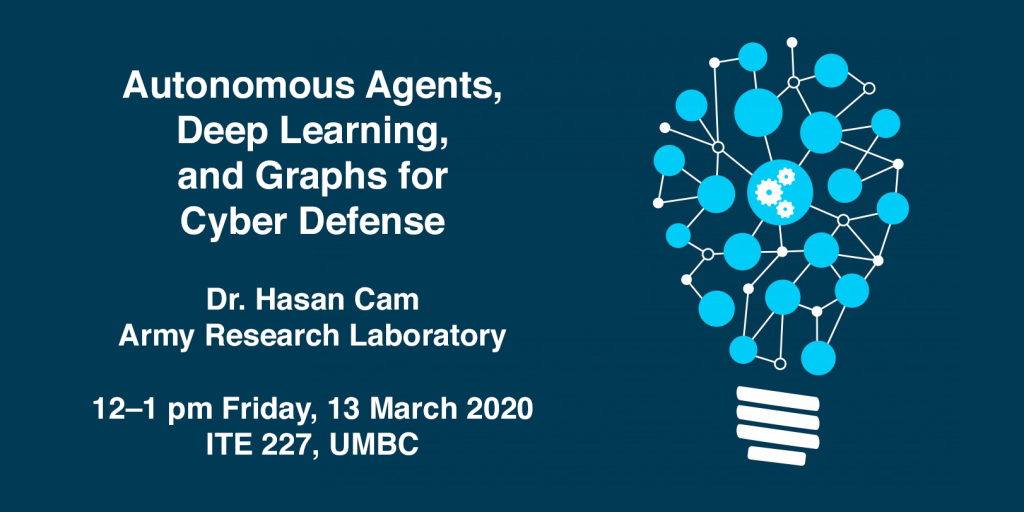
The UMBC Cyber Defense Lab presents
Autonomous Agents, Deep Learning,
and Graphs for Cyber Defense
Dr. Hasan Cam
Army Research Laboratory
12–1 pm Friday, 13 March 2020, ITE 227, UMBC
Cyber resilience usually refers to the ability of an entity to detect, respond to, and recover from cybersecurity attacks to the extent that the entity can continuously deliver the intended outcome despite their presence. Cybersecurity tools such as intrusion detection and prevention systems usually generate far too many alerts, indicators or log data, many of which do not have obvious security implications unless their correlations and temporal causality relationships are determined. In this talk, I will present methods to first estimate the infected and exploited assets and then take recovery and preventive actions using autonomous agents, deep learning, and graphs. Autonomous adversary and defender agents are designed such that the adversary agent can infer the adversary activities and intentions, based on cybersecurity observations and measurements, while the defender agent aims at estimating the best reactive and pro-active actions to protect assets and mitigate the adversary activities. The graph thinking and causality analysis of cyber infection and exploitation helps predict the infection states of some assets. This prediction data of infections is taken as input data by deep reinforcement learning to train agents for determining effective actions. This talk will discuss some preliminary results from the development of building an automated system of autonomous agents to provide cyber resiliency over networks.
Hasan Cam is a Computer Scientist at US Army Research Laboratory. He currently works on the projects involved with autonomous agents, active malware defense, cyber resiliency, and risk assessment over wired, mobile, and tactical networks. His research interests include cybersecurity, machine learning, data analytics, networks, algorithms, and parallel processing. He served as the government lead for the Risk area in Cyber Collaborative Research Alliance. He has previously worked as a faculty member in academia and a senior research scientist in the industry. He has served as an editorial member of two journals, a guest editor of two special issues of journals, an organizer of symposiums and workshops, and a Technical Program Committee Member in numerous conferences. He received a Ph.D. degree in electrical and computer engineering from Purdue University, and an M.S. degree in computer science from Polytechnic University, New York. He is a Senior Member of IEEE.
Host: Alan T. Sherman, *protected email*
Support for this event was provided in part by the National Science Foundation under SFS grant DGE-1753681. The UMBC Cyber Defense Lab meets biweekly Fridays. All meetings are open to the public. Upcoming CDL Meetings:
- Mar 27, Dan Yaroslaski, cybercommand
- Apr 10, Russ Fink (APL), ransomware
- Apr 24, Lance Hoffman (GWU), policy
- May 8, Jason Wells, law enforcement
- May 22, Spring SFS Meeting at UMBC, 9:30-2, ITE 456
The post talk: Autonomous Agents, Deep Learning, and Graphs for Cyber Defense, 12-1 Fri. 3/13 appeared first on Department of Computer Science and Electrical Engineering.
]]>
The UMBC Cyber Defense Lab presents Autonomous Agents, Deep Learning, and Graphs for Cyber Defense Dr. Hasan Cam Army Research Laboratory 12–1 pm Friday, 13 March 2020, ITE...
https://www.csee.umbc.edu/2020/03/talk-autonomous-agents-deep-learning-and-graphs-for-cyber-defense-12-1-fri-3-13/
https://beta.my.umbc.edu/api/v0/pixel/news/91103/guest@my.umbc.edu/4cdbd1c2dfd69476b76f6d340e202dc6/api/pixel
computer-engineering
computer-science
cybersecurity
events
news
talks
UMBC Cybersecurity Institute Group
https://beta.my.umbc.edu/groups/cybersecurity
https://assets3-beta.my.umbc.edu/system/shared/avatars/groups/000/000/485/196da6a7ec6f4c31eab2e474c17a9ab7/xsmall.png?1734891477
https://assets3-beta.my.umbc.edu/system/shared/avatars/groups/000/000/485/196da6a7ec6f4c31eab2e474c17a9ab7/original.png?1734891477
https://assets4-beta.my.umbc.edu/system/shared/avatars/groups/000/000/485/196da6a7ec6f4c31eab2e474c17a9ab7/xxlarge.png?1734891477
https://assets4-beta.my.umbc.edu/system/shared/avatars/groups/000/000/485/196da6a7ec6f4c31eab2e474c17a9ab7/xlarge.png?1734891477
https://assets2-beta.my.umbc.edu/system/shared/avatars/groups/000/000/485/196da6a7ec6f4c31eab2e474c17a9ab7/large.png?1734891477
https://assets3-beta.my.umbc.edu/system/shared/avatars/groups/000/000/485/196da6a7ec6f4c31eab2e474c17a9ab7/medium.png?1734891477
https://assets3-beta.my.umbc.edu/system/shared/avatars/groups/000/000/485/196da6a7ec6f4c31eab2e474c17a9ab7/small.png?1734891477
https://assets3-beta.my.umbc.edu/system/shared/avatars/groups/000/000/485/196da6a7ec6f4c31eab2e474c17a9ab7/xsmall.png?1734891477
https://assets3-beta.my.umbc.edu/system/shared/avatars/groups/000/000/485/196da6a7ec6f4c31eab2e474c17a9ab7/xxsmall.png?1734891477
UMBC Center for Cybersecurity
1
0
false
Sun, 08 Mar 2020 13:06:35 -0400
talk: Hardware Security Kernel for Managing Memory and Instruction Execution, 12pm Fri 2/28
The UMBC Cyber Defense Lab presents
Hardware Security Kernel for Managing Memory and Instruction Execution
Patrick Jungwirth, PhD
Computational and Information Sciences Directorate
Army Research Lab, Aberdeen Proving Ground, USA
12–1 pm Friday, 28 February 2020, ITE 227, UMBC
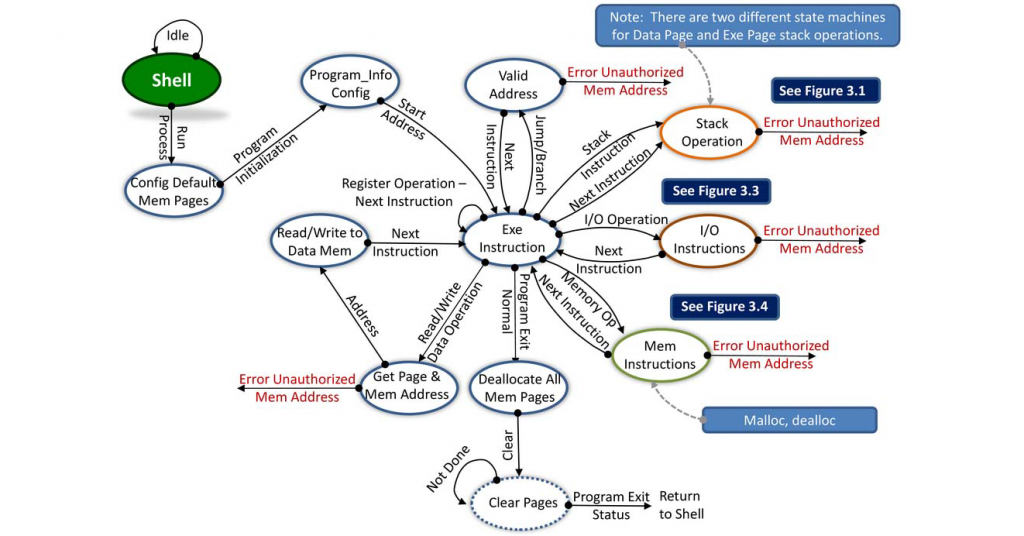
The cybersecurity world faces multiple attack vectors from hardware-level exploits, including cache bank malicious operations, rowhammer, Spectre, Meltdown, and Foreshadow attacks, and software-based attacks including buffer-overflows, et al. Hardware-level exploits bypass protections provided by software-based separation kernels. Current microprocessor execution pipelines are not designed to understand security: they treat malicious instructions, software bugs, and harmless code the same. This presentation explores adding a hardware-level security monitor below the execution pipeline [1,2,3].
[1] P. Jungwirth, et al.: “Hardware security kernel for cyber-defense,” Proc. SPIE 11013, Disruptive Technologies in Information Sciences II, 110130J, Baltimore 10 May 2019); https://doi.org/10.1117/12.2513224
[2] P. Jungwirth, and J. Ross: “Security Tag Fields and Control Flow Management,” IEEE SouthEastCon 2019, Huntsville, AL, April 2019.
[3] P. Jungwirth and D. Hahs: “Transfer Entropy Quantifies Information Leakage,” IEEE SouthEastCon 2019, Huntsville, AL, April 2019.
About the Speaker. Dr. Jungwirth is a computer architecture researcher at the Army Research Lab. Previously he worked for the Aviation and Missile, RDEC in Huntsville, AL. Currently, he is researching hardware state machines to provide simple operating system support (monitor) and control flow integrity in hardware. Dr. Jungwirth is co-inventor of the OS Friendly Microprocessor Architecture, US Patent 9122610. The OS Friendly Microprocessor Architecture includes hardware security features for an operating system and supports near single-cycle context switches in hardware. Email: *protected email*
Host: Alan T. Sherman, *protected email*
Support for this event was provided in part by the National Science Foundation under SFS grant DGE-1753681.
The UMBC Cyber Defense Lab meets biweekly Fridays. All meetings are open to the public.
Upcoming CDL Meetings:
Mar 13, Hasan Cam, autonomous agents
Mar 27, Dan Yaroslaski, cybercommand
Apr 10, Russ Fink (APL), ransomware
Apr 24, TBA
May 8, Jason Wells, law enforcement
May 22, Spring SFS Meeting at UMBC, 9:30am-2pm, ITE 456
The post talk: Hardware Security Kernel for Managing Memory and Instruction Execution, 12pm Fri 2/28 appeared first on Department of Computer Science and Electrical Engineering.
]]>
The UMBC Cyber Defense Lab presents Hardware Security Kernel for Managing Memory and Instruction Execution Patrick Jungwirth, PhD Computational and Information Sciences Directorate...
https://www.csee.umbc.edu/2020/02/talk-hardware-security-kernel-for-managing-memory-and-instruction-execution-12pm-fri-2-28/
https://beta.my.umbc.edu/api/v0/pixel/news/90623/guest@my.umbc.edu/73a2ef9aadd73410c584e89816bb8157/api/pixel
computer-engineering
computer-science
cybersecurity
events
talks
UMBC Cybersecurity Institute Group
https://beta.my.umbc.edu/groups/cybersecurity
https://assets3-beta.my.umbc.edu/system/shared/avatars/groups/000/000/485/196da6a7ec6f4c31eab2e474c17a9ab7/xsmall.png?1734891477
https://assets3-beta.my.umbc.edu/system/shared/avatars/groups/000/000/485/196da6a7ec6f4c31eab2e474c17a9ab7/original.png?1734891477
https://assets4-beta.my.umbc.edu/system/shared/avatars/groups/000/000/485/196da6a7ec6f4c31eab2e474c17a9ab7/xxlarge.png?1734891477
https://assets4-beta.my.umbc.edu/system/shared/avatars/groups/000/000/485/196da6a7ec6f4c31eab2e474c17a9ab7/xlarge.png?1734891477
https://assets2-beta.my.umbc.edu/system/shared/avatars/groups/000/000/485/196da6a7ec6f4c31eab2e474c17a9ab7/large.png?1734891477
https://assets3-beta.my.umbc.edu/system/shared/avatars/groups/000/000/485/196da6a7ec6f4c31eab2e474c17a9ab7/medium.png?1734891477
https://assets3-beta.my.umbc.edu/system/shared/avatars/groups/000/000/485/196da6a7ec6f4c31eab2e474c17a9ab7/small.png?1734891477
https://assets3-beta.my.umbc.edu/system/shared/avatars/groups/000/000/485/196da6a7ec6f4c31eab2e474c17a9ab7/xsmall.png?1734891477
https://assets3-beta.my.umbc.edu/system/shared/avatars/groups/000/000/485/196da6a7ec6f4c31eab2e474c17a9ab7/xxsmall.png?1734891477
UMBC Center for Cybersecurity
0
0
false
Thu, 20 Feb 2020 11:57:26 -0500
Shawn Blanton (CMU) on Designing Secure Hardware Systems
1-2 Friday February 7, ROOM CHANGE to 329 Commons
Lockheed Martin Distinguished Speaker Series
Designing Secure Hardware Systems
Shawn Blanton
Trustee Professor, Electrical and Computer Engineering, Carnegie Mellon University
1:00-2:00pm Friday 7 Feb. 2020, The Commons 329
On October 29, 2018, DARPA issued an RFI that stated: “This Request for Information (RFI) from the Defense Advanced Research Projects Agency’s (DARPA) Microsystems Technology Office (MTO) seeks information on technology, concepts, and approaches to support the integration of security capabilities directly into System on Chip (SoC) system design and to enable the autonomous integration and assembly of SoCs.
This RFI and the tens of millions of dollars that the US government has already invested in hardware security research and development is based on the fact that the fabrication of state-of-the-art electronics is now mostly overseas. With the recent announcement that GLOBALFOUNDRIES is going to stop all 7nm development, there is now only one company in the US that continues to pursue advanced semiconductors (Intel). Unfortunately, Intel does not have the same experience of making chips for third parties as does Samsung and (most importantly) TSMC (Taiwan Semiconductor Manufacturing Corporation). As a result, the US government believes it will be forced to fabricate advanced, sensitive electronics overseas in untrusted fabrication facilities. As a result, there is keen interest in design methodologies that mitigate reverse engineering, tampering, counterfeiting, etc.
In this talk, an overview of hardware security will be presented followed by a discussion on a concept called logic locking. This approach will be described and the “back and forth” that is now occurring in the research community involving: (i) vulnerability discovery and (ii) logic locking improvement.
Shawn Blanton is a professor in the Electrical and Computer Engineering Department at Carnegie Mellon University and Associate Director of the SYSU-CMU Joint Institute of Engineering (JIE). In 1995 he received his Ph.D. in Electrical Engineering and Computer Science from the University of Michigan, Ann Arbor. His research interests include various aspects of integrated system tests, testable design, and test methodology development. He has consulted for various companies and is the founder of TestWorks, a Carnegie Mellon University spinout focused on information extraction from IC test data. He is a Fellow of the IEEE and Senior Member of the ACM and served as the program chair for the 2011 International Test Conference.
]]>
Lockheed Martin Distinguished Speaker Series Designing Secure Hardware Systems Shawn Blanton Trustee Professor, Electrical and Computer Engineering, Carnegie Mellon University 1:00-2:00pm...
https://www.csee.umbc.edu/2020/02/talk-shawn-blanton-cmu-on-designing-secure-hardware-systems-1pm-fri-2-7/
https://beta.my.umbc.edu/api/v0/pixel/news/90163/guest@my.umbc.edu/0225d6c754c96d9a79a5157c6537aa8c/api/pixel
UMBC Cybersecurity Institute Group
https://beta.my.umbc.edu/groups/cybersecurity
https://assets3-beta.my.umbc.edu/system/shared/avatars/groups/000/000/485/196da6a7ec6f4c31eab2e474c17a9ab7/xsmall.png?1734891477
https://assets3-beta.my.umbc.edu/system/shared/avatars/groups/000/000/485/196da6a7ec6f4c31eab2e474c17a9ab7/original.png?1734891477
https://assets4-beta.my.umbc.edu/system/shared/avatars/groups/000/000/485/196da6a7ec6f4c31eab2e474c17a9ab7/xxlarge.png?1734891477
https://assets4-beta.my.umbc.edu/system/shared/avatars/groups/000/000/485/196da6a7ec6f4c31eab2e474c17a9ab7/xlarge.png?1734891477
https://assets2-beta.my.umbc.edu/system/shared/avatars/groups/000/000/485/196da6a7ec6f4c31eab2e474c17a9ab7/large.png?1734891477
https://assets3-beta.my.umbc.edu/system/shared/avatars/groups/000/000/485/196da6a7ec6f4c31eab2e474c17a9ab7/medium.png?1734891477
https://assets3-beta.my.umbc.edu/system/shared/avatars/groups/000/000/485/196da6a7ec6f4c31eab2e474c17a9ab7/small.png?1734891477
https://assets3-beta.my.umbc.edu/system/shared/avatars/groups/000/000/485/196da6a7ec6f4c31eab2e474c17a9ab7/xsmall.png?1734891477
https://assets3-beta.my.umbc.edu/system/shared/avatars/groups/000/000/485/196da6a7ec6f4c31eab2e474c17a9ab7/xxsmall.png?1734891477
UMBC Center for Cybersecurity
https://assets4-beta.my.umbc.edu/system/shared/thumbnails/news/000/090/163/914d3209065b41749413501a779d1cd6/xxlarge.jpg?1580931529
https://assets2-beta.my.umbc.edu/system/shared/thumbnails/news/000/090/163/914d3209065b41749413501a779d1cd6/xlarge.jpg?1580931529
https://assets1-beta.my.umbc.edu/system/shared/thumbnails/news/000/090/163/914d3209065b41749413501a779d1cd6/large.jpg?1580931529
https://assets1-beta.my.umbc.edu/system/shared/thumbnails/news/000/090/163/914d3209065b41749413501a779d1cd6/medium.jpg?1580931529
https://assets1-beta.my.umbc.edu/system/shared/thumbnails/news/000/090/163/914d3209065b41749413501a779d1cd6/small.jpg?1580931529
https://assets2-beta.my.umbc.edu/system/shared/thumbnails/news/000/090/163/914d3209065b41749413501a779d1cd6/xsmall.jpg?1580931529
https://assets3-beta.my.umbc.edu/system/shared/thumbnails/news/000/090/163/914d3209065b41749413501a779d1cd6/xxsmall.jpg?1580931529
0
0
true
Wed, 05 Feb 2020 14:44:58 -0500
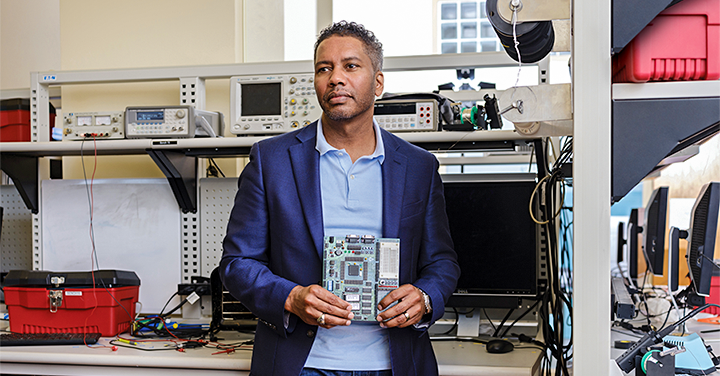
Lockheed Martin Distinguished Speaker Series
Designing Secure Hardware Systems
Shawn Blanton
Trustee Professor, Electrical and Computer Engineering
Carnegie Mellon University
1:00-2:00pm Friday 7 Feb. 2020
Commons 329, UMBC
University Center Ballroom
On October 29, 2018, DARPA issued an RFI that stated: “This Request for Information (RFI) from the Defense Advanced Research Projects Agency’s (DARPA) Microsystems Technology Office (MTO) seeks information on technology, concepts, and approaches to support the integration of security capabilities directly into System on Chip (SoC) system design and to enable the autonomous integration and assembly of SoCs.
This RFI and the tens of millions of dollars that the US government has already invested in hardware security research and development is based on the fact that the fabrication of state-of-the-art electronics is now mostly overseas. With the recent announcement that GLOBALFOUNDRIES is going to stop all 7nm development, there is now only one company in the US that continues to pursue advanced semiconductors (Intel). Unfortunately, Intel does not have the same experience of making chips for third parties as does Samsung and (most importantly) TSMC (Taiwan Semiconductor Manufacturing Corporation). As a result, the US government believes it will be forced to fabricate advanced, sensitive electronics overseas in untrusted fabrication facilities. As a result, there is keen interest in design methodologies that mitigate reverse engineering, tampering, counterfeiting, etc.
In this talk, an overview of hardware security will be presented followed by a discussion on a concept called logic locking. This approach will be described and the “back and forth” that is now occurring in the research community involving: (i) vulnerability discovery and (ii) logic locking improvement.
Shawn Blanton is a professor in the Electrical and Computer Engineering Department at Carnegie Mellon University and Associate Director of the SYSU-CMU Joint Institute of Engineering (JIE). In 1995 he received his Ph.D. in Electrical Engineering and Computer Science from the University of Michigan, Ann Arbor. His research interests include various aspects of integrated system tests, testable design, and test methodology development. He has consulted for various companies and is the founder of TestWorks, a Carnegie Mellon University spinout focused on information extraction from IC test data. He is a Fellow of the IEEE and Senior Member of the ACM and served as the program chair for the 2011 International Test Conference.
The post 🔴 talk: Shawn Blanton (CMU); Designing Secure Hardware Systems, 1pm Fri 2/7; Commons 329 appeared first on Department of Computer Science and Electrical Engineering.
]]>
Lockheed Martin Distinguished Speaker Series Designing Secure Hardware Systems Shawn Blanton Trustee Professor, Electrical and Computer Engineering Carnegie Mellon University...
https://www.csee.umbc.edu/2020/02/talk-shawn-blanton-cmu-on-designing-secure-hardware-systems-1pm-fri-2-7/
https://beta.my.umbc.edu/api/v0/pixel/news/90162/guest@my.umbc.edu/8136f036ce8ed4c55bc786ea98ddc9df/api/pixel
computer-engineering
computer-science
cybersecurity
data-science
electrical-engineering
events
news
UMBC Cybersecurity Institute Group
https://beta.my.umbc.edu/groups/cybersecurity
https://assets3-beta.my.umbc.edu/system/shared/avatars/groups/000/000/485/196da6a7ec6f4c31eab2e474c17a9ab7/xsmall.png?1734891477
https://assets3-beta.my.umbc.edu/system/shared/avatars/groups/000/000/485/196da6a7ec6f4c31eab2e474c17a9ab7/original.png?1734891477
https://assets4-beta.my.umbc.edu/system/shared/avatars/groups/000/000/485/196da6a7ec6f4c31eab2e474c17a9ab7/xxlarge.png?1734891477
https://assets4-beta.my.umbc.edu/system/shared/avatars/groups/000/000/485/196da6a7ec6f4c31eab2e474c17a9ab7/xlarge.png?1734891477
https://assets2-beta.my.umbc.edu/system/shared/avatars/groups/000/000/485/196da6a7ec6f4c31eab2e474c17a9ab7/large.png?1734891477
https://assets3-beta.my.umbc.edu/system/shared/avatars/groups/000/000/485/196da6a7ec6f4c31eab2e474c17a9ab7/medium.png?1734891477
https://assets3-beta.my.umbc.edu/system/shared/avatars/groups/000/000/485/196da6a7ec6f4c31eab2e474c17a9ab7/small.png?1734891477
https://assets3-beta.my.umbc.edu/system/shared/avatars/groups/000/000/485/196da6a7ec6f4c31eab2e474c17a9ab7/xsmall.png?1734891477
https://assets3-beta.my.umbc.edu/system/shared/avatars/groups/000/000/485/196da6a7ec6f4c31eab2e474c17a9ab7/xxsmall.png?1734891477
UMBC Center for Cybersecurity
0
0
false
Wed, 05 Feb 2020 09:56:00 -0500
Wed, 05 Feb 2020 09:56:00 -0500
JHU/APL CIRCUIT internship program information session, 3pm Fri 1/31
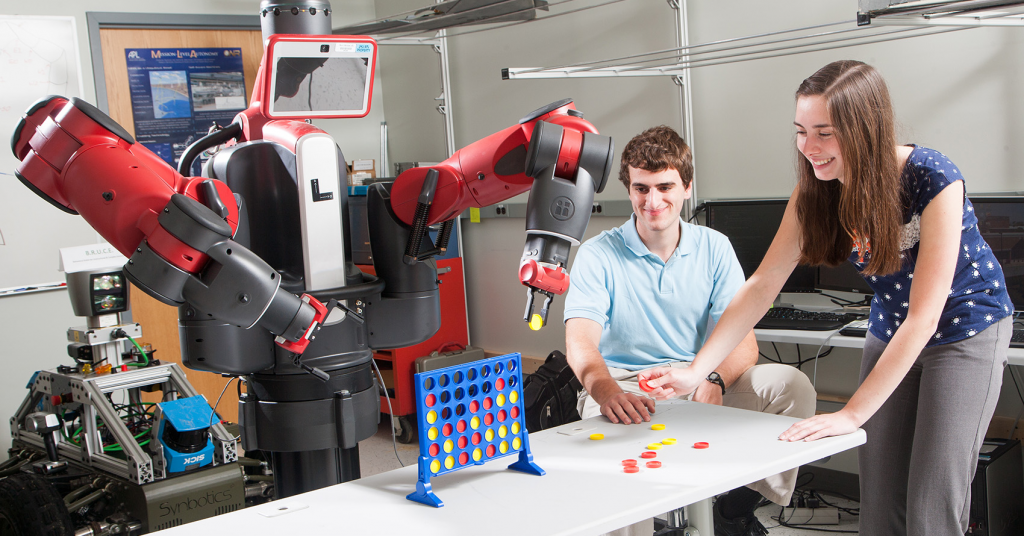
JHU/APL CIRCUIT internship program information session
3:00-4:00 pm Friday, 31 January 2020
ITE 459, UMBC
There will be a special information session on the JHU/APL CIRCUIT internship program from 3:00 pm to 4:30 pm on Friday, 31 January 2020 in room ITE 459.
This session is for undergraduates who want to spend their summer (June through August) getting paid to do mentored research at the Johns Hopkins University Applied Physics Lab. The research areas include AI, data science, cybersecurity, precision medicine, and planetary exploration.
Interns selected for the program will do mission-oriented research on-site at JHU/APL in Laurel MD mentored by STEM professionals. There will also be year-round opportunities for engagement and enrichment. The selection for an internship will be based on a combination of potential, need and commitment.
Email *protected email* or *protected email* with questions.
The post JHU/APL CIRCUIT internship program information session, 3pm Fri 1/31 appeared first on Department of Computer Science and Electrical Engineering.
]]>
JHU/APL CIRCUIT internship program information session 3:00-4:00 pm Friday, 31 January 2020 ITE 459, UMBC There will be a special information session on the JHU/APL CIRCUIT...
https://www.csee.umbc.edu/2020/01/jhu-apl-circuit-internship-program-information-session-3pm-fri-1-31/
https://beta.my.umbc.edu/api/v0/pixel/news/89804/guest@my.umbc.edu/78328c3f0e19647545384211b4aa76f6/api/pixel
ai
computer-engineering
computer-science
cybersecurity
data-science
machine-learning
news
research
students
uncategorized
undergraduate
UMBC Cybersecurity Institute Group
https://beta.my.umbc.edu/groups/cybersecurity
https://assets3-beta.my.umbc.edu/system/shared/avatars/groups/000/000/485/196da6a7ec6f4c31eab2e474c17a9ab7/xsmall.png?1734891477
https://assets3-beta.my.umbc.edu/system/shared/avatars/groups/000/000/485/196da6a7ec6f4c31eab2e474c17a9ab7/original.png?1734891477
https://assets4-beta.my.umbc.edu/system/shared/avatars/groups/000/000/485/196da6a7ec6f4c31eab2e474c17a9ab7/xxlarge.png?1734891477
https://assets4-beta.my.umbc.edu/system/shared/avatars/groups/000/000/485/196da6a7ec6f4c31eab2e474c17a9ab7/xlarge.png?1734891477
https://assets2-beta.my.umbc.edu/system/shared/avatars/groups/000/000/485/196da6a7ec6f4c31eab2e474c17a9ab7/large.png?1734891477
https://assets3-beta.my.umbc.edu/system/shared/avatars/groups/000/000/485/196da6a7ec6f4c31eab2e474c17a9ab7/medium.png?1734891477
https://assets3-beta.my.umbc.edu/system/shared/avatars/groups/000/000/485/196da6a7ec6f4c31eab2e474c17a9ab7/small.png?1734891477
https://assets3-beta.my.umbc.edu/system/shared/avatars/groups/000/000/485/196da6a7ec6f4c31eab2e474c17a9ab7/xsmall.png?1734891477
https://assets3-beta.my.umbc.edu/system/shared/avatars/groups/000/000/485/196da6a7ec6f4c31eab2e474c17a9ab7/xxsmall.png?1734891477
UMBC Center for Cybersecurity
1
0
false
Wed, 22 Jan 2020 16:05:36 -0500
Wed, 01 Jan 2020 16:05:36 -0500
UMBC Cyber Dawgs are named CyberForce national champions
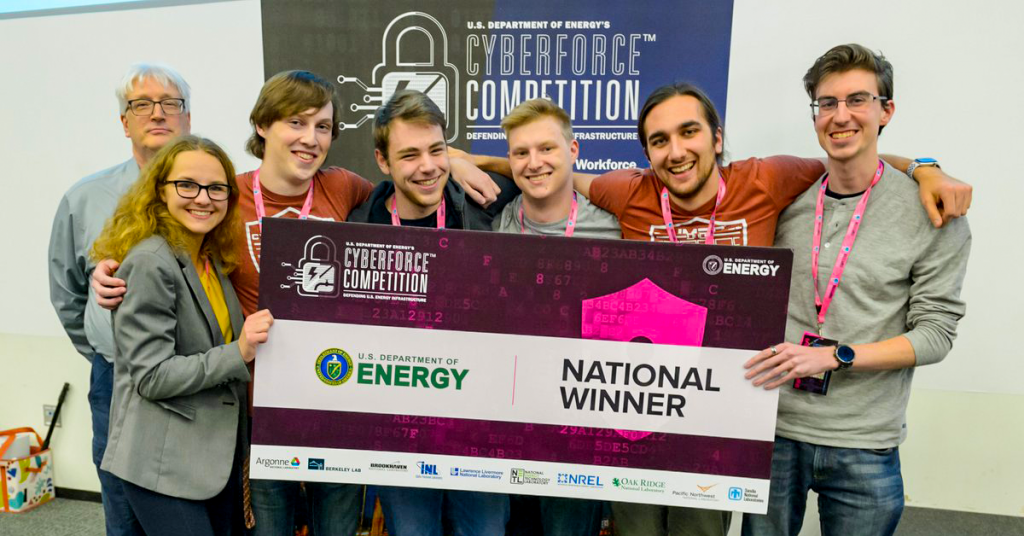 The Cyber Dawgs at the CyberForce competition. From left, Charles Nicholas, Anna Staats, Drew Barrett, Grant Spencer, Cyrus Bonyadi, and Seamus Burke. Photo courtesy of Argonne National Lab.
UMBC Cyber Dawgs are named CyberForce national champions
UMBC’s Cyber Defense Team, known as the Cyber Dawgs, has emerged the national champion team in the U.S. Department of Energy’s fifth annual CyberForce Competition. The Cyber Dawgs earned first place overall out of more than 100 teams from universities across the country.
Ten national laboratories hosted competing teams this year, November 15 – 16. UMBC competed at the Argonne National Laboratory near Chicago, Illinois, while other teams traveled to sites like the Pacific Northwest National Laboratory in Washington state and Oak Ridge National Laboratory in Tennessee. Competing teams hailed from a broad range of institutions, including Virginia Tech, Carnegie Mellon, Georgia Tech, Texas A&M and the U.S. Air Force Academy.
The competition tasks students with defending critical energy infrastructure during simulated cyberattacks. The scenarios are designed to be realistic, focused on water and power systems and including real-world constraints, such as insufficient budget for system upkeep and limited information on system needs. During the competition, “red teams,” including industry professionals, attack the system, while the students work to ensure that the infrastructure is available to their customers, or “green teams,” who test system usability.
The teams receive points based on how successfully they address attacks, while still allowing users to access the infrastructure they need. The teams are also awarded points for innovative defense tactics and ideas. This year’s competition saw several leading teams with neck-and-neck scores until the final round, when UMBC’s Cyber Dawgs pulled ahead for the victory.
The competition offers students a unique opportunity to develop their cybersecurity skills in relation to critical infrastructure, and have hands-on experience in a realistic cyberattack situation.
“The CyberForce competition is the most unique of our annual events, allowing us to experiment with network configurations to defend an industrial control system against adversaries while playing the roles of an IT organization,” explains RJ Joyce ’18, M.S. ’20, computer science, a member of the winning team. “The hard work, dedication, and creativity that each member brought to the team lifted us from a regional win last year to a national win this year.”
In addition to Joyce, last weekend’s winning team included Anna Staats ’20, computer science; Drew Barrett ’20, computer science; Grant Spencer ’20, computer science; Cyrus Bonyadi, Ph.D. ’23, computer science; and Seamus Burke ’20, computer science.
“The team’s second national championship in three years shows the enthusiasm, grit, and tenacity of our students in demonstrating their technical cyber expertise in a competitive arena,” says Rick Forno, senior lecturer of computer science and assistant director of UMBC’s Center for Cybersecurity.
Forno advises the Cyber Dawgs with Charles Nicholas, professor of computer science and electrical engineering. “It’s an awesome thing not just for the team and university,” he says, “but for each competitor individually, as they prepare to enter the cybersecurity workforce after graduation.”
UMBC students have a strong record in state and national competition. In 2018, UMBC computer science and information systems students won the top prize at the Maryland Cyber Challenge. A year earlier, the UMBC Cyber Dawgs won the National Collegiate Cyber Defense Competition.
Adapted from a UMBC News article by Megan Hanks.
The post UMBC Cyber Dawgs are named CyberForce national champions appeared first on Department of Computer Science and Electrical Engineering.
]]>
The Cyber Dawgs at the CyberForce competition. From left, Charles Nicholas, Anna Staats, Drew Barrett, Grant Spencer, Cyrus Bonyadi, and Seamus Burke. Photo courtesy of Argonne National Lab. UMBC...
https://www.csee.umbc.edu/2019/11/umbc-cyber-dawgs-are-named-cyberforce-national-champions/
https://beta.my.umbc.edu/api/v0/pixel/news/88626/guest@my.umbc.edu/c932c805fd9921bb2a7c6733824198ca/api/pixel
csee
cybersecurity
news
students
UMBC Cybersecurity Institute Group
https://beta.my.umbc.edu/groups/cybersecurity
https://assets3-beta.my.umbc.edu/system/shared/avatars/groups/000/000/485/196da6a7ec6f4c31eab2e474c17a9ab7/xsmall.png?1734891477
https://assets3-beta.my.umbc.edu/system/shared/avatars/groups/000/000/485/196da6a7ec6f4c31eab2e474c17a9ab7/original.png?1734891477
https://assets4-beta.my.umbc.edu/system/shared/avatars/groups/000/000/485/196da6a7ec6f4c31eab2e474c17a9ab7/xxlarge.png?1734891477
https://assets4-beta.my.umbc.edu/system/shared/avatars/groups/000/000/485/196da6a7ec6f4c31eab2e474c17a9ab7/xlarge.png?1734891477
https://assets2-beta.my.umbc.edu/system/shared/avatars/groups/000/000/485/196da6a7ec6f4c31eab2e474c17a9ab7/large.png?1734891477
https://assets3-beta.my.umbc.edu/system/shared/avatars/groups/000/000/485/196da6a7ec6f4c31eab2e474c17a9ab7/medium.png?1734891477
https://assets3-beta.my.umbc.edu/system/shared/avatars/groups/000/000/485/196da6a7ec6f4c31eab2e474c17a9ab7/small.png?1734891477
https://assets3-beta.my.umbc.edu/system/shared/avatars/groups/000/000/485/196da6a7ec6f4c31eab2e474c17a9ab7/xsmall.png?1734891477
https://assets3-beta.my.umbc.edu/system/shared/avatars/groups/000/000/485/196da6a7ec6f4c31eab2e474c17a9ab7/xxsmall.png?1734891477
UMBC Center for Cybersecurity
2
0
false
Tue, 19 Nov 2019 15:38:07 -0500
UMBC Cyberdawgs win first place in the 2019 DOE CyberForce Competition
UMBC’s CyberDawgs win first place in the 2019 DOE Cyberforce CompetitionCyberdawgs place first out of 105 teams in DOE’s 5th CyberForce Competition
Congratulations to the UMBC CyberDawgs team for their first place finish in a field of 105 collegiate teams in the U.S. Department of Energy’s Fifth Annual CyberForce Competition. The distributed event was held at ten of the DOE’s National Laboratories and challenged 105 teams to defend a simulated energy infrastructure from cyber-attacks.
The took place on November 15 and 16 with the goal of bolstering the U.S. cybersecurity workforce by extending skill-building opportunities for students, offering memorable hands-on experiences and highlighting the crucial role this field plays in preserving national energy security. The Cyberdawgs participated at the Argonne National Laboratory site in Illinois.
During the competition, teams competed to defend their simulated infrastructure from attacks by adversarial “red teams” composed of industry professionals, all while maintaining service for their “green team” customers, played by volunteers. The scenarios included simulated industrial control system components, real-world anomalies and constraints, and interaction with users of the systems.
Teams were scored on their success in protecting the infrastructure against attacks while ensuring the usability of the system, with additional points awarded for innovative ideas and defenses.
The team that competed in this year’s competition was chosen from members of the CyberDawgs student group, composed of students from a variety of majors who share a common interest in computer and network security. No prior experience is required to join and any UMBC students who want to learn more about cybersecurity and learn new skills in the field are encouraged to subscribe to its mailing list and attend meetings.
The CyberDawgs group is advised by CSEE faculty Charles Nicholas and Richard Forno.
The post UMBC Cyberdawgs win first place in the 2019 DOE CyberForce Competition appeared first on Department of Computer Science and Electrical Engineering.
]]>
UMBC’s CyberDawgs win first place in the 2019 DOE Cyberforce Competition Cyberdawgs place first out of 105 teams in DOE’s 5th CyberForce Competition Congratulations to the UMBC CyberDawgs...
https://www.csee.umbc.edu/2019/11/umbc-cyberdawgs-win-first-place-2019-doe-cyberforce-competition-argonne-cybersecurity-security/
https://beta.my.umbc.edu/api/v0/pixel/news/88544/guest@my.umbc.edu/ee7b8df122690fe7ad2794a05a16674d/api/pixel
csee
cybersecurity
news
students
uncategorized
undergraduate
UMBC Cybersecurity Institute Group
https://beta.my.umbc.edu/groups/cybersecurity
https://assets3-beta.my.umbc.edu/system/shared/avatars/groups/000/000/485/196da6a7ec6f4c31eab2e474c17a9ab7/xsmall.png?1734891477
https://assets3-beta.my.umbc.edu/system/shared/avatars/groups/000/000/485/196da6a7ec6f4c31eab2e474c17a9ab7/original.png?1734891477
https://assets4-beta.my.umbc.edu/system/shared/avatars/groups/000/000/485/196da6a7ec6f4c31eab2e474c17a9ab7/xxlarge.png?1734891477
https://assets4-beta.my.umbc.edu/system/shared/avatars/groups/000/000/485/196da6a7ec6f4c31eab2e474c17a9ab7/xlarge.png?1734891477
https://assets2-beta.my.umbc.edu/system/shared/avatars/groups/000/000/485/196da6a7ec6f4c31eab2e474c17a9ab7/large.png?1734891477
https://assets3-beta.my.umbc.edu/system/shared/avatars/groups/000/000/485/196da6a7ec6f4c31eab2e474c17a9ab7/medium.png?1734891477
https://assets3-beta.my.umbc.edu/system/shared/avatars/groups/000/000/485/196da6a7ec6f4c31eab2e474c17a9ab7/small.png?1734891477
https://assets3-beta.my.umbc.edu/system/shared/avatars/groups/000/000/485/196da6a7ec6f4c31eab2e474c17a9ab7/xsmall.png?1734891477
https://assets3-beta.my.umbc.edu/system/shared/avatars/groups/000/000/485/196da6a7ec6f4c31eab2e474c17a9ab7/xxsmall.png?1734891477
UMBC Center for Cybersecurity
8
0
false
Sun, 17 Nov 2019 17:25:26 -0500