Talk: Sparse models for integrative analysis of fMRI and genetic data, 6/13

CSEE Talk
Sparse models for integrative analysis
of fMRI and genetic data
Dr. Yu-Ping Wang
Biomedical Engineering Department
Biostatistics & Bioinformatics Department
Tulane University
2pm Thursday, 13 June 2013, ITE 346
In the last few years, the combination of imaging and genetic approaches has become an emerging area, where multiple complementary data are utilized for systematic and comprehensive analysis of a patient. While imaging approaches such as functional MRI (fMRI) continue to be major diagnostic tools for extracting structural and functional patterns at the tissue and organ levels, genetic techniques such as SNPs, microarray gene expression and the emerging next generation sequencing (NGS) add new dimensions by revealing structural variations at genomic level. The integration of these multiscale and multimodality approaches has been promising for complex disease diagnosis and prognosis. However, the combination of these data has been challenging because these data are of different nature, format, organization and structure are produced by different genomic platforms at multiple scales; each of these imaging data is currently still analyzed separately and the results are interpreted independently. Being a powerful approach recently developed in statistics and signal processing, sparse data representations or compressive sensing provides a promising way to address these challenges facing multiscale genomic imaging informatics. In this talk, I will present our recent research on the development of sparse models such as sparse canonical correlation analysis (sCCA) and joint sparse representation of multi-modal data that can better capture the interrelations between these data. We show latest examples of using these models for integrative analysis of SNP and fMRI to identify biomarkers, and use the joint information for the identification of schizophrenia diseases.
Dr. Yu-Ping Wang received the BS degree in applied mathematics from Tianjin University, China, in 1990, and the MS degree in computational mathematics and the PhD degree in communications and electronic systems from Xi'an Jiaotong University, China, in 1993 and 1996, respectively. After his graduation, he had visiting positions at the Center for Wavelets, Approximation and Information Processing of the National University of Singapore and Washington University Medical School in St. Louis. From 2000 to 2003, he worked as a senior research engineer at Perceptive Scientific Instruments, Inc., and then Advanced Digital Imaging Research, LLC, Houston, Texas. In the fall of 2003, he returned to academia as an assistant professor of computer science and electrical engineering at the University of Missouri-Kansas City. He is currently an Associate Professor of Biomedical Engineering and Biostatistics & Bioinformatics at Tulane University School of Science and Engineering & School of Public Health and Tropical Medicine. He is also a member of Tulane Center of Bioinformatics and Genomics and Tulane Cancer Center. His research interests lie in the interdisciplinary biomedical imaging and bioinformatics areas, where he has over 100 publications. He has served on numerous program committees and NSF/NIH review panels, and was a member of Machine Learning for Signal Processing technical committee of the IEEE Signal Processing Society.
]]>
CSEE Talk Sparse models for integrative analysis of fMRI and genetic data Dr. Yu-Ping Wang Biomedical Engineering Department Biostatistics & Bioinformatics Department Tulane...
http://www.csee.umbc.edu/2013/06/talk-sparse-models-for-integrative-analysis-of-fmri-and-genetic-data-613/
https://beta.my.umbc.edu/api/v0/pixel/news/31048/guest@my.umbc.edu/0950fddb94afaf13f48ca92bbcdda5b0/api/pixel
news
research
talks
Computer Science and Electrical Engineering
https://beta.my.umbc.edu/groups/csee
https://assets3-beta.my.umbc.edu/system/shared/avatars/groups/000/000/099/d117dca133c64bf78a4b7696dd007189/xsmall.png?1314043393
https://assets1-beta.my.umbc.edu/system/shared/avatars/groups/000/000/099/d117dca133c64bf78a4b7696dd007189/original.png?1314043393
https://assets1-beta.my.umbc.edu/system/shared/avatars/groups/000/000/099/d117dca133c64bf78a4b7696dd007189/xxlarge.png?1314043393
https://assets4-beta.my.umbc.edu/system/shared/avatars/groups/000/000/099/d117dca133c64bf78a4b7696dd007189/xlarge.png?1314043393
https://assets3-beta.my.umbc.edu/system/shared/avatars/groups/000/000/099/d117dca133c64bf78a4b7696dd007189/large.png?1314043393
https://assets1-beta.my.umbc.edu/system/shared/avatars/groups/000/000/099/d117dca133c64bf78a4b7696dd007189/medium.png?1314043393
https://assets2-beta.my.umbc.edu/system/shared/avatars/groups/000/000/099/d117dca133c64bf78a4b7696dd007189/small.png?1314043393
https://assets3-beta.my.umbc.edu/system/shared/avatars/groups/000/000/099/d117dca133c64bf78a4b7696dd007189/xsmall.png?1314043393
https://assets3-beta.my.umbc.edu/system/shared/avatars/groups/000/000/099/d117dca133c64bf78a4b7696dd007189/xxsmall.png?1314043393
Computer Science and Electrical Engineering
0
0
true
Mon, 10 Jun 2013 13:43:09 -0400
Mon, 10 Jun 2013 13:43:09 -0400
Tutorials by Center for Hybrid Multicore Productivity Research students,1-5 Wed 6/12

UMBC's Center for Hybrid Multicore Productivity Research, an NSF Industry & University Cooperative Research Center is holding its Industry Advisory Board meeting at UMBC 12-14 June. Students from UMBC and UCSD will present tutorials on a number of the technologies underlying ongoing CHMPR projects in a session from 1:00-5:00 on Wednesday June 12 in ITE 456. The tutorial session is free and open to the public.
- 3-D Printing – Timothy Blattner (UMBC)
- Semantic Table Information – Varish Mulwad (UMBC)
- Social Media Elastic Search – Oleg Aulov (UMBC)
- Machine Learning for Social Media – Han Dong (UMBC)
- Virtual World Interactions – Erik Hill (UCSD)
]]>
UMBC's Center for Hybrid Multicore Productivity Research, an NSF Industry & University Cooperative Research Center is holding its Industry Advisory Board meeting at UMBC 12-14 June. Students...
http://www.csee.umbc.edu/2013/06/tutorials-by-center-for-hybrid-multicore-productivity-research-students1-5-wed-612/
https://beta.my.umbc.edu/api/v0/pixel/news/31027/guest@my.umbc.edu/f60c2f6e718d1b730b4c95ea2820f701/api/pixel
news
research
talks
Computer Science and Electrical Engineering
https://beta.my.umbc.edu/groups/csee
https://assets3-beta.my.umbc.edu/system/shared/avatars/groups/000/000/099/d117dca133c64bf78a4b7696dd007189/xsmall.png?1314043393
https://assets1-beta.my.umbc.edu/system/shared/avatars/groups/000/000/099/d117dca133c64bf78a4b7696dd007189/original.png?1314043393
https://assets1-beta.my.umbc.edu/system/shared/avatars/groups/000/000/099/d117dca133c64bf78a4b7696dd007189/xxlarge.png?1314043393
https://assets4-beta.my.umbc.edu/system/shared/avatars/groups/000/000/099/d117dca133c64bf78a4b7696dd007189/xlarge.png?1314043393
https://assets3-beta.my.umbc.edu/system/shared/avatars/groups/000/000/099/d117dca133c64bf78a4b7696dd007189/large.png?1314043393
https://assets1-beta.my.umbc.edu/system/shared/avatars/groups/000/000/099/d117dca133c64bf78a4b7696dd007189/medium.png?1314043393
https://assets2-beta.my.umbc.edu/system/shared/avatars/groups/000/000/099/d117dca133c64bf78a4b7696dd007189/small.png?1314043393
https://assets3-beta.my.umbc.edu/system/shared/avatars/groups/000/000/099/d117dca133c64bf78a4b7696dd007189/xsmall.png?1314043393
https://assets3-beta.my.umbc.edu/system/shared/avatars/groups/000/000/099/d117dca133c64bf78a4b7696dd007189/xxsmall.png?1314043393
Computer Science and Electrical Engineering
1
0
true
Mon, 10 Jun 2013 09:36:11 -0400
Mon, 10 Jun 2013 09:36:11 -0400
Facebook Scholarships to attend 2013 Grace Hopper Computing Conference
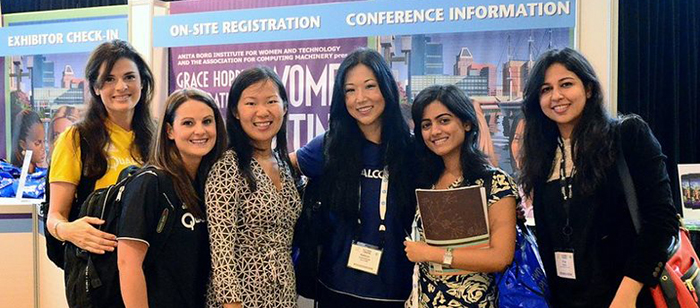
Facebook has scholarships for students to attend the 2013 Grace Hopper Celebration of Women in Computing Conference, which will be held in the first week of October in Minneapolis.
The Facebook Grace Hopper Scholarships will provide 25 students with an all-expenses paid, six-day trip to the 2013 Grace Hopper Conference. In addition to attending conference mentoring, networking, and career development events, the 25 scholarship winners will meet with Facebook director of engineering Jocelyn Goldfein, see the sights of Minneapolis before the conference, and receive a $200 meal stipend.
The scholarships are open to full-time undergraduate or graduate students who are pursuing a degree program in computer science, computer engineering, or a related technical major.
To apply fill out the online application form, attach your résumé and complete a short coding challenge. Applications must be completed by Sunday, June 16, 2013. Award recipients will be notified by June 21.
]]>
Facebook has scholarships for students to attend the 2013 Grace Hopper Celebration of Women in Computing Conference, which will be held in the first week of October in Minneapolis. The Facebook...
http://www.csee.umbc.edu/2013/06/facebook-scholarships-to-attend-2013-grace-hopper-computing-conference/
https://beta.my.umbc.edu/api/v0/pixel/news/30952/guest@my.umbc.edu/b9c9ca1df5f866f24dee3e15611f9c35/api/pixel
cwit
news
students
Computer Science and Electrical Engineering
https://beta.my.umbc.edu/groups/csee
https://assets3-beta.my.umbc.edu/system/shared/avatars/groups/000/000/099/d117dca133c64bf78a4b7696dd007189/xsmall.png?1314043393
https://assets1-beta.my.umbc.edu/system/shared/avatars/groups/000/000/099/d117dca133c64bf78a4b7696dd007189/original.png?1314043393
https://assets1-beta.my.umbc.edu/system/shared/avatars/groups/000/000/099/d117dca133c64bf78a4b7696dd007189/xxlarge.png?1314043393
https://assets4-beta.my.umbc.edu/system/shared/avatars/groups/000/000/099/d117dca133c64bf78a4b7696dd007189/xlarge.png?1314043393
https://assets3-beta.my.umbc.edu/system/shared/avatars/groups/000/000/099/d117dca133c64bf78a4b7696dd007189/large.png?1314043393
https://assets1-beta.my.umbc.edu/system/shared/avatars/groups/000/000/099/d117dca133c64bf78a4b7696dd007189/medium.png?1314043393
https://assets2-beta.my.umbc.edu/system/shared/avatars/groups/000/000/099/d117dca133c64bf78a4b7696dd007189/small.png?1314043393
https://assets3-beta.my.umbc.edu/system/shared/avatars/groups/000/000/099/d117dca133c64bf78a4b7696dd007189/xsmall.png?1314043393
https://assets3-beta.my.umbc.edu/system/shared/avatars/groups/000/000/099/d117dca133c64bf78a4b7696dd007189/xxsmall.png?1314043393
Computer Science and Electrical Engineering
6
0
true
Fri, 07 Jun 2013 00:07:46 -0400
Fri, 07 Jun 2013 00:07:46 -0400
CSEE professor Dr. Tulay Adali receives USM Regents’ Faculty Award for Scholarship/Research/Creative Activity
 More than twenty years ago, Tulay Adali stepped onto UMBC’s campus as an assistant professor right after receiving her PhD. Much has changed since then.
Now a professor of Computer Science and Electrical Engineering, Dr. Adali runs a highly active Machine Learning for Signal Processing Lab (MLSPLab). Her recent appointment as an IEEE Signal Processing Society Distinguished Lecturer has prompted invitations to speak around the world about her research in the theory and development of algorithms for signal processing. This March, Dr. Adali was awarded the University System of Maryland Regents’ Faculty Award for Scholarship, Research, or Creative Activity.
Her secret to success?
“Planning or thinking about the future is not something I do,” said Dr. Adali in her acceptance speech at the Presidential Faculty and Staff Ceremony where she was honored in March. “I rather make sure I enjoy what I do and have fun along the way.” Her technique seems to be paying off. For proof, just take a look at the recognition received by her research in two distinct areas: the development of powerful datadriven methods, and the analysis and fusion of medical imaging data. In 2008, Dr. Adali was elected a fellow of the American Institute for Medical and Biological Engineering (AIMBE). In 2009, the Institute of Electrical and Electronics Engineering (IEEE) elected her a fellow for her work on the theory and practice of statistical signal processing.
In 2011, a paper by Dr. Adali and colleagues titled “Complex ICA using nonlinear functions” received the 2010 IEEE Signal Processing Society Best Paper Award. The work develops a complete framework, allowing for the processing of complex data in a manner similar to the realvalued case, eliminating the need to make many of the simplifying assumptions commonly employed. The results of this NSFfunded study led to the development of a complete datadriven framework that enables joint use of sample dependence and higherorderstatistics.
Dr. Adali’s work in medical image analysis and fusion has also gained notoriety. She has been working on methods for datadriven analysis of medical imaging data, and for the analysis of functional magnetic resonance imaging (fMRI) data for understanding brain function. She and her colleagues discovered that fusing more than two modalities increases the sensitivity and specificity of the analyses of fMRI, electroencephalography (EEG) and structural MRI data. In March 2011, an IEEE Spectrum article mentioned her success in obtaining very high classification accuracy in identifying mental disorders in patients. Then in April 2011, in addition to her ongoing projects funded by the NSF, NIH, and the Mind Research Network, she received a grant from Michelin Research to study irregular wear detection in tires, where the new data-driven framework is applied to a completely new problem domain.
These notable research advances made Dr. Adali stand out as a nominee for this year’s Regents’ Faculty Award for Scholarship, Research, or Creative Activity. It is the highest honor given by the Board of Regents to faculty members, given to faculty members who have gone above and beyond the call of duty. This year, Dr. Adali joins only three other USM faculty members who were recognized for their exceptional research contributions. “Dr. Adali has been steadily building her research career and I am not surprised by the award since her research is remarkable,” says Dr. Carter, CSEE Department Chair. “I see her continuing to grow her research in areas of signal processing for medical applications and becoming a key UMBC faculty member
]]>
More than twenty years ago, Tulay Adali stepped onto UMBC’s campus as an assistant professor right after receiving her PhD. Much has changed since then. Now a professor of Computer Science and...
http://www.csee.umbc.edu/2013/06/csee-professor-dr-tulay-adali-receives-usm-regents-faculty-award-for-scholarshipresearchcreative-activity/
https://beta.my.umbc.edu/api/v0/pixel/news/30941/guest@my.umbc.edu/e253083a70039a39b9fcd21fc9fe7913/api/pixel
electrical-engineering
faculty-and-staff
news
research
research-awards
Computer Science and Electrical Engineering
https://beta.my.umbc.edu/groups/csee
https://assets3-beta.my.umbc.edu/system/shared/avatars/groups/000/000/099/d117dca133c64bf78a4b7696dd007189/xsmall.png?1314043393
https://assets1-beta.my.umbc.edu/system/shared/avatars/groups/000/000/099/d117dca133c64bf78a4b7696dd007189/original.png?1314043393
https://assets1-beta.my.umbc.edu/system/shared/avatars/groups/000/000/099/d117dca133c64bf78a4b7696dd007189/xxlarge.png?1314043393
https://assets4-beta.my.umbc.edu/system/shared/avatars/groups/000/000/099/d117dca133c64bf78a4b7696dd007189/xlarge.png?1314043393
https://assets3-beta.my.umbc.edu/system/shared/avatars/groups/000/000/099/d117dca133c64bf78a4b7696dd007189/large.png?1314043393
https://assets1-beta.my.umbc.edu/system/shared/avatars/groups/000/000/099/d117dca133c64bf78a4b7696dd007189/medium.png?1314043393
https://assets2-beta.my.umbc.edu/system/shared/avatars/groups/000/000/099/d117dca133c64bf78a4b7696dd007189/small.png?1314043393
https://assets3-beta.my.umbc.edu/system/shared/avatars/groups/000/000/099/d117dca133c64bf78a4b7696dd007189/xsmall.png?1314043393
https://assets3-beta.my.umbc.edu/system/shared/avatars/groups/000/000/099/d117dca133c64bf78a4b7696dd007189/xxsmall.png?1314043393
Computer Science and Electrical Engineering
3
0
true
Thu, 06 Jun 2013 19:43:17 -0400
Get The Most Out of your Summer Internship
Ten Tips
So you found an internship, Now what?
Full article found HERE.
First, it should be noted that internship
opportunities come in a variety of flavors. Some are part-time; some
are full-time. Some are paid and some (most) are unpaid. You might be
helping out in the office, doing “whatever”–like copying, delivering
documents, or data entry. Some are resume builders; some are not, but
bring in some spending cash while in college. Or you might be doing
more specific meaningful work such as analyzing samples in a lab,
updating web content, or helping out on a technical report.
So, beyond the paycheck (if any), the following are my 10 target behaviors and outcomes:
(1) Create a positive first and ongoing impression:
The end game here is to gain a professional reference, obtain a letter
of recommendation or blurb on LinkedIn, and have a quality resume
entry. You earn these through punctuality and presenting a professional
appearance each day. Be careful what you wear. Yes, it’s summer. But
before you leave the house, remember that you are not going to the
beach or sunbathing on the campus Quad. If you are not certain about
the dress code, ask your boss or someone in HR. Keep your work space
clean and organized and don’t be seen texting or using technology for
personal purposes while on-the-clock. Updating your Facebook status can
wait until you get home. (keeping point #8 below in mind)
(2) Deliver: Here you want to make sure that you
complete any assignments, whether easy or complex by the deadlines.
“The dog ate my homework” (or its digital version) will not resonate
here.
(3) Don’t be high maintenance: You obviously want
to do a good job. Try to take notes on what is expected of you from the
outset. When questions arise while you are performing a task, don’t
ask your supervisor questions every two minutes. To the extent
possible, “bank” your questions and move on to the next part. Then,
before the deadline, present your questions in batch mode in order to be
able to complete the assignment correctly.
(4) Expect downtime: Not all internships are
structured. In many cases, the longer an organization has had an
internship program on the books, the more organized it will be. But
oftentimes, the placement of an intern is new for an organization and
staff is unprepared to mentor or supervise. That being the case, fill
any gaps in your day with offering to help others with something
specific. Try to learn the behavior patterns and needs of others so
that you know exactly how you might be helpful. If you are really
proactive, you consider doing some industry relevant research and
creating a white paper to present to your supervisor.
(5) Log: In some cases, you will be ask to write a
weekly update or submit an end-of-stint report for course credit. So,
keep a running log of your activities including dates and what your
contribution was. That will help you later on in terms of recall and
capture what you did there on your resume.
(6) Skills: Try to identify 2-3 skills that you did
not already have which you can work on developing before the end of
your assignment. If there are any opportunities for you to attend a
training workshop, ask if you can take advantage of those. There might
also be some areas in which you could be cross-trained that are beyond
the narrow scope of the department in which you are initially assigned.
If and when you have a chance to sit in on a meeting, try to observe
what leaders or successful people say and do.
(7) Data Protection: In some cases, you might be
working on a proprietary project or otherwise have access to sensitive
data. You might also be given opportunities to do some of the work
remotely. The last thing you want is to leave your MacBook in your
favorite Starbucks, never to be seen again. If you copied a spreadsheet
which contained credit card account info or Social Security numbers,
your organization might very well be in the headlines on CNN tomorrow
morning.
(8) Be discreet: When you get home, don’t feel
compelled to Tweet “my supervisor’s wardrobe is SO 90’s! LOL!” or update
your Facebook status with “another day at the office–bored out of my
gourd!”. So, if you have posted to social media that your
fashioned-challenged boss needs to get with the program, a recruiter may
not look at you as a compelling candidate. Posting a picture on
Instagram of Joe asleep in his cubicle might be funny to your BFFL’s
now. But, it won’t be hysterical to Joe when after gets fired and you
have to face him while he’s cleaning out his desk next week. Remember,
the Internet does not forget!
(9) Know your place: Remember to be polite and
respectful of others. Note that the workplace is diverse in terms of
gender, generational cohorts, and other factors. Try to pick up on cues
as to the most appropriate ways to communicate with and address others.
This goes for both verbal and nonverbal communication. Some prefer or
deserve more formal titles like ‘Mr.’, ‘Ms.’, or ‘Dr.’. Try to fit in,
but don’t make yourself too comfortable. Respect the boundaries and
space of others. Remember that you are just a student and only there
for a couple of months.
(10) End on a high note: As you are concluding the
term of your summer internship, make sure to demonstrate your
appreciation for the opportunity. Thank your boss, mentors, or other
co-workers who helped you. A handwritten card is a small token that
will go a long way in their remembering you. It is often the small
things you did to be helpful or gestures of gratitude. You might also
want to ask whether those with whom you worked would be willing to
connect on LinkedIn, write you a recommendation, or keep in touch for
when you are looking for a real job. Your summer internship placement
might in fact be the best prospect for your first job out of college.
]]>
So you found an internship, Now what? Full article found HERE. First, it should be noted that internship opportunities come in a variety of flavors. Some are part-time; some are full-time. ...
http://joblinkofmaryland.wordpress.com/2013/06/05/getting-the-most-out-of-your-summer-internship-10-tips/
https://beta.my.umbc.edu/api/v0/pixel/news/30935/guest@my.umbc.edu/aa30625c7320040b1698173838f0b65b/api/pixel
The Shriver Center
https://beta.my.umbc.edu/groups/shriver
https://assets2-beta.my.umbc.edu/system/shared/avatars/groups/000/000/008/0bfad113286cf6b1bc6dedbdbfc7e5ef/xsmall.png?1441293069
https://assets1-beta.my.umbc.edu/system/shared/avatars/groups/000/000/008/0bfad113286cf6b1bc6dedbdbfc7e5ef/original.jpg?1441293069
https://assets3-beta.my.umbc.edu/system/shared/avatars/groups/000/000/008/0bfad113286cf6b1bc6dedbdbfc7e5ef/xxlarge.png?1441293069
https://assets2-beta.my.umbc.edu/system/shared/avatars/groups/000/000/008/0bfad113286cf6b1bc6dedbdbfc7e5ef/xlarge.png?1441293069
https://assets1-beta.my.umbc.edu/system/shared/avatars/groups/000/000/008/0bfad113286cf6b1bc6dedbdbfc7e5ef/large.png?1441293069
https://assets1-beta.my.umbc.edu/system/shared/avatars/groups/000/000/008/0bfad113286cf6b1bc6dedbdbfc7e5ef/medium.png?1441293069
https://assets4-beta.my.umbc.edu/system/shared/avatars/groups/000/000/008/0bfad113286cf6b1bc6dedbdbfc7e5ef/small.png?1441293069
https://assets2-beta.my.umbc.edu/system/shared/avatars/groups/000/000/008/0bfad113286cf6b1bc6dedbdbfc7e5ef/xsmall.png?1441293069
https://assets3-beta.my.umbc.edu/system/shared/avatars/groups/000/000/008/0bfad113286cf6b1bc6dedbdbfc7e5ef/xxsmall.png?1441293069
Shriver Center:Intern, Co-op, Research & Service-Learning
0
0
true
Thu, 06 Jun 2013 16:52:45 -0400
The UMBC Hilltop Institute Seeks Graduate Research Assistant
Summer and Fall 2013 Paid Position
Division/Department: The
Hilltop Institute at UMBC
Length of Appointment: July 1, 2013 – December 31, 2013
Summary of Duties: The incumbent will support research and
policy analysis as a member of cross-functional multidisciplinary
teams, and other duties as assigned.
Required Education and Experience: The incumbent will have a
Bachelor’s degree with course work in public
policy/administration, health policy/administration, economics,
research methods, health disciplines, or related field. No
experience in field of study is required.
Special Skills Required: Documented ability to (1) attend and
synthesize proceedings of executive level strategy meetings;
(2)develop and/or maintain an electronic filing or tracking
system; (3) coordinate team or committee member activities; (4)
research, analyze and summarize information to inform policy
analysis;(5) edit, format and revise a variety of documents and
materials in preparation for multimedia presentations.
Compensation: $15.00 per hour for up to 40 hours per
week, during summer and 20 hours a week during Fall
semester.
Send Resume and Cover Letter to:
Dr. Cynthia Boddie-Willis
Director of Health Services Policy and Research
The UMBC Hilltop Institute
Sondheim Hall, Third Floor
1000 Hilltop Circle
Baltimore, MD 21250
cboddie-willis@hilltop.umbc.edu
]]>
Division/Department: The Hilltop Institute at UMBC Length of Appointment: July 1, 2013 – December 31, 2013 Summary of Duties: The incumbent will...
https://beta.my.umbc.edu/api/v0/pixel/news/30932/guest@my.umbc.edu/f4d8de8b1e8dd555b603cc52f6514ad1/api/pixel
The Shriver Center
https://beta.my.umbc.edu/groups/shriver
https://assets2-beta.my.umbc.edu/system/shared/avatars/groups/000/000/008/0bfad113286cf6b1bc6dedbdbfc7e5ef/xsmall.png?1441293069
https://assets1-beta.my.umbc.edu/system/shared/avatars/groups/000/000/008/0bfad113286cf6b1bc6dedbdbfc7e5ef/original.jpg?1441293069
https://assets3-beta.my.umbc.edu/system/shared/avatars/groups/000/000/008/0bfad113286cf6b1bc6dedbdbfc7e5ef/xxlarge.png?1441293069
https://assets2-beta.my.umbc.edu/system/shared/avatars/groups/000/000/008/0bfad113286cf6b1bc6dedbdbfc7e5ef/xlarge.png?1441293069
https://assets1-beta.my.umbc.edu/system/shared/avatars/groups/000/000/008/0bfad113286cf6b1bc6dedbdbfc7e5ef/large.png?1441293069
https://assets1-beta.my.umbc.edu/system/shared/avatars/groups/000/000/008/0bfad113286cf6b1bc6dedbdbfc7e5ef/medium.png?1441293069
https://assets4-beta.my.umbc.edu/system/shared/avatars/groups/000/000/008/0bfad113286cf6b1bc6dedbdbfc7e5ef/small.png?1441293069
https://assets2-beta.my.umbc.edu/system/shared/avatars/groups/000/000/008/0bfad113286cf6b1bc6dedbdbfc7e5ef/xsmall.png?1441293069
https://assets3-beta.my.umbc.edu/system/shared/avatars/groups/000/000/008/0bfad113286cf6b1bc6dedbdbfc7e5ef/xxsmall.png?1441293069
Shriver Center:Intern, Co-op, Research & Service-Learning
0
0
true
Thu, 06 Jun 2013 16:34:41 -0400
Thu, 06 Jun 2013 16:35:08 -0400
PhD defense: On Prediction and Estimation for Datastreams Utilizing Sparsity and Structure, 6/6

Ph.D. Dissertation Defense
On Prediction and Estimation for Datastreams
Utilizing Sparsity and Structure
Shiming Yang
10:00am-12:00pm, 6 June 2013, ITE 325b, UMBC
With the unprecedented fast growth of data, we have better opportunities to understand our complex world, and simultaneously face pervasive challenges in efficiently inferring the meaning behind these vast amounts of data. It is particularly important to explore the intrinsic structures in data to increase our rational understanding of the latent mechanisms that generate them. In modeling, structures are features used to characterize the underlying systems, such as the rank of a system, the number of clusters, the levels of hierarchy, and the order of spatio-temporal correlations in multiple measurements.
In this thesis, we present our research contributions on utilizing structures and sparsity in observed data to improve estimation and prediction of trajectories of system states for two systems: the highway traffic system and the human physiology systems. Both systems exhibit features that are seen in many other applications.
For the traffic problem, it is useful to know the near–term traffic conditions after the occurrence of some events which have noticeable impact on the road traffic. Often used macroscopic models, which view road traffic as fluid flowing in pipes, suffer from various inaccuracies, which could be mitigated by incorporating past observations to correct predictions. However, we often have limited observation and computing resources (e.g., probe vehicles, smartphones, bandwidth, sensors) to gather and process past observations. We describe a novel low-overhead strategy to adaptively select observation sites in real-time by using the density of the mesh of the numerical solution of the underlying mathematical model to capture the variability of that solution. We show that our proposed strategy improves the numerical accuracy of near–term traffic forecasting with limited observation resources as compared with with uniform deployment of the observation resources. In addition to deploying limited observation resources, one is often concerned with detecting special traffic events. To this end, we propose a novel method to decompose traffic observations into normal background and sparse events. Our method couples multiple traffic datastreams so that they share a certain sparse spatio–temporal structure.
We also study the utility of sparseness and structure in physiological datastreams. Missing values hinder the use of many machine learning methods. We show how to incorporate ideas from compressive sensing into handling the missing values problem in continuous intracranial pressure (ICP) datastreams from patients with traumatic brain injury. We experimentally evaluate the proposed method in experiments where randomly selected ICP values are marked as missing. We find our method gives estimated missing values that are in better agreement with the true values as compared with k–nearest neighbor and expectation maximization data imputation methods.
Moreover, predicting the near–term intracranial pressure for traumatic brain injury patients is of great importance to clinicians. Traditional regression methods, need an explicit parametric form of the model to fit. However, due to our limited knowledge of the complex brain physiology, it is difficult to specify an accurate parametric model. To overcome this difficulty, our model uses Gaussian processes to quantify our prior beliefs on the smoothness of the regression model, and performs regression in an infinite dimensional space. We show that the proposed Gaussian process regression model shows predicts ICP changes in clinically useful timeframes and may support future development of minimally-invasive ICP monitoring systems, earlier intervention strategies, and better patient outcomes.
Committee: Drs. K. Kalpakis (Chair), Alain Biem (IBM TJ Watson), Chein-I Chang, Colin MacKenzie, Dhananjay Phatak, Yaacov Yesha
]]>
Ph.D. Dissertation Defense On Prediction and Estimation for Datastreams Utilizing Sparsity and Structure Shiming Yang 10:00am-12:00pm, 6 June 2013, ITE 325b, UMBC With the unprecedented...
http://www.csee.umbc.edu/2013/06/phd-defense-on-prediction-and-estimation-for-datastreams-utilizing-sparsity-and-structure-66/
https://beta.my.umbc.edu/api/v0/pixel/news/30879/guest@my.umbc.edu/0bb56239d694d79af34e62614527b3b0/api/pixel
computer-science
defense
graduate
news
research
students
talks
Computer Science and Electrical Engineering
https://beta.my.umbc.edu/groups/csee
https://assets3-beta.my.umbc.edu/system/shared/avatars/groups/000/000/099/d117dca133c64bf78a4b7696dd007189/xsmall.png?1314043393
https://assets1-beta.my.umbc.edu/system/shared/avatars/groups/000/000/099/d117dca133c64bf78a4b7696dd007189/original.png?1314043393
https://assets1-beta.my.umbc.edu/system/shared/avatars/groups/000/000/099/d117dca133c64bf78a4b7696dd007189/xxlarge.png?1314043393
https://assets4-beta.my.umbc.edu/system/shared/avatars/groups/000/000/099/d117dca133c64bf78a4b7696dd007189/xlarge.png?1314043393
https://assets3-beta.my.umbc.edu/system/shared/avatars/groups/000/000/099/d117dca133c64bf78a4b7696dd007189/large.png?1314043393
https://assets1-beta.my.umbc.edu/system/shared/avatars/groups/000/000/099/d117dca133c64bf78a4b7696dd007189/medium.png?1314043393
https://assets2-beta.my.umbc.edu/system/shared/avatars/groups/000/000/099/d117dca133c64bf78a4b7696dd007189/small.png?1314043393
https://assets3-beta.my.umbc.edu/system/shared/avatars/groups/000/000/099/d117dca133c64bf78a4b7696dd007189/xsmall.png?1314043393
https://assets3-beta.my.umbc.edu/system/shared/avatars/groups/000/000/099/d117dca133c64bf78a4b7696dd007189/xxsmall.png?1314043393
Computer Science and Electrical Engineering
0
0
true
Wed, 05 Jun 2013 17:05:09 -0400
Biosciences Opportunities (BOPs) Preview Weekend
University of Wisconsin-Madison: September 26-29
Fall 2010 was the first annual Biosciences Opportunities (BOPs) preview weekend at the University of Wisconsin-Madison. The event was a huge success and BOPS has now become an annual event to be held each fall. For 2013, BOPs will be held September 26 - 29. The BOPs preview weekend introduces highly qualified prospective graduate students to bioscience PhD programs offered at the UW-Madison and the breadth of research opportunities available on campus.
]]>
Fall 2010 was the first annual Biosciences Opportunities (BOPs) preview weekend at the University of Wisconsin-Madison. The event was a huge success and BOPS has now become an annual event to be...
http://www.biopreview.wisc.edu/
https://beta.my.umbc.edu/api/v0/pixel/news/30849/guest@my.umbc.edu/f3c94b2e60846c5f027ea1dde7d017de/api/pixel
biosciences
research
Undergraduate Research
https://beta.my.umbc.edu/groups/undergradresearch
https://assets2-beta.my.umbc.edu/system/shared/avatars/groups/000/000/006/875606ced2b629148af4caa1a4e8dd3c/xsmall.png?1600355057
https://assets3-beta.my.umbc.edu/system/shared/avatars/groups/000/000/006/875606ced2b629148af4caa1a4e8dd3c/original.jpg?1600355057
https://assets4-beta.my.umbc.edu/system/shared/avatars/groups/000/000/006/875606ced2b629148af4caa1a4e8dd3c/xxlarge.png?1600355057
https://assets1-beta.my.umbc.edu/system/shared/avatars/groups/000/000/006/875606ced2b629148af4caa1a4e8dd3c/xlarge.png?1600355057
https://assets2-beta.my.umbc.edu/system/shared/avatars/groups/000/000/006/875606ced2b629148af4caa1a4e8dd3c/large.png?1600355057
https://assets2-beta.my.umbc.edu/system/shared/avatars/groups/000/000/006/875606ced2b629148af4caa1a4e8dd3c/medium.png?1600355057
https://assets4-beta.my.umbc.edu/system/shared/avatars/groups/000/000/006/875606ced2b629148af4caa1a4e8dd3c/small.png?1600355057
https://assets2-beta.my.umbc.edu/system/shared/avatars/groups/000/000/006/875606ced2b629148af4caa1a4e8dd3c/xsmall.png?1600355057
https://assets4-beta.my.umbc.edu/system/shared/avatars/groups/000/000/006/875606ced2b629148af4caa1a4e8dd3c/xxsmall.png?1600355057
Undergraduate Research
https://assets3-beta.my.umbc.edu/system/shared/thumbnails/news/000/030/849/6a6b9ab46b610b6bf661a9c766f195eb/xxlarge.jpg?1370444490
https://assets3-beta.my.umbc.edu/system/shared/thumbnails/news/000/030/849/6a6b9ab46b610b6bf661a9c766f195eb/xlarge.jpg?1370444490
https://assets1-beta.my.umbc.edu/system/shared/thumbnails/news/000/030/849/6a6b9ab46b610b6bf661a9c766f195eb/large.jpg?1370444490
https://assets1-beta.my.umbc.edu/system/shared/thumbnails/news/000/030/849/6a6b9ab46b610b6bf661a9c766f195eb/medium.jpg?1370444490
https://assets2-beta.my.umbc.edu/system/shared/thumbnails/news/000/030/849/6a6b9ab46b610b6bf661a9c766f195eb/small.jpg?1370444490
https://assets3-beta.my.umbc.edu/system/shared/thumbnails/news/000/030/849/6a6b9ab46b610b6bf661a9c766f195eb/xsmall.jpg?1370444490
https://assets2-beta.my.umbc.edu/system/shared/thumbnails/news/000/030/849/6a6b9ab46b610b6bf661a9c766f195eb/xxsmall.jpg?1370444490
2
0
true
Wed, 05 Jun 2013 11:02:08 -0400
MS Defense: Nimbus: Scalable, Distributed, In-Memory Data Storage 6/6
MS Defense
Nimbus: Scalable, Distributed, In-Memory Data Storage
Adam Shook
1:30pm Thursday, 6 June 2013, 325b ITE, UMBC
The Apache Hadoop project provides a framework for reliable, scalable, distributed computing. The storage layer of Hadoop, called the Hadoop Distributed File System (HDFS), is an append-only distributed file system designed for commodity hardware. The append-only nature of the file system limits the ability for applications to have random reads and writes of data. This was addressed by Apache HBase and Apache Accumulo, which both allow for quick random access to a highly scalable key/value store.
However, these projects still require data to be read from the local disk of the server, and therefore cannot handle the type of I/O throughput that many applications require. This limits the potential for "hot" data sets that cannot be stored in memory of one machine, but do not need the scalability of HBase, i.e. the ones that can be sharded and stored in memory on dozens of machines. These data sets are often referenced by many applications and can be dozens of gigabytes in size.
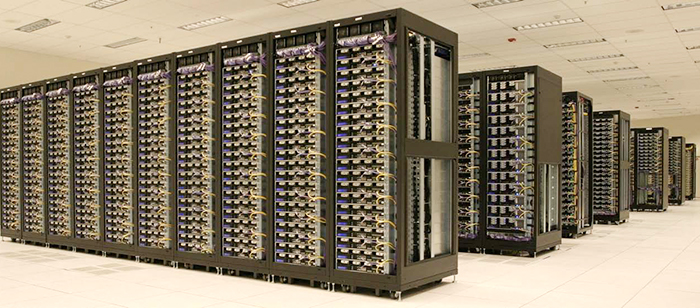
Nimbus is a project designed for Hadoop to expose distributed in-memory data structures, backed by the reliability of HDFS. By executing a series of I/O benchmarks against HBase, Nimbus's architecture and implementation are validated by demonstrating the performance advantage over HBase, allowing for high-throughput data fetch operations. The overall architecture and design of each component are discussed to validate Nimbus's design goals, as well as a description of relevant use cases and future work for the project.
Committee: Drs. Tim Finin (chair), Anupam Joshi and Konstantinos Kalpakis
]]>
MS Defense Nimbus: Scalable, Distributed, In-Memory Data Storage Adam Shook 1:30pm Thursday, 6 June 2013, 325b ITE, UMBC The Apache Hadoop project provides a framework for reliable,...
http://www.csee.umbc.edu/2013/06/ms-defense-nimbus-scalable-distributed-in-memory-data-storage-66/
https://beta.my.umbc.edu/api/v0/pixel/news/30825/guest@my.umbc.edu/76921cd930668e609d483b99fda5d1fc/api/pixel
computer-science
defense
news
research
talks
Computer Science and Electrical Engineering
https://beta.my.umbc.edu/groups/csee
https://assets3-beta.my.umbc.edu/system/shared/avatars/groups/000/000/099/d117dca133c64bf78a4b7696dd007189/xsmall.png?1314043393
https://assets1-beta.my.umbc.edu/system/shared/avatars/groups/000/000/099/d117dca133c64bf78a4b7696dd007189/original.png?1314043393
https://assets1-beta.my.umbc.edu/system/shared/avatars/groups/000/000/099/d117dca133c64bf78a4b7696dd007189/xxlarge.png?1314043393
https://assets4-beta.my.umbc.edu/system/shared/avatars/groups/000/000/099/d117dca133c64bf78a4b7696dd007189/xlarge.png?1314043393
https://assets3-beta.my.umbc.edu/system/shared/avatars/groups/000/000/099/d117dca133c64bf78a4b7696dd007189/large.png?1314043393
https://assets1-beta.my.umbc.edu/system/shared/avatars/groups/000/000/099/d117dca133c64bf78a4b7696dd007189/medium.png?1314043393
https://assets2-beta.my.umbc.edu/system/shared/avatars/groups/000/000/099/d117dca133c64bf78a4b7696dd007189/small.png?1314043393
https://assets3-beta.my.umbc.edu/system/shared/avatars/groups/000/000/099/d117dca133c64bf78a4b7696dd007189/xsmall.png?1314043393
https://assets3-beta.my.umbc.edu/system/shared/avatars/groups/000/000/099/d117dca133c64bf78a4b7696dd007189/xxsmall.png?1314043393
Computer Science and Electrical Engineering
0
0
true
Tue, 04 Jun 2013 21:39:06 -0400
Phd Defense: Dingkai Guo, Mid-Infrared Photonic Integration 6/4
Ph.D. Dissertation Defense
Mid-Infrared Photonic Integration
Dingkai Guo
10:00am Tuesday, 4 June 2013, TRC CASPR conference room
The mid-Infrared (Mid-IR) wavelength range is important for applications including medical and security imaging, environmental trace gas sensing and free space communications. However, photonic integrated circuits (PICs) in the mid-IR range are completely under-developed which significantly slows the reduction of mid-IR system size, weight, and coupling losses and limits the development of highly functional mid-IR photonic modules with lower cost. In this dissertation, a solution to mid-IR photonic integration was demonstrated using a compact widely tunable mid-IR transmitter and a mid-IR amplifying photo-detector, which can be integrated with the mid-IR source.
This integrated widely tunable mid-IR source is fabricated by incorporating super structure grating (SSG) to the mid-IR quantum cascade laser (QCL) waveguide. The emission wavelength of the fabricated SSG-DBR QCL can be well controlled by varying the injection currents to the two grating sections. The wavelength can be tuned from 4.58μm to 4.77μm (90cm-1) with a supermode spacing of 30nm. This SSG-DBR QCL can be a compact replacement for the external cavity QCL used in current mid-IR sensors.
Mid-IR amplification and detection can be achieved using the same material as the mid-IR source. This QCL amplifier has an adjustable bandwidth and tunable gain peak, so it can function as a tunable mid-IR filter. By biasing the QCL just below its threshold, we demonstrated more than 11dB optical gain and over 28dB electrical gain at specified wavelengths. In the electrical gain measurement process, the resonant amplifier also functioned as a detector. This indicates that intersubband-based gain materials are ideal candidates for mid-IR photonic integrations.
Beside the optimized fabrication processes, new characterization technique based on the electrical derivative of the QCL I-V curves is used to quickly acquire the QCL threshold and leakage current, and explore the device carrier transport. The leakage currents present in different QCL waveguide structures are also studied and compared using this technique.
Finally, we report that the telecom wavelengths induced optical quenching effects on mid-IR QCLs when the QCLs are operated well above their threshold. The quenching effect is a result of intersubband bandbending and it depends on the coupled near-IR intensity, wavelength, and the QCL voltage bias. The quenching effects not only can be used for mid-IR QCL optical switching and modulation but also reveal that the mid-IR QCLs can function as “converters” to convert the telecom optical signal into the mid-IR optical signal at the near-IR fiber end.
A coherent mid-IR transceiver with both transmitting and receiving functions can be realized based on each integrated component introduced in this dissertation. This compact transceiver includes an integrated widely tunable mid-IR source, a mid-IR filter, amplifier, and detector based on the same material system.
Committee: Drs. Fow-Sen Choa (Chair), Anthony Johnson, Terrance Worchesky (Physics) , Li Yan, Gymama Slaughter
]]>
Ph.D. Dissertation Defense Mid-Infrared Photonic Integration Dingkai Guo 10:00am Tuesday, 4 June 2013, TRC CASPR conference room The mid-Infrared (Mid-IR) wavelength range is important for...
http://www.csee.umbc.edu/2013/06/phd-defense-dingkai-guo-mid-infrared-photonic-integration-64/
https://beta.my.umbc.edu/api/v0/pixel/news/30718/guest@my.umbc.edu/4bbf7463d20ee8f86ccc2976eef499d7/api/pixel
defense
electrical-engineering
graduate
news
research
talks
Computer Science and Electrical Engineering
https://beta.my.umbc.edu/groups/csee
https://assets3-beta.my.umbc.edu/system/shared/avatars/groups/000/000/099/d117dca133c64bf78a4b7696dd007189/xsmall.png?1314043393
https://assets1-beta.my.umbc.edu/system/shared/avatars/groups/000/000/099/d117dca133c64bf78a4b7696dd007189/original.png?1314043393
https://assets1-beta.my.umbc.edu/system/shared/avatars/groups/000/000/099/d117dca133c64bf78a4b7696dd007189/xxlarge.png?1314043393
https://assets4-beta.my.umbc.edu/system/shared/avatars/groups/000/000/099/d117dca133c64bf78a4b7696dd007189/xlarge.png?1314043393
https://assets3-beta.my.umbc.edu/system/shared/avatars/groups/000/000/099/d117dca133c64bf78a4b7696dd007189/large.png?1314043393
https://assets1-beta.my.umbc.edu/system/shared/avatars/groups/000/000/099/d117dca133c64bf78a4b7696dd007189/medium.png?1314043393
https://assets2-beta.my.umbc.edu/system/shared/avatars/groups/000/000/099/d117dca133c64bf78a4b7696dd007189/small.png?1314043393
https://assets3-beta.my.umbc.edu/system/shared/avatars/groups/000/000/099/d117dca133c64bf78a4b7696dd007189/xsmall.png?1314043393
https://assets3-beta.my.umbc.edu/system/shared/avatars/groups/000/000/099/d117dca133c64bf78a4b7696dd007189/xxsmall.png?1314043393
Computer Science and Electrical Engineering
0
0
true
Mon, 03 Jun 2013 12:02:07 -0400
Mon, 03 Jun 2013 12:02:07 -0400

