<?xml version="1.0"?>
<News hasArchived="false" page="1" pageCount="1" pageSize="10" timestamp="Tue, 21 Apr 2026 17:23:15 -0400" url="https://beta.my.umbc.edu/groups/csee/posts.xml?tag=robot">
<NewsItem contentIssues="true" id="136198" important="false" status="posted" url="https://beta.my.umbc.edu/groups/csee/posts/136198">
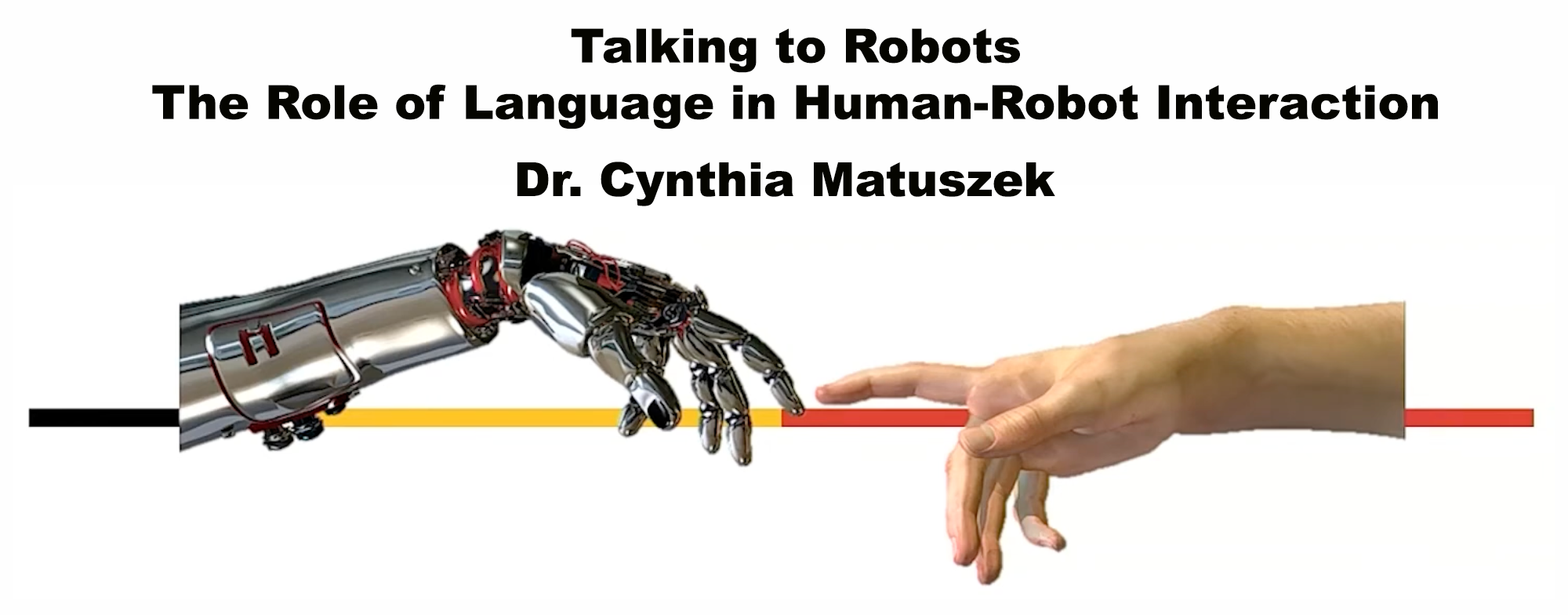
<Title>Prof. Matuszek on Talking to Robots, GRIT-X 2-4pm, Sat 10/14</Title>
<Tagline>The Role of Language in Human-Robot Interaction</Tagline>
<Body>
<![CDATA[
    <div class="html-content"><div><img src="https://www.csee.umbc.edu/wp-content/uploads/sites/659/2023/10/cmat_gritx.png" style="max-width: 100%; height: auto;"></div><div><span>CSEE professor </span><a href="https://redirect.cs.umbc.edu/~cmat/" rel="nofollow external" class="bo"><strong>Dr. Cynthia Matuszek</strong></a><span> will be one of this year's GRIT-X event speakers during the 2023 UMBC Homecoming celebration. Each of the nine speakers will give a 10-12 minute talk on their research and creative achievement. </span></div><div><br></div><div>Dr. Matuszek's topic is "<strong>Talking to Robots - The Role of Language in Human-Robot Interaction.</strong>" As robots become more common and begin to make their way into human environments, it becomes more important for them to interact comfortably with end users. One way to accomplish that is to build robotic systems that can use natural languages (human languages, such as English) to interact with and learn from people around them. In her talk, she will describe the concept of grounded language -- language that robots can use to understand the physical world around them -- and talk about the promise, as well as some of the risks, of language-using robots.</div><div><br></div><div>The <strong><a href="https://research.umbc.edu/grit-x/" rel="nofollow external" class="bo">2023 UMBC GRIT-X event</a></strong> takes place on Saturday, October 14, from 2-4 pm in the Fine Arts Recital Hall. After the talks, you can join the speakers for a post-event reception in the lobby.</div><div><br></div><div><a href="https://securelb.imodules.com/s/1325/21/1col.aspx?sid=1325&amp;gid=1&amp;pgid=2796&amp;cid=5914" rel="nofollow external" class="bo"><strong>Register here</strong></a> for the free GRIT-X event. </div></div>
]]>
</Body>
<Summary>CSEE professor Dr. Cynthia Matuszek will be one of this year's GRIT-X event speakers during the 2023 UMBC Homecoming celebration. Each of the nine speakers will give a 10-12 minute talk on their...</Summary>
<Website>https://research.umbc.edu/grit-x/</Website>
<TrackingUrl>https://beta.my.umbc.edu/api/v0/pixel/news/136198/guest@my.umbc.edu/2128bc74d58e74ecb64e06e071bbb07e/api/pixel</TrackingUrl>
<Tag>grit-x</Tag>
<Tag>homecoming</Tag>
<Tag>nlp</Tag>
<Tag>robot</Tag>
<Tag>robotics</Tag>
<Tag>umbc</Tag>
<Group token="csee">Computer Science and Electrical Engineering</Group>
<GroupUrl>https://beta.my.umbc.edu/groups/csee</GroupUrl>
<AvatarUrl>https://assets3-beta.my.umbc.edu/system/shared/avatars/groups/000/000/099/d117dca133c64bf78a4b7696dd007189/xsmall.png?1314043393</AvatarUrl>
<AvatarUrl size="original">https://assets1-beta.my.umbc.edu/system/shared/avatars/groups/000/000/099/d117dca133c64bf78a4b7696dd007189/original.png?1314043393</AvatarUrl>
<AvatarUrl size="xxlarge">https://assets1-beta.my.umbc.edu/system/shared/avatars/groups/000/000/099/d117dca133c64bf78a4b7696dd007189/xxlarge.png?1314043393</AvatarUrl>
<AvatarUrl size="xlarge">https://assets4-beta.my.umbc.edu/system/shared/avatars/groups/000/000/099/d117dca133c64bf78a4b7696dd007189/xlarge.png?1314043393</AvatarUrl>
<AvatarUrl size="large">https://assets3-beta.my.umbc.edu/system/shared/avatars/groups/000/000/099/d117dca133c64bf78a4b7696dd007189/large.png?1314043393</AvatarUrl>
<AvatarUrl size="medium">https://assets1-beta.my.umbc.edu/system/shared/avatars/groups/000/000/099/d117dca133c64bf78a4b7696dd007189/medium.png?1314043393</AvatarUrl>
<AvatarUrl size="small">https://assets2-beta.my.umbc.edu/system/shared/avatars/groups/000/000/099/d117dca133c64bf78a4b7696dd007189/small.png?1314043393</AvatarUrl>
<AvatarUrl size="xsmall">https://assets3-beta.my.umbc.edu/system/shared/avatars/groups/000/000/099/d117dca133c64bf78a4b7696dd007189/xsmall.png?1314043393</AvatarUrl>
<AvatarUrl size="xxsmall">https://assets3-beta.my.umbc.edu/system/shared/avatars/groups/000/000/099/d117dca133c64bf78a4b7696dd007189/xxsmall.png?1314043393</AvatarUrl>
<Sponsor>University of Maryland, Baltimore County</Sponsor>
<PawCount>0</PawCount>
<CommentCount>0</CommentCount>
<CommentsAllowed>true</CommentsAllowed>
<PostedAt>Wed, 11 Oct 2023 17:35:30 -0400</PostedAt>
</NewsItem>

<NewsItem contentIssues="true" id="133030" important="false" status="posted" url="https://beta.my.umbc.edu/groups/csee/posts/133030">
<Title>Robots are everywhere</Title>
<Tagline>Improving communication with people advances collaboration</Tagline>
<Body>
<![CDATA[
    <div class="html-content"><h3>Robots are everywhere - improving how they communicate with people could advance <span>human-robot</span> collaboration</h3>
    
      
        <img src="https://images.theconversation.com/files/520308/original/file-20230411-28-8juan4.jpg?ixlib=rb-1.1.0&amp;rect=0%2C0%2C2070%2C1449&amp;q=45&amp;auto=format&amp;w=754&amp;fit=clip" style="max-width: 100%; height: auto;">
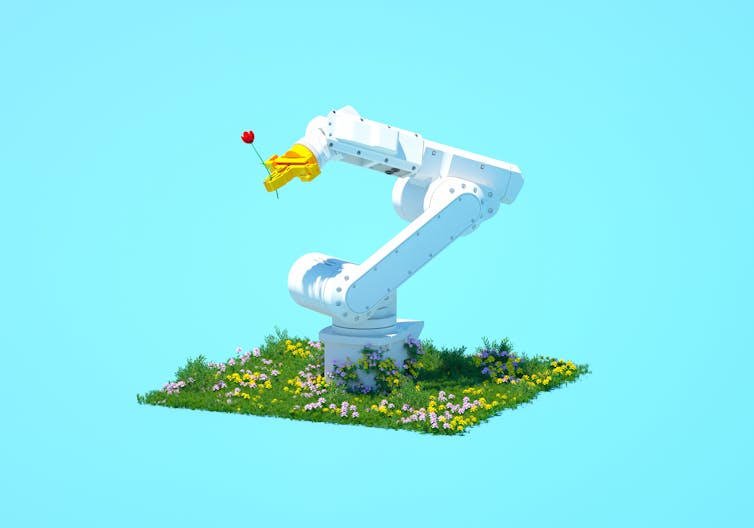
          'Emotionally intelligent' robots could improve their interactions with people.
            <span><a href="https://www.gettyimages.com/detail/photo/robotic-arm-holding-flower-royalty-free-image/1349021072" rel="nofollow external" class="bo">Andriy Onufriyenko/Moment via Getty Images</a></span>


    <div><br></div><h4><span><a href="https://theconversation.com/profiles/ramana-vinjamuri-1403077" rel="nofollow external" class="bo">Ramana Vinjamuri</a>, <em><a href="https://theconversation.com/institutions/university-of-maryland-baltimore-county-1667" rel="nofollow external" class="bo">University of Maryland, Baltimore County</a></em></span></h4><div><em><br></em>
    
    <p><a href="https://robots.ieee.org/learn/what-is-a-robot/" rel="nofollow external" class="bo">Robots</a> are machines that can sense the environment and use that information to perform an action. You can find them nearly everywhere in industrialized societies today. There are household robots that vacuum floors and <a href="https://www.osha.gov/robotics" rel="nofollow external" class="bo">warehouse robots</a> that pack and ship goods. <a href="https://www.dailycal.org/2020/05/03/uc-berkeley-ucsf-researchers-use-robotics-to-expedite-covid-19-testing" rel="nofollow external" class="bo">Lab robots</a> test hundreds of clinical samples a day. <a href="https://doi.org/10.3389/feduc.2019.00125" rel="nofollow external" class="bo">Education robots</a> support teachers by acting as one-on-one tutors, assistants and discussion facilitators. And <a href="https://www.wired.com/story/this-brain-controlled-robotic-arm-can-twist-grasp-and-feel/" rel="nofollow external" class="bo">medical robotics</a> composed of prosthetic limbs can enable someone to grasp and pick up objects with their thoughts. </p>
    
    <p>Figuring out how humans and robots can collaborate to effectively carry out tasks together is a rapidly growing area of interest to the scientists and engineers that design robots as well as the people who will use them. For successful collaboration between humans and robots, communication is key.</p>
    
    
                <a href="https://images.theconversation.com/files/520314/original/file-20230411-26-dhdpcu.jpg?ixlib=rb-1.1.0&amp;q=45&amp;auto=format&amp;w=1000&amp;fit=clip" rel="nofollow external" class="bo"><img alt="Physical therapist monitoring young patient walking on treadmill with robotic assistance" src="https://images.theconversation.com/files/520314/original/file-20230411-26-dhdpcu.jpg?ixlib=rb-1.1.0&amp;q=45&amp;auto=format&amp;w=754&amp;fit=clip" style="max-width: 100%; height: auto;"></a>
                
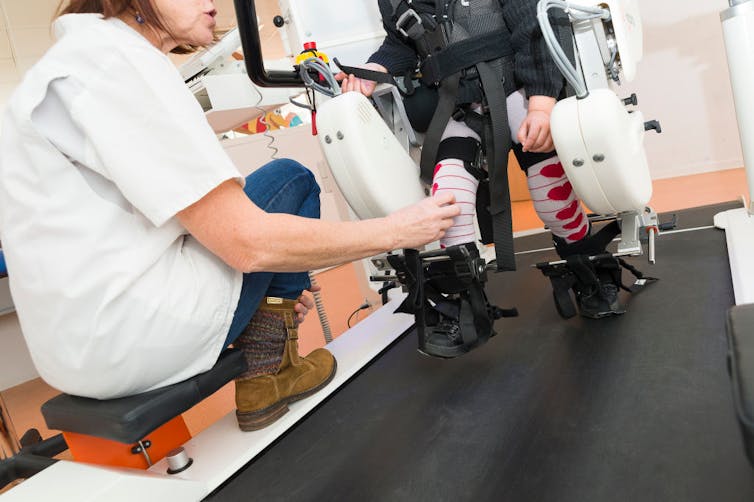
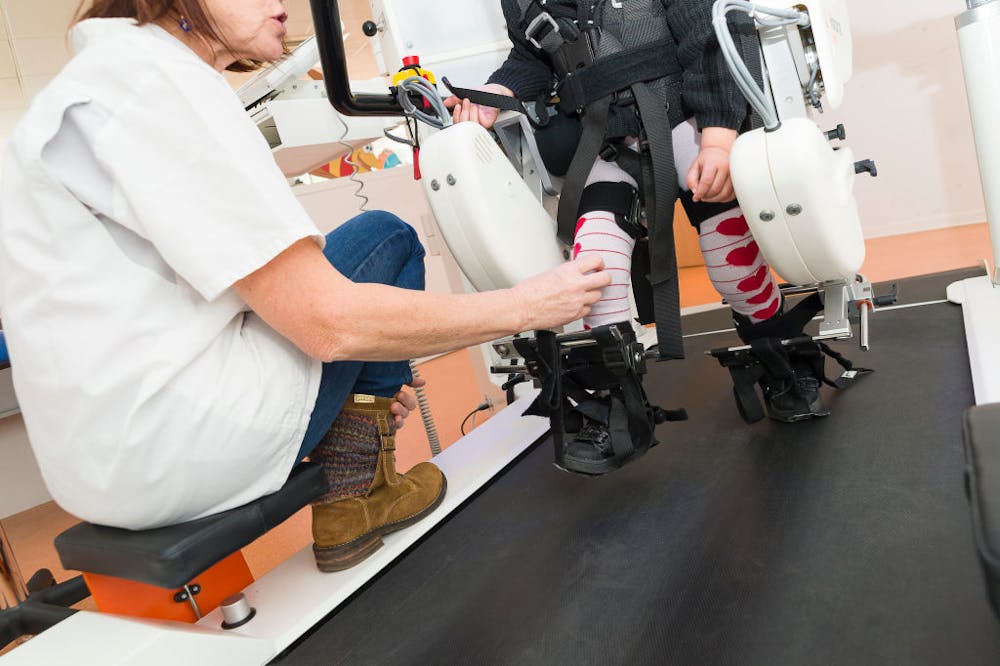
                  <span>Robotics can help patients recover physical function in rehabilitation.</span>
                  <span><a href="https://www.gettyimages.com/detail/news-photo/rossetti-health-center-france-rehabilitation-center-with-news-photo/838193362" rel="nofollow external" class="bo">BSIP/Universal Images Group via Getty Images</a></span>


    <h3><br></h3><h3>How people communicate with robots</h3>
    
    <p>Robots were originally designed to <a href="https://futura-automation.com/2019/05/15/a-history-timeline-of-industrial-robotics/" rel="nofollow external" class="bo">undertake repetitive and mundane tasks</a> and operate exclusively in robot-only zones like factories. Robots have since advanced to work collaboratively with people with new ways to communicate with each other.</p>
    
    <p><a href="https://doi.org/10.1007/s12541-012-0128-x" rel="nofollow external" class="bo">Cooperative control</a> is one way to transmit information and messages between a robot and a person. It involves combining human abilities and decision making with robot speed, accuracy and strength to accomplish a task. </p>
    
    <p>For example, robots in the <a href="https://doi.org/10.3390/agronomy11091818" rel="nofollow external" class="bo">agriculture industry</a> can help farmers monitor and harvest crops. A human can control a semi-autonomous vineyard sprayer through a user interface, as opposed to manually spraying their crops or broadly spraying the entire field and risking pesticide overuse. </p>
    
    <p>Robots can also <a href="https://doi.org/10.1186/s12984-018-0383-x" rel="nofollow external" class="bo">support patients in physical therapy</a>. Patients who had a stroke or spinal cord injury can use robots to practice hand grasping and assisted walking during rehabilitation.</p>
    
    <p>Another form of communication, <a href="https://www.pbs.org/wgbh/nova/article/robots-emotional-intelligence/" rel="nofollow external" class="bo">emotional intelligence perception</a>, involves developing robots that adapt their behaviors based on social interactions with humans. In this approach, the robot detects a person's emotions when collaborating on a task, assesses their satisfaction, then modifies and improves its execution based on this feedback. </p>
    
    <p>For example, if the robot detects that a physical therapy patient is dissatisfied with a specific rehabilitation activity, it could direct the patient to an alternate activity. <a href="https://doi.org/10.3389/frobt.2021.730317" rel="nofollow external" class="bo">Facial expression</a> and body gesture recognition ability are important design considerations for this approach. <a href="https://doi.org/10.3389/frobt.2020.532279" rel="nofollow external" class="bo">Recent advances in machine learning</a> can help robots decipher emotional body language and better interact with and perceive humans.</p>
    
    <h3>Robots in rehab</h3>
    
    <p>Questions like how to make robotic limbs feel more natural and capable of more complex functions like typing and playing musical instruments have yet to be answered.</p>
    
    <p>I am an <a href="https://scholar.google.com/citations?user=Ok92zD4AAAAJ&amp;hl=en" rel="nofollow external" class="bo">electrical engineer</a> who studies how the brain controls and communicates with other parts of the body, and <a href="http://vinjamurilab.cs.umbc.edu" rel="nofollow external" class="bo">my lab</a> investigates in particular how the <a href="https://doi.org/10.3390/s22145349" rel="nofollow external" class="bo">brain</a> and <a href="https://doi.org/10.3390/s22114177" rel="nofollow external" class="bo">hand</a> coordinate signals between each other. Our goal is to design technologies like prosthetic and wearable <a href="https://doi.org/10.1109/TBCAS.2019.2950145" rel="nofollow external" class="bo">robotic exoskeleton devices</a> that could help improve function for individuals with stroke, spinal cord and traumatic brain injuries. </p>
    
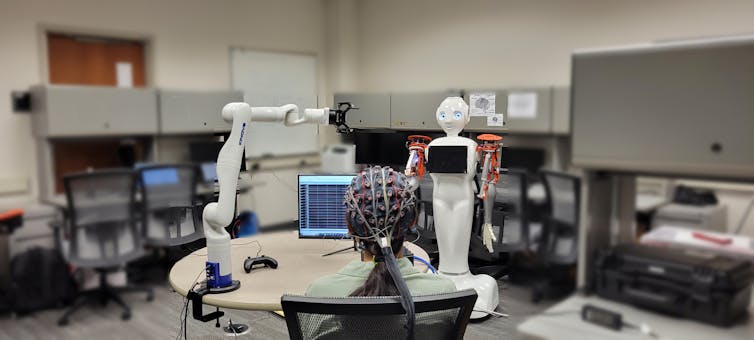
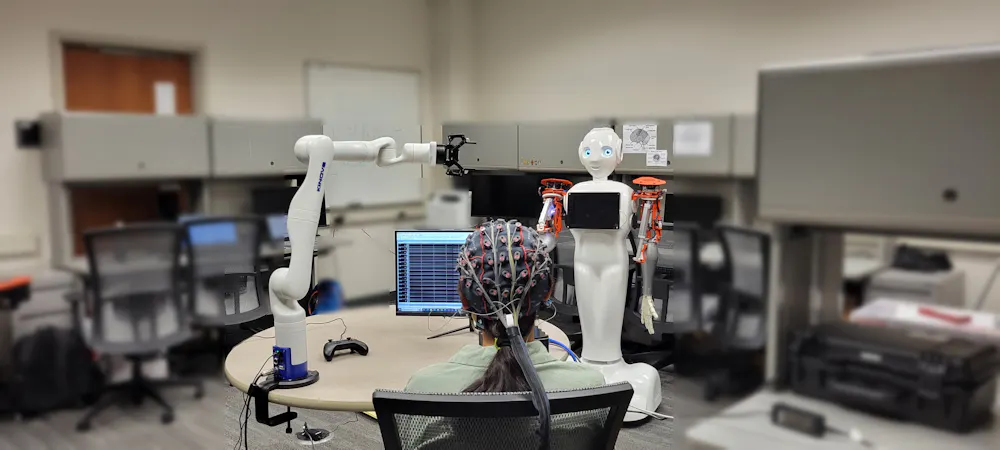
    <p>One approach is through <a href="https://theconversation.com/brain-computer-interfaces-could-allow-soldiers-to-control-weapons-with-their-thoughts-and-turn-off-their-fear-but-the-ethics-of-neurotechnology-lags-behind-the-science-194017" rel="nofollow external" class="bo">brain-computer interfaces</a>, which use brain signals to communicate between robots and humans. By accessing an individual's brain signals and providing targeted feedback, this technology can potentially improve recovery time in <a href="https://doi.org/10.1088/1741-2552/aba162" rel="nofollow external" class="bo">stroke rehabilitation</a>. Brain-computer interfaces may also help <a href="https://doi.org/10.1016/S1388-2457(02)00057-3" rel="nofollow external" class="bo">restore some communication abilities</a> and <a href="https://doi.org/10.1016/s0140-6736(12)61816-9" rel="nofollow external" class="bo">physical manipulation of the environment</a> for patients with motor neuron disorders.</p>
    
    
                <a href="https://images.theconversation.com/files/520871/original/file-20230413-26-98uwwp.jpg?ixlib=rb-1.1.0&amp;q=45&amp;auto=format&amp;w=1000&amp;fit=clip" rel="nofollow external" class="bo"><img alt="Person sitting in chair wearing electrode cap with a computer screen and robotic arms on a table in front of them" src="https://images.theconversation.com/files/520871/original/file-20230413-26-98uwwp.jpg?ixlib=rb-1.1.0&amp;q=45&amp;auto=format&amp;w=754&amp;fit=clip" style="max-width: 100%; height: auto;"></a>
                
                  <span>Brain-computer interfaces could allow people to control robotic arms by thought alone.</span>
                  <span><span>Ramana Kumar Vinjamuri</span>, <a href="http://creativecommons.org/licenses/by-nd/4.0/" rel="nofollow external" class="bo">CC BY-ND</a></span>


    <h3><br></h3><h3>The future of human-robot interaction</h3>
    
    <p>Effective integration of robots into human life requires balancing responsibility between people and robots, and designating clear roles for both in different environments.</p>
    
    <p>As robots are increasingly working hand in hand with people, the ethical questions and challenges they pose cannot be ignored. Concerns surrounding <a href="https://ssrn.com/abstract=1599189" rel="nofollow external" class="bo">privacy</a>, <a href="https://doi.org/10.1007/s11948-017-9975-2" rel="nofollow external" class="bo">bias and discrimination</a>, <a href="https://doi.org/10.1145/2909824.3020255" rel="nofollow external" class="bo">security risks</a> and <a href="https://doi.org/10.1145/2696454.2696458" rel="nofollow external" class="bo">robot morality</a> need to be seriously investigated in order to create a more comfortable, safer and trustworthy world with robots for everyone. Scientists and engineers studying the "<a href="https://doi.org/10.1109/HRI.2019.8673184" rel="nofollow external" class="bo">dark side" of human-robot interaction</a> are developing guidelines to identify and prevent negative outcomes.</p>
    
    <p>Human-robot interaction has the potential to affect every aspect of daily life. It is the collective responsibility of both the designers and the users to create a human-robot ecosystem that is safe and satisfactory for all.</p>
    
    <p><em>A photo was replaced to more accurately reflect the work of the author.</em></p>
    
    <p><span><a href="https://theconversation.com/profiles/ramana-vinjamuri-1403077" rel="nofollow external" class="bo">Ramana Vinjamuri</a>, Assistant Professor of Computer Science and Electrical Engineering, <em><a href="https://theconversation.com/institutions/university-of-maryland-baltimore-county-1667" rel="nofollow external" class="bo">University of Maryland, Baltimore County</a></em></span></p>
    
    <p>This article is republished from <a href="https://theconversation.com" rel="nofollow external" class="bo">The Conversation</a> under a Creative Commons license. Read the <a href="https://theconversation.com/robots-are-everywhere-improving-how-they-communicate-with-people-could-advance-human-robot-collaboration-197065" rel="nofollow external" class="bo">original article</a> or a version in <a href="https://umbc.edu/stories/robots-are-everywhere-improving-how-they-communicate-with-people-could-advance-human-robot-collaboration/" rel="nofollow external" class="bo">UMBC Magazine</a>.</p>
    </div></div>
]]>
</Body>
<Summary>Robots are everywhere - improving how they communicate with people could advance human-robot collaboration                 'Emotionally intelligent' robots could improve their interactions with...</Summary>
<TrackingUrl>https://beta.my.umbc.edu/api/v0/pixel/news/133030/guest@my.umbc.edu/d49d964dcef7804ec4ee2110d60d0991/api/pixel</TrackingUrl>
<Tag>ai</Tag>
<Tag>robot</Tag>
<Tag>robotics</Tag>
<Group token="csee">Computer Science and Electrical Engineering</Group>
<GroupUrl>https://beta.my.umbc.edu/groups/csee</GroupUrl>
<AvatarUrl>https://assets3-beta.my.umbc.edu/system/shared/avatars/groups/000/000/099/d117dca133c64bf78a4b7696dd007189/xsmall.png?1314043393</AvatarUrl>
<AvatarUrl size="original">https://assets1-beta.my.umbc.edu/system/shared/avatars/groups/000/000/099/d117dca133c64bf78a4b7696dd007189/original.png?1314043393</AvatarUrl>
<AvatarUrl size="xxlarge">https://assets1-beta.my.umbc.edu/system/shared/avatars/groups/000/000/099/d117dca133c64bf78a4b7696dd007189/xxlarge.png?1314043393</AvatarUrl>
<AvatarUrl size="xlarge">https://assets4-beta.my.umbc.edu/system/shared/avatars/groups/000/000/099/d117dca133c64bf78a4b7696dd007189/xlarge.png?1314043393</AvatarUrl>
<AvatarUrl size="large">https://assets3-beta.my.umbc.edu/system/shared/avatars/groups/000/000/099/d117dca133c64bf78a4b7696dd007189/large.png?1314043393</AvatarUrl>
<AvatarUrl size="medium">https://assets1-beta.my.umbc.edu/system/shared/avatars/groups/000/000/099/d117dca133c64bf78a4b7696dd007189/medium.png?1314043393</AvatarUrl>
<AvatarUrl size="small">https://assets2-beta.my.umbc.edu/system/shared/avatars/groups/000/000/099/d117dca133c64bf78a4b7696dd007189/small.png?1314043393</AvatarUrl>
<AvatarUrl size="xsmall">https://assets3-beta.my.umbc.edu/system/shared/avatars/groups/000/000/099/d117dca133c64bf78a4b7696dd007189/xsmall.png?1314043393</AvatarUrl>
<AvatarUrl size="xxsmall">https://assets3-beta.my.umbc.edu/system/shared/avatars/groups/000/000/099/d117dca133c64bf78a4b7696dd007189/xxsmall.png?1314043393</AvatarUrl>
<Sponsor>Computer Science and Electrical Engineering</Sponsor>
<PawCount>0</PawCount>
<CommentCount>0</CommentCount>
<CommentsAllowed>true</CommentsAllowed>
<PostedAt>Thu, 27 Apr 2023 11:11:06 -0400</PostedAt>
</NewsItem>

</News>