<?xml version="1.0"?>
<News hasArchived="false" page="1" pageCount="1" pageSize="10" timestamp="Tue, 21 Apr 2026 03:49:39 -0400" url="https://beta.my.umbc.edu/groups/csee/posts.xml?tag=quantum-computing">
<NewsItem contentIssues="true" id="131040" important="false" status="posted" url="https://beta.my.umbc.edu/groups/csee/posts/131040">
<Title>Videos now on YouTube introduce Quantum Algorithms</Title>
<Tagline>Introducing quantum computing to computer science students</Tagline>
<Body>
<![CDATA[
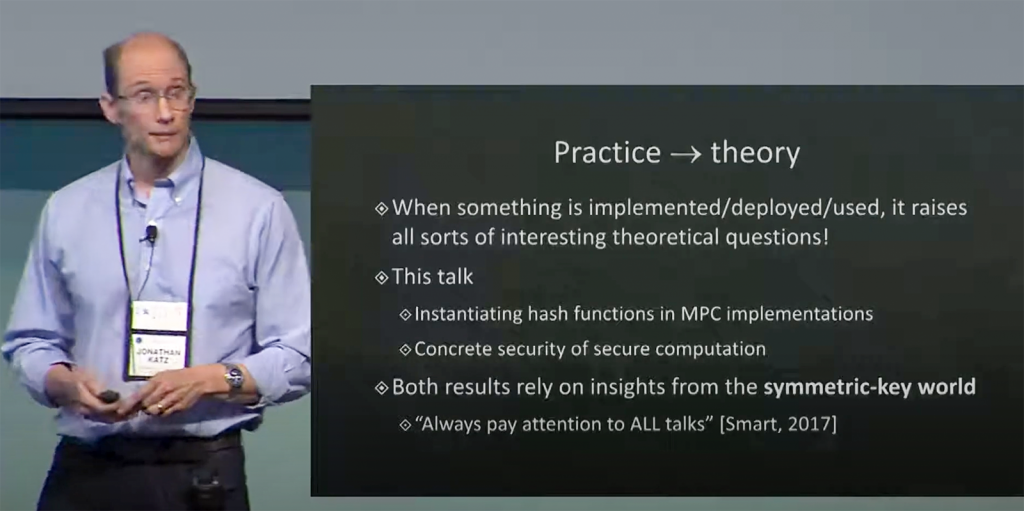
    <div class="html-content"><img src="https://www.csee.umbc.edu/wp-content/uploads/2021/11/quantum_computing_umbc2-scaled.jpg" style="max-width: 100%; height: auto;"><div>UMBC graduate students in CMSC-641 Algorithms actively engage in learning quantum algorithms in the two-week unit.<div><span><br></span></div></div><div>A set of <strong><a href="https://www.youtube.com/playlist?list=PLnj_pHJHgqkVhUrYg9hLl7xis2xw4rsYe" rel="nofollow external" class="bo">six videos</a></strong> now available on YouTube are the cornerstone of a two-week unit that introduces quantum algorithms in UMBC's core graduate course CMSC-641 Design and Analysis of Algorithms. The project was developed by Professor Alan T. Sherman and his colleagues, including Professors Sam Lomonaco (computer science) and Linda Oliva (education), <span>with support from the </span><a href="https://calt.umbc.edu/academic-innovation-competition/" rel="nofollow external" class="bo"><strong>Hrabowski innovation Fund</strong></a><span> and <strong><a href="https://coeit.umbc.edu/" rel="nofollow external" class="bo">College of Engineering and Information Technology</a></strong>. </span>Additional members of the team include graduate students Marc Laczin and Siddharth Chandrasekaran, and Dr. Omar Shehab (IBM), a former Ph.D. student of Dr. Lomonaco.</div><div><span><br></span></div><div><span>Using the <a href="https://en.wikipedia.org/wiki/Flipped_classroom" rel="nofollow external" class="bo">flipped classroom</a>, students watch the videos before coming to class prepared to engage actively programming the QUIRK quantum circuit simulator and the IBM Q quantum computer using the <a href="https://en.wikipedia.org/wiki/Qiskit" rel="nofollow external" class="bo">Qiskit software development kit</a>. The unit was piloted at UMBC in spring 2020, spring 2021, and fall 2021.  While there are full courses in quantum computation, this effort developed a two-week unit targeted at computer science graduate students covering three quantum algorithms: Deutsch-Jozsa, Simon, and Shor.</span></div><div><span><br></span></div><div><a href="https://en.wikipedia.org/wiki/Quantum_algorithm" rel="nofollow external" class="bo"><strong>Quantum algorithms</strong></a><span> running on quantum computers offer the potential to solve complex problems with dramatically reduced execution time and energy consumption. For example, </span><a href="https://en.wikipedia.org/wiki/Shor%27s_algorithm" rel="nofollow external" class="bo"><strong>Shor's quantum algorithm</strong></a><span> for factoring integers runs in polynomial time, faster than any known algorithm for classical computers and offers future potential to break the widely-used RSA cryptosystem. Whereas classical computers use discrete 1s and 0s to perform calculations, quantum computers use </span><a href="https://en.wikipedia.org/wiki/Qubit" rel="nofollow external" class="bo"><strong>Q-bits</strong></a><span>, which involve complex numbers and can simultaneously be 0 or 1. Based on quantum physics, quantum computers operate in a strange universe that includes the curious and potentially useful effects of superposition and entanglement. In pursuit of transformative potential advantages, government and private industry are investing significantly in quantum computer technologies. All computer science students need to know about these vital emerging technologies.</span></div><div><br></div><div>Read more about this in this <strong><a href="https://www.csee.umbc.edu/2021/11/umbc-computer-science-students-learn-about-quantum-%20algorithms/" rel="nofollow external" class="bo">UMBC news story</a> </strong>about the project. </div></div>
]]>
</Body>
<Summary>UMBC graduate students in CMSC-641 Algorithms actively engage in learning quantum algorithms in the two-week unit.     A set of six videos now available on YouTube are the cornerstone of a...</Summary>
<Website>https://www.youtube.com/playlist?list=PLnj_pHJHgqkVhUrYg9hLl7xis2xw4rsYe</Website>
<TrackingUrl>https://beta.my.umbc.edu/api/v0/pixel/news/131040/guest@my.umbc.edu/bd47b2ef2d492e720fccd66afdd5380d/api/pixel</TrackingUrl>
<Tag>csee</Tag>
<Tag>quantum</Tag>
<Tag>quantum-computing</Tag>
<Tag>umbc</Tag>
<Tag>youtube</Tag>
<Group token="csee">Computer Science and Electrical Engineering</Group>
<GroupUrl>https://beta.my.umbc.edu/groups/csee</GroupUrl>
<AvatarUrl>https://assets3-beta.my.umbc.edu/system/shared/avatars/groups/000/000/099/d117dca133c64bf78a4b7696dd007189/xsmall.png?1314043393</AvatarUrl>
<AvatarUrl size="original">https://assets1-beta.my.umbc.edu/system/shared/avatars/groups/000/000/099/d117dca133c64bf78a4b7696dd007189/original.png?1314043393</AvatarUrl>
<AvatarUrl size="xxlarge">https://assets1-beta.my.umbc.edu/system/shared/avatars/groups/000/000/099/d117dca133c64bf78a4b7696dd007189/xxlarge.png?1314043393</AvatarUrl>
<AvatarUrl size="xlarge">https://assets4-beta.my.umbc.edu/system/shared/avatars/groups/000/000/099/d117dca133c64bf78a4b7696dd007189/xlarge.png?1314043393</AvatarUrl>
<AvatarUrl size="large">https://assets3-beta.my.umbc.edu/system/shared/avatars/groups/000/000/099/d117dca133c64bf78a4b7696dd007189/large.png?1314043393</AvatarUrl>
<AvatarUrl size="medium">https://assets1-beta.my.umbc.edu/system/shared/avatars/groups/000/000/099/d117dca133c64bf78a4b7696dd007189/medium.png?1314043393</AvatarUrl>
<AvatarUrl size="small">https://assets2-beta.my.umbc.edu/system/shared/avatars/groups/000/000/099/d117dca133c64bf78a4b7696dd007189/small.png?1314043393</AvatarUrl>
<AvatarUrl size="xsmall">https://assets3-beta.my.umbc.edu/system/shared/avatars/groups/000/000/099/d117dca133c64bf78a4b7696dd007189/xsmall.png?1314043393</AvatarUrl>
<AvatarUrl size="xxsmall">https://assets3-beta.my.umbc.edu/system/shared/avatars/groups/000/000/099/d117dca133c64bf78a4b7696dd007189/xxsmall.png?1314043393</AvatarUrl>
<Sponsor>Computer Science and Electrical Engineering</Sponsor>
<PawCount>1</PawCount>
<CommentCount>0</CommentCount>
<CommentsAllowed>true</CommentsAllowed>
<PostedAt>Fri, 17 Feb 2023 15:29:39 -0500</PostedAt>
<EditAt>Fri, 17 Feb 2023 16:59:27 -0500</EditAt>
</NewsItem>

<NewsItem contentIssues="true" id="96901" important="false" status="posted" url="https://beta.my.umbc.edu/groups/csee/posts/96901">
<Title>talk: Secure Computation: From Theory to Practice, 12-1pm Oct 30</Title>
<Body>
<![CDATA[
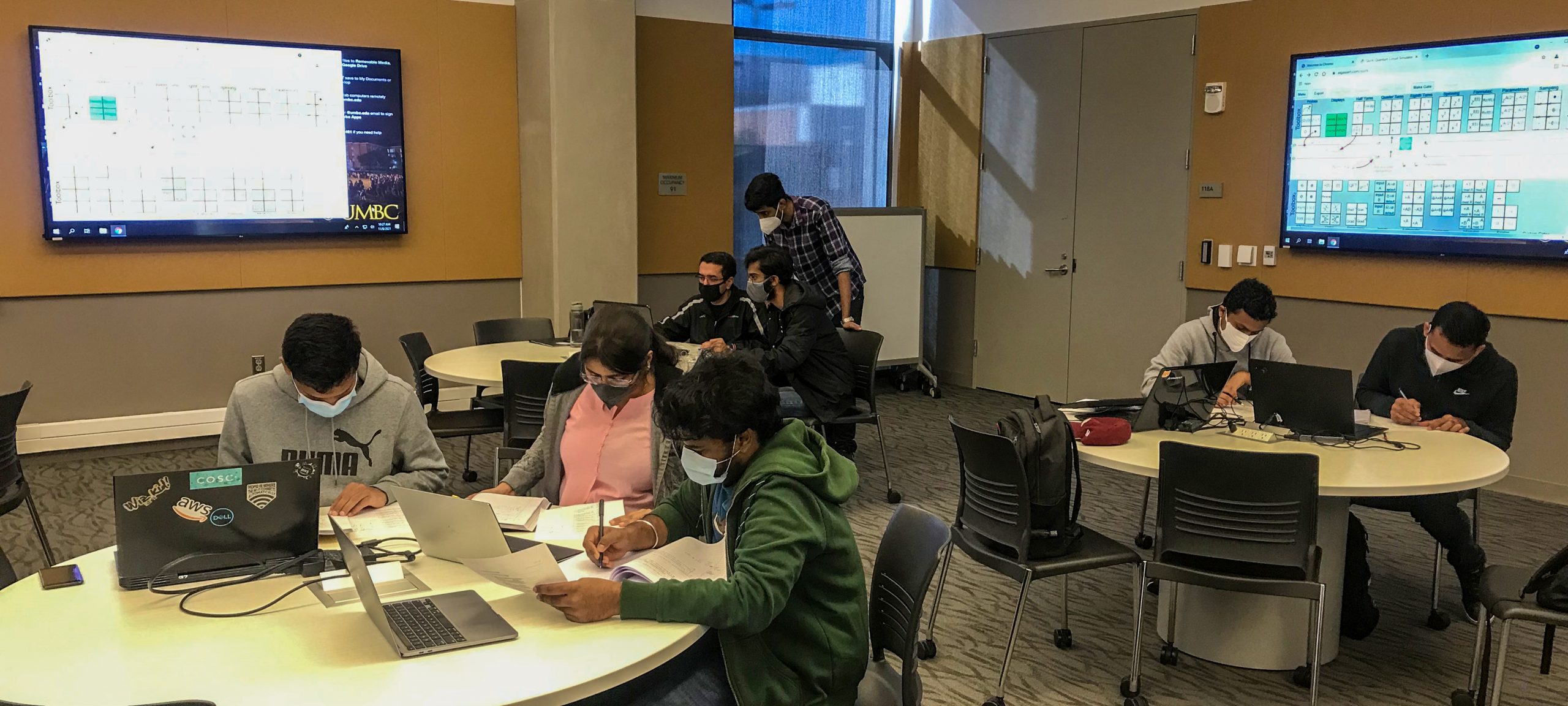
    <div class="html-content"><div><img width="1024" height="511" src="https://www.csee.umbc.edu/wp-content/uploads/2020/10/katz-1024x511.png" alt="" style="max-width: 100%; height: auto;"><hr><h5><strong>UMBC Cyber Defense Lab presents</strong></h5><hr><h2><strong>Secure Computation: From Theory to Practice</strong></h2><h3><strong>Jonathan Katz</strong></h3><h3><strong>Computer Science Department<br>University of Maryland, College Park</strong></h3><h3><strong>12:00–1:00 pm EDT, Friday, 30 October 2020</strong><br>Online via <a href="https:://umbc.webex.com/meet/sherman" rel="nofollow external" class="bo">Webex</a> </h3><hr><p>Protocols for secure multi-party computation (<a href="https://en.wikipedia.org/wiki/Secure_multi-party_computation" rel="nofollow external" class="bo">MPC</a>) allow a collection of mutually distrusting parties to compute a function of their private inputs without revealing anything else about their inputs to each other. Secure computation was shown to be feasible 35 years ago, but only in the past decade has its efficiency been improved to the point where it has been implemented and, more recently, begun to be used. This real-world deployment of secure computation suggests new applications and raises new questions.</p><p>This talk will survey some recent work at the intersection of the theory and practice of MPC, focusing on a surprising application to the construction of <a href="https://microsoft.github.io/Picnic/" rel="nofollow external" class="bo">Picnic</a>, a “post-quantum” signature scheme currently under consideration by NIST for standardization.</p><p><a href="https://www.cs.umd.edu/~jkatz/" rel="nofollow external" class="bo">Jonathan Katz</a> is a faculty member in the department of computer science at the University of Maryland, College Park, where he formerly served as director of the Maryland Cybersecurity Center for over five years. He is an IACR Fellow, was named a University of Maryland distinguished scholar-teacher in 2017-2018, and received the ACM SIGSAC Outstanding Contribution Award in 2019.</p><hr><p>Host: Alan T. Sherman, *protected email* Support for this event was provided in part by the National Science Foundation under SFS grant DGE-1753681. The UMBC Cyber Defense Lab meets biweekly Fridays 12-1pm. All meetings are open to the public.</p><p>Upcoming CDL Meetings: Nov. 13, TBA, [possibly: David R Imbordino (NSA), Security of the 2020 presidential election]; Dec. 11, TBA, [possibly: Peter A. H. Peterson (Univ. of Minnesota Duluth), Adversarial Thinking]</p></div>
    <p>The post <a href="https://www.csee.umbc.edu/2020/10/talk-secure-computation-from-theory-to-practice-12-1pm-oct-30/" rel="nofollow external" class="bo">talk: Secure Computation: From Theory to Practice, 12-1pm Oct 30</a> appeared first on <a href="https://www.csee.umbc.edu" rel="nofollow external" class="bo">Department of Computer Science and Electrical Engineering</a>.</p></div>
]]>
</Body>
<Summary>UMBC Cyber Defense Lab presents   Secure Computation: From Theory to Practice  Jonathan Katz  Computer Science Department University of Maryland, College Park  12:00–1:00 pm EDT, Friday, 30...</Summary>
<Website>https://www.csee.umbc.edu/2020/10/talk-secure-computation-from-theory-to-practice-12-1pm-oct-30/</Website>
<TrackingUrl>https://beta.my.umbc.edu/api/v0/pixel/news/96901/guest@my.umbc.edu/a580ce37e185c50617d9276b6afde94e/api/pixel</TrackingUrl>
<Tag>csee</Tag>
<Tag>cybersecurity</Tag>
<Tag>events</Tag>
<Tag>news</Tag>
<Tag>quantum-computing</Tag>
<Tag>research</Tag>
<Tag>talks</Tag>
<Group token="csee">Computer Science and Electrical Engineering</Group>
<GroupUrl>https://beta.my.umbc.edu/groups/csee</GroupUrl>
<AvatarUrl>https://assets3-beta.my.umbc.edu/system/shared/avatars/groups/000/000/099/d117dca133c64bf78a4b7696dd007189/xsmall.png?1314043393</AvatarUrl>
<AvatarUrl size="original">https://assets1-beta.my.umbc.edu/system/shared/avatars/groups/000/000/099/d117dca133c64bf78a4b7696dd007189/original.png?1314043393</AvatarUrl>
<AvatarUrl size="xxlarge">https://assets1-beta.my.umbc.edu/system/shared/avatars/groups/000/000/099/d117dca133c64bf78a4b7696dd007189/xxlarge.png?1314043393</AvatarUrl>
<AvatarUrl size="xlarge">https://assets4-beta.my.umbc.edu/system/shared/avatars/groups/000/000/099/d117dca133c64bf78a4b7696dd007189/xlarge.png?1314043393</AvatarUrl>
<AvatarUrl size="large">https://assets3-beta.my.umbc.edu/system/shared/avatars/groups/000/000/099/d117dca133c64bf78a4b7696dd007189/large.png?1314043393</AvatarUrl>
<AvatarUrl size="medium">https://assets1-beta.my.umbc.edu/system/shared/avatars/groups/000/000/099/d117dca133c64bf78a4b7696dd007189/medium.png?1314043393</AvatarUrl>
<AvatarUrl size="small">https://assets2-beta.my.umbc.edu/system/shared/avatars/groups/000/000/099/d117dca133c64bf78a4b7696dd007189/small.png?1314043393</AvatarUrl>
<AvatarUrl size="xsmall">https://assets3-beta.my.umbc.edu/system/shared/avatars/groups/000/000/099/d117dca133c64bf78a4b7696dd007189/xsmall.png?1314043393</AvatarUrl>
<AvatarUrl size="xxsmall">https://assets3-beta.my.umbc.edu/system/shared/avatars/groups/000/000/099/d117dca133c64bf78a4b7696dd007189/xxsmall.png?1314043393</AvatarUrl>
<Sponsor>Computer Science and Electrical Engineering</Sponsor>
<PawCount>1</PawCount>
<CommentCount>0</CommentCount>
<CommentsAllowed>false</CommentsAllowed>
<PostedAt>Sat, 24 Oct 2020 13:33:48 -0400</PostedAt>
<EditAt>Sat, 10 Oct 2020 13:33:00 -0400</EditAt>
</NewsItem>

</News>