<?xml version="1.0"?>
<News hasArchived="false" page="1" pageCount="1" pageSize="10" timestamp="Sat, 25 Apr 2026 11:23:04 -0400" url="https://beta.my.umbc.edu/groups/csee/posts.xml?tag=iot">
<NewsItem contentIssues="true" id="147919" important="false" status="posted" url="https://beta.my.umbc.edu/groups/csee/posts/147919">
<Title>Talk: Extensible, efficient and autonomous operation of IoT applications across the computing continuum 3/14</Title>
<Tagline>12-1pm ET Friday March 14, 2025, UMBC ITE 325b &amp; online</Tagline>
<Body>
<![CDATA[
    <div class="html-content"><span><h3><span>Extensible, efficient and autonomous operation of IoT applications across the computing continuum</span></h3><h4><a href="https://gbouloukakis.com/" rel="nofollow external" class="bo"><span>Georgios Bouloukakis</span></a><span> Télécom SudParis / IP Paris</span></h4><h4><span>12-1pm ET Friday March 14, 2025; UMBC </span><span>ITE 325 &amp; </span><a href="https://umbc.webex.com/meet/ryus" rel="nofollow external" class="bo"><span>online</span></a></h4><p><span>As computing continuum technologies (IoT-Edge-Cloud) emerge, infrastructures are becoming increasingly sensorized, driving the growth of smart space ecosystems and enhancing societal well-being. Despite the potential for revolutionizing operations within these ecosystems, smart spaces are highly dynamic and heterogeneous in context and resources. In this talk, I will provide an overview of past achievements and future pathways of the </span><a href="https://satrai.telecom-sudparis.eu/" rel="nofollow external" class="bo"><span><strong>SATRAI Living Lab</strong></span></a><span> for enabling extensible, efficient and autonomous operation of IoT applications over smart spaces.</span></p><p><a href="https://gbouloukakis.com/" rel="nofollow external" class="bo"><span><strong>Georgios Bouloukakis</strong></span></a><span> is an Associate Professor at Télécom SudParis / IP Paris. He received his Ph.D. from Sorbonne University in 2017, conducting his thesis at the research center of INRIA Paris, France. Previously he held the position of postdoctoral researcher at the University of California, Irvine in the Distributed Systems Middleware group. His research interests are on IoT/Edge-driven middleware and distributed software systems. Georgios is currently the Principal Investigator (PI) and Scientific Coordinator of 1 EU research project, and PI of 4 EU research projects. He has received the prestigious fellowships from INRIA@SiliconValley to conduct research during his Postdoc and Ph.D journeys. His published work has received best paper awards at ICIOT 2018, PerCom 2022 and the best artifact award at ICSA 2024.</span></p><div><span><br></span></div></span></div>
]]>
</Body>
<Summary>Extensible, efficient and autonomous operation of IoT applications across the computing continuum  Georgios Bouloukakis Télécom SudParis / IP Paris  12-1pm ET Friday March 14, 2025; UMBC ITE 325...</Summary>
<TrackingUrl>https://beta.my.umbc.edu/api/v0/pixel/news/147919/guest@my.umbc.edu/74d35b5aa583ca9337de16acb9d48795/api/pixel</TrackingUrl>
<Tag>cloud</Tag>
<Tag>edge</Tag>
<Tag>iot</Tag>
<Tag>smart-space</Tag>
<Tag>talk</Tag>
<Group token="csee">Computer Science and Electrical Engineering</Group>
<GroupUrl>https://beta.my.umbc.edu/groups/csee</GroupUrl>
<AvatarUrl>https://assets3-beta.my.umbc.edu/system/shared/avatars/groups/000/000/099/d117dca133c64bf78a4b7696dd007189/xsmall.png?1314043393</AvatarUrl>
<AvatarUrl size="original">https://assets1-beta.my.umbc.edu/system/shared/avatars/groups/000/000/099/d117dca133c64bf78a4b7696dd007189/original.png?1314043393</AvatarUrl>
<AvatarUrl size="xxlarge">https://assets1-beta.my.umbc.edu/system/shared/avatars/groups/000/000/099/d117dca133c64bf78a4b7696dd007189/xxlarge.png?1314043393</AvatarUrl>
<AvatarUrl size="xlarge">https://assets4-beta.my.umbc.edu/system/shared/avatars/groups/000/000/099/d117dca133c64bf78a4b7696dd007189/xlarge.png?1314043393</AvatarUrl>
<AvatarUrl size="large">https://assets3-beta.my.umbc.edu/system/shared/avatars/groups/000/000/099/d117dca133c64bf78a4b7696dd007189/large.png?1314043393</AvatarUrl>
<AvatarUrl size="medium">https://assets1-beta.my.umbc.edu/system/shared/avatars/groups/000/000/099/d117dca133c64bf78a4b7696dd007189/medium.png?1314043393</AvatarUrl>
<AvatarUrl size="small">https://assets2-beta.my.umbc.edu/system/shared/avatars/groups/000/000/099/d117dca133c64bf78a4b7696dd007189/small.png?1314043393</AvatarUrl>
<AvatarUrl size="xsmall">https://assets3-beta.my.umbc.edu/system/shared/avatars/groups/000/000/099/d117dca133c64bf78a4b7696dd007189/xsmall.png?1314043393</AvatarUrl>
<AvatarUrl size="xxsmall">https://assets3-beta.my.umbc.edu/system/shared/avatars/groups/000/000/099/d117dca133c64bf78a4b7696dd007189/xxsmall.png?1314043393</AvatarUrl>
<Sponsor>Computer Science and Electrical Engineering</Sponsor>
<ThumbnailUrl size="xxlarge">https://assets1-beta.my.umbc.edu/system/shared/thumbnails/news/000/147/919/a09ae8b45bb0a1b7714daec7deb59f68/xxlarge.jpg?1741358666</ThumbnailUrl>
<ThumbnailUrl size="xlarge">https://assets3-beta.my.umbc.edu/system/shared/thumbnails/news/000/147/919/a09ae8b45bb0a1b7714daec7deb59f68/xlarge.jpg?1741358666</ThumbnailUrl>
<ThumbnailUrl size="large">https://assets2-beta.my.umbc.edu/system/shared/thumbnails/news/000/147/919/a09ae8b45bb0a1b7714daec7deb59f68/large.jpg?1741358666</ThumbnailUrl>
<ThumbnailUrl size="medium">https://assets2-beta.my.umbc.edu/system/shared/thumbnails/news/000/147/919/a09ae8b45bb0a1b7714daec7deb59f68/medium.jpg?1741358666</ThumbnailUrl>
<ThumbnailUrl size="small">https://assets1-beta.my.umbc.edu/system/shared/thumbnails/news/000/147/919/a09ae8b45bb0a1b7714daec7deb59f68/small.jpg?1741358666</ThumbnailUrl>
<ThumbnailUrl size="xsmall">https://assets4-beta.my.umbc.edu/system/shared/thumbnails/news/000/147/919/a09ae8b45bb0a1b7714daec7deb59f68/xsmall.jpg?1741358666</ThumbnailUrl>
<ThumbnailUrl size="xxsmall">https://assets3-beta.my.umbc.edu/system/shared/thumbnails/news/000/147/919/a09ae8b45bb0a1b7714daec7deb59f68/xxsmall.jpg?1741358666</ThumbnailUrl>
<PawCount>0</PawCount>
<CommentCount>0</CommentCount>
<CommentsAllowed>true</CommentsAllowed>
<PostedAt>Fri, 07 Mar 2025 09:54:15 -0500</PostedAt>
</NewsItem>

<NewsItem contentIssues="true" id="135530" important="false" status="posted" url="https://beta.my.umbc.edu/groups/csee/posts/135530">
<Title>talk: Privacy in ML/AI in Smart Environments, 2-3pm Tue 9/19</Title>
<Tagline>ITE 325b ITE, UMBC</Tagline>
<Body>
<![CDATA[
    <div class="html-content"><div><strong>IEEE Sponsored Event</strong></div><div><strong><br></strong></div><div><strong>Bringing Privacy into the Picture: New Optimization </strong><strong>Goals for ML/AI in Smart Environments</strong></div><div><strong><br></strong></div><div><strong><a href="https://www.cs.ucf.edu/person/damla-turgut/" rel="nofollow external" class="bo">Dr. Damla Turgut</a></strong></div><div><strong>University of Central Florida</strong></div><div><br></div><div><strong>2:00-3:00pm ET, Tuesday, Sept 19, 2023 </strong></div><div><strong>ITE 325b ITE, UMBC</strong></div><div><strong><br></strong></div><div><strong>check back for online link</strong></div><div><br></div><div>Smart assistive environments adapt to the needs and preferences of disabled or elderly users who need help with the activities of daily living. However, the needs and requests of users vary greatly, both due to personal preferences and type of disability. As handcrafting an environment is prohibitively expensive, in recent years significant research was done in systems that use machine learning to create a predictive model of the user. Machine learning, however, typically requires large amounts of data. A stand-alone smart environment, however, only has access to the data collected from its user since it was deployed. A possible solution is to perform centralized, cloud-based learning by pooling the training data collected from multiple users. However, uploading data collected from the personal habits of elderly and disabled users creates significant security and privacy concerns.</div><div><br></div><div>In this talk, we investigate the type of data sharing necessary for learning user models in smart environments and propose several novel considerations. We point out that data sharing is only ethical if the user derives a benefit from it. This implies that the decision to share data must be periodically revisited, it is not a commitment extending indefinitely in the future. We study the data sharing decisions made by users under several machine learning frameworks: local, cloud, and federated learning. We show that most users only benefit from data sharing for a limited interval after the deployment of the system. We also investigate machine learning techniques that predict whether the user will benefit from sharing the data before the data is shared.</div><div><br></div><div><a href="https://www.cs.ucf.edu/person/damla-turgut/" rel="nofollow external" class="bo"><strong>Damla Turgut</strong></a> is Charles Millican Professor and Chair of Computer Science at the University of Central Florida (UCF). She is the co-director of the <a href="https://www.cs.ucf.edu/aithings/" rel="nofollow external" class="bo">AI Things Laboratory</a>. She held visiting researcher positions at the University of Rome ``La Sapienza'', Imperial College of London, and KTH Royal Institute of Technology, Sweden. Her research interests include wireless ad hoc, sensor, underwater, vehicular, and social networks, edge/cloud computing, smart cities, smart grids, IoT-enabled healthcare and augmented reality, as well as considerations of privacy in the Internet of Things. Dr. Turgut serves on several editorial boards and program committees of prestigious ACM and IEEE journals and conferences. Her most recent honors include the NCWIT 2021 Mentoring Award for Undergraduate Research (MAUR), the UCF Research Incentive Award, and the UCF Women of Distinction Award. Since 2019, she serves as the N2Women Board Co-Chair where she co-leads the activities of the N2Women Board in supporting female researchers in the fields of networking and communications. She is an IEEE ComSoc Distinguished Lecturer, IEEE Senior Member, ACM Senior Member, the Chair of the IEEE Technical Committee on Social Networks, and the Chair of the IEEE Technical Community on Computer Communications (TCCC).<br></div></div>
]]>
</Body>
<Summary>IEEE Sponsored Event     Bringing Privacy into the Picture: New Optimization Goals for ML/AI in Smart Environments     Dr. Damla Turgut  University of Central Florida     2:00-3:00pm ET, Tuesday,...</Summary>
<Website>https://events.vtools.ieee.org/m/374300</Website>
<TrackingUrl>https://beta.my.umbc.edu/api/v0/pixel/news/135530/guest@my.umbc.edu/6907a80f1fe26ca8fcdb6833f1341fc2/api/pixel</TrackingUrl>
<Tag>ai</Tag>
<Tag>ieee</Tag>
<Tag>iot</Tag>
<Tag>ml</Tag>
<Tag>privacy</Tag>
<Group token="csee">Computer Science and Electrical Engineering</Group>
<GroupUrl>https://beta.my.umbc.edu/groups/csee</GroupUrl>
<AvatarUrl>https://assets3-beta.my.umbc.edu/system/shared/avatars/groups/000/000/099/d117dca133c64bf78a4b7696dd007189/xsmall.png?1314043393</AvatarUrl>
<AvatarUrl size="original">https://assets1-beta.my.umbc.edu/system/shared/avatars/groups/000/000/099/d117dca133c64bf78a4b7696dd007189/original.png?1314043393</AvatarUrl>
<AvatarUrl size="xxlarge">https://assets1-beta.my.umbc.edu/system/shared/avatars/groups/000/000/099/d117dca133c64bf78a4b7696dd007189/xxlarge.png?1314043393</AvatarUrl>
<AvatarUrl size="xlarge">https://assets4-beta.my.umbc.edu/system/shared/avatars/groups/000/000/099/d117dca133c64bf78a4b7696dd007189/xlarge.png?1314043393</AvatarUrl>
<AvatarUrl size="large">https://assets3-beta.my.umbc.edu/system/shared/avatars/groups/000/000/099/d117dca133c64bf78a4b7696dd007189/large.png?1314043393</AvatarUrl>
<AvatarUrl size="medium">https://assets1-beta.my.umbc.edu/system/shared/avatars/groups/000/000/099/d117dca133c64bf78a4b7696dd007189/medium.png?1314043393</AvatarUrl>
<AvatarUrl size="small">https://assets2-beta.my.umbc.edu/system/shared/avatars/groups/000/000/099/d117dca133c64bf78a4b7696dd007189/small.png?1314043393</AvatarUrl>
<AvatarUrl size="xsmall">https://assets3-beta.my.umbc.edu/system/shared/avatars/groups/000/000/099/d117dca133c64bf78a4b7696dd007189/xsmall.png?1314043393</AvatarUrl>
<AvatarUrl size="xxsmall">https://assets3-beta.my.umbc.edu/system/shared/avatars/groups/000/000/099/d117dca133c64bf78a4b7696dd007189/xxsmall.png?1314043393</AvatarUrl>
<Sponsor>Computer Science and Electrical Engineering</Sponsor>
<ThumbnailUrl size="xxlarge">https://assets3-beta.my.umbc.edu/system/shared/thumbnails/news/000/135/530/56fdce423e03aacde0b74a35ee3559f2/xxlarge.jpg?1695069160</ThumbnailUrl>
<ThumbnailUrl size="xlarge">https://assets3-beta.my.umbc.edu/system/shared/thumbnails/news/000/135/530/56fdce423e03aacde0b74a35ee3559f2/xlarge.jpg?1695069160</ThumbnailUrl>
<ThumbnailUrl size="large">https://assets2-beta.my.umbc.edu/system/shared/thumbnails/news/000/135/530/56fdce423e03aacde0b74a35ee3559f2/large.jpg?1695069160</ThumbnailUrl>
<ThumbnailUrl size="medium">https://assets1-beta.my.umbc.edu/system/shared/thumbnails/news/000/135/530/56fdce423e03aacde0b74a35ee3559f2/medium.jpg?1695069160</ThumbnailUrl>
<ThumbnailUrl size="small">https://assets4-beta.my.umbc.edu/system/shared/thumbnails/news/000/135/530/56fdce423e03aacde0b74a35ee3559f2/small.jpg?1695069160</ThumbnailUrl>
<ThumbnailUrl size="xsmall">https://assets3-beta.my.umbc.edu/system/shared/thumbnails/news/000/135/530/56fdce423e03aacde0b74a35ee3559f2/xsmall.jpg?1695069160</ThumbnailUrl>
<ThumbnailUrl size="xxsmall">https://assets1-beta.my.umbc.edu/system/shared/thumbnails/news/000/135/530/56fdce423e03aacde0b74a35ee3559f2/xxsmall.jpg?1695069160</ThumbnailUrl>
<PawCount>0</PawCount>
<CommentCount>0</CommentCount>
<CommentsAllowed>true</CommentsAllowed>
<PostedAt>Mon, 18 Sep 2023 16:43:47 -0400</PostedAt>
</NewsItem>

<NewsItem contentIssues="true" id="100044" important="false" status="posted" url="https://beta.my.umbc.edu/groups/csee/posts/100044">
<Title>talk: (Don&#8217;t) Mind the Gap: Bridging the Worlds of People and IoT Devices, 1-2 ET 3/23</Title>
<Body>
<![CDATA[
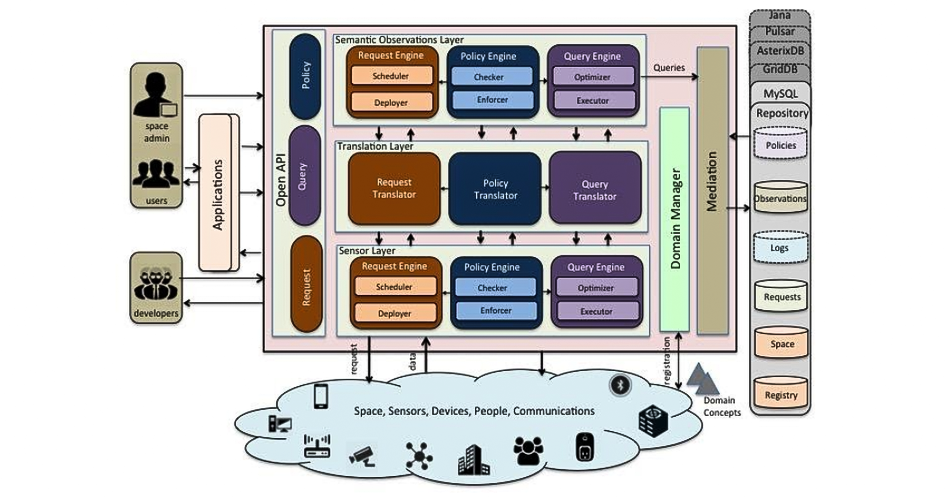
    <div class="html-content"><div><a href="https://www.csee.umbc.edu/wp-content/uploads/2021/03/tippers.png" rel="nofollow external" class="bo"><img width="948" height="497" src="https://www.csee.umbc.edu/wp-content/uploads/2021/03/tippers.png" alt="" style="max-width: 100%; height: auto;"></a><p>TIPPERS is an IoT data management middleware system developed at UCI that manages IoT smart spaces by collecting sensor data, inferring semantically meaningful information, and providing developers with data for intelligent applications.</p><hr><h2>(<strong>Don’t) Mind the Gap: Bridging the Worlds of People and IoT Devices</strong></h2><hr><h3><strong><a href="https://robertoyus.com/" rel="nofollow external" class="bo">Dr. Roberto Yus</a><br>University of California, Irvine</strong></h3><h3>1:00-2:00 pm ET, Tuesday, 23 March 2021<br>online via <a href="https://umbc.webex.com/umbc/j.php?MTID=m1ebeeca207bb966ed2c24130987b976b" rel="nofollow external" class="bo">WebEx</a></h3><hr><p>The Internet of Things (IoT) has the potential to improve our lives through different services given the diversity of smart devices and their capabilities. For example, the IoT can empower services to make the re-opening of business during the current pandemic safer by monitoring adherence to regulations. But the large amounts of highly heterogeneous data captured by IoT devices typically require further processing to become useful information. The challenge is thus for IoT systems to determine which sensor data has to be captured/stored/processed/shared to, for instance, determine the occupancy of a specific office building or the spaces in which a potential exposure took place. This becomes even more challenging when IoT systems have to take into account the privacy preferences of individuals, such as the need to prevent sharing data about their daily patterns or habits.</p><p>In this talk, I will discuss my efforts into helping IoT systems bridge the gap between the world of IoT devices and the world where people act. First, I will introduce a model to represent knowledge about sensors/actuators, people, spaces, events, and their relationships. Based on the model, I will explain an algorithmic solution to translate user requests and privacy preferences defined in a high-level, more semantically meaningful way into operations on IoT devices and their captured data. Second, I will talk about the enforcement of privacy preferences in the context of the IoT. Finally, I will overview my experience building and deploying an IoT data management system, TIPPERS, which has been deployed at UC Irvine and two US Navy vessels and is soon to be deployed on other campuses. I will conclude the talk by discussing the exciting future work opportunities towards supporting the next generation of ubiquitous IoT data management systems and technologies that autonomously, transparently, and at scale, balance the trade-off between providing users with high utility and respecting people’s privacy requirements.</p><hr><p><a href="https://robertoyus.com/" rel="nofollow external" class="bo">Roberto Yus</a> is a Postdoctoral Researcher in the Computer Science department at the University of California, Irvine working with Prof. Sharad Mehrotra. Before that, he spent a year as a visiting researcher at the University of Maryland, Baltimore County working with Prof. Anupam Joshi and Prof. Tim Finin. He obtained his Ph.D. in Computer Science from the University of Zaragoza, Spain, funded through a 4-year fellowship from the Spanish Ministry of Science and Innovation. His research interests are in the fields of data management, knowledge representation, privacy, and the Internet of Things (IoT). His research focuses on the design of semantic data management solutions to empower IoT systems to understand user information requirements and user privacy preferences and adapt their operations taking those into account. Roberto’s research has been published in top-tier conferences and journals such as VLDB and the Journal of Web Semantics. He is part of the editorial board of the “Sensors” and “Frontiers in Big Data” journals and has served as part of the organizing and program committee of several conferences and workshops in addition to serving as an external reviewer for multiple conferences and journals.</p></div>
    <p>The post <a href="https://www.csee.umbc.edu/2021/03/talk-dont-mind-the-gap-bridging-the-worlds-of-people-and-iot-devices-1-2-et-3-23/" rel="nofollow external" class="bo">talk: (Don’t) Mind the Gap: Bridging the Worlds of People and IoT Devices, 1-2 ET 3/23</a> appeared first on <a href="https://www.csee.umbc.edu" rel="nofollow external" class="bo">Department of Computer Science and Electrical Engineering</a>.</p></div>
]]>
</Body>
<Summary>TIPPERS is an IoT data management middleware system developed at UCI that manages IoT smart spaces by collecting sensor data, inferring semantically meaningful information, and providing...</Summary>
<Website>https://www.csee.umbc.edu/2021/03/talk-dont-mind-the-gap-bridging-the-worlds-of-people-and-iot-devices-1-2-et-3-23/</Website>
<TrackingUrl>https://beta.my.umbc.edu/api/v0/pixel/news/100044/guest@my.umbc.edu/ce79dbe3994eb12bb796bf6234829aa8/api/pixel</TrackingUrl>
<Tag>ai</Tag>
<Tag>csee</Tag>
<Tag>events</Tag>
<Tag>iot</Tag>
<Tag>machine-learning</Tag>
<Tag>news</Tag>
<Tag>research</Tag>
<Tag>talks</Tag>
<Group token="csee">Computer Science and Electrical Engineering</Group>
<GroupUrl>https://beta.my.umbc.edu/groups/csee</GroupUrl>
<AvatarUrl>https://assets3-beta.my.umbc.edu/system/shared/avatars/groups/000/000/099/d117dca133c64bf78a4b7696dd007189/xsmall.png?1314043393</AvatarUrl>
<AvatarUrl size="original">https://assets1-beta.my.umbc.edu/system/shared/avatars/groups/000/000/099/d117dca133c64bf78a4b7696dd007189/original.png?1314043393</AvatarUrl>
<AvatarUrl size="xxlarge">https://assets1-beta.my.umbc.edu/system/shared/avatars/groups/000/000/099/d117dca133c64bf78a4b7696dd007189/xxlarge.png?1314043393</AvatarUrl>
<AvatarUrl size="xlarge">https://assets4-beta.my.umbc.edu/system/shared/avatars/groups/000/000/099/d117dca133c64bf78a4b7696dd007189/xlarge.png?1314043393</AvatarUrl>
<AvatarUrl size="large">https://assets3-beta.my.umbc.edu/system/shared/avatars/groups/000/000/099/d117dca133c64bf78a4b7696dd007189/large.png?1314043393</AvatarUrl>
<AvatarUrl size="medium">https://assets1-beta.my.umbc.edu/system/shared/avatars/groups/000/000/099/d117dca133c64bf78a4b7696dd007189/medium.png?1314043393</AvatarUrl>
<AvatarUrl size="small">https://assets2-beta.my.umbc.edu/system/shared/avatars/groups/000/000/099/d117dca133c64bf78a4b7696dd007189/small.png?1314043393</AvatarUrl>
<AvatarUrl size="xsmall">https://assets3-beta.my.umbc.edu/system/shared/avatars/groups/000/000/099/d117dca133c64bf78a4b7696dd007189/xsmall.png?1314043393</AvatarUrl>
<AvatarUrl size="xxsmall">https://assets3-beta.my.umbc.edu/system/shared/avatars/groups/000/000/099/d117dca133c64bf78a4b7696dd007189/xxsmall.png?1314043393</AvatarUrl>
<Sponsor>Computer Science and Electrical Engineering</Sponsor>
<PawCount>1</PawCount>
<CommentCount>0</CommentCount>
<CommentsAllowed>false</CommentsAllowed>
<PostedAt>Thu, 18 Mar 2021 11:22:54 -0400</PostedAt>
</NewsItem>

</News>
