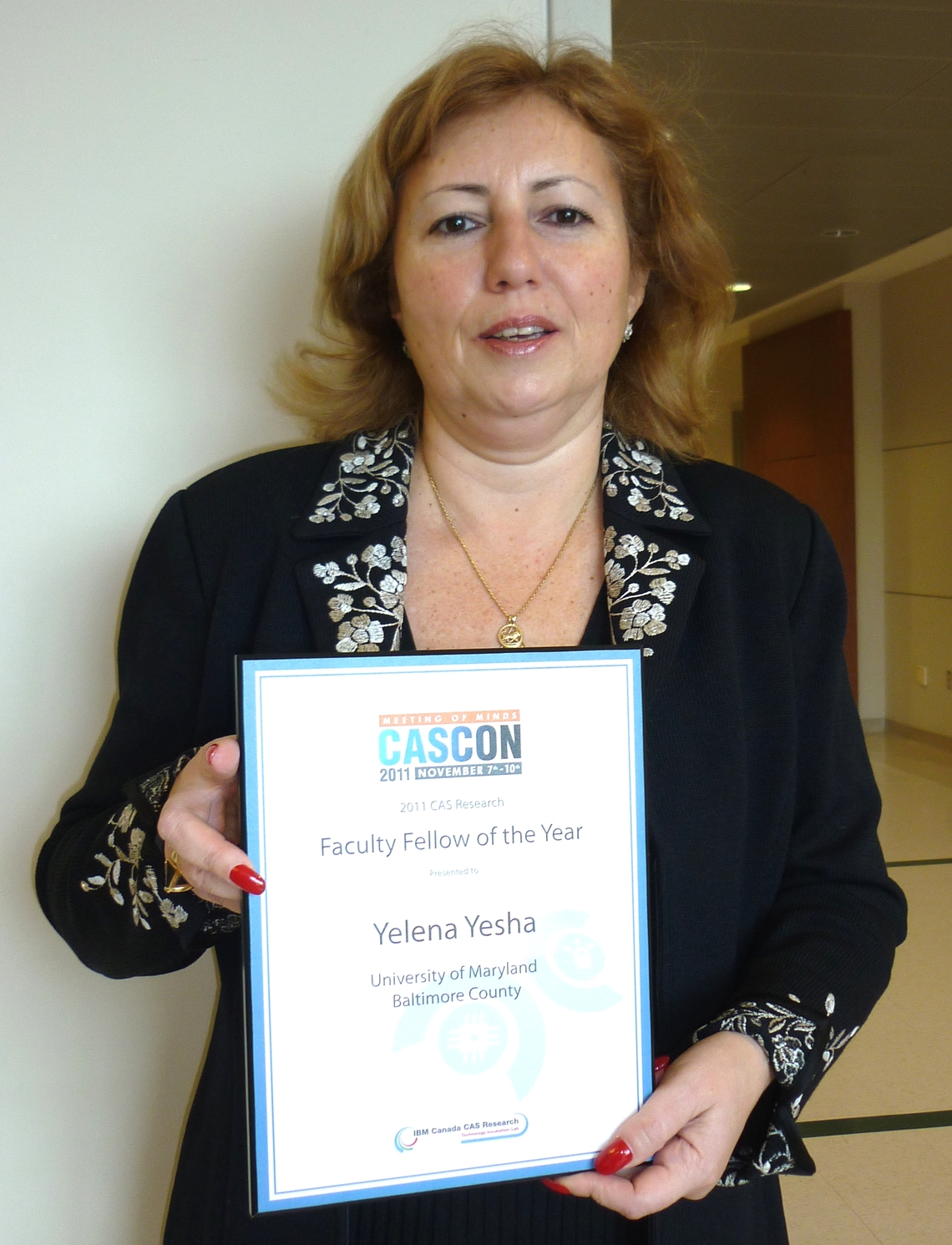
Dr. Yesha named IBM CAS Faculty Fellow of the Year
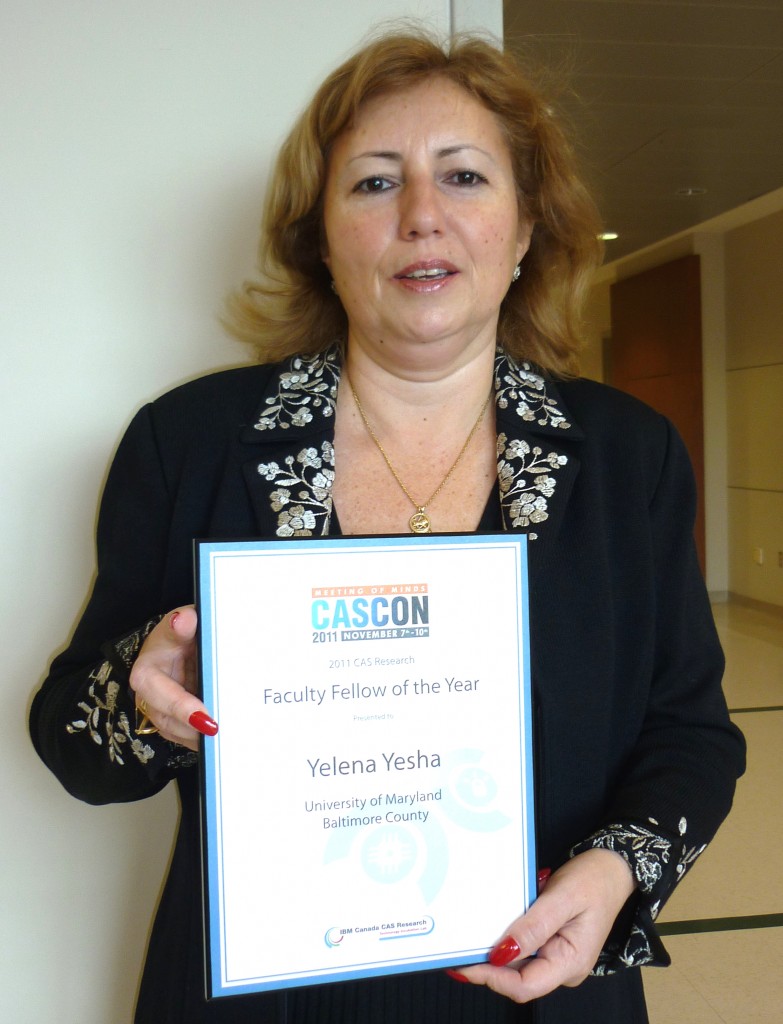
Congratulations to Dr. Yelena Yesha, professor of Computer Science and Electrical Engineering, for receiving this year's IBM CAS Faculty Fellow of the Year award.
The award is a recognition of Dr. Yesha's positive impact on the goals and reputation of IBM, as well as her influence on IBM's Center for Advanced Studies (CAS) as an ambassador in promoting IBM in academia.
]]>
Congratulations to Dr. Yelena Yesha, professor of Computer Science and Electrical Engineering, for receiving this year's IBM CAS Faculty Fellow of the Year award. The award is a recognition of...
http://www.cs.umbc.edu/2011/11/dr-yesha-named-ibm-cas-faculty-fellow-of-the-year/
https://beta.my.umbc.edu/api/v0/pixel/news/10177/guest@my.umbc.edu/685db4cd72595c47c4d3177528d47a89/api/pixel
news
research
Computer Science and Electrical Engineering
https://beta.my.umbc.edu/groups/csee
https://assets3-beta.my.umbc.edu/system/shared/avatars/groups/000/000/099/d117dca133c64bf78a4b7696dd007189/xsmall.png?1314043393
https://assets1-beta.my.umbc.edu/system/shared/avatars/groups/000/000/099/d117dca133c64bf78a4b7696dd007189/original.png?1314043393
https://assets1-beta.my.umbc.edu/system/shared/avatars/groups/000/000/099/d117dca133c64bf78a4b7696dd007189/xxlarge.png?1314043393
https://assets4-beta.my.umbc.edu/system/shared/avatars/groups/000/000/099/d117dca133c64bf78a4b7696dd007189/xlarge.png?1314043393
https://assets3-beta.my.umbc.edu/system/shared/avatars/groups/000/000/099/d117dca133c64bf78a4b7696dd007189/large.png?1314043393
https://assets1-beta.my.umbc.edu/system/shared/avatars/groups/000/000/099/d117dca133c64bf78a4b7696dd007189/medium.png?1314043393
https://assets2-beta.my.umbc.edu/system/shared/avatars/groups/000/000/099/d117dca133c64bf78a4b7696dd007189/small.png?1314043393
https://assets3-beta.my.umbc.edu/system/shared/avatars/groups/000/000/099/d117dca133c64bf78a4b7696dd007189/xsmall.png?1314043393
https://assets3-beta.my.umbc.edu/system/shared/avatars/groups/000/000/099/d117dca133c64bf78a4b7696dd007189/xxsmall.png?1314043393
Computer Science and Electrical Engineering
8
0
true
Mon, 14 Nov 2011 10:21:37 -0500
Talk: Stochastic Graph Grammars, Oates, 11/11/11
EE Graduate Seminar
Stochastic Graph Grammars
Prof. Tim Oates
Associate Professor of Computer Science
Computer Science and Electrical Engineering, UMBC
11:30am Friday November 11, ITE 231, UMBC
Many important domains are naturally described relationally, often using graphs in which nodes correspond to entities and edges to relations. Stochastic graph grammars compactly represent probability distributions over graphs and can be learned from data, such as a set of graphs corresponding to proteins that have the same function.
In this talk we consider the problem of learning the parameters (i.e., the production probabilities) of stochastic graph grammars and the structure of the grammar (i.e., the productions) given a representative sample of graphs taken from the underlying distribution. We also present efficient algorithms for computing properties of the distribution over graphs defined by a graph grammar such as expectations of graph size, node degree, and number of edges.
Dr. Tim Oates is an Associate Professor in the CSEE Department at UMBC. He received B.S. degrees in Computer Science and Electrical Engineering from North Carolina State University in 1989, and M.S. and PhD degrees from the Univ of Massachusetts Amherst in 1997 and 2000, respectively. Prior to coming to UMBC in Fall 2001, Prof. Oates spent a year as a postdoc in the Artificial Intelligence Lab at MIT.
Host: Prof. Joel M. Morris
]]>
EE Graduate Seminar Stochastic Graph Grammars Prof. Tim Oates Associate Professor of Computer Science Computer Science and Electrical Engineering, UMBC 11:30am Friday November 11, ITE...
http://www.csee.umbc.edu/2011/11/talk-stochastic-graph-grammars-oates-111111/
https://beta.my.umbc.edu/api/v0/pixel/news/10250/guest@my.umbc.edu/0beca4496ae96a372fc096f560b7db1e/api/pixel
electrical-engineering
news
talks
Computer Science and Electrical Engineering
https://beta.my.umbc.edu/groups/csee
https://assets3-beta.my.umbc.edu/system/shared/avatars/groups/000/000/099/d117dca133c64bf78a4b7696dd007189/xsmall.png?1314043393
https://assets1-beta.my.umbc.edu/system/shared/avatars/groups/000/000/099/d117dca133c64bf78a4b7696dd007189/original.png?1314043393
https://assets1-beta.my.umbc.edu/system/shared/avatars/groups/000/000/099/d117dca133c64bf78a4b7696dd007189/xxlarge.png?1314043393
https://assets4-beta.my.umbc.edu/system/shared/avatars/groups/000/000/099/d117dca133c64bf78a4b7696dd007189/xlarge.png?1314043393
https://assets3-beta.my.umbc.edu/system/shared/avatars/groups/000/000/099/d117dca133c64bf78a4b7696dd007189/large.png?1314043393
https://assets1-beta.my.umbc.edu/system/shared/avatars/groups/000/000/099/d117dca133c64bf78a4b7696dd007189/medium.png?1314043393
https://assets2-beta.my.umbc.edu/system/shared/avatars/groups/000/000/099/d117dca133c64bf78a4b7696dd007189/small.png?1314043393
https://assets3-beta.my.umbc.edu/system/shared/avatars/groups/000/000/099/d117dca133c64bf78a4b7696dd007189/xsmall.png?1314043393
https://assets3-beta.my.umbc.edu/system/shared/avatars/groups/000/000/099/d117dca133c64bf78a4b7696dd007189/xxsmall.png?1314043393
Computer Science and Electrical Engineering
0
0
true
Wed, 09 Nov 2011 11:59:23 -0500
Talk: Stochastic Graph Grammars, Oates, 11/11/11
EE Graduate Seminar
Stochastic Graph Grammars
Prof. Tim Oates
Associate Professor of Computer Science
Computer Science and Electrical Engineering, UMBC
11:30am Friday November 11, ITE 231, UMBC
Many important domains are naturally described relationally, often using graphs in which nodes correspond to entities and edges to relations. Stochastic graph grammars compactly represent probability distributions over graphs and can be learned from data, such as a set of graphs corresponding to proteins that have the same function.
In this talk we consider the problem of learning the parameters (i.e., the production probabilities) of stochastic graph grammars and the structure of the grammar (i.e., the productions) given a representative sample of graphs taken from the underlying distribution. We also present efficient algorithms for computing properties of the distribution over graphs defined by a graph grammar such as expectations of graph size, node degree, and number of edges.
Dr. Tim Oates is an Associate Professor in the CSEE Department at UMBC. He received B.S. degrees in Computer Science and Electrical Engineering from North Carolina State University in 1989, and M.S. and PhD degrees from the Univ of Massachusetts Amherst in 1997 and 2000, respectively. Prior to coming to UMBC in Fall 2001, Prof. Oates spent a year as a postdoc in the Artificial Intelligence Lab at MIT.
Host: Prof. Joel M. Morris
]]>
EE Graduate Seminar Stochastic Graph Grammars Prof. Tim Oates Associate Professor of Computer Science Computer Science and Electrical Engineering, UMBC 11:30am Friday November 11, ITE...
http://www.cs.umbc.edu/2011/11/talk-stochastic-graph-grammars-oates-111111/
https://beta.my.umbc.edu/api/v0/pixel/news/10085/guest@my.umbc.edu/76c780e08349b19cece16d880a173d60/api/pixel
electrical-engineering
news
talks
Computer Science and Electrical Engineering
https://beta.my.umbc.edu/groups/csee
https://assets3-beta.my.umbc.edu/system/shared/avatars/groups/000/000/099/d117dca133c64bf78a4b7696dd007189/xsmall.png?1314043393
https://assets1-beta.my.umbc.edu/system/shared/avatars/groups/000/000/099/d117dca133c64bf78a4b7696dd007189/original.png?1314043393
https://assets1-beta.my.umbc.edu/system/shared/avatars/groups/000/000/099/d117dca133c64bf78a4b7696dd007189/xxlarge.png?1314043393
https://assets4-beta.my.umbc.edu/system/shared/avatars/groups/000/000/099/d117dca133c64bf78a4b7696dd007189/xlarge.png?1314043393
https://assets3-beta.my.umbc.edu/system/shared/avatars/groups/000/000/099/d117dca133c64bf78a4b7696dd007189/large.png?1314043393
https://assets1-beta.my.umbc.edu/system/shared/avatars/groups/000/000/099/d117dca133c64bf78a4b7696dd007189/medium.png?1314043393
https://assets2-beta.my.umbc.edu/system/shared/avatars/groups/000/000/099/d117dca133c64bf78a4b7696dd007189/small.png?1314043393
https://assets3-beta.my.umbc.edu/system/shared/avatars/groups/000/000/099/d117dca133c64bf78a4b7696dd007189/xsmall.png?1314043393
https://assets3-beta.my.umbc.edu/system/shared/avatars/groups/000/000/099/d117dca133c64bf78a4b7696dd007189/xxsmall.png?1314043393
Computer Science and Electrical Engineering
1
0
true
Wed, 09 Nov 2011 11:59:23 -0500
Summer research in cybersecurity and trustworthy systems
The Team for Research in Ubiquitous Secure Technology (TRUST) will sponsor 20 undergraduate students from diverse backgrounds and cultures, to participate in the Summer Undergraduate Research Experience located at TRUST partner campuses: UC Berkeley, Cornell University, Stanford University, Vanderbilt University. These students will work with graduate student and faculty mentors throughout the summer performing research and supporting activities in the area of information technology and TRUST related topics. The program will run from June 3 to July 27, 2012 and provide room and board, a travel allowance and a $4,000 stipend. Apply by February 17. See the flyer for more information and the Trust REU site for details and to apply.
]]>
The Team for Research in Ubiquitous Secure Technology (TRUST) will sponsor 20 undergraduate students from diverse backgrounds and cultures, to participate in the Summer Undergraduate Research...
http://www.csee.umbc.edu/2011/11/summer-research-in-cybersecurity-and-trustworthy-systems/
https://beta.my.umbc.edu/api/v0/pixel/news/10251/guest@my.umbc.edu/5c63393941c599754a75ceaf7ead42f5/api/pixel
cybersecurity
news
undergraduate
Computer Science and Electrical Engineering
https://beta.my.umbc.edu/groups/csee
https://assets3-beta.my.umbc.edu/system/shared/avatars/groups/000/000/099/d117dca133c64bf78a4b7696dd007189/xsmall.png?1314043393
https://assets1-beta.my.umbc.edu/system/shared/avatars/groups/000/000/099/d117dca133c64bf78a4b7696dd007189/original.png?1314043393
https://assets1-beta.my.umbc.edu/system/shared/avatars/groups/000/000/099/d117dca133c64bf78a4b7696dd007189/xxlarge.png?1314043393
https://assets4-beta.my.umbc.edu/system/shared/avatars/groups/000/000/099/d117dca133c64bf78a4b7696dd007189/xlarge.png?1314043393
https://assets3-beta.my.umbc.edu/system/shared/avatars/groups/000/000/099/d117dca133c64bf78a4b7696dd007189/large.png?1314043393
https://assets1-beta.my.umbc.edu/system/shared/avatars/groups/000/000/099/d117dca133c64bf78a4b7696dd007189/medium.png?1314043393
https://assets2-beta.my.umbc.edu/system/shared/avatars/groups/000/000/099/d117dca133c64bf78a4b7696dd007189/small.png?1314043393
https://assets3-beta.my.umbc.edu/system/shared/avatars/groups/000/000/099/d117dca133c64bf78a4b7696dd007189/xsmall.png?1314043393
https://assets3-beta.my.umbc.edu/system/shared/avatars/groups/000/000/099/d117dca133c64bf78a4b7696dd007189/xxsmall.png?1314043393
Computer Science and Electrical Engineering
0
0
true
Wed, 09 Nov 2011 08:04:46 -0500
Summer research in cybersecurity and trustworthy systems
The Team for Research in Ubiquitous Secure Technology (TRUST) will sponsor 20 undergraduate students from diverse backgrounds and cultures, to participate in the Summer Undergraduate Research Experience located at TRUST partner campuses: UC Berkeley, Cornell University, Stanford University, Vanderbilt University. These students will work with graduate student and faculty mentors throughout the summer performing research and supporting activities in the area of information technology and TRUST related topics. The program will run from June 3 to July 27, 2012 and provide room and board, a travel allowance and a $4,000 stipend. Apply by February 17. See the flyer for more information and the Trust REU site for details and to apply.
]]>
The Team for Research in Ubiquitous Secure Technology (TRUST) will sponsor 20 undergraduate students from diverse backgrounds and cultures, to participate in the Summer Undergraduate Research...
http://www.cs.umbc.edu/2011/11/summer-research-in-cybersecurity-and-trustworthy-systems/
https://beta.my.umbc.edu/api/v0/pixel/news/10079/guest@my.umbc.edu/65d0bcb583a54ecbda60b333dc0028a9/api/pixel
cybersecurity
news
undergraduate
Computer Science and Electrical Engineering
https://beta.my.umbc.edu/groups/csee
https://assets3-beta.my.umbc.edu/system/shared/avatars/groups/000/000/099/d117dca133c64bf78a4b7696dd007189/xsmall.png?1314043393
https://assets1-beta.my.umbc.edu/system/shared/avatars/groups/000/000/099/d117dca133c64bf78a4b7696dd007189/original.png?1314043393
https://assets1-beta.my.umbc.edu/system/shared/avatars/groups/000/000/099/d117dca133c64bf78a4b7696dd007189/xxlarge.png?1314043393
https://assets4-beta.my.umbc.edu/system/shared/avatars/groups/000/000/099/d117dca133c64bf78a4b7696dd007189/xlarge.png?1314043393
https://assets3-beta.my.umbc.edu/system/shared/avatars/groups/000/000/099/d117dca133c64bf78a4b7696dd007189/large.png?1314043393
https://assets1-beta.my.umbc.edu/system/shared/avatars/groups/000/000/099/d117dca133c64bf78a4b7696dd007189/medium.png?1314043393
https://assets2-beta.my.umbc.edu/system/shared/avatars/groups/000/000/099/d117dca133c64bf78a4b7696dd007189/small.png?1314043393
https://assets3-beta.my.umbc.edu/system/shared/avatars/groups/000/000/099/d117dca133c64bf78a4b7696dd007189/xsmall.png?1314043393
https://assets3-beta.my.umbc.edu/system/shared/avatars/groups/000/000/099/d117dca133c64bf78a4b7696dd007189/xxsmall.png?1314043393
Computer Science and Electrical Engineering
1
0
true
Wed, 09 Nov 2011 08:04:46 -0500
UMBC Alumnus helps develop Apple’s latest technology
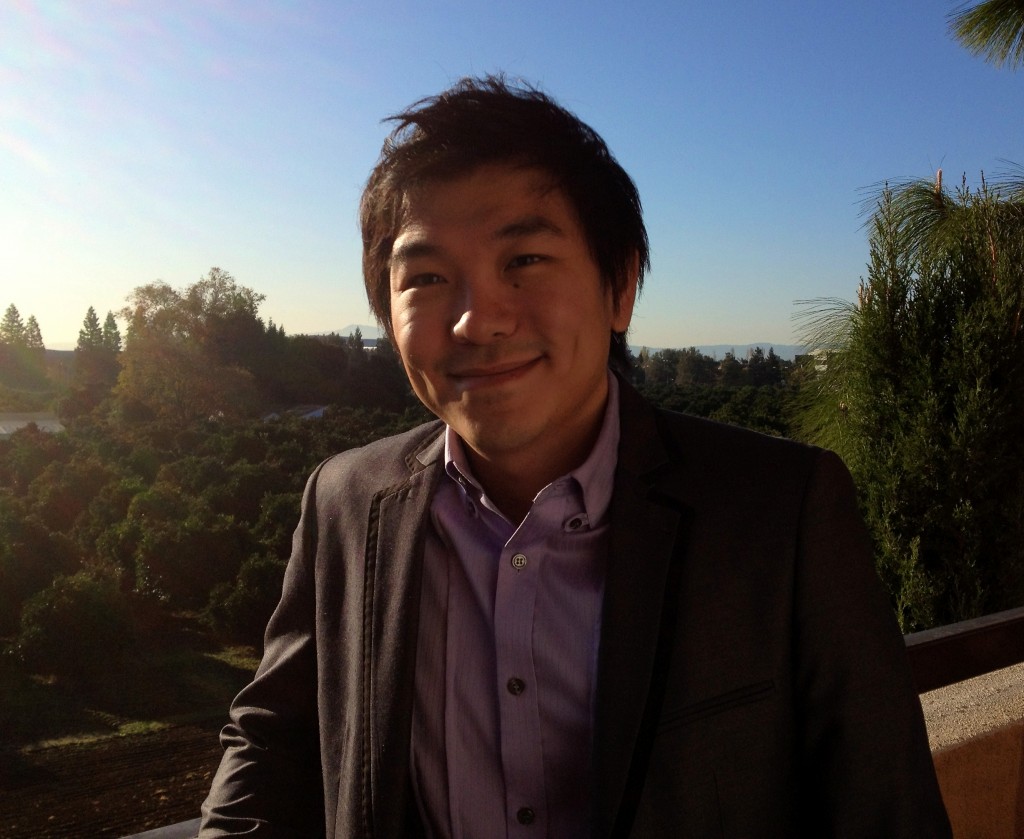
If you were among the millions who bought the new iPhone 4S, then you can thank Dr. Harry Chen, the UMBC alumnus who helped develop the phone’s most notable new feature: Siri.
For those not among the millions, here’s a bit of background: Siri is a virtual assistant that responds to voice commands. “She” can do things like make phone calls, send text messages, set alarms, and find directions. But, the remarkable thing about Siri is that she understands intent. Tell Siri “I’m drunk,” and she’ll bring up a list of cab services in the area. Tell Siri “I want a burger” and she’ll direct you to burger joints nearby, according to ratings.
Before Siri was bought by Apple, it was a small startup company operating out of Silicon Valley. Born out of a research project of SRI International, the company functioned under the moniker “stealth-company.com” until they were ready to disclose what they were working on, says Chen, who joined the team when he was offered a job by Adam Cheyer, one of the company’s initial founders.
The offer came at an ideal moment, after Chen and his wife had decided to start fresh on the West Coast. “We just packed and started looking for jobs,” says Chen who knew that Silicon Valley was the sort of culture he wanted to be in. But, when they made the move in 2008, he had no idea that he would end up contributing to one of the world’s most revolutionary technologies. “It has been a rollercoaster ride for me the past three years,” he says.
It’s no surprise that at UMBC, Chen studied artificial intelligence. He was a founding member of the Ebiquity group, named for its focus on Ubiquitous Computing—the idea that computing devices will seamlessly blend into our environment and enhance our everyday activity. While pursuing a Ph.D. in Computer Science at UMBC, Chen wrote his dissertation on intelligent rooms—rooms with the potential to collect information about their environment to share with different smart devices.
As a Graduate Student, Chen worked as a Research Assistant under Dr. Tim Finin. The position gave him the opportunity to meet other researchers in his field of study–like Cheyer, the man who would eventually offer him a place at Siri. Chen credits Dr. Tim Finin with pushing him forward: “Without him, I would probably not arrive where I am today.”
Today, Chen is a Siri Engineer at Apple and he loves it. “Apple is a very different company,” says Chen, who explains that the company runs more like a start-up than a big corporation. He couldn’t be happier with his decision to switch coasts. He sees Silicon Valley as the center of technological progress. “Reputable companies like Google, Facebook, Apple, Yahoo, Netflix, LinkedIn and Oracle are only a short drive from each other,” he says, “Cool new technologies tend to emerge within the Bay Area and then later spread throughout the world.”
Chen compares the evolution of Siri to a parent watching his child grow up. Though, it isn’t done growing–Chen predicts that the application will continue to improve. Siri is bound to become a model for the future of technology. Everyone—especially children and the elderly–will benefit by being able to interact with a computer just as they would a person: through speech. At least, so says Chen: “The natural evolution is natural language.”
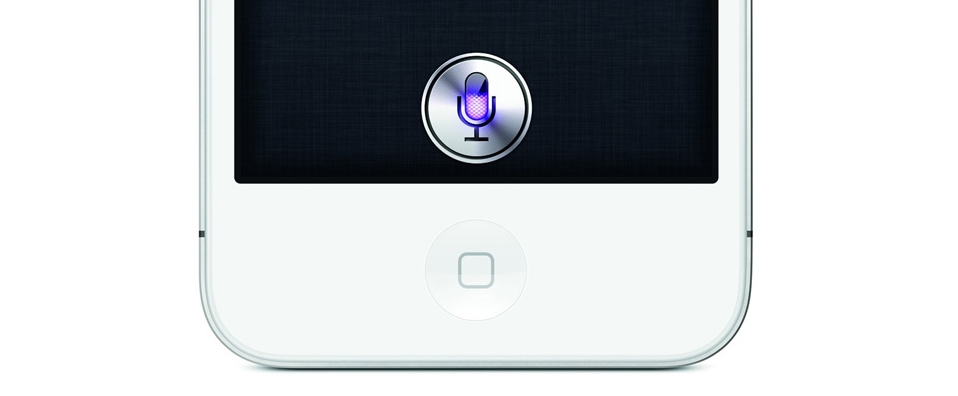 Photo Courtesy Gizmodo.com
]]>
If you were among the millions who bought the new iPhone 4S, then you can thank Dr. Harry Chen, the UMBC alumnus who helped develop the phone’s most notable new feature: Siri. For those not...
http://www.csee.umbc.edu/2011/11/umbc-alumnus-helps-develop-apples-latest-technology/
https://beta.my.umbc.edu/api/v0/pixel/news/10252/guest@my.umbc.edu/4d536bf7cb334177f5306879bd1070a5/api/pixel
alumni
news
Computer Science and Electrical Engineering
https://beta.my.umbc.edu/groups/csee
https://assets3-beta.my.umbc.edu/system/shared/avatars/groups/000/000/099/d117dca133c64bf78a4b7696dd007189/xsmall.png?1314043393
https://assets1-beta.my.umbc.edu/system/shared/avatars/groups/000/000/099/d117dca133c64bf78a4b7696dd007189/original.png?1314043393
https://assets1-beta.my.umbc.edu/system/shared/avatars/groups/000/000/099/d117dca133c64bf78a4b7696dd007189/xxlarge.png?1314043393
https://assets4-beta.my.umbc.edu/system/shared/avatars/groups/000/000/099/d117dca133c64bf78a4b7696dd007189/xlarge.png?1314043393
https://assets3-beta.my.umbc.edu/system/shared/avatars/groups/000/000/099/d117dca133c64bf78a4b7696dd007189/large.png?1314043393
https://assets1-beta.my.umbc.edu/system/shared/avatars/groups/000/000/099/d117dca133c64bf78a4b7696dd007189/medium.png?1314043393
https://assets2-beta.my.umbc.edu/system/shared/avatars/groups/000/000/099/d117dca133c64bf78a4b7696dd007189/small.png?1314043393
https://assets3-beta.my.umbc.edu/system/shared/avatars/groups/000/000/099/d117dca133c64bf78a4b7696dd007189/xsmall.png?1314043393
https://assets3-beta.my.umbc.edu/system/shared/avatars/groups/000/000/099/d117dca133c64bf78a4b7696dd007189/xxsmall.png?1314043393
Computer Science and Electrical Engineering
0
0
true
Tue, 08 Nov 2011 14:17:54 -0500
UMBC Alumnus helps develop Apple’s latest technology
If you were among the millions who bought the new iPhone 4S, then you can thank Dr. Harry Chen, the UMBC alumnus who helped develop the phone’s most notable new feature: Siri.
For those not among the millions, here’s a bit of background: Siri is a virtual assistant that responds to voice commands. “She” can do things like make phone calls, send text messages, set alarms, and find directions. But, the remarkable thing about Siri is that she understands intent. Tell Siri “I’m drunk,” and she’ll bring up a list of cab services in the area. Tell Siri “I want a burger” and she’ll direct you to burger joints nearby, according to ratings.
Before Siri was bought by Apple, it was a small startup company operating out of Silicon Valley. Born out of a research project of SRI International, the company functioned under the moniker “stealth-company.com” until they were ready to disclose what they were working on, says Chen, who joined the team when he was offered a job by Adam Cheyer, one of the company’s initial founders.
The offer came at an ideal moment, after Chen and his wife had decided to start fresh on the West Coast. “We just packed and started looking for jobs,” says Chen who knew that Silicon Valley was the sort of culture he wanted to be in. But, when they made the move in 2008, he had no idea that he would end up contributing to one of the world’s most revolutionary technologies. “It has been a rollercoaster ride for me the past three years,” he says.
It’s no surprise that at UMBC, Chen studied artificial intelligence. He was a founding member of the Ebiquity group, named for its focus on Ubiquitous Computing—the idea that computing devices will seamlessly blend into our environment and enhance our everyday activity. While pursuing a Ph.D. in Computer Science at UMBC, Chen wrote his dissertation on intelligent rooms—rooms with the potential to collect information about their environment to share with different smart devices.
As a Graduate Student, Chen worked as a Research Assistant under Dr. Tim Finin. The position gave him the opportunity to meet other researchers in his field of study–like Cheyer, the man who would eventually offer him a place at Siri. Chen credits Dr. Tim Finin with pushing him forward: “Without him, I would probably not arrive where I am today.”
Today, Chen is a Siri Engineer at Apple and he loves it. “Apple is a very different company,” says Chen, who explains that the company runs more like a start-up than a big corporation. He couldn’t be happier with his decision to switch coasts. He sees Silicon Valley as the center of technological progress. “Reputable companies like Google, Facebook, Apple, Yahoo, Netflix, LinkedIn and Oracle are only a short drive from each other,” he says, “Cool new technologies tend to emerge within the Bay Area and then later spread throughout the world.”
Chen compares the evolution of Siri to a parent watching his child grow up. Though, it isn’t done growing–Chen predicts that the application will continue to improve. Siri is bound to become a model for the future of technology. Everyone—especially children and the elderly–will benefit by being able to interact with a computer just as they would a person: through speech. At least, so says Chen: “The natural evolution is natural language.”
Photo Courtesy Gizmodo.com
]]>
If you were among the millions who bought the new iPhone 4S, then you can thank Dr. Harry Chen, the UMBC alumnus who helped develop the phone’s most notable new feature: Siri. For those not...
http://www.cs.umbc.edu/2011/11/umbc-alumnus-helps-develop-apples-latest-technology/
https://beta.my.umbc.edu/api/v0/pixel/news/10046/guest@my.umbc.edu/6819c58e7983a50e323f06115c4e08af/api/pixel
alumni
news
Computer Science and Electrical Engineering
https://beta.my.umbc.edu/groups/csee
https://assets3-beta.my.umbc.edu/system/shared/avatars/groups/000/000/099/d117dca133c64bf78a4b7696dd007189/xsmall.png?1314043393
https://assets1-beta.my.umbc.edu/system/shared/avatars/groups/000/000/099/d117dca133c64bf78a4b7696dd007189/original.png?1314043393
https://assets1-beta.my.umbc.edu/system/shared/avatars/groups/000/000/099/d117dca133c64bf78a4b7696dd007189/xxlarge.png?1314043393
https://assets4-beta.my.umbc.edu/system/shared/avatars/groups/000/000/099/d117dca133c64bf78a4b7696dd007189/xlarge.png?1314043393
https://assets3-beta.my.umbc.edu/system/shared/avatars/groups/000/000/099/d117dca133c64bf78a4b7696dd007189/large.png?1314043393
https://assets1-beta.my.umbc.edu/system/shared/avatars/groups/000/000/099/d117dca133c64bf78a4b7696dd007189/medium.png?1314043393
https://assets2-beta.my.umbc.edu/system/shared/avatars/groups/000/000/099/d117dca133c64bf78a4b7696dd007189/small.png?1314043393
https://assets3-beta.my.umbc.edu/system/shared/avatars/groups/000/000/099/d117dca133c64bf78a4b7696dd007189/xsmall.png?1314043393
https://assets3-beta.my.umbc.edu/system/shared/avatars/groups/000/000/099/d117dca133c64bf78a4b7696dd007189/xxsmall.png?1314043393
Computer Science and Electrical Engineering
3
0
true
Tue, 08 Nov 2011 14:17:54 -0500
talk: Cyber Security Situation Awareness and Impact...
Full Title: talk: Cyber Security Situation Awareness and Impact Assessment, 10:30am Tue 11/8
Cyber Security Situation Awareness and Impact Assessment:
Issues, Models and Applications
Dr. Gabriel Jakobson
Altusys Corporation, Princeton NJ
10:30-11:30am 8 November 2011, ITE 325
Cyber attacks committed against IT networks and services have profound impact both on ongoing mission and future missions, whose operations are based on these networks and services. The attacks, by exploiting the vulnerabilities of the software assets can push their impact through Cyber Terrain – a dependency network of structural, spatial, functional and other domain-specific dependencies that exist among software assets and services, and reach the missions. In this presentation we will introduce a novel approach of assessing impact of cyber attacks on missions (business process) and describe the basic models and algorithms of the approach.
Dr. Gabriel Jakobson is the VP and Chief Scientist at Altusys Corp., a consulting firm specializing in the development of intelligent situation management technologies for defence and cyber security applications. During his more than 20 years tenure at Verizon he had increasing responsibilities of leading advanced database, expert systems, artificial intelligence, and telecommunication network management programs. He has authored (and co-authored) more than 100 technical papers and is principal author of 5 US patents in situation management and event correlation. He received PhD degree in Computer Science from the Institute of Cybernetics, Estonia. Dr. Jakobson holds the honorary degree of Doctor Honorius Causa from the Tallinn Technical University, Estonia, and is Distinguished IEEE Lecturer. Dr. Jakobson is the member of the Board of Governors of IEEE Communications Society, Director, IEEE ComSoc North America Region, co-chair of the Tactical Communications and Operations Technical Committee of IEEE ComSoc, chair of the IEEE ComSoc Sub-Committee on Situation Management.
Host: Anupam Joshi
]]>
Full Title: talk: Cyber Security Situation Awareness and Impact Assessment, 10:30am Tue 11/8 Cyber Security Situation Awareness and Impact Assessment: Issues, Models and Applications Dr....
http://www.csee.umbc.edu/2011/11/talk-cyber-security-situation-awareness-and-impact-assessment-1030am-tue-118/
https://beta.my.umbc.edu/api/v0/pixel/news/10253/guest@my.umbc.edu/be8f29ff5545611457dcb17641ebb6b9/api/pixel
cybersecurity
news
research
talks
Computer Science and Electrical Engineering
https://beta.my.umbc.edu/groups/csee
https://assets3-beta.my.umbc.edu/system/shared/avatars/groups/000/000/099/d117dca133c64bf78a4b7696dd007189/xsmall.png?1314043393
https://assets1-beta.my.umbc.edu/system/shared/avatars/groups/000/000/099/d117dca133c64bf78a4b7696dd007189/original.png?1314043393
https://assets1-beta.my.umbc.edu/system/shared/avatars/groups/000/000/099/d117dca133c64bf78a4b7696dd007189/xxlarge.png?1314043393
https://assets4-beta.my.umbc.edu/system/shared/avatars/groups/000/000/099/d117dca133c64bf78a4b7696dd007189/xlarge.png?1314043393
https://assets3-beta.my.umbc.edu/system/shared/avatars/groups/000/000/099/d117dca133c64bf78a4b7696dd007189/large.png?1314043393
https://assets1-beta.my.umbc.edu/system/shared/avatars/groups/000/000/099/d117dca133c64bf78a4b7696dd007189/medium.png?1314043393
https://assets2-beta.my.umbc.edu/system/shared/avatars/groups/000/000/099/d117dca133c64bf78a4b7696dd007189/small.png?1314043393
https://assets3-beta.my.umbc.edu/system/shared/avatars/groups/000/000/099/d117dca133c64bf78a4b7696dd007189/xsmall.png?1314043393
https://assets3-beta.my.umbc.edu/system/shared/avatars/groups/000/000/099/d117dca133c64bf78a4b7696dd007189/xxsmall.png?1314043393
Computer Science and Electrical Engineering
0
0
true
Tue, 08 Nov 2011 08:12:36 -0500
talk: Cyber Security Situation Awareness and Impact...
Full Title: talk: Cyber Security Situation Awareness and Impact Assessment, 10:30am Tue 11/8
Cyber Security Situation Awareness and Impact Assessment:
Issues, Models and Applications
Dr. Gabriel Jakobson
Altusys Corporation, Princeton NJ
10:30-11:30am 8 November 2011, ITE 325
Cyber attacks committed against IT networks and services have profound impact both on ongoing mission and future missions, whose operations are based on these networks and services. The attacks, by exploiting the vulnerabilities of the software assets can push their impact through Cyber Terrain – a dependency network of structural, spatial, functional and other domain-specific dependencies that exist among software assets and services, and reach the missions. In this presentation we will introduce a novel approach of assessing impact of cyber attacks on missions (business process) and describe the basic models and algorithms of the approach.
Dr. Gabriel Jakobson is the VP and Chief Scientist at Altusys Corp., a consulting firm specializing in the development of intelligent situation management technologies for defence and cyber security applications. During his more than 20 years tenure at Verizon he had increasing responsibilities of leading advanced database, expert systems, artificial intelligence, and telecommunication network management programs. He has authored (and co-authored) more than 100 technical papers and is principal author of 5 US patents in situation management and event correlation. He received PhD degree in Computer Science from the Institute of Cybernetics, Estonia. Dr. Jakobson holds the honorary degree of Doctor Honorius Causa from the Tallinn Technical University, Estonia, and is Distinguished IEEE Lecturer. Dr. Jakobson is the member of the Board of Governors of IEEE Communications Society, Director, IEEE ComSoc North America Region, co-chair of the Tactical Communications and Operations Technical Committee of IEEE ComSoc, chair of the IEEE ComSoc Sub-Committee on Situation Management.
Host: Anupam Joshi
]]>
Full Title: talk: Cyber Security Situation Awareness and Impact Assessment, 10:30am Tue 11/8 Cyber Security Situation Awareness and Impact Assessment: Issues, Models and Applications Dr....
http://www.cs.umbc.edu/2011/11/talk-cyber-security-situation-awareness-and-impact-assessment-1030am-tue-118/
https://beta.my.umbc.edu/api/v0/pixel/news/10024/guest@my.umbc.edu/56399cf0fa99bc9203a579cea49d55ea/api/pixel
cybersecurity
news
research
talks
Computer Science and Electrical Engineering
https://beta.my.umbc.edu/groups/csee
https://assets3-beta.my.umbc.edu/system/shared/avatars/groups/000/000/099/d117dca133c64bf78a4b7696dd007189/xsmall.png?1314043393
https://assets1-beta.my.umbc.edu/system/shared/avatars/groups/000/000/099/d117dca133c64bf78a4b7696dd007189/original.png?1314043393
https://assets1-beta.my.umbc.edu/system/shared/avatars/groups/000/000/099/d117dca133c64bf78a4b7696dd007189/xxlarge.png?1314043393
https://assets4-beta.my.umbc.edu/system/shared/avatars/groups/000/000/099/d117dca133c64bf78a4b7696dd007189/xlarge.png?1314043393
https://assets3-beta.my.umbc.edu/system/shared/avatars/groups/000/000/099/d117dca133c64bf78a4b7696dd007189/large.png?1314043393
https://assets1-beta.my.umbc.edu/system/shared/avatars/groups/000/000/099/d117dca133c64bf78a4b7696dd007189/medium.png?1314043393
https://assets2-beta.my.umbc.edu/system/shared/avatars/groups/000/000/099/d117dca133c64bf78a4b7696dd007189/small.png?1314043393
https://assets3-beta.my.umbc.edu/system/shared/avatars/groups/000/000/099/d117dca133c64bf78a4b7696dd007189/xsmall.png?1314043393
https://assets3-beta.my.umbc.edu/system/shared/avatars/groups/000/000/099/d117dca133c64bf78a4b7696dd007189/xxsmall.png?1314043393
Computer Science and Electrical Engineering
2
0
true
Tue, 08 Nov 2011 08:12:36 -0500
Faculty Profile: Professor Ryan Bergeron

Professor Ryan Bergeron has been a lecturer of Computer Science at UMBC since Spring 2008. Currently the Technical Director for UMBC's Women's Volleyball team, Bergeron's research interests lie at the intersection of athletics and technology. Questions like “How do I make coaches understand what their players are doing better” and “How can we make athletes even better at what they do” are at the heart of his search.
To read more about professor Ryan Bergeron, see his faculty profile.
]]>
Professor Ryan Bergeron has been a lecturer of Computer Science at UMBC since Spring 2008. Currently the Technical Director for UMBC's Women's Volleyball team, Bergeron's research interests lie at...
http://www.csee.umbc.edu/2011/11/faculty-profile-professor-ryan-bergeron/
https://beta.my.umbc.edu/api/v0/pixel/news/10254/guest@my.umbc.edu/719c1c6a845333b5ba5dd0bcddd3eebb/api/pixel
news
Computer Science and Electrical Engineering
https://beta.my.umbc.edu/groups/csee
https://assets3-beta.my.umbc.edu/system/shared/avatars/groups/000/000/099/d117dca133c64bf78a4b7696dd007189/xsmall.png?1314043393
https://assets1-beta.my.umbc.edu/system/shared/avatars/groups/000/000/099/d117dca133c64bf78a4b7696dd007189/original.png?1314043393
https://assets1-beta.my.umbc.edu/system/shared/avatars/groups/000/000/099/d117dca133c64bf78a4b7696dd007189/xxlarge.png?1314043393
https://assets4-beta.my.umbc.edu/system/shared/avatars/groups/000/000/099/d117dca133c64bf78a4b7696dd007189/xlarge.png?1314043393
https://assets3-beta.my.umbc.edu/system/shared/avatars/groups/000/000/099/d117dca133c64bf78a4b7696dd007189/large.png?1314043393
https://assets1-beta.my.umbc.edu/system/shared/avatars/groups/000/000/099/d117dca133c64bf78a4b7696dd007189/medium.png?1314043393
https://assets2-beta.my.umbc.edu/system/shared/avatars/groups/000/000/099/d117dca133c64bf78a4b7696dd007189/small.png?1314043393
https://assets3-beta.my.umbc.edu/system/shared/avatars/groups/000/000/099/d117dca133c64bf78a4b7696dd007189/xsmall.png?1314043393
https://assets3-beta.my.umbc.edu/system/shared/avatars/groups/000/000/099/d117dca133c64bf78a4b7696dd007189/xxsmall.png?1314043393
Computer Science and Electrical Engineering
0
0
true
Mon, 07 Nov 2011 09:11:00 -0500