CSEE programs graduate 114 students in December

We congratulate the 114 students who graduated from our programs in December 2011. Three students received Ph.D. degrees in Computer Science, 58 received M.S. degrees in Computer Engineering, Computer Science, Electrical Engineering, Engineering Management and Systems Engineering, and 53 got B.S. degrees in Computer Engineering and Computer Science. We wish all of our new alumni happiness and success as they moved on to new challenges in 2012. Please stay in touch by keeping your contact information current on the UMBC Alumni Association site.
]]>
We congratulate the 114 students who graduated from our programs in December 2011. Three students received Ph.D. degrees in Computer Science, 58 received M.S. degrees in Computer Engineering,...
http://www.csee.umbc.edu/2011/12/csee-programs-graduate-114-students-in-december/
https://beta.my.umbc.edu/api/v0/pixel/news/11029/guest@my.umbc.edu/aa924e2c50aec988ac288142dd380afc/api/pixel
graduate
news
undergraduate
Computer Science and Electrical Engineering
https://beta.my.umbc.edu/groups/csee
https://assets3-beta.my.umbc.edu/system/shared/avatars/groups/000/000/099/d117dca133c64bf78a4b7696dd007189/xsmall.png?1314043393
https://assets1-beta.my.umbc.edu/system/shared/avatars/groups/000/000/099/d117dca133c64bf78a4b7696dd007189/original.png?1314043393
https://assets1-beta.my.umbc.edu/system/shared/avatars/groups/000/000/099/d117dca133c64bf78a4b7696dd007189/xxlarge.png?1314043393
https://assets4-beta.my.umbc.edu/system/shared/avatars/groups/000/000/099/d117dca133c64bf78a4b7696dd007189/xlarge.png?1314043393
https://assets3-beta.my.umbc.edu/system/shared/avatars/groups/000/000/099/d117dca133c64bf78a4b7696dd007189/large.png?1314043393
https://assets1-beta.my.umbc.edu/system/shared/avatars/groups/000/000/099/d117dca133c64bf78a4b7696dd007189/medium.png?1314043393
https://assets2-beta.my.umbc.edu/system/shared/avatars/groups/000/000/099/d117dca133c64bf78a4b7696dd007189/small.png?1314043393
https://assets3-beta.my.umbc.edu/system/shared/avatars/groups/000/000/099/d117dca133c64bf78a4b7696dd007189/xsmall.png?1314043393
https://assets3-beta.my.umbc.edu/system/shared/avatars/groups/000/000/099/d117dca133c64bf78a4b7696dd007189/xxsmall.png?1314043393
Computer Science and Electrical Engineering
5
0
true
Mon, 26 Dec 2011 09:28:55 -0500
ACM Queue programming challenge
If you’re at loose ends for the semester break and want to sharpen your programming slils, you might try competing in the ACM Queue Magazine online programming competition. You will program a player that will compete with others in the game of Coercion. The competition opens January 15 and closes at midnight GMT on February 12.
“The game of Coercion takes place on a square field that is divided into regions, which vary by height and slope of the field. Each player controls three movable playing pieces called pushers, using them to push little doughnut-shaped markers around. Players use the markers to claim new territory on the playing field. The player with the most territory at the end of the match wins. The game rules will describe how to control your team, score points, and win. A double elimination tournament follows the coding phase, to determine the top four places.”
You can create your entry in in C++, C#, Java, Python or JavaScript. Preliminary matches will take place during the one-month coding phase will that will let you know how well your player is doing. A final double-elimination competition among all the submitted players will decide whose player is best.
Queue is the ACM’s magazine for practicing software engineers. Written by engineers for engineers, it focuses on the technical problems and challenges that loom ahead, helping readers to sharpen their own thinking and pursue innovative solutions.
]]>
If you’re at loose ends for the semester break and want to sharpen your programming slils, you might try competing in the ACM Queue Magazine online programming competition. You will program a...
http://www.csee.umbc.edu/2011/12/acm-queue-programming-challenge/
https://beta.my.umbc.edu/api/v0/pixel/news/10957/guest@my.umbc.edu/24167840b23c096264f63337f3bcaabb/api/pixel
computer-science
graduate
news
undergraduate
Computer Science and Electrical Engineering
https://beta.my.umbc.edu/groups/csee
https://assets3-beta.my.umbc.edu/system/shared/avatars/groups/000/000/099/d117dca133c64bf78a4b7696dd007189/xsmall.png?1314043393
https://assets1-beta.my.umbc.edu/system/shared/avatars/groups/000/000/099/d117dca133c64bf78a4b7696dd007189/original.png?1314043393
https://assets1-beta.my.umbc.edu/system/shared/avatars/groups/000/000/099/d117dca133c64bf78a4b7696dd007189/xxlarge.png?1314043393
https://assets4-beta.my.umbc.edu/system/shared/avatars/groups/000/000/099/d117dca133c64bf78a4b7696dd007189/xlarge.png?1314043393
https://assets3-beta.my.umbc.edu/system/shared/avatars/groups/000/000/099/d117dca133c64bf78a4b7696dd007189/large.png?1314043393
https://assets1-beta.my.umbc.edu/system/shared/avatars/groups/000/000/099/d117dca133c64bf78a4b7696dd007189/medium.png?1314043393
https://assets2-beta.my.umbc.edu/system/shared/avatars/groups/000/000/099/d117dca133c64bf78a4b7696dd007189/small.png?1314043393
https://assets3-beta.my.umbc.edu/system/shared/avatars/groups/000/000/099/d117dca133c64bf78a4b7696dd007189/xsmall.png?1314043393
https://assets3-beta.my.umbc.edu/system/shared/avatars/groups/000/000/099/d117dca133c64bf78a4b7696dd007189/xxsmall.png?1314043393
Computer Science and Electrical Engineering
4
0
true
Tue, 20 Dec 2011 23:58:52 -0500
Cyber Challenge Hones Students’ Cyber Skills
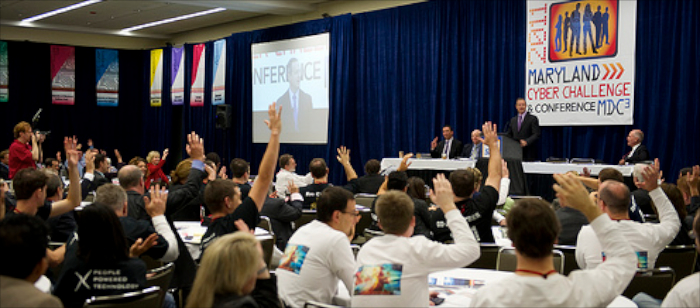
Tyler Campbell, Nick Ducq, Ryan King, Andrew Nguyen and Tim Spillman walked out of the Baltimore Convention Center elated. Their team, the Sherwood Cyber Warriors, had just won the high school division of the inaugural Maryland Cyber Challenge. Their success netted them each a $5,000 scholarship from the National Security Agency.
The entire experience was rewarding for both the students and their parents, says Steve Weiss, one of the team’s advisers. “Winning first place was the icing on the cake.”
In a conference with over 800 attendees, the excitement over the cyber competition was palpable. With scoreboards changing in real time, onlookers crowded around to see who was in the lead.
Following the competition, held October 21 and 22, eight teams from each division — professional, college and high school — walked away with scholarships and cash prizes. The scholarships for students, put up by the National Security Agency (NSA), totaled more than $84,000.
Members of first place high school and college teams took home $5,000 scholarships each. Members of second place high school and college teams took home $2,000 scholarships. Each member of the first place professional teams won $2,000 and each second place member won $1,000.
First place winners in the college and high school categories were from, respectively, the University of Maryland, College Park and Sherwood High School. Second place winners were Towson University and Poolesville High School. In the professional category Team ICF came in first, with Team Pr3tty coming in second.
The Sherwood Cyber Warriors, four seniors and a junior, are mostly undecided in their future careers, although one does plan to work cybersecurity. Jim Kirk, the team’s senior advisor, says that regardless of the their ultimate career choices, the students learned valuable skills from the competition — such as how to communicate effectively and work as a team.
The Cyber Warriors began practicing for the competition in May, often meeting twice a week. The team developed strategies to pick the low hanging fruit — what hackers go for first. That, says Kirk, includes developing strong passwords and removing unnecessary software from servers.
The challenge for the high school teams, says Rick Forno, Director of UMBC's Graduate Cybersecurity Program and an organizer of the Cyber Challenge, was purely defensive. “They were being attacked and their job was to keep services open.”
The challenge was run using CyberNEXS, a software system developed by SAIC for cybersecurity training and exercises.The system is self-contained and runs both Windows and UNIX systems.
But, more than just the chance to compete, the event gave college and high school students a taste of what cybersecurity work is like. And that, involves more than technical skills say professionals in the field.
“The cyber challenge is especially interesting to me, since all the students participating are passionate about cyber security and the teams will only excel if every member is doing their job,” says Neil Furukawa, vice president of CyberPoint International. “We’re looking for people who can lead, but who can also roll up their sleeves and get the work done.”
Phyllis Villani, Director of Talent acquisition at Northrop Grumman says that to get a job, “networking is key.” Besides honing “soft skills” like communication, Furukawa says, people should never stop their education because cybersecurity is a rapidly evolving field.
Fittingly, education is what the Maryland Cyber Challenge is all about.
Originally posted by Nicole Ruediger at November 18, 2011 1:02 PM
]]>
Tyler Campbell, Nick Ducq, Ryan King, Andrew Nguyen and Tim Spillman walked out of the Baltimore Convention Center elated. Their team, the Sherwood Cyber Warriors, had just won the high school...
http://www.csee.umbc.edu/2011/12/cyber-challenge-hones-students-cyber-skills/
https://beta.my.umbc.edu/api/v0/pixel/news/10956/guest@my.umbc.edu/cc42d367060008b73d2f2cffc9b458ef/api/pixel
cybersecurity
graduate
news
undergraduate
Computer Science and Electrical Engineering
https://beta.my.umbc.edu/groups/csee
https://assets3-beta.my.umbc.edu/system/shared/avatars/groups/000/000/099/d117dca133c64bf78a4b7696dd007189/xsmall.png?1314043393
https://assets1-beta.my.umbc.edu/system/shared/avatars/groups/000/000/099/d117dca133c64bf78a4b7696dd007189/original.png?1314043393
https://assets1-beta.my.umbc.edu/system/shared/avatars/groups/000/000/099/d117dca133c64bf78a4b7696dd007189/xxlarge.png?1314043393
https://assets4-beta.my.umbc.edu/system/shared/avatars/groups/000/000/099/d117dca133c64bf78a4b7696dd007189/xlarge.png?1314043393
https://assets3-beta.my.umbc.edu/system/shared/avatars/groups/000/000/099/d117dca133c64bf78a4b7696dd007189/large.png?1314043393
https://assets1-beta.my.umbc.edu/system/shared/avatars/groups/000/000/099/d117dca133c64bf78a4b7696dd007189/medium.png?1314043393
https://assets2-beta.my.umbc.edu/system/shared/avatars/groups/000/000/099/d117dca133c64bf78a4b7696dd007189/small.png?1314043393
https://assets3-beta.my.umbc.edu/system/shared/avatars/groups/000/000/099/d117dca133c64bf78a4b7696dd007189/xsmall.png?1314043393
https://assets3-beta.my.umbc.edu/system/shared/avatars/groups/000/000/099/d117dca133c64bf78a4b7696dd007189/xxsmall.png?1314043393
Computer Science and Electrical Engineering
1
0
true
Tue, 20 Dec 2011 23:30:25 -0500
Marie desJardins named ACM Distinguished Member
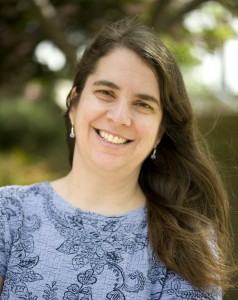
ACM has recognized CSEE Professor Marie desJardins as a Distinguished Member for her contributions to the field of computing. ACM is the world's largest educational and scientific computing society. Each year it recognizes a handful of its members for significant advances in computing technology that have dramatically influenced progress on a range of human endeavors. This year, Dr. desJardins was one of just 54 computer scientists, educators, and engineers from leading academic and corporate institutions worldwide who were recognized.
Dr. desJardins is well known for her artificial intelligence research, which focuses on planning, learning, and multiagent systems. She leads the large and active MAPLE research group and also works on developing new techniques to improve computer science education.
]]>
ACM has recognized CSEE Professor Marie desJardins as a Distinguished Member for her contributions to the field of computing. ACM is the world's largest educational and scientific computing...
http://www.csee.umbc.edu/2011/12/marie-desjardins-named-acm-distinguished-member/
https://beta.my.umbc.edu/api/v0/pixel/news/10918/guest@my.umbc.edu/f040be5e64a5f0a76aefba11fb79e7ea/api/pixel
faculty-and-staff
news
research
Computer Science and Electrical Engineering
https://beta.my.umbc.edu/groups/csee
https://assets3-beta.my.umbc.edu/system/shared/avatars/groups/000/000/099/d117dca133c64bf78a4b7696dd007189/xsmall.png?1314043393
https://assets1-beta.my.umbc.edu/system/shared/avatars/groups/000/000/099/d117dca133c64bf78a4b7696dd007189/original.png?1314043393
https://assets1-beta.my.umbc.edu/system/shared/avatars/groups/000/000/099/d117dca133c64bf78a4b7696dd007189/xxlarge.png?1314043393
https://assets4-beta.my.umbc.edu/system/shared/avatars/groups/000/000/099/d117dca133c64bf78a4b7696dd007189/xlarge.png?1314043393
https://assets3-beta.my.umbc.edu/system/shared/avatars/groups/000/000/099/d117dca133c64bf78a4b7696dd007189/large.png?1314043393
https://assets1-beta.my.umbc.edu/system/shared/avatars/groups/000/000/099/d117dca133c64bf78a4b7696dd007189/medium.png?1314043393
https://assets2-beta.my.umbc.edu/system/shared/avatars/groups/000/000/099/d117dca133c64bf78a4b7696dd007189/small.png?1314043393
https://assets3-beta.my.umbc.edu/system/shared/avatars/groups/000/000/099/d117dca133c64bf78a4b7696dd007189/xsmall.png?1314043393
https://assets3-beta.my.umbc.edu/system/shared/avatars/groups/000/000/099/d117dca133c64bf78a4b7696dd007189/xxsmall.png?1314043393
Computer Science and Electrical Engineering
39
3
true
Sat, 17 Dec 2011 00:36:58 -0500
talk: Oil Spills and Search and Rescue: Key...
Full Title: talk: Oil Spills and Search and Rescue: Key Computational Challenges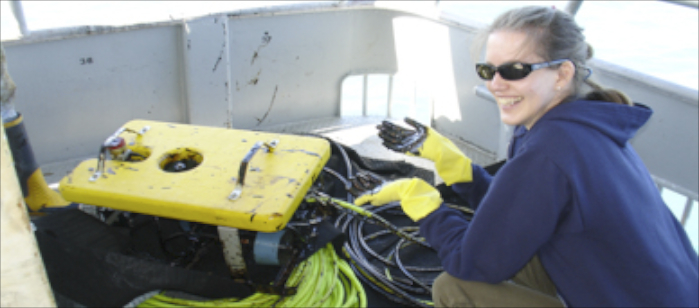
UMBC CHMPR Colloquium
Oil Spills and Search and Rescue:
Key Computational Challenges
Dr. C. J. Beegle-Krause
Environmental Research for Decision, Inc.
1:00pm 16 December 2011, ITE 227 325b
Leveraging the research community into societal issues can help save lives and reduce environmental impacts from both natural and anthropogenic disasters. For example, Search and Rescue, oil Spills, and marine debris drift are decision support areas commonly solved with Eulerian-Lagrangian models. These models typically use wind and current fields derived from external circulation models. These problems share many similarities:
- Use of a “leeway” or “windage” to simulate drift on the water surface or atmospheric transport,
- Increased leveraging of larger scale physical ocean and atmospheric circulation models, and
- Predicting geolocation information with sufficient accuracy for detection (e.g. finding the person) or response (booming off the beach),
However, there are some distinct differences and each field has some case types with complexities that remain unanswered by the research community. This presentation will cover some key examples, such as:
- Mystery spills (reverse drift) – Where did oil come from?
- Surface collection areas (sensitivity of drift to surface circulation convergence and divergences and shoreline contact);
- Accuracy required for locating a target – small islands may be missing in implementation of numerical model; and
- Extensive drift problems – an overdue vessel may have crossed the domains of several small and large-‐scale models.
The 21st century vision of numerical modeling includes Lagrangian Coherent Structures (LCS, and application of chaos theory), Social Media (thanks to UMBC), further integration of numerical and geospatial data streams, and more real-‐time information access through handheld computing.
Dr. C.J. Beegle-Krause is President of Environmental Research for Decision, Inc., a nonprofit dedicated to three primary missions: transitioning peer reviewed research into Decision Support applications; Education; and Data Rescue. As founder of the nonprofit, she has a strong vision of the Next Generation Trajectory. Her background is in physical oceanography, specializing in modeling chemical transport. She is one of the original developers of the NOAA Office of Response and Restoration (OR&R) GNOME trajectory model, and spent five years of her career at NOAA as one of the U.S. lead trajectory forecasters, on-call 24×7 for events around the world. She was called back to NOAA OR&R for the Deepwater Horizon (MC252) oil spill and continues to work on aspects of that incident and future model development.
]]>
Full Title: talk: Oil Spills and Search and Rescue: Key Computational Challenges UMBC CHMPR Colloquium Oil Spills and Search and Rescue: Key Computational Challenges Dr. C. J....
http://www.csee.umbc.edu/2011/12/talk-oil-spills-and-search-and-rescue-key-computational-challenges/
https://beta.my.umbc.edu/api/v0/pixel/news/10776/guest@my.umbc.edu/459ec042f59c37e16d12fd5b375c9ff0/api/pixel
news
research
talks
Computer Science and Electrical Engineering
https://beta.my.umbc.edu/groups/csee
https://assets3-beta.my.umbc.edu/system/shared/avatars/groups/000/000/099/d117dca133c64bf78a4b7696dd007189/xsmall.png?1314043393
https://assets1-beta.my.umbc.edu/system/shared/avatars/groups/000/000/099/d117dca133c64bf78a4b7696dd007189/original.png?1314043393
https://assets1-beta.my.umbc.edu/system/shared/avatars/groups/000/000/099/d117dca133c64bf78a4b7696dd007189/xxlarge.png?1314043393
https://assets4-beta.my.umbc.edu/system/shared/avatars/groups/000/000/099/d117dca133c64bf78a4b7696dd007189/xlarge.png?1314043393
https://assets3-beta.my.umbc.edu/system/shared/avatars/groups/000/000/099/d117dca133c64bf78a4b7696dd007189/large.png?1314043393
https://assets1-beta.my.umbc.edu/system/shared/avatars/groups/000/000/099/d117dca133c64bf78a4b7696dd007189/medium.png?1314043393
https://assets2-beta.my.umbc.edu/system/shared/avatars/groups/000/000/099/d117dca133c64bf78a4b7696dd007189/small.png?1314043393
https://assets3-beta.my.umbc.edu/system/shared/avatars/groups/000/000/099/d117dca133c64bf78a4b7696dd007189/xsmall.png?1314043393
https://assets3-beta.my.umbc.edu/system/shared/avatars/groups/000/000/099/d117dca133c64bf78a4b7696dd007189/xxsmall.png?1314043393
Computer Science and Electrical Engineering
1
0
true
Thu, 08 Dec 2011 22:30:39 -0500
Thu, 08 Dec 2011 22:30:39 -0500
UMBC team places second in the DARPA Shredder Challenge

Just over a month ago, DARPA announced The Shredder Challenge competition to develop a system to solve puzzles by reassembling images of shredded documents with a $50,000 prize for the winning entry. Yesterday the prize was won by All Your Shreds Are Belong to U.S., a San Francisco-based team that was the first to correctly reconstructed each of the five challenge documents.

UMBC Assistant VP for
Research Don Engel
It's unfortunate that there was no prize for second place, because that honor was won by Schroddon, a two-person effort including UMBC Assistant Vice President for Research Don Engel. While most of the top teams had a handful of software engineers and used commercial crowdsourcing services, Schroddon was a part-time effort by Dr. Engel and his wife, Dr. Marianne Engel.
Both Don and Marianne have Ph.D.s in Physics, but Don also has an undergraduate degree in Computer Science, did graduate work in computational linguistics, and develops software in his spare time for fun. Two of his active software development projects are ShowMe3D, an application for Mac and iOS that can be used to take and view 3D photos, and When2meet, a free web-based tool for finding the best time for a group to meet.
The Shredder Challenge was the latest competition run by DARPA as a low cost way to spur research on new problems. The press release describes it this way.
"The Shredder Challenge represents a preliminary investigation into the area of information security to identify and assess potential capabilities that could be used by war fighters operating in war zones to more quickly obtain valuable information from confiscated, shredded documents and gain a quantitative understanding of potential vulnerabilities inherent to the shredding of sensitive U.S. National security documents."
"Lots of experts were skeptical that a solution could be produced at all let alone within the short time frame,” said Dan Kaufman, director, DARPA Information Innovation Office. “The most effective approaches were not purely computational or crowd-sourced, but used a combination blended with some clever detective work. We are impressed by the ingenuity this type of competition elicits."
Over 9,000 teams registered for the Shredder Challenge and it is quite an achievement for the Engles to have placed second, especially against many much larger teams. If you are interested in seeing what the data is like, you can download it from the DARPA site.
These challenge competitions are becoming more common and are a great way for students to get involved in independent research and maybe win fame and fortune.
]]>
Just over a month ago, DARPA announced The Shredder Challenge competition to develop a system to solve puzzles by reassembling images of shredded documents with a $50,000 prize for the winning...
http://www.csee.umbc.edu/2011/12/umbc-team-places-second-in-the-darpa-shredder-challenge/
https://beta.my.umbc.edu/api/v0/pixel/news/10655/guest@my.umbc.edu/6e763604b5be9c84148b3f90414c1f53/api/pixel
computer-science
cybersecurity
news
research
Computer Science and Electrical Engineering
https://beta.my.umbc.edu/groups/csee
https://assets3-beta.my.umbc.edu/system/shared/avatars/groups/000/000/099/d117dca133c64bf78a4b7696dd007189/xsmall.png?1314043393
https://assets1-beta.my.umbc.edu/system/shared/avatars/groups/000/000/099/d117dca133c64bf78a4b7696dd007189/original.png?1314043393
https://assets1-beta.my.umbc.edu/system/shared/avatars/groups/000/000/099/d117dca133c64bf78a4b7696dd007189/xxlarge.png?1314043393
https://assets4-beta.my.umbc.edu/system/shared/avatars/groups/000/000/099/d117dca133c64bf78a4b7696dd007189/xlarge.png?1314043393
https://assets3-beta.my.umbc.edu/system/shared/avatars/groups/000/000/099/d117dca133c64bf78a4b7696dd007189/large.png?1314043393
https://assets1-beta.my.umbc.edu/system/shared/avatars/groups/000/000/099/d117dca133c64bf78a4b7696dd007189/medium.png?1314043393
https://assets2-beta.my.umbc.edu/system/shared/avatars/groups/000/000/099/d117dca133c64bf78a4b7696dd007189/small.png?1314043393
https://assets3-beta.my.umbc.edu/system/shared/avatars/groups/000/000/099/d117dca133c64bf78a4b7696dd007189/xsmall.png?1314043393
https://assets3-beta.my.umbc.edu/system/shared/avatars/groups/000/000/099/d117dca133c64bf78a4b7696dd007189/xxsmall.png?1314043393
Computer Science and Electrical Engineering
19
5
true
Sat, 03 Dec 2011 15:42:51 -0500
Sat, 03 Dec 2011 15:42:51 -0500
talk: Christopher Rose (Rutgers): Write or Radiate
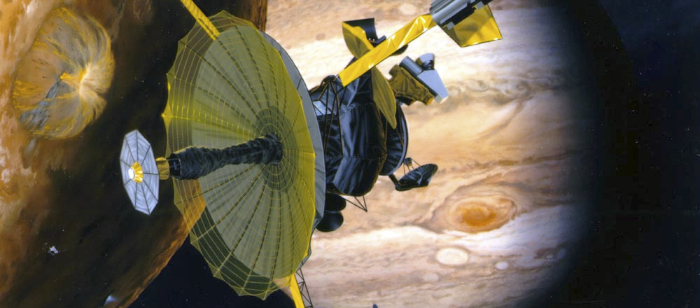
Write or Radiate
Professor Christopher Rose
Rutgers University
1:00pm Friday December 9, 2011, ITE 227
Communication theory researchers do the relatively routine but deeply important work that maintains and expands our increasingly connected society. It is therefore easy to forget that communications research, by its very nature, is more than about telephones and the Internet, but is about interactions of any and every kind. That is, communication theory is an inherently profound subject and as communications researchers, we should be sensitive to the deeper questions our discipline often raises. In illustration, we describe how some routine wireless research had something surprising to say about how we might efficiently communicate across a wide range of distances and in so doing knocked on the door of one of the "big questions" — are we alone in the universe?
Christopher Rose was a semi-lifer at MIT from 1975 to 1985. He was paroled by his new wife and new baby in 1985 when he graduated with a Ph.D. in EECS. Almost immediately afterward he began what is now a 26-year-and-counting postdoc in communication theory starting at Bell Laboratories Research where he rubbed shoulders with a wide range of uniformly delightful technical angels and curmudgeons. He's currently an ECE professor at Rutgers, WINLAB and an IEEE Fellow cited for "contributions to wireless systems theory."
Chris has always been confused about his technical identity and has thus roamed over research terrain that has included introducing surprisingly good random switch architectures as an antidote to the "topology of the week" rage back in the late '80s, better-than-fiber superconducting coax with levitated center conductors during the heady days of High-Tc superconductors, and a variety of wireless problems, culminating in his proudest moment — an interview on NPR where a caller asked him about crop circles and ET communication. That interview (and the Nature paper which spawned it) has done wonders for his reputation as an expert witness.
He is currently thinking hard about (but not making loads of progress on) fundamental problems in bio-molecular communication. He is also thinking about communications as a lens on everything — with some already surprising initial results.
]]>
Write or Radiate Professor Christopher Rose Rutgers University 1:00pm Friday December 9, 2011, ITE 227 Communication theory researchers do the relatively routine but deeply important work...
http://www.csee.umbc.edu/2011/11/talk-christopher-rose-rutgers-write-or-radiate/
https://beta.my.umbc.edu/api/v0/pixel/news/10555/guest@my.umbc.edu/b306f360322360c1f71914211d3ae116/api/pixel
news
other
research
talks
Computer Science and Electrical Engineering
https://beta.my.umbc.edu/groups/csee
https://assets3-beta.my.umbc.edu/system/shared/avatars/groups/000/000/099/d117dca133c64bf78a4b7696dd007189/xsmall.png?1314043393
https://assets1-beta.my.umbc.edu/system/shared/avatars/groups/000/000/099/d117dca133c64bf78a4b7696dd007189/original.png?1314043393
https://assets1-beta.my.umbc.edu/system/shared/avatars/groups/000/000/099/d117dca133c64bf78a4b7696dd007189/xxlarge.png?1314043393
https://assets4-beta.my.umbc.edu/system/shared/avatars/groups/000/000/099/d117dca133c64bf78a4b7696dd007189/xlarge.png?1314043393
https://assets3-beta.my.umbc.edu/system/shared/avatars/groups/000/000/099/d117dca133c64bf78a4b7696dd007189/large.png?1314043393
https://assets1-beta.my.umbc.edu/system/shared/avatars/groups/000/000/099/d117dca133c64bf78a4b7696dd007189/medium.png?1314043393
https://assets2-beta.my.umbc.edu/system/shared/avatars/groups/000/000/099/d117dca133c64bf78a4b7696dd007189/small.png?1314043393
https://assets3-beta.my.umbc.edu/system/shared/avatars/groups/000/000/099/d117dca133c64bf78a4b7696dd007189/xsmall.png?1314043393
https://assets3-beta.my.umbc.edu/system/shared/avatars/groups/000/000/099/d117dca133c64bf78a4b7696dd007189/xxsmall.png?1314043393
Computer Science and Electrical Engineering
2
0
true
Wed, 30 Nov 2011 09:05:40 -0500
Wed, 30 Nov 2011 09:05:40 -0500
MS defense: Sawhney on Analyzing the Growth of...
Full Title: MS defense: Sawhney on Analyzing the Growth of Hoeffding Trees
MS Thesis Defense
Analyzing the Growth of Hoeffding Trees
Mayank Sawhney
12:00-1:30pm Thursday 1 December 2011, ITE 346
Mining high speed data streams has become a necessity because of the enormous growth in the volume of electronic data. In the past decade, researchers have suggested various models for learning in both stationary and concept drifting data streams. Hoeffding Trees (Domingos & Hulten 2000) are one such model for mining stationary data streams. Several modifications of the nave Hoeffding Tree algorithm have been proposed to study data streams.
Our work analyzes the behavior of Hoeffding Trees when they are trained on infinite and experiments, we show that the Hoeffding bound suffers from an inherent shortcoming. Even after reaching a stage where accuracy asymptotes, Hoeffding Trees continue to grow. We examine this behavior in data streams with both nominal and numeric attributes. We also study enhancements made to the naive Hoeffding Tree algorithm and also evaluate different discretization methods.
In our work, we analyze how the Hoeffding bound relates to the information gain when splits are made and also when we send a random distribution as a data stream. We conclude that this behavior is a result of decisions made for the early growth of Hoeffding Trees and the induced randomness in an online setting. We also argue that the presence of this behavior will impact the use of Hoeffding algorithms in real world online applications.
Committee Members
- Dr. Tim Oates (Chair)
- Dr. Tim Finin
- Dr. Kostas Kalpakis
]]>
Full Title: MS defense: Sawhney on Analyzing the Growth of Hoeffding Trees MS Thesis Defense Analyzing the Growth of Hoeffding Trees Mayank Sawhney 12:00-1:30pm Thursday 1 December 2011,...
http://www.csee.umbc.edu/2011/11/ms-defense-sawhney-on-analyzing-the-growth-of-hoeffding-trees/
https://beta.my.umbc.edu/api/v0/pixel/news/10516/guest@my.umbc.edu/ab03026150fa3a8a4a082c972edfae19/api/pixel
computer-science
graduate
news
talks
Computer Science and Electrical Engineering
https://beta.my.umbc.edu/groups/csee
https://assets3-beta.my.umbc.edu/system/shared/avatars/groups/000/000/099/d117dca133c64bf78a4b7696dd007189/xsmall.png?1314043393
https://assets1-beta.my.umbc.edu/system/shared/avatars/groups/000/000/099/d117dca133c64bf78a4b7696dd007189/original.png?1314043393
https://assets1-beta.my.umbc.edu/system/shared/avatars/groups/000/000/099/d117dca133c64bf78a4b7696dd007189/xxlarge.png?1314043393
https://assets4-beta.my.umbc.edu/system/shared/avatars/groups/000/000/099/d117dca133c64bf78a4b7696dd007189/xlarge.png?1314043393
https://assets3-beta.my.umbc.edu/system/shared/avatars/groups/000/000/099/d117dca133c64bf78a4b7696dd007189/large.png?1314043393
https://assets1-beta.my.umbc.edu/system/shared/avatars/groups/000/000/099/d117dca133c64bf78a4b7696dd007189/medium.png?1314043393
https://assets2-beta.my.umbc.edu/system/shared/avatars/groups/000/000/099/d117dca133c64bf78a4b7696dd007189/small.png?1314043393
https://assets3-beta.my.umbc.edu/system/shared/avatars/groups/000/000/099/d117dca133c64bf78a4b7696dd007189/xsmall.png?1314043393
https://assets3-beta.my.umbc.edu/system/shared/avatars/groups/000/000/099/d117dca133c64bf78a4b7696dd007189/xxsmall.png?1314043393
Computer Science and Electrical Engineering
3
0
true
Tue, 29 Nov 2011 08:33:53 -0500
Tue, 29 Nov 2011 08:33:53 -0500
talk: Wolfson on Intelligent Transportation Systems,...
Full Title: talk: Wolfson on Intelligent Transportation Systems, 1pm Fri 12/2, ITE 227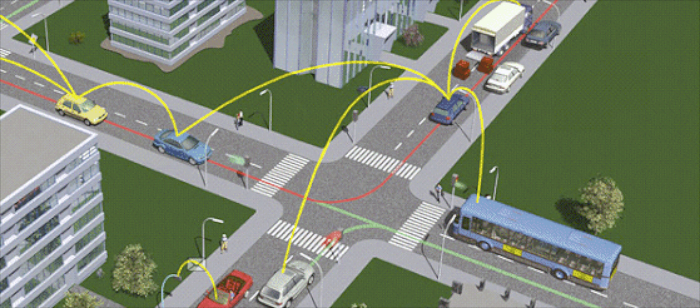
Silence of the labs: Why are we still commuting
the way we did 40 years ago?
Professor Ouri Wolfson
University of Illinois at Chicago
1:00pm Friday 2 December 2011, ITE 227
Intelligent Transportation Systems (ITS) have been in research and development since the 70's but their impact so far has been relatively small. In this talk I will argue that this is about to change, and that these systems will soon revolutionize the way we commute. I will describe research issues and Information Technology approaches related to ITS. I will focus on urban transportation, and discuss novel applications enabled by mobile wireless technologies. Such applications have the potential to improve safety, mobility, environmental impact, and energy efficiency of urban transportation. The applications are based on vehicle-to-vehicle and vehicle-to-infrastructure communication, and they epitomize ITS efforts currently undertaken throughout the world, particularly the IntelliDrive initiative of the US Department of Transportation. I will also relate these efforts to our NSF-sponsored IGERT PhD program in Computational Transportation Science.
Ouri Wolfson is the Richard and Loan Hill Professor of Computer Science at the University of Illinois at Chicago, and an Affiliate Professor in the Department of Computer Science at the University of Illinois at Urbana Champaign. He is the sole founder of Mobitrac, a venture-funded high-tech startup that was acquired by Fluensee Co. in 2006.
Ouri Wolfson authored over 180 publications, and holds seven patents. He is a Fellow of the Association of Computing Machinery, a Fellow of the American Association for the Advancement of Science (AAAS), a University of Illinois Scholar for 2009, and serves on the editorial boards of several journals. He co-authored three award winning papers, served as a Distinguished Lecturer for the Association of Computing Machinery during 2001-2003, and participated in numerous conferences as a keynote speaker, general chairman, program committee chairman or member, tutorial presenter, session chairman, and panelist. Most recently he was the keynote speaker at the Mobilware 2010 Conference, and the general chair of the 17th ACM SIGSPATIAL International Conference on Advances in Geographic Information Systems (ACM GIS 2009) . His research has been funded by the National Science Foundation (NSF), Air Force Office of Scientific Research (AFOSR), Defense Advanced Research Projects Agency (DARPA), NATO, US Army, NASA, the New York State Science and Technology Foundation, Hughes Research Laboratories, Informix Co., Accenture Co., and Hitachi Co.
Wolfson’s main research interests are in database systems, distributed systems, and mobile/pervasive computing. Before joining the University of Illinois he has been on the computer science faculty at the Technion, Columbia University, and a Member of Technical Staff at Bell Labs.
Host: Yelena Yesha
]]>
Full Title: talk: Wolfson on Intelligent Transportation Systems, 1pm Fri 12/2, ITE 227 Silence of the labs: Why are we still commuting the way we did 40 years ago? Professor Ouri Wolfson...
http://www.csee.umbc.edu/2011/11/talk-wolfson-on-intelligent-transportation-systems-1pm-fri-122-ite-325/
https://beta.my.umbc.edu/api/v0/pixel/news/10482/guest@my.umbc.edu/77b17f8e737abaa6fa32a2b18ddda68f/api/pixel
news
research
talks
Computer Science and Electrical Engineering
https://beta.my.umbc.edu/groups/csee
https://assets3-beta.my.umbc.edu/system/shared/avatars/groups/000/000/099/d117dca133c64bf78a4b7696dd007189/xsmall.png?1314043393
https://assets1-beta.my.umbc.edu/system/shared/avatars/groups/000/000/099/d117dca133c64bf78a4b7696dd007189/original.png?1314043393
https://assets1-beta.my.umbc.edu/system/shared/avatars/groups/000/000/099/d117dca133c64bf78a4b7696dd007189/xxlarge.png?1314043393
https://assets4-beta.my.umbc.edu/system/shared/avatars/groups/000/000/099/d117dca133c64bf78a4b7696dd007189/xlarge.png?1314043393
https://assets3-beta.my.umbc.edu/system/shared/avatars/groups/000/000/099/d117dca133c64bf78a4b7696dd007189/large.png?1314043393
https://assets1-beta.my.umbc.edu/system/shared/avatars/groups/000/000/099/d117dca133c64bf78a4b7696dd007189/medium.png?1314043393
https://assets2-beta.my.umbc.edu/system/shared/avatars/groups/000/000/099/d117dca133c64bf78a4b7696dd007189/small.png?1314043393
https://assets3-beta.my.umbc.edu/system/shared/avatars/groups/000/000/099/d117dca133c64bf78a4b7696dd007189/xsmall.png?1314043393
https://assets3-beta.my.umbc.edu/system/shared/avatars/groups/000/000/099/d117dca133c64bf78a4b7696dd007189/xxsmall.png?1314043393
Computer Science and Electrical Engineering
1
0
true
Sun, 27 Nov 2011 20:36:32 -0500
Sun, 27 Nov 2011 20:36:32 -0500
It gets better

h/t Chris Cho
]]>
h/t Chris Cho
http://www.csee.umbc.edu/2011/11/it-gets-better/
https://beta.my.umbc.edu/api/v0/pixel/news/10468/guest@my.umbc.edu/e2738355c58a503a88bd4ae8c9ee574d/api/pixel
fyi
life
Computer Science and Electrical Engineering
https://beta.my.umbc.edu/groups/csee
https://assets3-beta.my.umbc.edu/system/shared/avatars/groups/000/000/099/d117dca133c64bf78a4b7696dd007189/xsmall.png?1314043393
https://assets1-beta.my.umbc.edu/system/shared/avatars/groups/000/000/099/d117dca133c64bf78a4b7696dd007189/original.png?1314043393
https://assets1-beta.my.umbc.edu/system/shared/avatars/groups/000/000/099/d117dca133c64bf78a4b7696dd007189/xxlarge.png?1314043393
https://assets4-beta.my.umbc.edu/system/shared/avatars/groups/000/000/099/d117dca133c64bf78a4b7696dd007189/xlarge.png?1314043393
https://assets3-beta.my.umbc.edu/system/shared/avatars/groups/000/000/099/d117dca133c64bf78a4b7696dd007189/large.png?1314043393
https://assets1-beta.my.umbc.edu/system/shared/avatars/groups/000/000/099/d117dca133c64bf78a4b7696dd007189/medium.png?1314043393
https://assets2-beta.my.umbc.edu/system/shared/avatars/groups/000/000/099/d117dca133c64bf78a4b7696dd007189/small.png?1314043393
https://assets3-beta.my.umbc.edu/system/shared/avatars/groups/000/000/099/d117dca133c64bf78a4b7696dd007189/xsmall.png?1314043393
https://assets3-beta.my.umbc.edu/system/shared/avatars/groups/000/000/099/d117dca133c64bf78a4b7696dd007189/xxsmall.png?1314043393
Computer Science and Electrical Engineering
66
10
true
Fri, 25 Nov 2011 00:33:12 -0500