talk: Using Static Analysis to Diagnose Misconfigured...
Full Title: talk: Using Static Analysis to Diagnose Misconfigured Open Source Systems Software
Using Static Analysis to Diagnose
Misconfigured Open Source Systems Software
Ariel Rabkin, UC Berkeley
1:00pm Monday 5 March 2012, ITE 325b UMBC
Ten years ago, few software developers worked on distributed systems. Today, developers often run code on clusters, relying on large open-source software stacks to manage resources. These systems are challenging to configure and debug. Fortunately, developments in program analysis have given us new tools for managing the complexity of modern software. This talk will show how static analysis can help users configure their systems. I present a technique that builds an explicit table mapping a program's possible error messages to the options that might cause them. As a result, users can get immediate feedback on how to resolve configuration errors.
Ari Rabkin is a PhD student in Computer Science at UC Berkeley working in the AMP lab. His current research interest is the software engineering and administration challenges of big-data systems. He is particularly interested in applying program analysis techniques to tasks like log analysis and configuration debugging. His broader interests focus on systems and security, including improving system usability by making systems easier to understand, the connections between computer science research and technology policy, developing program analysis techniques that work acceptably well on large, complex, messy software systems.
Host: Anupam Joshi
See http://csee.umbc.edu/talks for more information
]]>
Full Title: talk: Using Static Analysis to Diagnose Misconfigured Open Source Systems Software Using Static Analysis to Diagnose Misconfigured Open Source Systems Software Ariel Rabkin, UC...
http://www.csee.umbc.edu/2012/02/using-static-analysis-to-diagnose-misconfigured-open-source-systems-software/
https://beta.my.umbc.edu/api/v0/pixel/news/12457/guest@my.umbc.edu/4bfe61c1801493608302c3961aa0d712/api/pixel
cybersecurity
news
research
talks
Computer Science and Electrical Engineering
https://beta.my.umbc.edu/groups/csee
https://assets3-beta.my.umbc.edu/system/shared/avatars/groups/000/000/099/d117dca133c64bf78a4b7696dd007189/xsmall.png?1314043393
https://assets1-beta.my.umbc.edu/system/shared/avatars/groups/000/000/099/d117dca133c64bf78a4b7696dd007189/original.png?1314043393
https://assets1-beta.my.umbc.edu/system/shared/avatars/groups/000/000/099/d117dca133c64bf78a4b7696dd007189/xxlarge.png?1314043393
https://assets4-beta.my.umbc.edu/system/shared/avatars/groups/000/000/099/d117dca133c64bf78a4b7696dd007189/xlarge.png?1314043393
https://assets3-beta.my.umbc.edu/system/shared/avatars/groups/000/000/099/d117dca133c64bf78a4b7696dd007189/large.png?1314043393
https://assets1-beta.my.umbc.edu/system/shared/avatars/groups/000/000/099/d117dca133c64bf78a4b7696dd007189/medium.png?1314043393
https://assets2-beta.my.umbc.edu/system/shared/avatars/groups/000/000/099/d117dca133c64bf78a4b7696dd007189/small.png?1314043393
https://assets3-beta.my.umbc.edu/system/shared/avatars/groups/000/000/099/d117dca133c64bf78a4b7696dd007189/xsmall.png?1314043393
https://assets3-beta.my.umbc.edu/system/shared/avatars/groups/000/000/099/d117dca133c64bf78a4b7696dd007189/xxsmall.png?1314043393
Computer Science and Electrical Engineering
1
0
true
Sun, 26 Feb 2012 12:25:32 -0500
Wed, 29 Feb 2012 22:25:32 -0500
talk: Self-sustainable Cyber-physical System Design
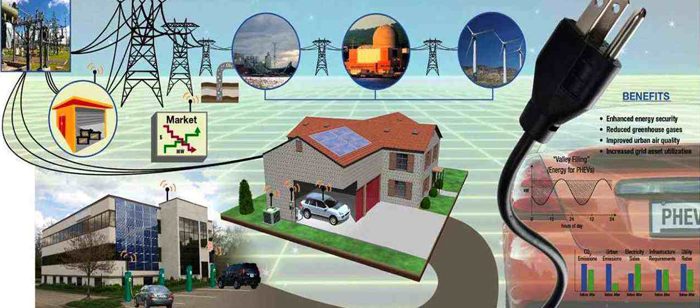
Self-sustainable Cyber-physical System Design
Dr. Nilanjan Banerjee
University of Arkansas Fayetteville
1:00pm Tuesday 13 March 2012, ITE 325b UMBC
Renewable energy can enable diverse self-sustainable cyber-physical systems with applications ranging from healthcare to off-grid home energy management. However, there are several challenges that need to be addressed before such systems can be realized. For instance, how do we balance the small and often variable energy budgets imposed by renewables with system functionality? How can we design sensitive physical sensors and efficient harvesting circuits for mW energy sources such as sound and indoor light? For systems such as off-grid homes that interact with humans, how do we balance demand and supply while being cognizant to usability needs?
In this talk, I will present techniques that address these challenges. Specifically, I will propose a Hierarchical Power Management paradigm that combines platforms with varied energy needs to balance energy consumption and functionality, the design of an efficient harvester for sound scavenging, and sensitive ECG sensors. I will also present a measurement study that reveals the energy management challenges faced by off-grid home residents. Finally, I will conclude with the design of a solar replayer platform that allows immense flexibility in evaluating solar panel driven systems, and works for a wide range of panels.
Nilanjan Banerjee is an Assistant Professor in the department of Computer Science and Computer Engineering at University of Arkansas Fayetteville. He graduated with a M.S. and a Ph.D. from the University of Massachusetts at Amherst in 2009 and a BTech. (Hons.) from IIT Kharagpur in 2004. He has won the Yahoo! Outstanding dissertation award at UMass, a best undergraduate thesis award at IIT Kharagpur, and an Outstanding Researcher award at University of Arkansas. He is a 2011 NSF Career awardee and has won three other NSF awards (including the NSF I-Corp grant). His research interests span renewable energy driven systems, healthcare systems, and mobile systems.
Host: Anupam Joshi
See http://csee.umbc.edu/talks for more information
]]>
Self-sustainable Cyber-physical System Design Dr. Nilanjan Banerjee University of Arkansas Fayetteville 1:00pm Tuesday 13 March 2012, ITE 325b UMBC Renewable energy can enable diverse...
http://www.csee.umbc.edu/2012/02/talk-self-sustainable-cyber-physical-system-design/
https://beta.my.umbc.edu/api/v0/pixel/news/12456/guest@my.umbc.edu/10781512f4d6c51fb19c6d20dc6a4708/api/pixel
cybersecurity
news
research
talks
Computer Science and Electrical Engineering
https://beta.my.umbc.edu/groups/csee
https://assets3-beta.my.umbc.edu/system/shared/avatars/groups/000/000/099/d117dca133c64bf78a4b7696dd007189/xsmall.png?1314043393
https://assets1-beta.my.umbc.edu/system/shared/avatars/groups/000/000/099/d117dca133c64bf78a4b7696dd007189/original.png?1314043393
https://assets1-beta.my.umbc.edu/system/shared/avatars/groups/000/000/099/d117dca133c64bf78a4b7696dd007189/xxlarge.png?1314043393
https://assets4-beta.my.umbc.edu/system/shared/avatars/groups/000/000/099/d117dca133c64bf78a4b7696dd007189/xlarge.png?1314043393
https://assets3-beta.my.umbc.edu/system/shared/avatars/groups/000/000/099/d117dca133c64bf78a4b7696dd007189/large.png?1314043393
https://assets1-beta.my.umbc.edu/system/shared/avatars/groups/000/000/099/d117dca133c64bf78a4b7696dd007189/medium.png?1314043393
https://assets2-beta.my.umbc.edu/system/shared/avatars/groups/000/000/099/d117dca133c64bf78a4b7696dd007189/small.png?1314043393
https://assets3-beta.my.umbc.edu/system/shared/avatars/groups/000/000/099/d117dca133c64bf78a4b7696dd007189/xsmall.png?1314043393
https://assets3-beta.my.umbc.edu/system/shared/avatars/groups/000/000/099/d117dca133c64bf78a4b7696dd007189/xxsmall.png?1314043393
Computer Science and Electrical Engineering
0
0
true
Sun, 26 Feb 2012 11:33:07 -0500
talk: Correlation Aware Optimizations for Analytic Databases

Correlation Aware Optimizations for Analytic Databases
Hideaki Kimura, Brown University
1:00pm Friday 9 March 2012, ITE 325b, UMBC
Recent years have seen that the analysis of large data-sets is crucially important in a wide range of business, governmental, and scientific applications. For example, research projects in astronomy need to analyze petabytes of image data taken from telescopes. Providing a fast and scalable analytical data management system for such users has become increasingly important.
The major bottlenecks for analytics on such big data are disk- and network-I/O. Because the data is too large to fit in RAM, each query causes substantial disk I/O. Traditional database systems provide indexes to speed up disk reads, but many analytic queries do not benefit from indexes because data is scattered over a large number of disk blocks and disk seeks are prohibitively expensive. Furthermore, such huge data sets need to be partitioned and distributed over hundreds or many thousands of nodes. When a query requires more than one data at once, such as a query involving a JOIN operation, the data management system must transmit a large amount of data over the network. For example, the Shuffle phase in Map-Reduce systems copies file blocks over the network and causes a significant bottleneck in many cases.
Our approach to tackling these challenges in big data analytics is to exploit correlations. I will describe our correlation-aware indexing, replication, and data placement which make big data analytics faster and more scalable.
Finally, if time allows, I will also introduce another on-going project to develop a scalable transactional processing system on modern hardware in collaboration with Hewlett-Packard Laboratories.
Hideaki Kimura is a doctoral candidate in the Computer Science Department at Brown University. His main research interests are in data management systems. His dissertation research with Prof. Stan Zdonik is on correlation-based optimizations for large analytic databases. He also worked on transaction processing systems exploiting modern hardware at HP Labs.
Host: Anupam Joshi
See http://csee.umbc.edu/talks for more information
]]>
Correlation Aware Optimizations for Analytic Databases Hideaki Kimura, Brown University 1:00pm Friday 9 March 2012, ITE 325b, UMBC Recent years have seen that the analysis of large data-sets...
http://www.csee.umbc.edu/2012/02/talk-correlation-aware-optimizations-for-analytic-databases/
https://beta.my.umbc.edu/api/v0/pixel/news/12455/guest@my.umbc.edu/9e4ae62c0113e4823027125c54914b20/api/pixel
analytics
big-data
map-reduce
news
research
talks
Computer Science and Electrical Engineering
https://beta.my.umbc.edu/groups/csee
https://assets3-beta.my.umbc.edu/system/shared/avatars/groups/000/000/099/d117dca133c64bf78a4b7696dd007189/xsmall.png?1314043393
https://assets1-beta.my.umbc.edu/system/shared/avatars/groups/000/000/099/d117dca133c64bf78a4b7696dd007189/original.png?1314043393
https://assets1-beta.my.umbc.edu/system/shared/avatars/groups/000/000/099/d117dca133c64bf78a4b7696dd007189/xxlarge.png?1314043393
https://assets4-beta.my.umbc.edu/system/shared/avatars/groups/000/000/099/d117dca133c64bf78a4b7696dd007189/xlarge.png?1314043393
https://assets3-beta.my.umbc.edu/system/shared/avatars/groups/000/000/099/d117dca133c64bf78a4b7696dd007189/large.png?1314043393
https://assets1-beta.my.umbc.edu/system/shared/avatars/groups/000/000/099/d117dca133c64bf78a4b7696dd007189/medium.png?1314043393
https://assets2-beta.my.umbc.edu/system/shared/avatars/groups/000/000/099/d117dca133c64bf78a4b7696dd007189/small.png?1314043393
https://assets3-beta.my.umbc.edu/system/shared/avatars/groups/000/000/099/d117dca133c64bf78a4b7696dd007189/xsmall.png?1314043393
https://assets3-beta.my.umbc.edu/system/shared/avatars/groups/000/000/099/d117dca133c64bf78a4b7696dd007189/xxsmall.png?1314043393
Computer Science and Electrical Engineering
0
0
true
Sun, 26 Feb 2012 10:41:18 -0500
talk: Analytics for Detecting Web and Social Media Abuse
Analytics for Detecting Web and Social Media Abuse
Dr. Justin Ma, UC Berkeley
1:00pm Friday 16 March 2012, ITE 325, UMBC
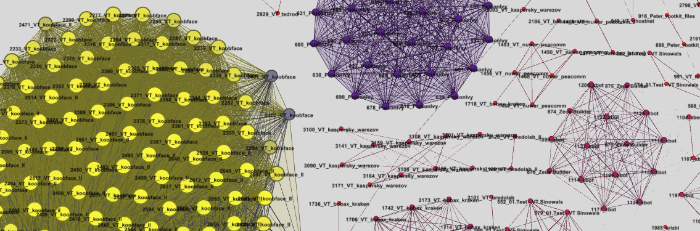
The Web and online social media provide invaluable communication services to a global Internet user base. The tremendous success of these services, however, has also created valuable opportunities for criminals and other miscreants to abuse them for their own gain. As a result, it is both an important yet challenging problem to detect, monitor, and curtail this abuse. However, the large scale and diversity of these services, combined with the tactics used by attackers, make it difficult to discern one clear and robust signal for detecting abuse. One approach, relying on domain expertise, is to construct a small set of well-crafted heuristics, but such heuristics tend to rapidly become obsolete. In this talk, I will describe more robust approaches based on machine learning, statistical modeling, and large-scale analytics of large data sets.
First I will describe online learning approaches for detecting malicious Web sites (those involved in criminal scams) using lexical and host-based features of the associated URLs. This application is particularly appropriate for online algorithms as the size of the training data is larger than can be efficiently processed in batch and because the features that typify malicious URLs evolve continuously. Motivated by this application, we built a real-time system to gather URL features and analyze them against a source of labeled URLs from a large Web mail provider. Our system adapts in an online fashion to the evolving characteristics of malicious URLs, achieving daily classification accuracies up to 99% over a balanced data set.
Next I will describe our ongoing efforts for creating analytics for detecting social media abuse. Deciding on a universal definition of social media abuse is difficult, as abuse is often in the eye of the beholder. In light of this challenge, we explore a more formal definition based on information theory. In particular, we hypothesize that messages with low information content are likely to be abusive. From this, we develop a measure of content complexity to identify abusive users that shows promise in our early evaluations.
In addition to our own experiments in the lab, this work has found success in practice as well. Companies serving hundreds of millions of users have adopted these ideas to improve abuse detection within their own services.
Justin Ma is a postdoc in the UC Berkeley AMPLab. His primary research is in systems security, and his other interests include applications of machine learning to systems problems, systems for large-scale machine learning, and the impact of energy availability on computing. He received B.S. degrees in Computer Science and Mathematics from the University of Maryland in 2004, and he received his Ph.D. in Computer Science from UC San Diego in 2010.
Host: Anupam Joshi
See http://csee.umbc.edu/talks for more information
]]>
Analytics for Detecting Web and Social Media Abuse Dr. Justin Ma, UC Berkeley 1:00pm Friday 16 March 2012, ITE 325, UMBC The Web and online social media provide invaluable communication...
http://www.csee.umbc.edu/2012/02/talk-analytics-for-detecting-web-and-social-media-abuse-1pm-316/
https://beta.my.umbc.edu/api/v0/pixel/news/12450/guest@my.umbc.edu/7716330b5c8708f060907f80cb3c33c8/api/pixel
cybersecurity
news
research
security
social-media
talks
web
Computer Science and Electrical Engineering
https://beta.my.umbc.edu/groups/csee
https://assets3-beta.my.umbc.edu/system/shared/avatars/groups/000/000/099/d117dca133c64bf78a4b7696dd007189/xsmall.png?1314043393
https://assets1-beta.my.umbc.edu/system/shared/avatars/groups/000/000/099/d117dca133c64bf78a4b7696dd007189/original.png?1314043393
https://assets1-beta.my.umbc.edu/system/shared/avatars/groups/000/000/099/d117dca133c64bf78a4b7696dd007189/xxlarge.png?1314043393
https://assets4-beta.my.umbc.edu/system/shared/avatars/groups/000/000/099/d117dca133c64bf78a4b7696dd007189/xlarge.png?1314043393
https://assets3-beta.my.umbc.edu/system/shared/avatars/groups/000/000/099/d117dca133c64bf78a4b7696dd007189/large.png?1314043393
https://assets1-beta.my.umbc.edu/system/shared/avatars/groups/000/000/099/d117dca133c64bf78a4b7696dd007189/medium.png?1314043393
https://assets2-beta.my.umbc.edu/system/shared/avatars/groups/000/000/099/d117dca133c64bf78a4b7696dd007189/small.png?1314043393
https://assets3-beta.my.umbc.edu/system/shared/avatars/groups/000/000/099/d117dca133c64bf78a4b7696dd007189/xsmall.png?1314043393
https://assets3-beta.my.umbc.edu/system/shared/avatars/groups/000/000/099/d117dca133c64bf78a4b7696dd007189/xxsmall.png?1314043393
Computer Science and Electrical Engineering
0
0
true
Sun, 26 Feb 2012 08:50:06 -0500
Sun, 26 Feb 2012 08:50:06 -0500
Google Android Camp program
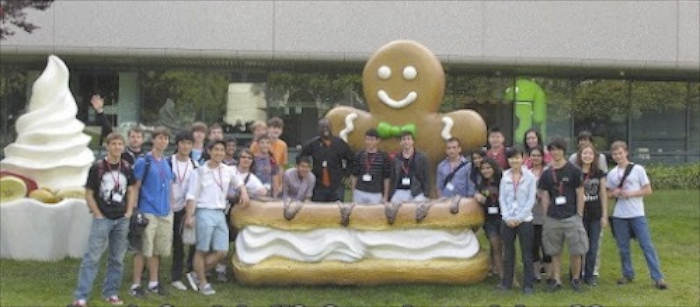
Google is running an Android Camp this summer where 30 selected students will attend an all-expense-paid program at Google’s headquarters in Mountain View, California, July 22-28.
The camp will include an interactive and collaborative curriculum focusing on a practical introduction to developing applications for Android and will explore the concepts behind Android, the framework for constructing an application, and the tools for developing, testing, and publishing software for the platform. Students will also get the opportunity to enjoy technical talks by Googlers, and social activities around the Bay Area.
To be eligible, you must be a current freshman or sophomore majoring in Computer Science, Computer Engineering or related area and have at least a year of proven Java development experience. The application deadline is March 11.
For more information and to apply, see the 2012 Google Android Camp site.
]]>
Google is running an Android Camp this summer where 30 selected students will attend an all-expense-paid program at Google’s headquarters in Mountain View, California, July 22-28. The camp will...
http://www.csee.umbc.edu/2012/02/google-android-camp-program/
https://beta.my.umbc.edu/api/v0/pixel/news/12403/guest@my.umbc.edu/714d8c8e609709bcabf616fcb7624ab9/api/pixel
android
news
undergraduate
Computer Science and Electrical Engineering
https://beta.my.umbc.edu/groups/csee
https://assets3-beta.my.umbc.edu/system/shared/avatars/groups/000/000/099/d117dca133c64bf78a4b7696dd007189/xsmall.png?1314043393
https://assets1-beta.my.umbc.edu/system/shared/avatars/groups/000/000/099/d117dca133c64bf78a4b7696dd007189/original.png?1314043393
https://assets1-beta.my.umbc.edu/system/shared/avatars/groups/000/000/099/d117dca133c64bf78a4b7696dd007189/xxlarge.png?1314043393
https://assets4-beta.my.umbc.edu/system/shared/avatars/groups/000/000/099/d117dca133c64bf78a4b7696dd007189/xlarge.png?1314043393
https://assets3-beta.my.umbc.edu/system/shared/avatars/groups/000/000/099/d117dca133c64bf78a4b7696dd007189/large.png?1314043393
https://assets1-beta.my.umbc.edu/system/shared/avatars/groups/000/000/099/d117dca133c64bf78a4b7696dd007189/medium.png?1314043393
https://assets2-beta.my.umbc.edu/system/shared/avatars/groups/000/000/099/d117dca133c64bf78a4b7696dd007189/small.png?1314043393
https://assets3-beta.my.umbc.edu/system/shared/avatars/groups/000/000/099/d117dca133c64bf78a4b7696dd007189/xsmall.png?1314043393
https://assets3-beta.my.umbc.edu/system/shared/avatars/groups/000/000/099/d117dca133c64bf78a4b7696dd007189/xxsmall.png?1314043393
Computer Science and Electrical Engineering
3
0
true
Fri, 24 Feb 2012 00:57:49 -0500
talk: Building and Testing Distributed Systems
Building and Testing Distributed Systems
Dr. Charles Killian
Purdue University, Computer Science
1:00pm Friday, 2 March 2012, ITE325 UMBC
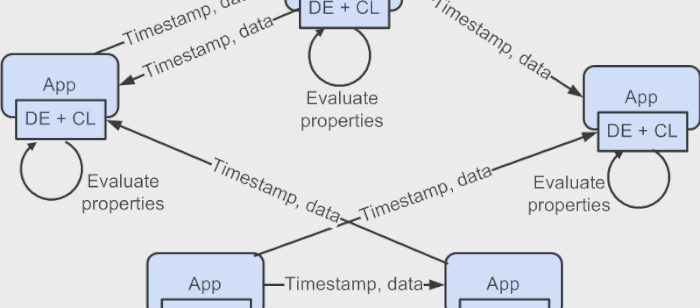
Building distributed systems is particularly difficult because of the asynchronous, heterogeneous, and failure-prone environment where these systems must run. This asynchrony makes verifying the correctness of systems implementations even more challenging. Tools for building distributed systems must often strike a compromise between reducing programmer effort and increasing system efficiency. In my research, we strive to introduce a limited amount of structure and limitations to implementations to enable a wide range of analysis and development assistance. Most prominently, we have built the Mace language and runtime, which translates a concise, expressive distributed system specification into a C++ implementation. The Mace specification importantly exposes three key pieces of structure: atomic events, explicit state, and explicit messaging.
With a few additional contextual annotations, we show how we can support intra-node parallel event processing of these atomic events while still preserving sequenal event consistency—even using variably available computing resources distributed across a cluster. By leveraging these three structural elements, we have further built tools such as a model checker capable of detecting liveness violations in systems code, a performance tester, and an automated malicious protocol tester. Recent research has also explored applications of these key structures in legacy software, that has produced a log anaysis tool that can detect performance problems, and a malicious fault injector that can discover successful performance attacks. Mace has been in development since 2004 and has been used to build a wide variety of Internet-ready distributed systems both by myself and by researchers at places such as Cornell University, Microsoft Research (Redmond, Silicon Valley, and Beijing), HP Labs, UCLA, EPFL, and UCSD. This talk will give an overview of my research, presenting the execution model and its checker, support for event parallelization, and our more recent testing tools.
Charles Killian is an Assistant Professor in the Department of Computer Science at Purdue University. He received an NSF CAREER award in 2011, as well as an HP Open Innovation award. In 2008 he completed his Ph.D. in Computer Science from the University of California, San Diego under the supervision of Amin Vahdat. Before transferring to UCSD in August 2004, he completed his Masters in Computer Science from Duke University with Amin Vahdat. His systems and networking research focuses on building and testing distributed systems, and bridges this research with software engineering, security, data mining, and programming languages. Since 2004 he has implemented the Mace programming language and runtime, built numerous distributed systems, and designed MaceMC, the first model checker capable of finding liveness violations in unmodified systems code and 2007 best paper award at NSDI. Chip has built many additional tools and enhancements since then, including performance testing, work on parallel event processing, automated attack discovery, and data mining logs to discover performance problems.
]]>
Building and Testing Distributed Systems Dr. Charles Killian Purdue University, Computer Science 1:00pm Friday, 2 March 2012, ITE325 UMBC Building distributed systems is particularly...
http://www.csee.umbc.edu/2012/02/talk-building-and-testing-distributed-systems/
https://beta.my.umbc.edu/api/v0/pixel/news/12405/guest@my.umbc.edu/309239075ab6dec4fd740065ac3771b2/api/pixel
news
research
talks
Computer Science and Electrical Engineering
https://beta.my.umbc.edu/groups/csee
https://assets3-beta.my.umbc.edu/system/shared/avatars/groups/000/000/099/d117dca133c64bf78a4b7696dd007189/xsmall.png?1314043393
https://assets1-beta.my.umbc.edu/system/shared/avatars/groups/000/000/099/d117dca133c64bf78a4b7696dd007189/original.png?1314043393
https://assets1-beta.my.umbc.edu/system/shared/avatars/groups/000/000/099/d117dca133c64bf78a4b7696dd007189/xxlarge.png?1314043393
https://assets4-beta.my.umbc.edu/system/shared/avatars/groups/000/000/099/d117dca133c64bf78a4b7696dd007189/xlarge.png?1314043393
https://assets3-beta.my.umbc.edu/system/shared/avatars/groups/000/000/099/d117dca133c64bf78a4b7696dd007189/large.png?1314043393
https://assets1-beta.my.umbc.edu/system/shared/avatars/groups/000/000/099/d117dca133c64bf78a4b7696dd007189/medium.png?1314043393
https://assets2-beta.my.umbc.edu/system/shared/avatars/groups/000/000/099/d117dca133c64bf78a4b7696dd007189/small.png?1314043393
https://assets3-beta.my.umbc.edu/system/shared/avatars/groups/000/000/099/d117dca133c64bf78a4b7696dd007189/xsmall.png?1314043393
https://assets3-beta.my.umbc.edu/system/shared/avatars/groups/000/000/099/d117dca133c64bf78a4b7696dd007189/xxsmall.png?1314043393
Computer Science and Electrical Engineering
1
0
true
Thu, 23 Feb 2012 18:09:05 -0500
Wed, 29 Feb 2012 18:09:05 -0500
Google announces plans for digital glasses

By the end of 2012, Google plans to unveil their latest addition to the tech world: a pair of android-based digital glasses, reports the New York Times. With a built in camera, the glasses will monitor the wearer’s surroundings and present them with relevant information about nearby businesses, or information about friends who might be nearby. Like smartphones, the glasses will harness third-party 3G or 4G for internet access. The glasses are being developed by the Google X team based out of a top-secret lab in Google headquarters where the company’s top-minds have been thinking up plans for futuristic products like space elevators and driverless cars.
Priced about the same as a smartphone—$250 to $600—the glasses are reported to have the rugged and futuristic look of a pair of Oakley Thump glasses. The proposed navigation system for the glasses will be a series of subtle head nods.
A PCWorld article shed a not-so-favorable light on the proposed Google product, saying that glasses could be potentially hazardous if worn while driving. The glasses, like other mobile devices, also raise questions about personal security and the potential of Google harnessing “Big-brother”-like influence over its customers. It’s likely, too, that the product is bound to cause concern about the health implications of having a small screen sitting only a few inches from your eye.
]]>
By the end of 2012, Google plans to unveil their latest addition to the tech world: a pair of android-based digital glasses, reports the New York Times. With a built in camera, the glasses will...
http://www.csee.umbc.edu/2012/02/google-announces-plans-for-digital-glasses/
https://beta.my.umbc.edu/api/v0/pixel/news/12393/guest@my.umbc.edu/c428a90318bf8df5a3c9ece8897b9981/api/pixel
news
Computer Science and Electrical Engineering
https://beta.my.umbc.edu/groups/csee
https://assets3-beta.my.umbc.edu/system/shared/avatars/groups/000/000/099/d117dca133c64bf78a4b7696dd007189/xsmall.png?1314043393
https://assets1-beta.my.umbc.edu/system/shared/avatars/groups/000/000/099/d117dca133c64bf78a4b7696dd007189/original.png?1314043393
https://assets1-beta.my.umbc.edu/system/shared/avatars/groups/000/000/099/d117dca133c64bf78a4b7696dd007189/xxlarge.png?1314043393
https://assets4-beta.my.umbc.edu/system/shared/avatars/groups/000/000/099/d117dca133c64bf78a4b7696dd007189/xlarge.png?1314043393
https://assets3-beta.my.umbc.edu/system/shared/avatars/groups/000/000/099/d117dca133c64bf78a4b7696dd007189/large.png?1314043393
https://assets1-beta.my.umbc.edu/system/shared/avatars/groups/000/000/099/d117dca133c64bf78a4b7696dd007189/medium.png?1314043393
https://assets2-beta.my.umbc.edu/system/shared/avatars/groups/000/000/099/d117dca133c64bf78a4b7696dd007189/small.png?1314043393
https://assets3-beta.my.umbc.edu/system/shared/avatars/groups/000/000/099/d117dca133c64bf78a4b7696dd007189/xsmall.png?1314043393
https://assets3-beta.my.umbc.edu/system/shared/avatars/groups/000/000/099/d117dca133c64bf78a4b7696dd007189/xxsmall.png?1314043393
Computer Science and Electrical Engineering
2
0
true
Thu, 23 Feb 2012 13:20:34 -0500
talk: Free-Space-Optical Mobile Ad-Hoc Networks

FSO-MANETs: Free-Space-Optical Mobile Ad-Hoc Networks
Dr. Murat Yuksel
Computer Science and Engineering
University of Nevada, Reno
1:00pm Monday 27 February 2012, ITE 325b, UMBC
The recent proliferation of wireless technologies and choices available to user applications has triggered a tremendous wireless demand, and wireless nodes are expected to dominate the Internet soon. Reports show that usage of mobile Web and WiFi by smartphones is increasing sharply, with more than 80% of their data consumption landing on WiFi points, and this statistic does not even include a major smartphone brand, the iPhone. Accommodating this exploding wireless demand with cellular capacity does not seem possible in the long run. As the radio spectrum (RF) spectrum is getting scarcer and saturated by recent innovations in attaining high spectral efficiency gains such as hierarchical cooperative MIMO, we urgently need innovations that will enable leveraging of new wireless spectrums and substrates in order to respond to the exploding mobile wireless traffic demand. Further, the capacity gap between RF wireless and optical fiber backbone speeds will remain huge because of the limited availability of RF spectrum. Enabling optical spectrum in wireless communications is the needed revolution for ultra-high-speed mobile ad-hoc networks (MANETs) of the future.
In this talk, I will present our work on exploring the potential for free-space-optics (FSO), a.k.a. optical wireless, in the context of very-high-speed mobile ad-hoc and opportunistic networking. We introduce basic building blocks for MANETs using FSO and present initial prototypes for multi-hop FSO building blocks and protocols operating under mobility. 3-D spherical structures covered with inexpensive FSO transceivers (e.g., LED/VCSEL and photo-detector pair) solve issues relevant to mobility and line-of-sight (LOS) management via availability of several transceivers per node. Such structures facilitate electronic LOS tracking (i.e., “electronic steering”) methods instead of traditional mechanical steering techniques used in FSO communications. By abstracting FSO directionality and LOS characteristics, our work also explores issues relating to routing and localization, and develops layer 3 protocols. FSO has been used at high-altitude communications, and this research enables FSO communications at lower-altitudes and in ad-hoc settings with redundancy of cheap optoelectronic components. This research also contributes to the new application of using solid-state lighting technology due to potential integration of illumination and communication functions in the same devices. Please refer to our project website for further information.
Murat Yuksel is an Assistant Professor at the CSE Department of The University of Nevada – Reno (UNR), Reno, NV. He was with the ECSE Department of Rensselaer Polytechnic Institute (RPI), Troy, NY as a Postdoctoral Research Associate and a member of Adjunct Faculty until 2006. He received a B.S. degree from the Computer Engineering Department of Ege University, Izmir, Turkey in 1996. He received M.S. and Ph.D. degrees from Computer Science Department of RPI in 1999 and 2002 respectively. His research interests are in the area of computer communication networks with a focus on protocol design, network economics, wireless routing, free-space-optical mobile ad-hoc networks (FSO-MANETs), and peer-to-peer. He is a senior member of IEEE, life member of ACM, and a member of Sigma Xi and ASEE.
Host: Anupam Joshi
]]>
FSO-MANETs: Free-Space-Optical Mobile Ad-Hoc Networks Dr. Murat Yuksel Computer Science and Engineering University of Nevada, Reno 1:00pm Monday 27 February 2012, ITE 325b, UMBC The...
http://www.csee.umbc.edu/2012/02/talk-free-space-optical-mobile-ad-hoc-networks/
https://beta.my.umbc.edu/api/v0/pixel/news/12381/guest@my.umbc.edu/8b1317fa6239e3715aff1bdd401dacf0/api/pixel
news
research
talks
Computer Science and Electrical Engineering
https://beta.my.umbc.edu/groups/csee
https://assets3-beta.my.umbc.edu/system/shared/avatars/groups/000/000/099/d117dca133c64bf78a4b7696dd007189/xsmall.png?1314043393
https://assets1-beta.my.umbc.edu/system/shared/avatars/groups/000/000/099/d117dca133c64bf78a4b7696dd007189/original.png?1314043393
https://assets1-beta.my.umbc.edu/system/shared/avatars/groups/000/000/099/d117dca133c64bf78a4b7696dd007189/xxlarge.png?1314043393
https://assets4-beta.my.umbc.edu/system/shared/avatars/groups/000/000/099/d117dca133c64bf78a4b7696dd007189/xlarge.png?1314043393
https://assets3-beta.my.umbc.edu/system/shared/avatars/groups/000/000/099/d117dca133c64bf78a4b7696dd007189/large.png?1314043393
https://assets1-beta.my.umbc.edu/system/shared/avatars/groups/000/000/099/d117dca133c64bf78a4b7696dd007189/medium.png?1314043393
https://assets2-beta.my.umbc.edu/system/shared/avatars/groups/000/000/099/d117dca133c64bf78a4b7696dd007189/small.png?1314043393
https://assets3-beta.my.umbc.edu/system/shared/avatars/groups/000/000/099/d117dca133c64bf78a4b7696dd007189/xsmall.png?1314043393
https://assets3-beta.my.umbc.edu/system/shared/avatars/groups/000/000/099/d117dca133c64bf78a4b7696dd007189/xxsmall.png?1314043393
Computer Science and Electrical Engineering
2
0
true
Thu, 23 Feb 2012 08:33:24 -0500
Stripe capture the flag wargame
Stripe, a San Francisco startup with an online-payment system, is hosting a simple online cybersecurity capture the flag (CTF) challenge. See their blog post for the details.
“The hardest part of writing secure code is learning to think like an attacker. For example, every programmer is told to watch out for SQL injections, but it’s hard to appreciate just how exploitable they are until you’ve written a SQL injection of your own.
We built Stripe Capture the Flag, a security wargame inspired by SmashTheStack’s IO, to help the community (as well our team!) practice identifying and exploiting common security problems.
After completing our CTF, you should have a greatly improved understanding of how attackers will try to break your code (and hopefully will have fun in the process!).”
If you can crack their system, they’ll send you a t-shirt. Since security is important to their business, maybe they will also talk to you about a job.
]]>
Stripe, a San Francisco startup with an online-payment system, is hosting a simple online cybersecurity capture the flag (CTF) challenge. See their blog post for the details. “The hardest...
http://www.csee.umbc.edu/2012/02/stripe-capture-the-flag-wargame/
https://beta.my.umbc.edu/api/v0/pixel/news/12378/guest@my.umbc.edu/9d10504999a3e7b3ca8734bd9271ca3d/api/pixel
cybersecurity
fyi
undergraduate
Computer Science and Electrical Engineering
https://beta.my.umbc.edu/groups/csee
https://assets3-beta.my.umbc.edu/system/shared/avatars/groups/000/000/099/d117dca133c64bf78a4b7696dd007189/xsmall.png?1314043393
https://assets1-beta.my.umbc.edu/system/shared/avatars/groups/000/000/099/d117dca133c64bf78a4b7696dd007189/original.png?1314043393
https://assets1-beta.my.umbc.edu/system/shared/avatars/groups/000/000/099/d117dca133c64bf78a4b7696dd007189/xxlarge.png?1314043393
https://assets4-beta.my.umbc.edu/system/shared/avatars/groups/000/000/099/d117dca133c64bf78a4b7696dd007189/xlarge.png?1314043393
https://assets3-beta.my.umbc.edu/system/shared/avatars/groups/000/000/099/d117dca133c64bf78a4b7696dd007189/large.png?1314043393
https://assets1-beta.my.umbc.edu/system/shared/avatars/groups/000/000/099/d117dca133c64bf78a4b7696dd007189/medium.png?1314043393
https://assets2-beta.my.umbc.edu/system/shared/avatars/groups/000/000/099/d117dca133c64bf78a4b7696dd007189/small.png?1314043393
https://assets3-beta.my.umbc.edu/system/shared/avatars/groups/000/000/099/d117dca133c64bf78a4b7696dd007189/xsmall.png?1314043393
https://assets3-beta.my.umbc.edu/system/shared/avatars/groups/000/000/099/d117dca133c64bf78a4b7696dd007189/xxsmall.png?1314043393
Computer Science and Electrical Engineering
2
0
true
Thu, 23 Feb 2012 01:03:00 -0500
talk and demo: Brain-Computer Interface Technologies
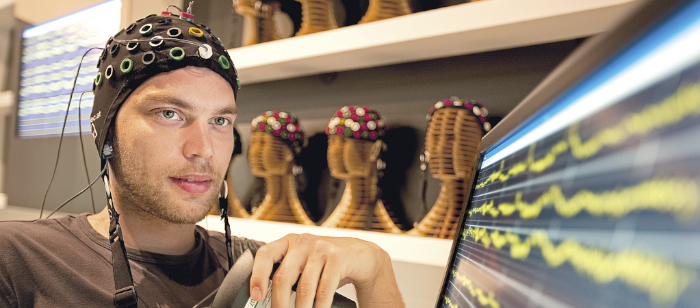
Engineering Week IEEE Student Branch Seminar
in conjunction with CSEE Graduate Seminar
Brain-Computer Interface Technologies
in the Coming Decades (with Demonstration)
Dr. Kaleb McDowell
Translational Neuroscience Branch Chief
Army Research Laboratory
11:30-12:30 Friday, 24 February 2012, ITE 227, UMBC
As the proliferation of technology dramatically infiltrates all aspects of modern life, in many ways the world is becoming so dynamic and complex that technological capabilities are overwhelming human capabilities to optimally interact with and leverage those technologies. Fortunately, these technological advancements have also driven an explosion of neuroscience research over the past several decades, presenting engineers with a remarkable opportunity to design and develop flexible and adaptive brain-based neurotechnologies that integrate with and capitalize on human capabilities and limitations to improve human-system interactions. Major forerunners of this conception are brain-computer interfaces (BCIs), which to this point have been largely focused on improving the quality of life for particular clinical populations and include, for example, applications for advanced communications with paralyzed or "locked-in" patients as well as the direct control of prostheses and wheelchairs. Near-term applications are envisioned that are primarily task-oriented and are targeted to avoid the most difficult obstacles to development. In the farther term, a holistic approach to BCIs will enable a broad range of task-oriented and opportunistic applications by leveraging pervasive technologies and advanced analytical approaches to sense and merge critical brain, behavioral, task, and environmental information. Communications and other applications that are envisioned to be broadly impacted by BCIs are highlighted; however, these represent just a small sample of the potential of these technologies.
Kaleb McDowell (M'08-SM'11) was born in Frederick, MD, USA on July 10, 1970. He has a B.S in operations research and industrial engineering from Cornell University, Ithaca, NY, USA in 1992, an M.S. in kinesiology from the University of Maryland, College Park, MD, USA in 2000, and a Ph.D. in neuroscience and cognitive science from the University of Maryland, College Park, MD, USA in 2003.
He is currently the Chief of the Translational Neuroscience Branch and Chair of the Neuroscience Strategic Research Area at the U.S. Army Research Laboratory (ARL) in Aberdeen Proving Ground, MD, USA. Since joining ARL as a Research Psychologist in 2003, he has contributed to over 30 reviewed publications, and has led several major research and development programs focused on neuroscience, indirect vision systems and vehicle mobility. His current research interest focuses on translating basic neuroscience into applications for use by healthy populations in everyday, real-world environments.
Dr. McDowell received Department of Army Research and Development Achievement awards for technical excellence in 2007 and 2009 and the ARL Award for Leadership in 2011.
Host: IEEE UG and Grad Student Branches (cookies drinks available 11:15am)
]]>
Engineering Week IEEE Student Branch Seminar in conjunction with CSEE Graduate Seminar Brain-Computer Interface Technologies in the Coming Decades (with Demonstration) Dr. Kaleb McDowell...
http://www.csee.umbc.edu/2012/02/talk-and-demo-brain-computer-interface-technologies/
https://beta.my.umbc.edu/api/v0/pixel/news/12300/guest@my.umbc.edu/c9940943378e08667cac9d910c227f5d/api/pixel
computer-engineering
electrical-engineering
news
research
talks
Computer Science and Electrical Engineering
https://beta.my.umbc.edu/groups/csee
https://assets3-beta.my.umbc.edu/system/shared/avatars/groups/000/000/099/d117dca133c64bf78a4b7696dd007189/xsmall.png?1314043393
https://assets1-beta.my.umbc.edu/system/shared/avatars/groups/000/000/099/d117dca133c64bf78a4b7696dd007189/original.png?1314043393
https://assets1-beta.my.umbc.edu/system/shared/avatars/groups/000/000/099/d117dca133c64bf78a4b7696dd007189/xxlarge.png?1314043393
https://assets4-beta.my.umbc.edu/system/shared/avatars/groups/000/000/099/d117dca133c64bf78a4b7696dd007189/xlarge.png?1314043393
https://assets3-beta.my.umbc.edu/system/shared/avatars/groups/000/000/099/d117dca133c64bf78a4b7696dd007189/large.png?1314043393
https://assets1-beta.my.umbc.edu/system/shared/avatars/groups/000/000/099/d117dca133c64bf78a4b7696dd007189/medium.png?1314043393
https://assets2-beta.my.umbc.edu/system/shared/avatars/groups/000/000/099/d117dca133c64bf78a4b7696dd007189/small.png?1314043393
https://assets3-beta.my.umbc.edu/system/shared/avatars/groups/000/000/099/d117dca133c64bf78a4b7696dd007189/xsmall.png?1314043393
https://assets3-beta.my.umbc.edu/system/shared/avatars/groups/000/000/099/d117dca133c64bf78a4b7696dd007189/xxsmall.png?1314043393
Computer Science and Electrical Engineering
1
0
true
Tue, 21 Feb 2012 00:23:42 -0500