<?xml version="1.0"?>
<News hasArchived="false" page="1" pageCount="1" pageSize="10" timestamp="Tue, 21 Apr 2026 03:49:06 -0400" url="https://beta.my.umbc.edu/groups/coeit/posts.xml?tag=cuere">
<NewsItem contentIssues="false" id="111682" important="false" status="posted" url="https://beta.my.umbc.edu/groups/coeit/posts/111682">
<Title>UPDATE 8/20/2021 : UMBC Headlines and COEIT News Archive</Title>
<Body>
<![CDATA[
    <div class="html-content"><p>Effective August 20, 2021, COEIT Headlines from <a href="https://news.umbc.edu/" rel="nofollow external" class="bo">UMBC News</a>
    and <a href="https://magazine.umbc.edu/" rel="nofollow external" class="bo">UMBC Magazine</a> are available on the COEIT Dean’s Office <a href="https://coeit.umbc.edu/" rel="nofollow external" class="bo">website</a> on the
    landing page and on the <a href="https://coeit.umbc.edu/coeit-news-archive/" rel="nofollow external" class="bo">COEIT News Archiv</a><a rel="nofollow external" class="bo">e</a>.<br></p><br><a href="https://news.umbc.edu/author/csdd/" rel="nofollow external" class="bo">###</a><div><ul><li><span>For additional UMBC Science and Technology stories, visit the <a href="https://news.umbc.edu/category/science-technology/" rel="nofollow external" class="bo">UMBC News site</a>.</span></li><li><span>For additional stories about the UMBC community, visit the <a href="https://magazine.umbc.edu/" rel="nofollow external" class="bo"><span>UMBC Magazine site</span></a>.</span></li><li><span><span><span>For additional COEIT stories, visit the <a href="https://coeit.umbc.edu/" rel="nofollow external" class="bo">COEIT site</a>.</span></span></span></li><li>For additional COEIT Research Highlights, including Publications Spotlights, visit the <a href="https://coeit.umbc.edu/research-highlights/" rel="nofollow external" class="bo">COEIT Research pages</a> on the COEIT Dean's Office site.</li></ul></div></div>
]]>
</Body>
<Summary>Effective August 20, 2021, COEIT Headlines from UMBC News and UMBC Magazine are available on the COEIT Dean’s Office website on the landing page and on the COEIT News Archive.   ###   For...</Summary>
<Website>coeitnews</Website>
<TrackingUrl>https://beta.my.umbc.edu/api/v0/pixel/news/111682/guest@my.umbc.edu/3929316fb36ed1c89ee7482bffa49b6b/api/pixel</TrackingUrl>
<Tag>carta</Tag>
<Tag>cast</Tag>
<Tag>cbee</Tag>
<Tag>chmpr</Tag>
<Tag>coeit</Tag>
<Tag>coeitbrief</Tag>
<Tag>coeitnews</Tag>
<Tag>csee</Tag>
<Tag>csst</Tag>
<Tag>cuere</Tag>
<Tag>cwit</Tag>
<Tag>cybersecurity</Tag>
<Tag>is</Tag>
<Tag>meche</Tag>
<Group token="coeit">College of Engineering and Information Technology</Group>
<GroupUrl>https://beta.my.umbc.edu/groups/coeit</GroupUrl>
<AvatarUrl>https://assets3-beta.my.umbc.edu/system/shared/avatars/groups/000/000/095/c2a784a6cda726ef5f845e9192adb64b/xsmall.png?1496851664</AvatarUrl>
<AvatarUrl size="original">https://assets1-beta.my.umbc.edu/system/shared/avatars/groups/000/000/095/c2a784a6cda726ef5f845e9192adb64b/original.jpg?1496851664</AvatarUrl>
<AvatarUrl size="xxlarge">https://assets3-beta.my.umbc.edu/system/shared/avatars/groups/000/000/095/c2a784a6cda726ef5f845e9192adb64b/xxlarge.png?1496851664</AvatarUrl>
<AvatarUrl size="xlarge">https://assets3-beta.my.umbc.edu/system/shared/avatars/groups/000/000/095/c2a784a6cda726ef5f845e9192adb64b/xlarge.png?1496851664</AvatarUrl>
<AvatarUrl size="large">https://assets2-beta.my.umbc.edu/system/shared/avatars/groups/000/000/095/c2a784a6cda726ef5f845e9192adb64b/large.png?1496851664</AvatarUrl>
<AvatarUrl size="medium">https://assets3-beta.my.umbc.edu/system/shared/avatars/groups/000/000/095/c2a784a6cda726ef5f845e9192adb64b/medium.png?1496851664</AvatarUrl>
<AvatarUrl size="small">https://assets3-beta.my.umbc.edu/system/shared/avatars/groups/000/000/095/c2a784a6cda726ef5f845e9192adb64b/small.png?1496851664</AvatarUrl>
<AvatarUrl size="xsmall">https://assets3-beta.my.umbc.edu/system/shared/avatars/groups/000/000/095/c2a784a6cda726ef5f845e9192adb64b/xsmall.png?1496851664</AvatarUrl>
<AvatarUrl size="xxsmall">https://assets2-beta.my.umbc.edu/system/shared/avatars/groups/000/000/095/c2a784a6cda726ef5f845e9192adb64b/xxsmall.png?1496851664</AvatarUrl>
<Sponsor>College of Engineering and Information Technology</Sponsor>
<PawCount>0</PawCount>
<CommentCount>0</CommentCount>
<CommentsAllowed>false</CommentsAllowed>
<PostedAt>Fri, 20 Aug 2021 15:22:13 -0400</PostedAt>
<EditAt>Wed, 01 Sep 2021 12:37:24 -0400</EditAt>
</NewsItem>

<NewsItem contentIssues="true" id="95390" important="false" status="posted" url="https://beta.my.umbc.edu/groups/coeit/posts/95390">
<Title>NSF $4.8M award: urban environment study led by Claire Welty</Title>
<Body>
<![CDATA[
    <div class="html-content"><span><a href="https://news.umbc.edu/bedrock-to-treetops-nsf-awards-4-8m-to-urban-environment-study-led-by-umbcs-claire-welty/" rel="nofollow external" class="bo">September 2, 2020</a> by </span><span><span><a href="https://news.umbc.edu/author/sarahhansen/" rel="nofollow external" class="bo">Sarah Hansen</a></span></span><br><br><p>There is an essential resource constantly flowing beneath our feet: 
    groundwater. Urban denizens may not think about it often, or at all, 
    because they don’t rely on wells, “but it’s still there,” says 
    hydrologist <strong>Claire Welty,</strong> and it’s critical to understanding the health of urban ecosystems. </p>


    <p>Welty is director of UMBC’s Center for Urban Environmental Research 
    and Education (CUERE) and a professor of chemical, biochemical, and 
    environmental engineering. Groundwater is just one piece of a 
    complicated puzzle that she and her team will work to put together over 
    the next five years. A $4.8 million Critical Zone Collaborative Network 
    grant from the National Science Foundation will make the large-scale 
    project possible. The grant will support researchers at UMBC and eight 
    other institutions that are part of the UMBC-led Urban Critical Zone 
    Cluster.</p>


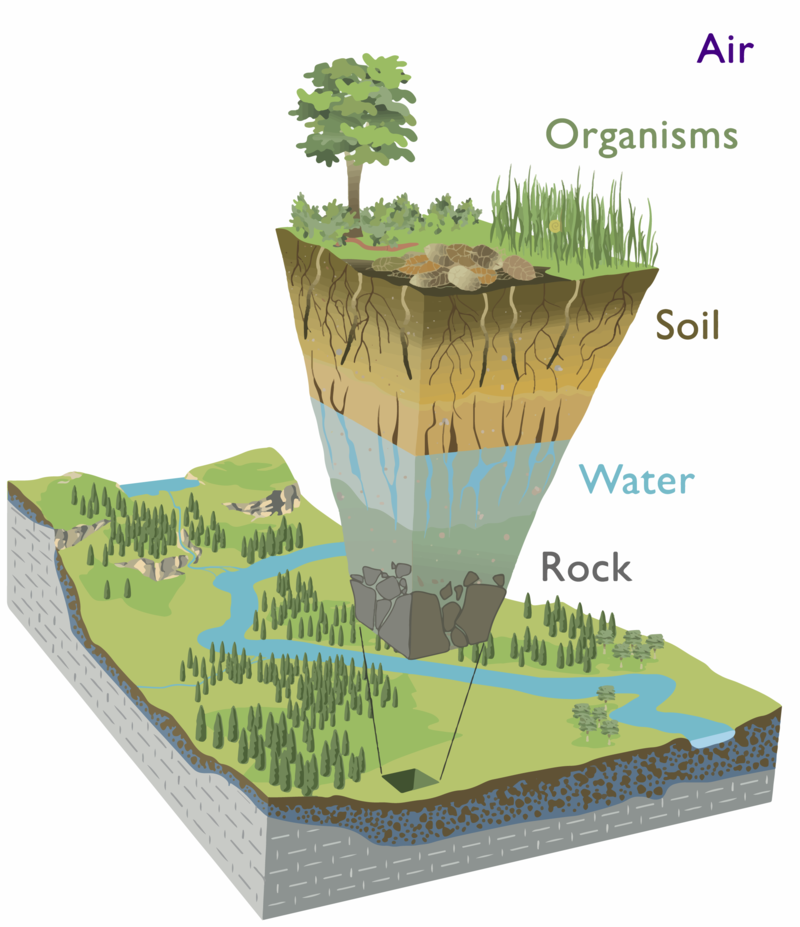
    <p>Welty’s team will explore Earth’s critical zone, which extends from 
    the tops of trees to the base of weathered bedrock, in urban centers 
    along the Eastern Seaboard. In particular, they’re interested in how 
    natural, geological processes occurring below the Earth’s surface and 
    human-driven processes interact. Human influences include road salt 
    application, polluted stormwater runoff, and soil-disturbing 
    construction. These factors can all significantly influence urban water 
    quality, water chemistry, and weathering processes. </p>


    <p>Most Critical Zone grants are for work in more pristine wilderness 
    areas, because the added effects of urban processes make the research 
    more complicated. But, Welty says, “that’s the most interesting part.”</p>


    <img src="https://news.umbc.edu/wp-content/uploads/2020/09/Czone-from-NSF.png" alt="" style="max-width: 100%; height: auto;"><br>The Earth’s critical zone extends from the treetops down to bedrock below ground. Image by the National Science Foundation. <br><br>


    <p><strong>Focus on the Fall Zone</strong></p>


    <p>The research will take place in four East Coast cities: Philadelphia,
     Baltimore, Washington, and Raleigh. The researchers strategically 
    selected these urban centers because they align in a north-to-south 
    corridor along what geologists call the “Fall Zone.” The Fall Zone 
    exists at the transition from the <a href="http://www.mgs.md.gov/geology/" rel="nofollow external" class="bo">Piedmont to the Coastal Plain</a>, and is an area of intense interest for geologists.</p>


    <p>“We think of this landscape as ancient, but recent research has led 
    to a different understanding about how the Fall Zone in our region has 
    evolved,” says geomorphologist <strong>Andrew Miller</strong>, UMBCprofessor
     of geography and environmental systems and a collaborator on the new 
    grant. Glaciers to the region’s north played a role, and “human activity
     has also caused profound changes,” Miller says. “All of this forms the 
    background for the work we are planning to do on this project.”</p>


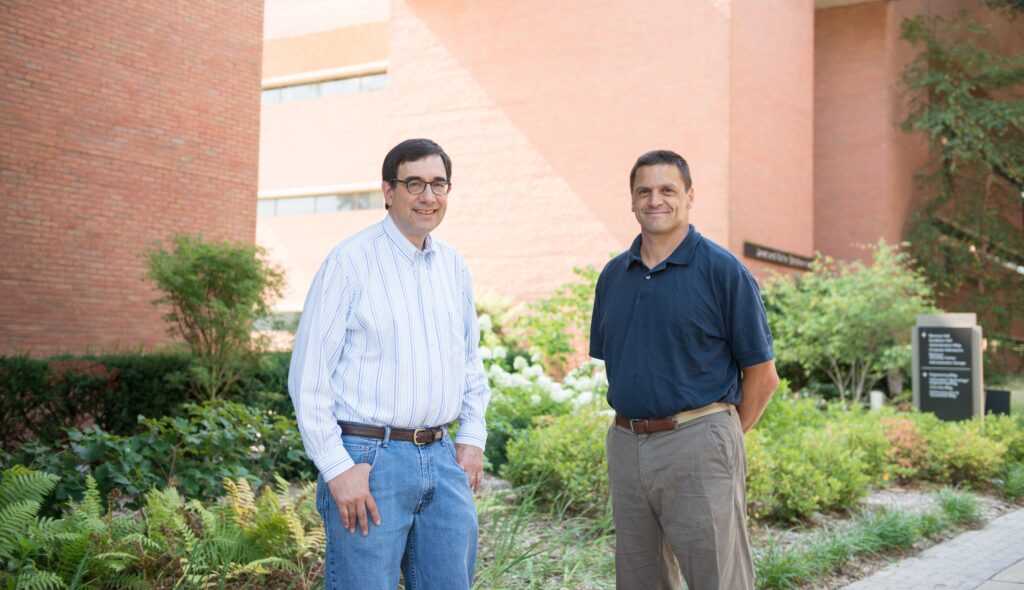
    <img src="https://news.umbc.edu/wp-content/uploads/2020/09/IMG_0506-1024x768.jpeg" alt="" style="max-width: 100%; height: auto;"><br>Miller (left) and Welty in Catonsville at one of their research field sites. Photo by Victor Fulda.<br><br>


    <h4>Philadelphia to Raleigh: An urban corridor</h4>


    <p>The Fall Zone’s unique topography made it a natural place for some of
     the first American cities to emerge. Dramatic elevation changes 
    characterize the Fall Zone, “so that’s where waterfalls formed, 
    providing hydropower, so mills were set up,” Welty explains. Population 
    centers grew up around the mills. Elevation changes at the Fall Zone 
    boundary also limited water transport further inland, making it the 
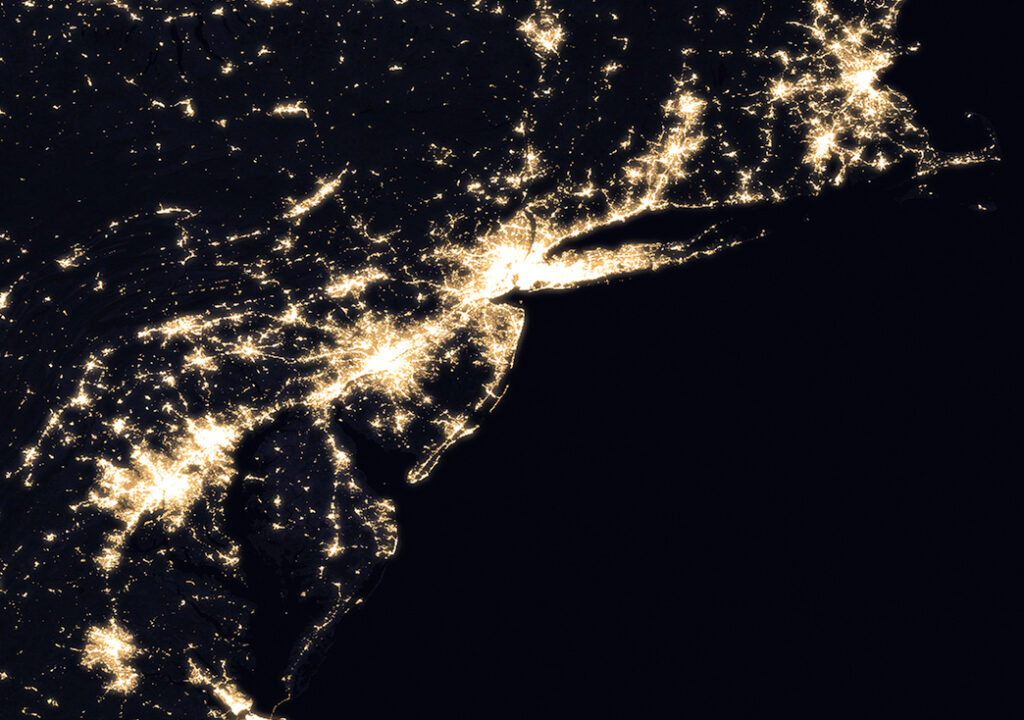
    natural place to build port cities. Today’s I-95 corridor links these 
    urban centers.</p>


    <p>The north-south corridor also gives the researchers an opportunity to
     examine how climate affects the movement of substances, such as 
    sediment and dissolved materials, through the natural and built 
    environments. Natural and human-introduced substances can affect 
    everything from water quality to how quickly the bedrock wears away over
     time.  </p>


    <p>Of the four cities, Raleigh is distinct in ways that offer unique 
    opportunities. As a younger city, it’s laid out differently. It may also
     have newer water, sewer, and other systems that could affect its 
    underground properties in ways that differ from older, industrial cities
     like Baltimore and Philadelphia.</p>


    <img src="https://news.umbc.edu/wp-content/uploads/2020/09/night-view-u.s.-east-coast-nasa-1024x720.jpg" alt="" style="max-width: 100%; height: auto;"><br>The
     U.S. Northeast and mid-Atlantic at night, showing the urban corridor. 
    Image courtesy NASA Earth Observatory, by Joshua Stevens. <br><br>


    <h4><strong>Long-term legacy</strong></h4>


    <p>Baltimore, in particular, is well-suited to host this research, 
    because scientists have collected environmental data on the region for 
    over twenty years through the <a href="https://baltimoreecosystemstudy.org/" rel="nofollow external" class="bo">Baltimore Ecosystem Study</a>
     Long-Term Ecological Research Project (BES). The BES team has installed
     scientific instruments all over the region. Students, faculty, and 
    sensors have been recording data consistently for decades, painting a 
    picture of Baltimore’s watershed, ecology, and social issues related to 
    the environment.  </p>


    <p>However, “the subsurface has for the most part been ignored,” Welty 
    says. With funding from other sources, she and her field assistants have
     drilled 35 monitoring  wells—but there’s more to be learned. </p>


    <p>“We’ve got all this incredible science that’s been going on for 20 
    years of the BES,” Welty says. With the Critical Zone grant, “Now we 
    want to look at the subsurface to complement all the data and 
    information and instrumentation—you name it, we have it,” Welty says. 
    “We think it’s really important to marry these two together.”</p>


    <p>In addition to adding more and different data to an already huge 
    archive, the Baltimore-based team also plans to leverage their existing 
    data in new ways. “We’re going to use stream chemistry as a window into 
    the subsurface,” Welty says. The researchers will also examine land use 
    patterns and analyze bedrock and soil cores. Tools that act like an 
    x-ray or MRI will enable them to visualize the structure and properties 
    of the subsurface that are impossible to observe directly.</p>


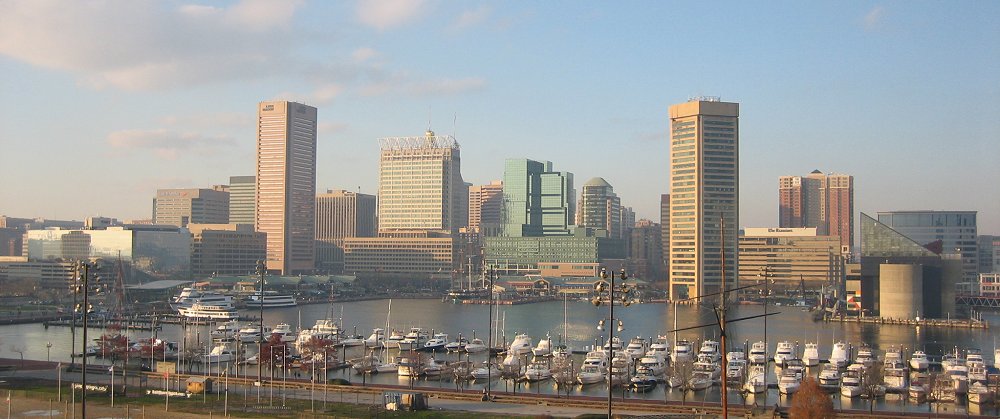
    <img src="https://news.umbc.edu/wp-content/uploads/2020/09/3160249975_906d2dfb70_o1.jpg" alt="" style="max-width: 100%; height: auto;"><br>Baltimore skyline. Photo by Adam Lindquist, used under <a href="https://creativecommons.org/licenses/by-nc/2.0/legalcode" rel="nofollow external" class="bo">CC-BY-NC 2.0</a>.<br><br>


    <h4><strong>Putting science into practice</strong></h4>


    <p>Urban groundwater processes fascinate Welty. She’s driven by a 
    fundamental desire to better understand what’s going on underneath 
    cities in the Fall Zone. And there are practical reasons why this work 
    is important, too.  </p>


    <p>“At UMBC, we’re always interested in informing policy with the 
    scientific projects we do,” she says. “We have strong relationships with
     partners in Baltimore, and folks in the other cities do as well. They 
    pay attention to what we do.” </p>


    <p>Those relationships work in both directions. Sometimes the research 
    informs new policies around development, water treatment, or salt use. 
    Other times, questions from regional leaders inspire additional 
    research, including student projects.</p>


    <p>Some public concerns have involved hazards to the urban drinking 
    water supply and salinization of streams, which could be detrimental to 
    wildlife. “We’re making connections and providing a foundation of 
    knowledge,” Welty says, so policymakers can make decisions grounded in 
    science.   </p>


    <p>In addition, Alan Berkowitz from the Cary Institute is on the team to
     help bring these important ideas to K-12 students. Berkowitz will work 
    with the researchers to develop an Earth science module for local 
    schools, which will eventually be available to educators nationwide. 
    Berkowitz will also work with the team to develop a citizen science 
    program focused on the urban critical zone theme. </p>


    <p>“Alan has his ear to the ground on what the schools are interested 
    in, and he knows how to make that translation from the scientific 
    project to this kind of outreach,” Welty says. This work will bring the 
    project full circle, inspiring another generation of minds to explore 
    the world beneath their feet.</p>


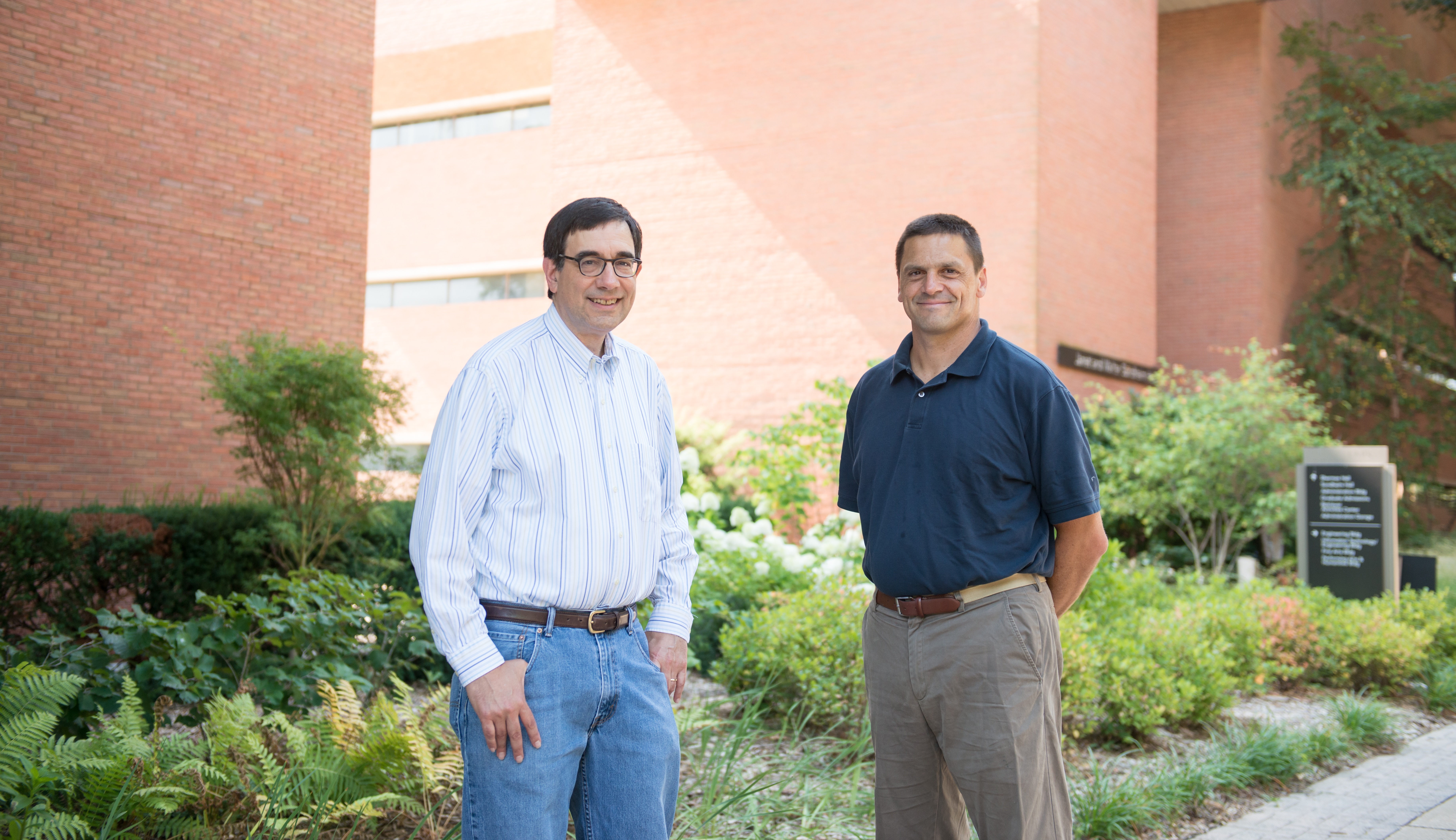
    <p><em>Banner image: Claire Welty (left) and Andrew Miller at a field 
    research site in Catonsville. The site is a buried stream that doubles 
    as a storm drain and is part of a restoration project. Photo by Victor 
    Fulda, an engineering technician in UMBC’s chemical, biochemical, and 
    environmental engineering department. </em></p><br><br><a href="https://news.umbc.edu/author/csdd/" rel="nofollow external" class="bo">###</a><div><ul><li><span>For additional UMBC Science and Technology stories, visit the <a href="https://news.umbc.edu/category/science-technology/" rel="nofollow external" class="bo">UMBC News site</a>.</span></li><li><span>For additional stories about the UMBC community, visit the <a href="https://magazine.umbc.edu/" rel="nofollow external" class="bo"><span>UMBC Magazine site</span></a>.</span></li><li><span><span><span>For additional COEIT stories, visit the <a href="https://coeit.umbc.edu/" rel="nofollow external" class="bo">COEIT site</a>.</span></span></span></li><li>For additional COEIT Research Highlights, including Publications Spotlights, visit the <a href="https://coeit.umbc.edu/research-highlights/" rel="nofollow external" class="bo">COEIT Research pages</a> on the COEIT Dean's Office site.</li></ul></div></div>
]]>
</Body>
<Summary>September 2, 2020 by Sarah Hansen   There is an essential resource constantly flowing beneath our feet:  groundwater. Urban denizens may not think about it often, or at all,  because they don’t...</Summary>
<Website>https://news.umbc.edu/bedrock-to-treetops-nsf-awards-4-8m-to-urban-environment-study-led-by-umbcs-claire-welty/</Website>
<TrackingUrl>https://beta.my.umbc.edu/api/v0/pixel/news/95390/guest@my.umbc.edu/784145302d8052e31181706c819167a2/api/pixel</TrackingUrl>
<Tag>cbee</Tag>
<Tag>cuere</Tag>
<Tag>ges</Tag>
<Tag>research</Tag>
<Group token="coeit">College of Engineering and Information Technology</Group>
<GroupUrl>https://beta.my.umbc.edu/groups/coeit</GroupUrl>
<AvatarUrl>https://assets3-beta.my.umbc.edu/system/shared/avatars/groups/000/000/095/c2a784a6cda726ef5f845e9192adb64b/xsmall.png?1496851664</AvatarUrl>
<AvatarUrl size="original">https://assets1-beta.my.umbc.edu/system/shared/avatars/groups/000/000/095/c2a784a6cda726ef5f845e9192adb64b/original.jpg?1496851664</AvatarUrl>
<AvatarUrl size="xxlarge">https://assets3-beta.my.umbc.edu/system/shared/avatars/groups/000/000/095/c2a784a6cda726ef5f845e9192adb64b/xxlarge.png?1496851664</AvatarUrl>
<AvatarUrl size="xlarge">https://assets3-beta.my.umbc.edu/system/shared/avatars/groups/000/000/095/c2a784a6cda726ef5f845e9192adb64b/xlarge.png?1496851664</AvatarUrl>
<AvatarUrl size="large">https://assets2-beta.my.umbc.edu/system/shared/avatars/groups/000/000/095/c2a784a6cda726ef5f845e9192adb64b/large.png?1496851664</AvatarUrl>
<AvatarUrl size="medium">https://assets3-beta.my.umbc.edu/system/shared/avatars/groups/000/000/095/c2a784a6cda726ef5f845e9192adb64b/medium.png?1496851664</AvatarUrl>
<AvatarUrl size="small">https://assets3-beta.my.umbc.edu/system/shared/avatars/groups/000/000/095/c2a784a6cda726ef5f845e9192adb64b/small.png?1496851664</AvatarUrl>
<AvatarUrl size="xsmall">https://assets3-beta.my.umbc.edu/system/shared/avatars/groups/000/000/095/c2a784a6cda726ef5f845e9192adb64b/xsmall.png?1496851664</AvatarUrl>
<AvatarUrl size="xxsmall">https://assets2-beta.my.umbc.edu/system/shared/avatars/groups/000/000/095/c2a784a6cda726ef5f845e9192adb64b/xxsmall.png?1496851664</AvatarUrl>
<Sponsor>College of Engineering and Information Technology</Sponsor>
<ThumbnailUrl size="xxlarge">https://assets1-beta.my.umbc.edu/system/shared/thumbnails/news/000/095/390/e88592cf9c081860ff1b3de851ac6157/xxlarge.jpg?1599070479</ThumbnailUrl>
<ThumbnailUrl size="xlarge">https://assets1-beta.my.umbc.edu/system/shared/thumbnails/news/000/095/390/e88592cf9c081860ff1b3de851ac6157/xlarge.jpg?1599070479</ThumbnailUrl>
<ThumbnailUrl size="large">https://assets3-beta.my.umbc.edu/system/shared/thumbnails/news/000/095/390/e88592cf9c081860ff1b3de851ac6157/large.jpg?1599070479</ThumbnailUrl>
<ThumbnailUrl size="medium">https://assets4-beta.my.umbc.edu/system/shared/thumbnails/news/000/095/390/e88592cf9c081860ff1b3de851ac6157/medium.jpg?1599070479</ThumbnailUrl>
<ThumbnailUrl size="small">https://assets3-beta.my.umbc.edu/system/shared/thumbnails/news/000/095/390/e88592cf9c081860ff1b3de851ac6157/small.jpg?1599070479</ThumbnailUrl>
<ThumbnailUrl size="xsmall">https://assets1-beta.my.umbc.edu/system/shared/thumbnails/news/000/095/390/e88592cf9c081860ff1b3de851ac6157/xsmall.jpg?1599070479</ThumbnailUrl>
<ThumbnailUrl size="xxsmall">https://assets4-beta.my.umbc.edu/system/shared/thumbnails/news/000/095/390/e88592cf9c081860ff1b3de851ac6157/xxsmall.jpg?1599070479</ThumbnailUrl>
<PawCount>4</PawCount>
<CommentCount>0</CommentCount>
<CommentsAllowed>false</CommentsAllowed>
<PostedAt>Wed, 02 Sep 2020 14:16:04 -0400</PostedAt>
</NewsItem>

<NewsItem contentIssues="true" id="80056" important="false" status="posted" url="https://beta.my.umbc.edu/groups/coeit/posts/80056">
<Title>Twenty years of the Baltimore Ecosystem Study</Title>
<Tagline>An icon of urban ecology research</Tagline>
<Body>
<![CDATA[
    <div class="html-content"><div><span><a href="https://news.umbc.edu/twenty-years-of-the-baltimore-ecosystem-study-an-icon-of-urban-ecology-research/" rel="nofollow external" class="bo">November 2, 2018</a> by </span><span> <span><a href="https://news.umbc.edu/author/sarahhansen/" rel="nofollow external" class="bo">Sarah Hansen</a><br></span></span></div><div><br></div><div><p>The Baltimore Ecosystem Study (BES) is one of only two urban 
    Long-Term Ecological Research projects initially funded by the National 
    Science Foundation, and this year it turns 20. When the BES was founded 
    in 1998, “The field of urban ecology basically didn’t exist,” says <strong>Claire Welty</strong>,
     director of UMBC’s Center for Urban Environmental Research and 
    Education. Since then, the field has flourished, in no small part thanks
     to dedicated researchers in Baltimore.</p>
    <p>The BES has succeeded in compiling massive datasets on the Baltimore 
    region’s watershed, ecology, and sociological issues related to the 
    environment. The extent of these data are unparalleled anywhere else in 
    the world. That makes the study “an international icon,” Welty says, and
     its wealth of fully public data provides “a rich resource for people to
     use in their research.”</p>
    <p>“We’re living in a rapidly changing environment,” says <strong>Andy Miller</strong>,
     professor of geography and environmental systems (GES) and chair of the
     department when the study was founded. The long-term data the BES 
    collects allows researchers to document “how systems change in response 
    to what we do” on and to the landscape, Miller explains. That includes 
    large-scale development of previously undisturbed ecosystems. If we can 
    learn enough, Miller says, that knowledge may create “opportunities to 
    mitigate the effects of urbanization.”</p>
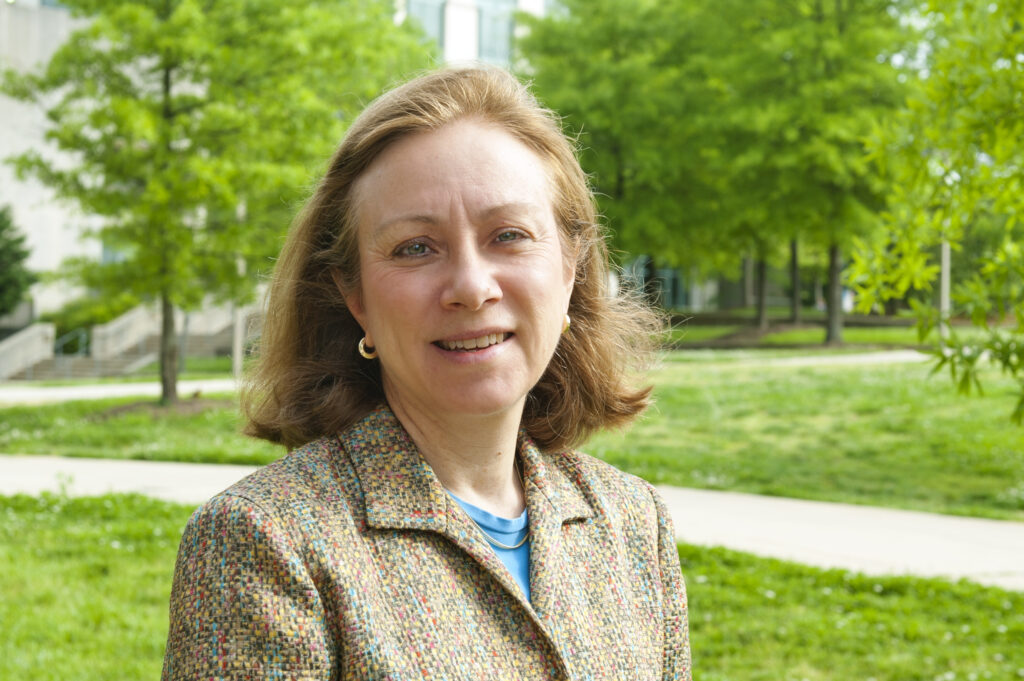
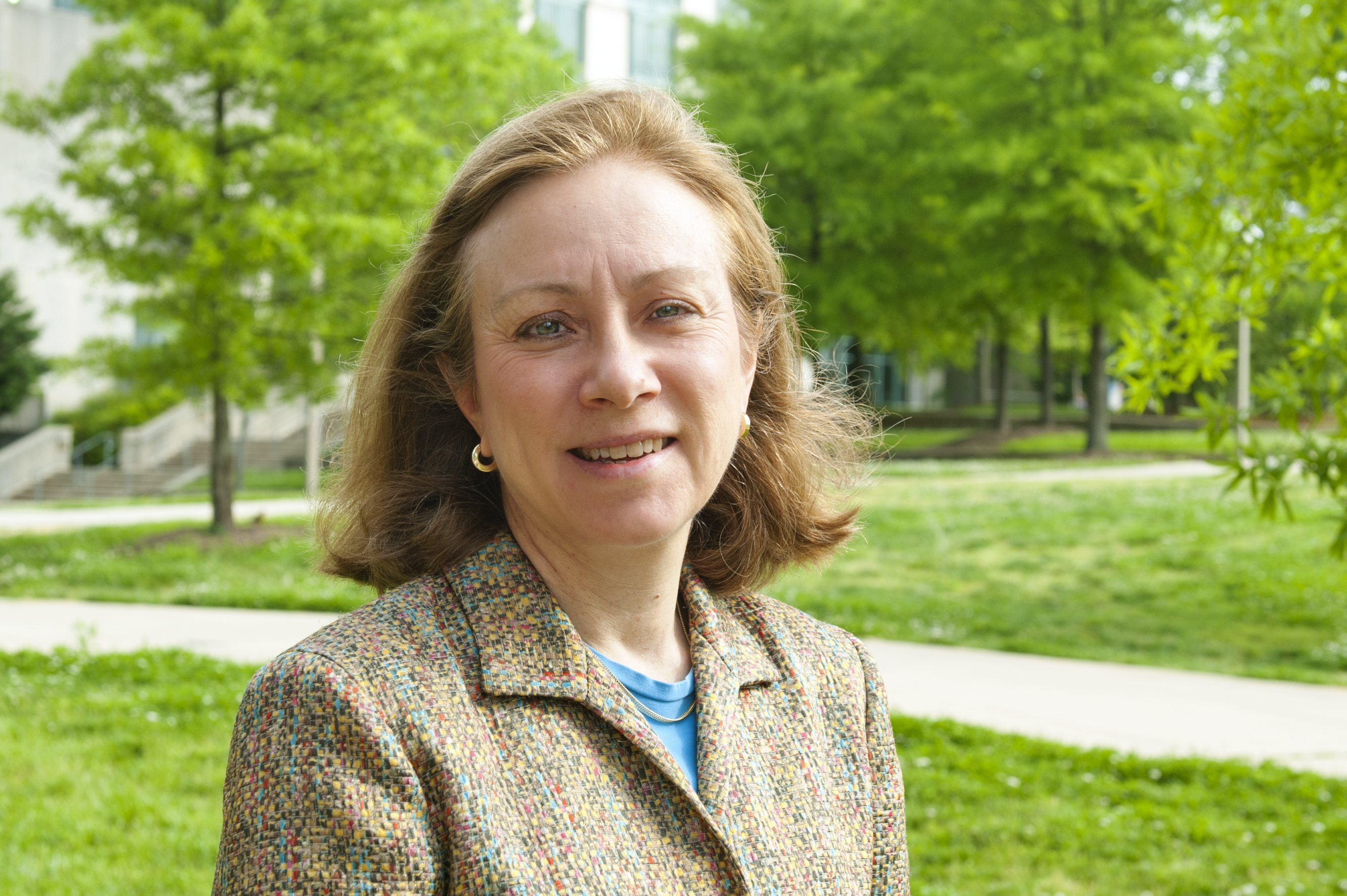
    <a href="https://news.umbc.edu/wp-content/uploads/2018/11/Claire_Welty_CBEE_7067.jpg" rel="nofollow external" class="bo"><img src="https://news.umbc.edu/wp-content/uploads/2018/11/Claire_Welty_CBEE_7067-1024x681.jpg" alt="" width="616" height="410" style="max-width: 100%; height: auto;"></a>Claire Welty, director of UMBC’s Center for Urban Environmental Research and Education.
    <p><br></p><p>Moving on those opportunities requires collaboration with 
    policymakers at many levels. Over the course of the BES, its researchers
     have gained the trust of local and state officials who have found BES 
    data helpful in informing policy discussions, says Miller. Employees 
    from the Maryland Department of the Environment, Department of Natural 
    Resources, and others regularly attend BES quarterly meetings.</p>
    <p>Beyond the flood of data and influence on policy, “The impact of the 
    BES on research infrastructure and training in Baltimore has been so 
    important,” says Miller. The BES is headquartered on UMBC’s campus, and 
    the presence of the program here has helped faculty successfully apply 
    for funding to support related projects. It even enabled the launch of 
    UMBC’s graduate program in GES by facilitating funding of the program’s 
    first students through the NSF’s Integrative Graduate Education and 
    Research Traineeship program.</p>
    <p>The education component of the BES extends far beyond the graduate 
    level. Its education arm works with K-12 students throughout the 
    Baltimore region to teach them about their local ecosystems and the 
    importance of caring for the environment, with the goal of raising a 
    generation of young people committed to environmental stewardship.</p>
    <a href="https://news.umbc.edu/wp-content/uploads/2017/05/Matt-Baker_Andy-Miller-9034_crop.jpg" rel="nofollow external" class="bo"><img src="https://news.umbc.edu/wp-content/uploads/2017/05/Matt-Baker_Andy-Miller-9034_crop-1024x590.jpg" alt="" width="720" height="415" style="max-width: 100%; height: auto;"></a>Andy Miller (left) and Matthew Baker, professors of geography and environmental systems at UMBC.
    <p><br></p><p>Today, “More than half of the world’s population lives in cities,” says <strong>Chris Swan</strong>,
     professor of GES and a BES scientist, “and understanding how these 
    environments function from the natural, physical and social science 
    perspectives has never been more important.”</p>
    <p>Plus, the effects of climate change don’t necessarily show up 
    immediately, but can accumulate over time, explains Welty, “so it’s 
    important that the data collection continue,” especially as climate 
    change accelerates.</p>
    <p>The BES is unique because it “brings scientists, stakeholders, policy
     makers, and students to the table on a regular basis to perform 
    research, interpret results and understand outcomes,” says Swan. This 
    level of collaboration on such a large scale enables BES to have a 
    substantial impact, locally and in other urban areas around the world. 
    This impact can be felt in the well-being of urban residents, he adds, 
    “none more so than the people of Baltimore.”</p>
    <p><em>Banner image: Chris Swan tends native plants at a UMBC greenhouse. All photos by Marlayna Demond ’11 for UMBC.</em></p><br><span></span></div></div>
]]>
</Body>
<Summary>November 2, 2018 by  Sarah Hansen       The Baltimore Ecosystem Study (BES) is one of only two urban  Long-Term Ecological Research projects initially funded by the National  Science Foundation,...</Summary>
<Website>https://news.umbc.edu/twenty-years-of-the-baltimore-ecosystem-study-an-icon-of-urban-ecology-research/</Website>
<TrackingUrl>https://beta.my.umbc.edu/api/v0/pixel/news/80056/guest@my.umbc.edu/66d17c6e8ea805befdfe8d2aee485f0a/api/pixel</TrackingUrl>
<Tag>cahss</Tag>
<Tag>coeit</Tag>
<Tag>cuere</Tag>
<Tag>ges</Tag>
<Tag>research</Tag>
<Group token="coeit">College of Engineering and Information Technology</Group>
<GroupUrl>https://beta.my.umbc.edu/groups/coeit</GroupUrl>
<AvatarUrl>https://assets3-beta.my.umbc.edu/system/shared/avatars/groups/000/000/095/c2a784a6cda726ef5f845e9192adb64b/xsmall.png?1496851664</AvatarUrl>
<AvatarUrl size="original">https://assets1-beta.my.umbc.edu/system/shared/avatars/groups/000/000/095/c2a784a6cda726ef5f845e9192adb64b/original.jpg?1496851664</AvatarUrl>
<AvatarUrl size="xxlarge">https://assets3-beta.my.umbc.edu/system/shared/avatars/groups/000/000/095/c2a784a6cda726ef5f845e9192adb64b/xxlarge.png?1496851664</AvatarUrl>
<AvatarUrl size="xlarge">https://assets3-beta.my.umbc.edu/system/shared/avatars/groups/000/000/095/c2a784a6cda726ef5f845e9192adb64b/xlarge.png?1496851664</AvatarUrl>
<AvatarUrl size="large">https://assets2-beta.my.umbc.edu/system/shared/avatars/groups/000/000/095/c2a784a6cda726ef5f845e9192adb64b/large.png?1496851664</AvatarUrl>
<AvatarUrl size="medium">https://assets3-beta.my.umbc.edu/system/shared/avatars/groups/000/000/095/c2a784a6cda726ef5f845e9192adb64b/medium.png?1496851664</AvatarUrl>
<AvatarUrl size="small">https://assets3-beta.my.umbc.edu/system/shared/avatars/groups/000/000/095/c2a784a6cda726ef5f845e9192adb64b/small.png?1496851664</AvatarUrl>
<AvatarUrl size="xsmall">https://assets3-beta.my.umbc.edu/system/shared/avatars/groups/000/000/095/c2a784a6cda726ef5f845e9192adb64b/xsmall.png?1496851664</AvatarUrl>
<AvatarUrl size="xxsmall">https://assets2-beta.my.umbc.edu/system/shared/avatars/groups/000/000/095/c2a784a6cda726ef5f845e9192adb64b/xxsmall.png?1496851664</AvatarUrl>
<Sponsor>College of Engineering and Information Technology</Sponsor>
<ThumbnailUrl size="xxlarge">https://assets4-beta.my.umbc.edu/system/shared/thumbnails/news/000/080/056/e9ce6cda1926225d3344957ee24abf91/xxlarge.jpg?1541529474</ThumbnailUrl>
<ThumbnailUrl size="xlarge">https://assets1-beta.my.umbc.edu/system/shared/thumbnails/news/000/080/056/e9ce6cda1926225d3344957ee24abf91/xlarge.jpg?1541529474</ThumbnailUrl>
<ThumbnailUrl size="large">https://assets3-beta.my.umbc.edu/system/shared/thumbnails/news/000/080/056/e9ce6cda1926225d3344957ee24abf91/large.jpg?1541529474</ThumbnailUrl>
<ThumbnailUrl size="medium">https://assets3-beta.my.umbc.edu/system/shared/thumbnails/news/000/080/056/e9ce6cda1926225d3344957ee24abf91/medium.jpg?1541529474</ThumbnailUrl>
<ThumbnailUrl size="small">https://assets3-beta.my.umbc.edu/system/shared/thumbnails/news/000/080/056/e9ce6cda1926225d3344957ee24abf91/small.jpg?1541529474</ThumbnailUrl>
<ThumbnailUrl size="xsmall">https://assets2-beta.my.umbc.edu/system/shared/thumbnails/news/000/080/056/e9ce6cda1926225d3344957ee24abf91/xsmall.jpg?1541529474</ThumbnailUrl>
<ThumbnailUrl size="xxsmall">https://assets2-beta.my.umbc.edu/system/shared/thumbnails/news/000/080/056/e9ce6cda1926225d3344957ee24abf91/xxsmall.jpg?1541529474</ThumbnailUrl>
<PawCount>2</PawCount>
<CommentCount>0</CommentCount>
<CommentsAllowed>false</CommentsAllowed>
<PostedAt>Mon, 05 Nov 2018 07:14:50 -0500</PostedAt>
<EditAt>Tue, 06 Nov 2018 13:38:02 -0500</EditAt>
</NewsItem>

</News>