The World Is (Finally) Watching...ChemE student athletes
We are excited that Chemical engineering students, Amaya Carroll and Mikayla Bryant, were highlighted in the UMBC magazine (2024, December). Both Amaya and Mikayla are chemical engineering majors on the environmental engineering and sustainability track.
You can see Amaya in the cover photo and Mikayla in the photo within the article.
To read full article: https://umbc.edu/stories/the-world-is-finally-watching-womens-sports/

Left to right: Katana Nelson, Jada James, Mikayla Bryant.
]]>
We are excited that Chemical engineering students, Amaya Carroll and Mikayla Bryant, were highlighted in the UMBC magazine (2024, December). Both Amaya and Mikayla are chemical engineering majors...
https://beta.my.umbc.edu/api/v0/pixel/news/146778/guest@my.umbc.edu/48240a8f26c042afa8829511cdec6c1f/api/pixel
award
grad
spring-2024
ug
ugrad
Chemical, Biochemical and Environmental Engineering
https://beta.my.umbc.edu/groups/cbee
https://assets4-beta.my.umbc.edu/system/shared/avatars/groups/000/000/771/b5e579e81b2e3624611890fa3ca2716a/xsmall.png?1746794587
https://assets2-beta.my.umbc.edu/system/shared/avatars/groups/000/000/771/b5e579e81b2e3624611890fa3ca2716a/original.png?1746794587
https://assets1-beta.my.umbc.edu/system/shared/avatars/groups/000/000/771/b5e579e81b2e3624611890fa3ca2716a/xxlarge.png?1746794587
https://assets2-beta.my.umbc.edu/system/shared/avatars/groups/000/000/771/b5e579e81b2e3624611890fa3ca2716a/xlarge.png?1746794587
https://assets2-beta.my.umbc.edu/system/shared/avatars/groups/000/000/771/b5e579e81b2e3624611890fa3ca2716a/large.png?1746794587
https://assets4-beta.my.umbc.edu/system/shared/avatars/groups/000/000/771/b5e579e81b2e3624611890fa3ca2716a/medium.png?1746794587
https://assets1-beta.my.umbc.edu/system/shared/avatars/groups/000/000/771/b5e579e81b2e3624611890fa3ca2716a/small.png?1746794587
https://assets4-beta.my.umbc.edu/system/shared/avatars/groups/000/000/771/b5e579e81b2e3624611890fa3ca2716a/xsmall.png?1746794587
https://assets1-beta.my.umbc.edu/system/shared/avatars/groups/000/000/771/b5e579e81b2e3624611890fa3ca2716a/xxsmall.png?1746794587
Chemical, Biochemical and Environmental Engineering
https://assets2-beta.my.umbc.edu/system/shared/thumbnails/news/000/146/778/98a502685d6ca1cf34b83ec7c32ba007/xxlarge.jpg?1738013065
https://assets3-beta.my.umbc.edu/system/shared/thumbnails/news/000/146/778/98a502685d6ca1cf34b83ec7c32ba007/xlarge.jpg?1738013065
https://assets4-beta.my.umbc.edu/system/shared/thumbnails/news/000/146/778/98a502685d6ca1cf34b83ec7c32ba007/large.jpg?1738013065
https://assets3-beta.my.umbc.edu/system/shared/thumbnails/news/000/146/778/98a502685d6ca1cf34b83ec7c32ba007/medium.jpg?1738013065
https://assets2-beta.my.umbc.edu/system/shared/thumbnails/news/000/146/778/98a502685d6ca1cf34b83ec7c32ba007/small.jpg?1738013065
https://assets4-beta.my.umbc.edu/system/shared/thumbnails/news/000/146/778/98a502685d6ca1cf34b83ec7c32ba007/xsmall.jpg?1738013065
https://assets3-beta.my.umbc.edu/system/shared/thumbnails/news/000/146/778/98a502685d6ca1cf34b83ec7c32ba007/xxsmall.jpg?1738013065
0
0
true
Mon, 27 Jan 2025 16:27:40 -0500
Thu, 30 Jan 2025 14:12:00 -0500
Undergraduate Research: ATOMS lab
‘26 chemical engineering-biotechnology & bioengineering
Shashane Anderson
‘26 chemical engineering - biotechnology & bioengineering track
When did you do your Research?
Fall 2023 - still doing it
Where was your Research?
My research is at the ATOMS Lab with Dr. Josephson at UMBC.
What is the focus of your Research?
My current focus is on formalizing proofs regarding chemical equilibrium using the Lean Theorem Prover.
What are you looking forward to the most about your Research?
I am eager to become more proficient with the computational aspects of engineering and math. Although it can be challenging, it’s an incredibly valuable skill.
What was the best part of your Research OR What was the biggest learning moment of your Research?
As a beginner, it’s been fascinating to observe my growth. I’ve gradually developed the ability to apply the knowledge I’ve gained from my courses and research in more practical ways such as proving the mathematical concepts I learn in class. This has significantly strengthened my skills. For this reason, I can be more appreciative of the value of the learning process and the insight it brings.
What advice do you have for students who are interested in getting involved in research or an internship?
Never underestimate your ability to learn and apply new concepts.
What are your goals after graduation?
I will be pursuing a job in the pharmaceutical industry.
]]>
Shashane Anderson ‘26 chemical engineering - biotechnology & bioengineering track When did you do your Research? Fall 2023 - still doing it Where was your Research? My research is at...
https://beta.my.umbc.edu/api/v0/pixel/news/144819/guest@my.umbc.edu/91f6ef46418671f6d199234e29f917af/api/pixel
fall-2023
internship
research
spring-2024
student-highlight
summer-2024
ug
ugrad
Chemical, Biochemical and Environmental Engineering
https://beta.my.umbc.edu/groups/cbee
https://assets4-beta.my.umbc.edu/system/shared/avatars/groups/000/000/771/b5e579e81b2e3624611890fa3ca2716a/xsmall.png?1746794587
https://assets2-beta.my.umbc.edu/system/shared/avatars/groups/000/000/771/b5e579e81b2e3624611890fa3ca2716a/original.png?1746794587
https://assets1-beta.my.umbc.edu/system/shared/avatars/groups/000/000/771/b5e579e81b2e3624611890fa3ca2716a/xxlarge.png?1746794587
https://assets2-beta.my.umbc.edu/system/shared/avatars/groups/000/000/771/b5e579e81b2e3624611890fa3ca2716a/xlarge.png?1746794587
https://assets2-beta.my.umbc.edu/system/shared/avatars/groups/000/000/771/b5e579e81b2e3624611890fa3ca2716a/large.png?1746794587
https://assets4-beta.my.umbc.edu/system/shared/avatars/groups/000/000/771/b5e579e81b2e3624611890fa3ca2716a/medium.png?1746794587
https://assets1-beta.my.umbc.edu/system/shared/avatars/groups/000/000/771/b5e579e81b2e3624611890fa3ca2716a/small.png?1746794587
https://assets4-beta.my.umbc.edu/system/shared/avatars/groups/000/000/771/b5e579e81b2e3624611890fa3ca2716a/xsmall.png?1746794587
https://assets1-beta.my.umbc.edu/system/shared/avatars/groups/000/000/771/b5e579e81b2e3624611890fa3ca2716a/xxsmall.png?1746794587
Chemical, Biochemical and Environmental Engineering
https://assets3-beta.my.umbc.edu/system/shared/thumbnails/news/000/144/819/b61815281f788b014b22ff0fa8a0f2d6/xxlarge.jpg?1729090626
https://assets1-beta.my.umbc.edu/system/shared/thumbnails/news/000/144/819/b61815281f788b014b22ff0fa8a0f2d6/xlarge.jpg?1729090626
https://assets2-beta.my.umbc.edu/system/shared/thumbnails/news/000/144/819/b61815281f788b014b22ff0fa8a0f2d6/large.jpg?1729090626
https://assets4-beta.my.umbc.edu/system/shared/thumbnails/news/000/144/819/b61815281f788b014b22ff0fa8a0f2d6/medium.jpg?1729090626
https://assets3-beta.my.umbc.edu/system/shared/thumbnails/news/000/144/819/b61815281f788b014b22ff0fa8a0f2d6/small.jpg?1729090626
https://assets1-beta.my.umbc.edu/system/shared/thumbnails/news/000/144/819/b61815281f788b014b22ff0fa8a0f2d6/xsmall.jpg?1729090626
https://assets4-beta.my.umbc.edu/system/shared/thumbnails/news/000/144/819/b61815281f788b014b22ff0fa8a0f2d6/xxsmall.jpg?1729090626
0
0
true
Wed, 16 Oct 2024 10:58:22 -0400
Wed, 10 Sep 2025 11:49:55 -0400
CBEE students receive awards for research at 2024 COEIT Research Day
The College of Engineering and Information Technology (COEIT) Research Day was held on April 19, 2024. Undergraduate and graduate students across the college presented their research covering a range of topics.
Congratulations to the CBEE students who received COEIT Research Day Poster Awards. Poster presenters are in bold.
Bachelor Student Poster Awards
Authors: Tithi Prajapati, Mike Tolosa, Venkatesh Srinivasan, and Dr. Govind Rao
Department: Chemical, Biochemical and Environmental Engineering
Poster Title: Affordable Hand-held Portable Spectroscopy Technology for PAT applications
Authors: Mesha Shajahan, Preety Ahuja, and Dr. Govind Rao
Department: Chemical, Biochemical and Environmental Engineering
Poster Title: Polymer-Carbon Composite for Wearable Transcutaneous CO₂ Sensor
Doctoral Student Poster Awards
Authors: Revati Kadolkar, Vikash Kumar, Venkatesh Srinivasan, Sanjeev Kumar Ujjain, Dr. Douglas Frey, Dr. Govind Rao
Department: Chemical, Biochemical and Environmental Engineering
Poster Title: Development of a Novel Analytical Sensor Utilizing Ni-NTA and His-tag Affinity for At-Line Quantitative Analysis of Binding Proteins
Honorable Mention – Student Poster Awards
Authors: Alexander G. Doan, Matthew S. Quintanilla, Jessica E. Schafer, Casey M. Douglas, Meredith E. Morse, Dela-Joshua K. Dayie, Kay T. Latt, Julianna C. Wasiuta, Steven D. Harris, and Dr. Mark R. Marten
Department: Chemical, Biochemical and Environmental Engineering
Poster Title: Crosstalk Between Aspergillus nidulans CWIS and SIN Pathways Under Cell Wall Stress
Authors: Amir Babaei Gharehbagh, Rose Taylor, Joy Kiguru, Alyssa M. Burns, Ann Marie G. Carlton, and Dr. Christopher J. Hennigan
Department: Chemical, Biochemical and Environmental Engineering
Poster Title: Effects of Inorganic Salts and pH on the Gas-Aqueous Partitioning of Formic Acid and Acetic Acid
Authors: Elias Gilotte, Chad Sundberg, Hasib Hasan, and Dr. Govind Rao
Department: Chemical, Biochemical and Environmental Engineering
Poster Title: Developing an Online ATP Sensor for Cell-Free Protein Synthesis Monitoring
Judges
Thank you to the Research Day Poster Judges for all their help review of posters, specifically,
Jorge Almodovar (CBEE).
]]>
The College of Engineering and Information Technology (COEIT) Research Day was held on April 19, 2024. Undergraduate and graduate students across the college presented their research covering a...
https://beta.my.umbc.edu/api/v0/pixel/news/143483/guest@my.umbc.edu/e085ae48d351eb57c42e7fe3517fd0cc/api/pixel
almodovar
award
faculty
grad
hennigan
marten
rao
spring-2024
ug
ugrad
Chemical, Biochemical and Environmental Engineering
https://beta.my.umbc.edu/groups/cbee
https://assets4-beta.my.umbc.edu/system/shared/avatars/groups/000/000/771/b5e579e81b2e3624611890fa3ca2716a/xsmall.png?1746794587
https://assets2-beta.my.umbc.edu/system/shared/avatars/groups/000/000/771/b5e579e81b2e3624611890fa3ca2716a/original.png?1746794587
https://assets1-beta.my.umbc.edu/system/shared/avatars/groups/000/000/771/b5e579e81b2e3624611890fa3ca2716a/xxlarge.png?1746794587
https://assets2-beta.my.umbc.edu/system/shared/avatars/groups/000/000/771/b5e579e81b2e3624611890fa3ca2716a/xlarge.png?1746794587
https://assets2-beta.my.umbc.edu/system/shared/avatars/groups/000/000/771/b5e579e81b2e3624611890fa3ca2716a/large.png?1746794587
https://assets4-beta.my.umbc.edu/system/shared/avatars/groups/000/000/771/b5e579e81b2e3624611890fa3ca2716a/medium.png?1746794587
https://assets1-beta.my.umbc.edu/system/shared/avatars/groups/000/000/771/b5e579e81b2e3624611890fa3ca2716a/small.png?1746794587
https://assets4-beta.my.umbc.edu/system/shared/avatars/groups/000/000/771/b5e579e81b2e3624611890fa3ca2716a/xsmall.png?1746794587
https://assets1-beta.my.umbc.edu/system/shared/avatars/groups/000/000/771/b5e579e81b2e3624611890fa3ca2716a/xxsmall.png?1746794587
Chemical, Biochemical and Environmental Engineering
https://assets2-beta.my.umbc.edu/system/shared/thumbnails/news/000/143/483/68ccd36f91f784fbe3623b4a842401fb/xxlarge.jpg?1725027899
https://assets1-beta.my.umbc.edu/system/shared/thumbnails/news/000/143/483/68ccd36f91f784fbe3623b4a842401fb/xlarge.jpg?1725027899
https://assets4-beta.my.umbc.edu/system/shared/thumbnails/news/000/143/483/68ccd36f91f784fbe3623b4a842401fb/large.jpg?1725027899
https://assets3-beta.my.umbc.edu/system/shared/thumbnails/news/000/143/483/68ccd36f91f784fbe3623b4a842401fb/medium.jpg?1725027899
https://assets3-beta.my.umbc.edu/system/shared/thumbnails/news/000/143/483/68ccd36f91f784fbe3623b4a842401fb/small.jpg?1725027899
https://assets1-beta.my.umbc.edu/system/shared/thumbnails/news/000/143/483/68ccd36f91f784fbe3623b4a842401fb/xsmall.jpg?1725027899
https://assets4-beta.my.umbc.edu/system/shared/thumbnails/news/000/143/483/68ccd36f91f784fbe3623b4a842401fb/xxsmall.jpg?1725027899
0
0
true
Fri, 30 Aug 2024 10:27:58 -0400
CBEE students visit the Ashburton Filtration Plant
Spring 2024 - Environmental Physicochemical Process
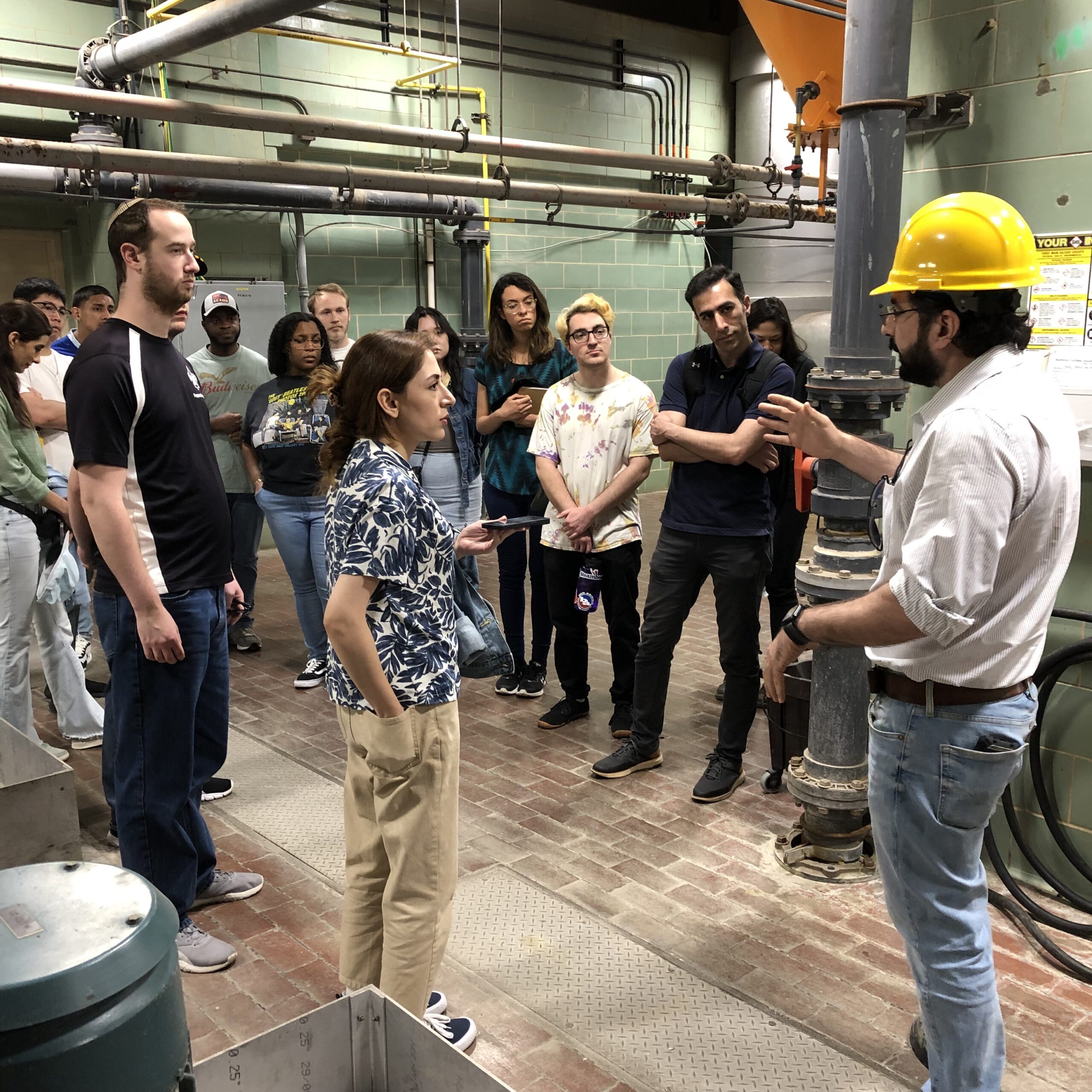
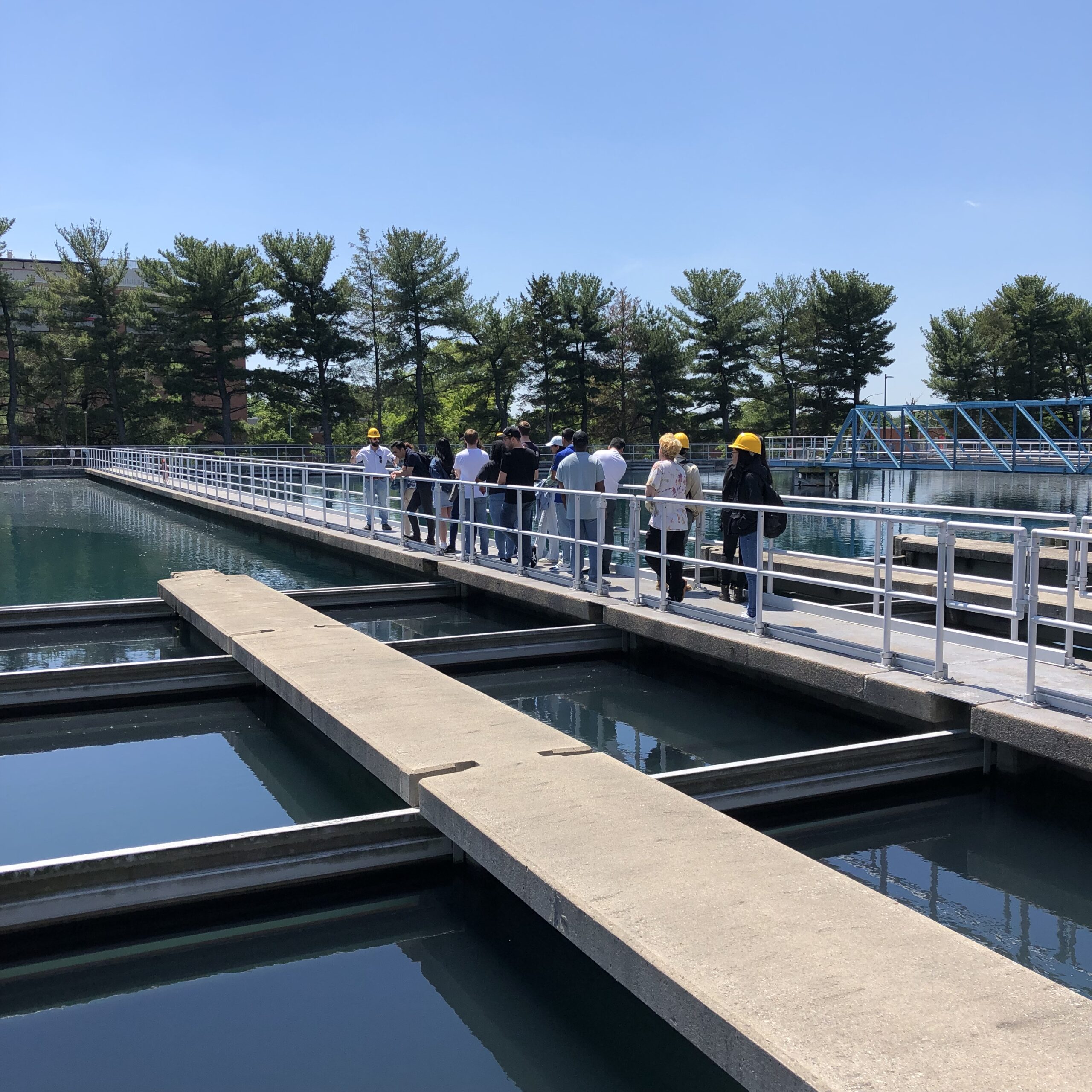
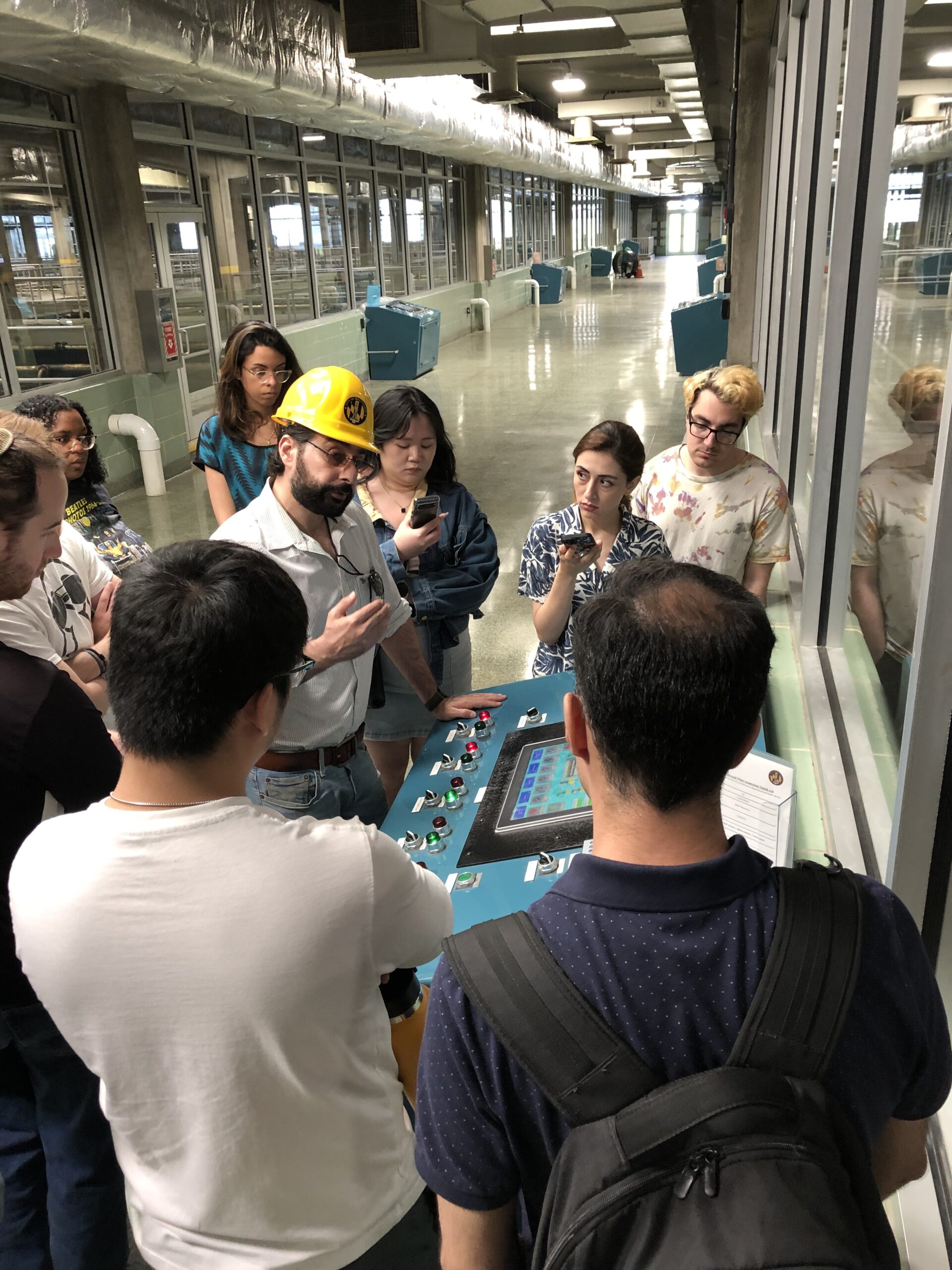
At the end of the Spring 2024 semester, Dr. Blaney’s Environmental Physicochemical Processes course (ENCH 412 and ENEN 612) visited the Ashburton Filtration Plant, Baltimore’s largest drinking water treatment plant. Students had the chance to see how the processes they learned about in class, namely coagulation, flocculation, sedimentation, granular media filtration, and disinfection, treat 165 million gallons of drinking water for Baltimore every day.
Mohammed Almafrachi, Engineering Manager for the Baltimore City Department of Public Works, gave an excellent tour. His in-depth knowledge of the treatment processes and on-the-ground experience managing the facility helped students understand how the concepts that they learned in class provide clean drinking water to Baltimore residents. He stressed the importance of being adaptable to challenges, telling the students “You can’t troubleshoot without trouble.”
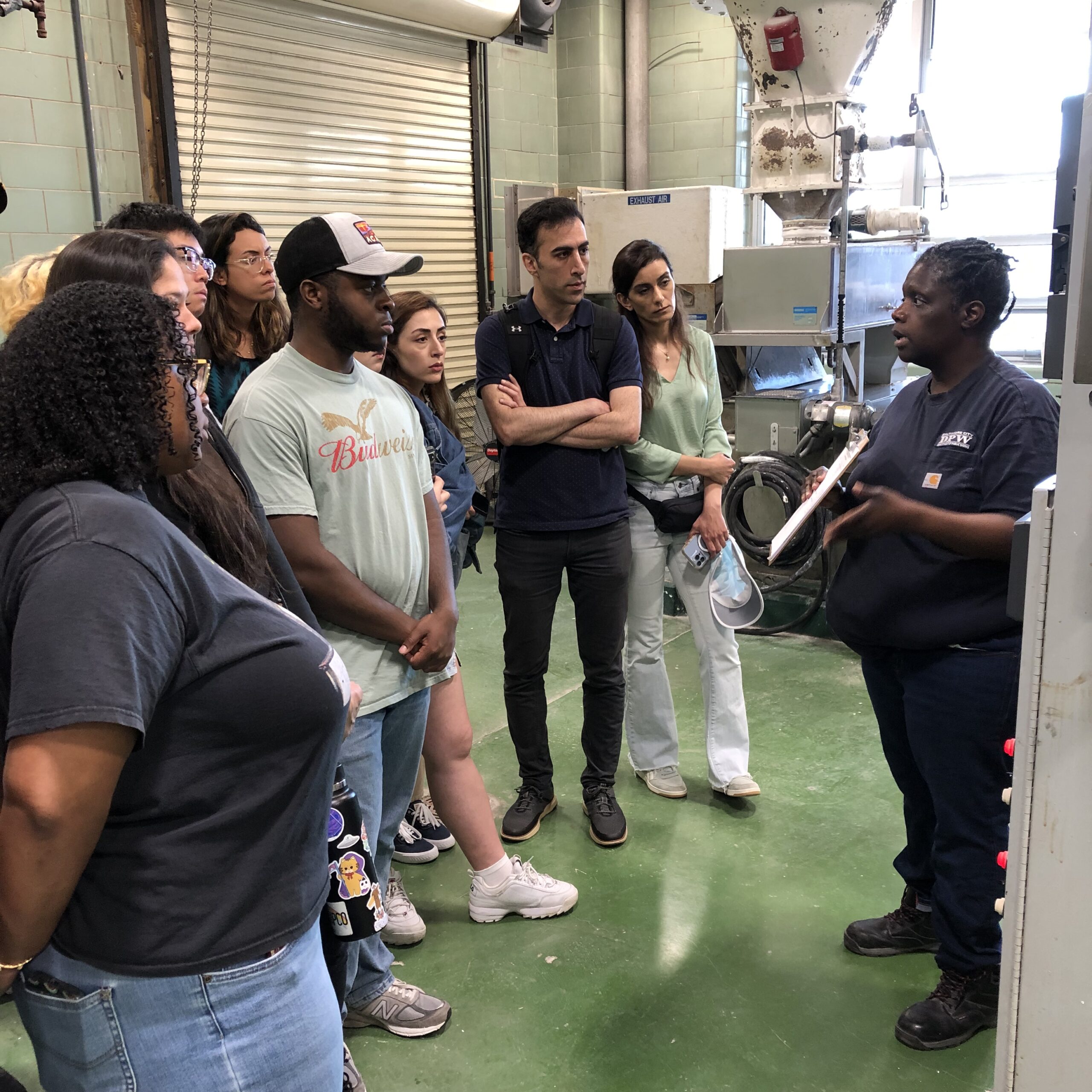
We also enjoyed learning about the importance of water quality testing throughout the distribution system from Deneen Gordon, the Laboratory Technical Administrator for Baltimore’s drinking water treatment plants. She emphasized the new challenges awaiting the next generation of water quality engineers and motivated our students to tackle those challenges head on.
Thanks to all of the other Ashburton staff members that shared their expertise with us during the visit. We left inspired by your commitment to ensuring the health and safety of Baltimore residents. Thank you for your service!
]]>
At the end of the Spring 2024 semester, Dr. Blaney’s Environmental Physicochemical Processes course (ENCH 412 and ENEN 612) visited the Ashburton Filtration Plant, Baltimore’s largest drinking...
https://beta.my.umbc.edu/api/v0/pixel/news/143458/guest@my.umbc.edu/dfd0e58b3f20c92625eee2addfdb8a1f/api/pixel
blaney
grad
spring-2024
ug
ugrad
Chemical, Biochemical and Environmental Engineering
https://beta.my.umbc.edu/groups/cbee
https://assets4-beta.my.umbc.edu/system/shared/avatars/groups/000/000/771/b5e579e81b2e3624611890fa3ca2716a/xsmall.png?1746794587
https://assets2-beta.my.umbc.edu/system/shared/avatars/groups/000/000/771/b5e579e81b2e3624611890fa3ca2716a/original.png?1746794587
https://assets1-beta.my.umbc.edu/system/shared/avatars/groups/000/000/771/b5e579e81b2e3624611890fa3ca2716a/xxlarge.png?1746794587
https://assets2-beta.my.umbc.edu/system/shared/avatars/groups/000/000/771/b5e579e81b2e3624611890fa3ca2716a/xlarge.png?1746794587
https://assets2-beta.my.umbc.edu/system/shared/avatars/groups/000/000/771/b5e579e81b2e3624611890fa3ca2716a/large.png?1746794587
https://assets4-beta.my.umbc.edu/system/shared/avatars/groups/000/000/771/b5e579e81b2e3624611890fa3ca2716a/medium.png?1746794587
https://assets1-beta.my.umbc.edu/system/shared/avatars/groups/000/000/771/b5e579e81b2e3624611890fa3ca2716a/small.png?1746794587
https://assets4-beta.my.umbc.edu/system/shared/avatars/groups/000/000/771/b5e579e81b2e3624611890fa3ca2716a/xsmall.png?1746794587
https://assets1-beta.my.umbc.edu/system/shared/avatars/groups/000/000/771/b5e579e81b2e3624611890fa3ca2716a/xxsmall.png?1746794587
Chemical, Biochemical and Environmental Engineering
https://assets3-beta.my.umbc.edu/system/shared/thumbnails/news/000/143/458/5090980d0e46a13f1548e1586afe24a7/xxlarge.jpg?1725023160
https://assets4-beta.my.umbc.edu/system/shared/thumbnails/news/000/143/458/5090980d0e46a13f1548e1586afe24a7/xlarge.jpg?1725023160
https://assets3-beta.my.umbc.edu/system/shared/thumbnails/news/000/143/458/5090980d0e46a13f1548e1586afe24a7/large.jpg?1725023160
https://assets2-beta.my.umbc.edu/system/shared/thumbnails/news/000/143/458/5090980d0e46a13f1548e1586afe24a7/medium.jpg?1725023160
https://assets4-beta.my.umbc.edu/system/shared/thumbnails/news/000/143/458/5090980d0e46a13f1548e1586afe24a7/small.jpg?1725023160
https://assets1-beta.my.umbc.edu/system/shared/thumbnails/news/000/143/458/5090980d0e46a13f1548e1586afe24a7/xsmall.jpg?1725023160
https://assets2-beta.my.umbc.edu/system/shared/thumbnails/news/000/143/458/5090980d0e46a13f1548e1586afe24a7/xxsmall.jpg?1725023160
1
0
true
Fri, 30 Aug 2024 08:56:28 -0400
Fri, 30 Aug 2024 09:12:45 -0400
Graduate Student Internship: Uplift Geo Systems
Keerthana Goskonda, M.S. student
Keerthana Goskonda,
M.S. student, Chemical and Biochemical Engineering
When did you start your Internship?
Feb 2024
Where was your Internship?
Uplift Geo Systems, Baltimore, MD
What is the focus of your Internship?
Metal extraction from rocks
What are you looking forward to the most about your Internship?
Ability to develop a process
What was the best part of your Internship OR What was the biggest learning moment of your Internship ?
Working on different rock samples and meeting new people.
What advice do you have for students who are interested in getting involved in research or an internship?
Willing to work hard and think out of box
Are you a member of any clubs/campus organizations?
N/A
What are your goals after graduation?
Would like to work in research and development
Learn more about Keerthana Goskonda:
https://www.linkedin.com/in/keerthana-goskonda-ba5126204/
]]>
Keerthana Goskonda, M.S. student, Chemical and Biochemical Engineering When did you start your Internship? Feb 2024 Where was your Internship? Uplift Geo Systems, Baltimore, MD What...
https://beta.my.umbc.edu/api/v0/pixel/news/143429/guest@my.umbc.edu/2711b0bc83bd10208b4a435d30f1395a/api/pixel
grad
internship
research
spring-2024
student-highlight
Chemical, Biochemical and Environmental Engineering
https://beta.my.umbc.edu/groups/cbee
https://assets4-beta.my.umbc.edu/system/shared/avatars/groups/000/000/771/b5e579e81b2e3624611890fa3ca2716a/xsmall.png?1746794587
https://assets2-beta.my.umbc.edu/system/shared/avatars/groups/000/000/771/b5e579e81b2e3624611890fa3ca2716a/original.png?1746794587
https://assets1-beta.my.umbc.edu/system/shared/avatars/groups/000/000/771/b5e579e81b2e3624611890fa3ca2716a/xxlarge.png?1746794587
https://assets2-beta.my.umbc.edu/system/shared/avatars/groups/000/000/771/b5e579e81b2e3624611890fa3ca2716a/xlarge.png?1746794587
https://assets2-beta.my.umbc.edu/system/shared/avatars/groups/000/000/771/b5e579e81b2e3624611890fa3ca2716a/large.png?1746794587
https://assets4-beta.my.umbc.edu/system/shared/avatars/groups/000/000/771/b5e579e81b2e3624611890fa3ca2716a/medium.png?1746794587
https://assets1-beta.my.umbc.edu/system/shared/avatars/groups/000/000/771/b5e579e81b2e3624611890fa3ca2716a/small.png?1746794587
https://assets4-beta.my.umbc.edu/system/shared/avatars/groups/000/000/771/b5e579e81b2e3624611890fa3ca2716a/xsmall.png?1746794587
https://assets1-beta.my.umbc.edu/system/shared/avatars/groups/000/000/771/b5e579e81b2e3624611890fa3ca2716a/xxsmall.png?1746794587
Chemical, Biochemical and Environmental Engineering
https://assets4-beta.my.umbc.edu/system/shared/thumbnails/news/000/143/429/e095a575d101ed7d4f8f9bfecbcc052b/xxlarge.jpg?1724871994
https://assets2-beta.my.umbc.edu/system/shared/thumbnails/news/000/143/429/e095a575d101ed7d4f8f9bfecbcc052b/xlarge.jpg?1724871994
https://assets4-beta.my.umbc.edu/system/shared/thumbnails/news/000/143/429/e095a575d101ed7d4f8f9bfecbcc052b/large.jpg?1724871994
https://assets1-beta.my.umbc.edu/system/shared/thumbnails/news/000/143/429/e095a575d101ed7d4f8f9bfecbcc052b/medium.jpg?1724871994
https://assets1-beta.my.umbc.edu/system/shared/thumbnails/news/000/143/429/e095a575d101ed7d4f8f9bfecbcc052b/small.jpg?1724871994
https://assets2-beta.my.umbc.edu/system/shared/thumbnails/news/000/143/429/e095a575d101ed7d4f8f9bfecbcc052b/xsmall.jpg?1724871994
https://assets2-beta.my.umbc.edu/system/shared/thumbnails/news/000/143/429/e095a575d101ed7d4f8f9bfecbcc052b/xxsmall.jpg?1724871994
0
0
true
Wed, 28 Aug 2024 15:08:45 -0400
Wed, 10 Sep 2025 11:50:53 -0400
Alumni Update
Career Updates from '19
Are you a CBEE Alumni? Stay connected via LinkedIn
Let us know what you're doing now and share an update
here.
Patricia Dubyoski
B.S. '19, Chemical Engineering, Environmental Engineering & Sustainability Track
Patricia Dubyoski has worked in the water and wastewater sector for the past five years. In July 2023, she joined GHD as a Project Engineer working on water and wastewater treatment projects all over the world. She actively mentors new graduates at her local office in Bowie, Maryland, and takes every opportunity to participate in STEM pathways events encouraging young people to pursue engineering.
(Image: This list of UMBC Alumni employers should not be construed as sponsorship, affiliation, or approval by the trademark owner.)
The article link is available here: Inside the Laboratory: The Blaney Laboratory at the University of Maryland Baltimore County (chromatographyonline.com)
"Inside the Laboratory" is a series in collaboration with LCGC and Spectroscopy, highlighting the pioneering work of analytical scientists worldwide. In this edition, we delve into the groundbreaking research of Dr. Lee Blaney from the University of Maryland, Baltimore County (UMBC). Dr. Blaney, a Professor and Associate Director of Sustainability Engineering, leads his team in developing advanced methods using liquid chromatography (LC) techniques to analyze contaminants of emerging concern (CECs) in environmental samples.
Environmental analysis is a field where chromatography plays an integral role. Detecting, identifying, and quantifying per- and polyfluoroalkyl substances (PFAS) and contaminants of emerging concern (CECs) are currently hot topics in environmental analysis, mostly because it affects both the environment and natural resources humans regularly use. Chromatographic techniques like liquid chromatography coupled to tandem mass spectrometry (LC–MS/MS) offer unparalleled sensitivity and specificity in separating and identifying PFAS within complex matrices, such as water, soil, and biological samples. Through chromatographic separation, PFAS are eluted based on their unique physicochemical properties, allowing accurate and precise quantification by downstream detectors. This analytical approach not only aids in assessing environmental contamination, but also contributes significantly to understanding the exposure pathways and potential health risks associated with PFAS.
Dr. Lee Blaney is a Professor and Associate Director of Sustainability Engineering at the University of Maryland Baltimore County. He received his BS and MS in Environmental Engineering at Lehigh University before completing his PhD in Civil Engineering at the University of Texas at Austin. His laboratory is primarily focused on studying CECs, including developing advanced analytical methods that can better improve detection and quantification of CECs in the environment, as well as developing new treatment technologies for diverse contaminants in water and wastewater.
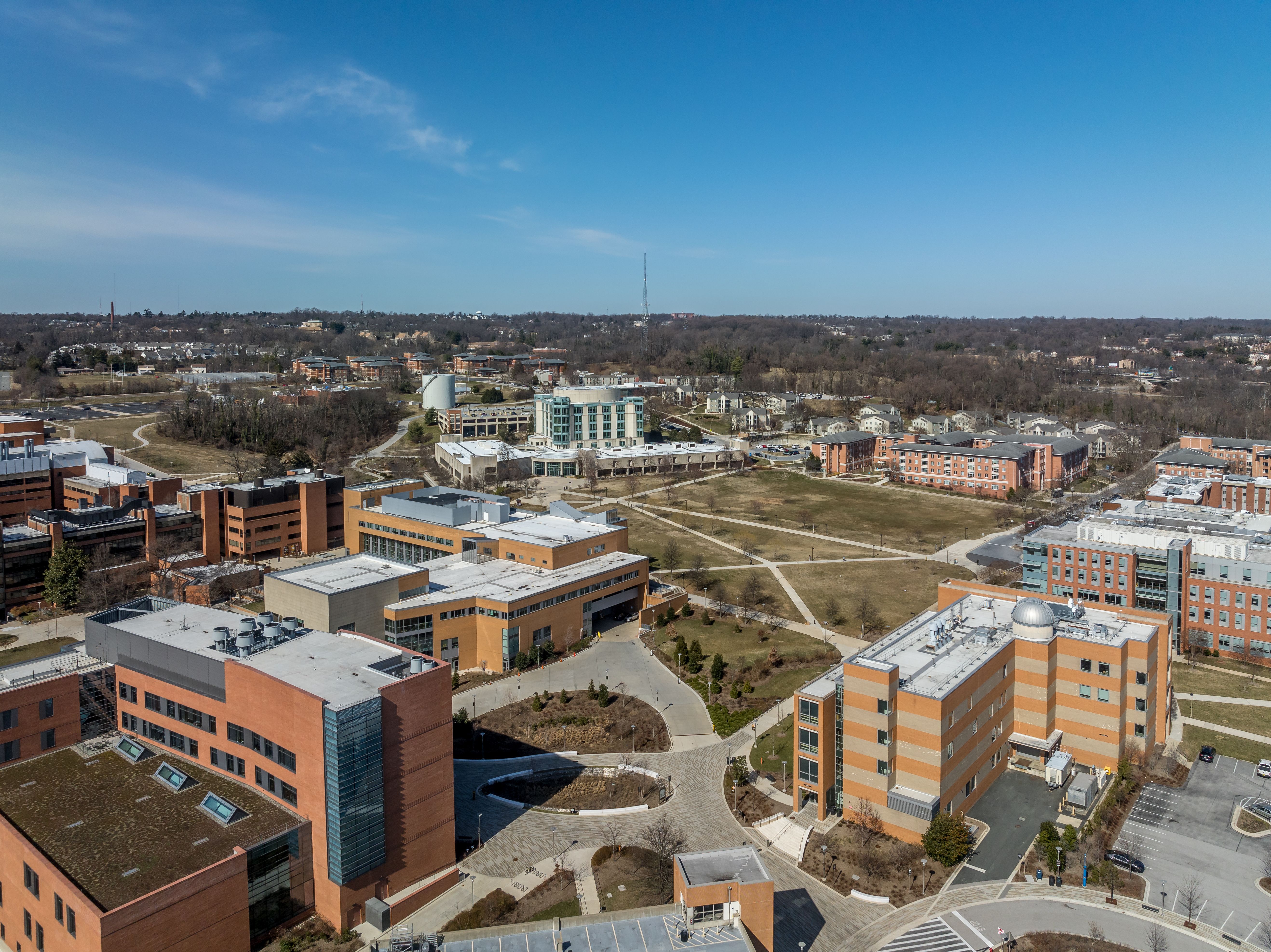
Aerial view of University of Maryland Baltimore County UMBC Catonsville | Image Credit: © vitanovski - stock.adobe.com
Recently, LCGC International spoke to Dr. Blaney about his laboratory’s work with PFAS and CEC analysis, as well as the current research projects they are working on.

Dr. Lee Blaney of the University of Maryland, Baltimore County | Photo Credit: © Lee Blaney
Can you tell me about the research that your laboratory group is working on currently?
Most of our research involves contaminants of emerging concern (CECs), such as pharmaceuticals, hormones, and personal care products. These are chemicals that we use every day to improve our quality of life, but we don’t really think about them as “pollution." Nevertheless, every chemical that we use ultimately makes its way into the aquatic environment, where it can have unintended consequences. When we take an antibiotic to fight an infection, some fraction of the antibiotic gets excreted into our toilets without undergoing any chemical changes. Wastewater treatment plants were not designed to remove pharmaceuticals, causing antibiotics to be discharged into the environment, where they can accelerate the development and spread of antimicrobial resistance. Similar concerns abound for other CECs. For this reason, our group focuses on developing (i) new analytical methods to measure CECs in the aquatic environment and (ii) new treatment technologies to ensure CEC removal from both drinking water and wastewater.

Blaney (left) with undergraduate researcher Ouriel Ndalamba (center) and PhD candidate Jahir Antonio Batista-Andrade (right) discuss an LC-MS/MS method for CEC measurement in Baltimore streams. Photo Credit: © Lee Blaney
In the research that you and your group does, what particular analytical techniques do you normally use?
Our laboratory primarily employs liquid chromatography (LC) coupled to ultraviolet (UV), fluorescence (FL), and triple quadrupole tandem mass spectrometry (MS/MS) detectors. Some CECs have strong absorbance and/or fluorescence properties that allow us to measure their concentrations using high performance liquid chromatography (HPLC) with UV or FL detection in relatively clean samples, such as those produced during laboratory experiments. However, real environmental samples contain dozens of CECs at concentrations of 1–1000 ng/L (that is, 1–1000 parts per trillion). Real samples also contain much higher concentrations of natural organic matter and background ions. With appropriate pretreatment via solid-phase extraction, we can not only concentrate the analytes, but also remove some of the interfering substances. Nevertheless, the large number of CECs in real samples mandates the use of LC–MS/MS, which can concurrently measure analytes with similar retention times. During LC–MS/MS analysis, we have several analytical criteria that ensure highly selective and sensitive measurement of each CEC. In particular, we need to match the LC retention time of our chemical standards for each CEC, produce the same MS-1 ion during electrospray ionization, and generate the same MS-2 ions for analyte quantitation and confirmation by the triple quadrupole MS/MS detector. The fast scan times of the MS/MS detector allow us to measure dozens of CECs in the same method. These aspects make LC–MS/MS the go-to technology for environmental analytical chemists and engineers studying CECs.

Blaney (second from left) with undergraduate researchers Bridget Anger (left) and Lauren Harris (right) and PhD candidate Mamatha Hopanna (second from right) discuss photochemical treatment of antibiotics in water. Photo Credit: © Lee Blaney
What’s the difference between CECs and PFAS?
Contaminants of emerging concern is an umbrella term for all contaminants that have been identified as having potentially harmful effects on the environment or humans. The “emerging” concern means that we do not yet fully understand the toxicity of these chemicals in the environment or people. Per- and polyfluoroalkyl substances (PFAS) are a class of almost 15,000 fluorinated chemicals used in fire-fighting foams, nonstick cookware, fast food wrappers, and many other industrial and consumer products. Even though there are many PFAS, you can consider them to be a subcategory of CECs. Due to the chemical and thermal stability of the carbon-fluorine bonds in PFAS, these chemicals do not readily degrade during wastewater treatment or in the environment. In the last few years, we have learned about a number of harmful outcomes of PFAS in humans. As a result, new drinking water regulations were recently approved for six PFAS in drinking water. In a sense, some PFAS have therefore transcended the concept of “contaminants of emerging concern” and have just become “regulated contaminants." The new regulations for PFAS will also spur the growth and development of analytical contract labs to meet the demand for regular analysis of PFAS in drinking water across the country.
Going back to LC–MS methodologies, are there any limitations of using that technique right now that are kind of preventing you and your group from figuring some things out in your research or?
The biggest limitation is the large number of CECs. Right now, we are only measuring a small fraction of the specialty chemicals employed in everyday life. For example, our lab has developed methods for dozens of antibiotics, but each of those compounds undergo chemical transformations in natural and engineered systems. These reactions produce several unknown transformation products that may still retain antimicrobial properties. Without chemical standards, it is difficult to employ targeted LC–MS/MS methods to measure these transformation products. As another example, the latest EPA method measures 40 PFAS, which accounts for less than 1% of the estimated 15,000 PFAS. If we extrapolate this issue across the full suite of CECs, the number of individual chemicals becomes staggering. For this reason, we have prioritized certain chemicals that represent the most concern, but new approaches will be needed in the future to best safeguard environmental and public health.

Blaney (right) with undergraduate researchers Fabian Amurrio (left) and Lauren Harris (second from right) and PhD candidate Utsav Shashvatt (second from left) discuss ion chromatography results related to a project focused on nutrient recovery from waste streams. | Photo Credit: © Lee Blaney
With all the advancements that are going on in with the techniques and the technologies, how does you and your group stay on top of all the developments going on in this space?
We regularly go to conferences and meetings focused on the latest developments in CEC analysis. Several of our current projects are funded by the Strategic Environmental Research and Development Program (SERDP), which holds regular meetings for PFAS-related research. These conferences and meetings are great opportunities to share our work, receive feedback, learn about the work of other groups, and share notes to advance knowledge in the environmental analytical chemistry and environmental engineering fields. In addition, I serve as an executive editor at the Journal of Hazardous Materials. While it is a demanding job to keep up with all the manuscripts submitted by authors, this role also gives me a chance to read the latest work from around the world to learn about the latest updates and findings.
Are there any upcoming research projects on your end that you’re excited about?
Our best available technologies for PFAS treatment work well for long-chain PFAS, such as perfluorooctanoic acid (PFOA) and perfluorooctane sulfonic acid (PFOS), which contain eight carbon atoms in their chemical structures. Short- and ultrashort-chain PFAS, which contain less than eight carbons, pose challenges to conventional treatment technologies. Many of these compounds are also not included in current analytical methods. Our new SERDP project will focus on developing novel hybrid anion-exchange resins to remove these challenging contaminants from water. We’re excited about our materials and the promising preliminary data, and we’ll look forward to sharing our findings with the environmental community to continue to address the challenges associated with PFAS treatment and remediation.
This interview has been edited for clarity.
About the Interviewee
Lee Blaney, PhD, is a Professor and Associate Director of Sustainability Engineering at the University of Maryland Baltimore County.
]]>
The article link is available here: Inside the Laboratory: The Blaney Laboratory at the University of Maryland Baltimore County (chromatographyonline.com) "Inside the Laboratory" is a series in...
https://beta.my.umbc.edu/api/v0/pixel/news/142551/guest@my.umbc.edu/0764332abe72ebbfcf624befb64b81ad/api/pixel
blaney
lab
research
spring-2024
Chemical, Biochemical and Environmental Engineering
https://beta.my.umbc.edu/groups/cbee
https://assets4-beta.my.umbc.edu/system/shared/avatars/groups/000/000/771/b5e579e81b2e3624611890fa3ca2716a/xsmall.png?1746794587
https://assets2-beta.my.umbc.edu/system/shared/avatars/groups/000/000/771/b5e579e81b2e3624611890fa3ca2716a/original.png?1746794587
https://assets1-beta.my.umbc.edu/system/shared/avatars/groups/000/000/771/b5e579e81b2e3624611890fa3ca2716a/xxlarge.png?1746794587
https://assets2-beta.my.umbc.edu/system/shared/avatars/groups/000/000/771/b5e579e81b2e3624611890fa3ca2716a/xlarge.png?1746794587
https://assets2-beta.my.umbc.edu/system/shared/avatars/groups/000/000/771/b5e579e81b2e3624611890fa3ca2716a/large.png?1746794587
https://assets4-beta.my.umbc.edu/system/shared/avatars/groups/000/000/771/b5e579e81b2e3624611890fa3ca2716a/medium.png?1746794587
https://assets1-beta.my.umbc.edu/system/shared/avatars/groups/000/000/771/b5e579e81b2e3624611890fa3ca2716a/small.png?1746794587
https://assets4-beta.my.umbc.edu/system/shared/avatars/groups/000/000/771/b5e579e81b2e3624611890fa3ca2716a/xsmall.png?1746794587
https://assets1-beta.my.umbc.edu/system/shared/avatars/groups/000/000/771/b5e579e81b2e3624611890fa3ca2716a/xxsmall.png?1746794587
Chemical, Biochemical and Environmental Engineering
https://assets2-beta.my.umbc.edu/system/shared/thumbnails/news/000/142/551/013fe9a1aa45d5462e015bd03d9ac4ae/xxlarge.jpg?1719339836
https://assets1-beta.my.umbc.edu/system/shared/thumbnails/news/000/142/551/013fe9a1aa45d5462e015bd03d9ac4ae/xlarge.jpg?1719339836
https://assets3-beta.my.umbc.edu/system/shared/thumbnails/news/000/142/551/013fe9a1aa45d5462e015bd03d9ac4ae/large.jpg?1719339836
https://assets1-beta.my.umbc.edu/system/shared/thumbnails/news/000/142/551/013fe9a1aa45d5462e015bd03d9ac4ae/medium.jpg?1719339836
https://assets2-beta.my.umbc.edu/system/shared/thumbnails/news/000/142/551/013fe9a1aa45d5462e015bd03d9ac4ae/small.jpg?1719339836
https://assets2-beta.my.umbc.edu/system/shared/thumbnails/news/000/142/551/013fe9a1aa45d5462e015bd03d9ac4ae/xsmall.jpg?1719339836
https://assets1-beta.my.umbc.edu/system/shared/thumbnails/news/000/142/551/013fe9a1aa45d5462e015bd03d9ac4ae/xxsmall.jpg?1719339836
3
0
true
Tue, 25 Jun 2024 14:25:54 -0400
Thu, 27 Jun 2024 13:42:38 -0400
New Publication by CBEE Faculty
ATOMS lab with Dr. Tyler Josephson
Dr. Tyler R Josephson, Assistant Professor, Chemical, Biochemical, and Environmental Engineering department at the University of Maryland, Baltimore County, along with UMBC student and alumni, Charles Fox, Neil D Tran, F Nikki Nacion, and Samiha Sharlin, have a new publication in Machine Learning: Science and Technology titled "Incorporating background knowledge in symbolic regression using a computer algebra system."
The article is available here:
Incorporating background knowledge in symbolic regression using a computer algebra system - IOPscience
DOI 10.1088/2632-2153/ad4a1e
Abstract:
Symbolic regression (SR) can generate interpretable, concise expressions that fit a given dataset, allowing for more human understanding of the structure than black-box approaches. The addition of background knowledge (in the form of symbolic mathematical constraints) allows for the generation of expressions that are meaningful with respect to theory while also being consistent with data. We specifically examine the addition of constraints to traditional genetic algorithm (GA) based SR (PySR) as well as a Markov-chain Monte Carlo (MCMC) based Bayesian SR architecture (Bayesian Machine Scientist), and apply these to rediscovering adsorption equations from experimental, historical datasets. We find that, while hard constraints prevent GA and MCMC SR from searching, soft constraints can lead to improved performance both in terms of search effectiveness and model meaningfulness, with computational costs increasing by about an order of magnitude. If the constraints do not correlate well with the dataset or expected models, they can hinder the search of expressions. We find incorporating these constraints in Bayesian SR (as the Bayesian prior) is better than by modifying the fitness function in the GA.
]]>
Dr. Tyler R Josephson, Assistant Professor, Chemical, Biochemical, and Environmental Engineering department at the University of Maryland, Baltimore County, along with UMBC student and alumni,...
https://beta.my.umbc.edu/api/v0/pixel/news/142548/guest@my.umbc.edu/eea75f122d055ffcc373f822592f2a5d/api/pixel
faculty
josephson
research
spring-2024
Chemical, Biochemical and Environmental Engineering
https://beta.my.umbc.edu/groups/cbee
https://assets4-beta.my.umbc.edu/system/shared/avatars/groups/000/000/771/b5e579e81b2e3624611890fa3ca2716a/xsmall.png?1746794587
https://assets2-beta.my.umbc.edu/system/shared/avatars/groups/000/000/771/b5e579e81b2e3624611890fa3ca2716a/original.png?1746794587
https://assets1-beta.my.umbc.edu/system/shared/avatars/groups/000/000/771/b5e579e81b2e3624611890fa3ca2716a/xxlarge.png?1746794587
https://assets2-beta.my.umbc.edu/system/shared/avatars/groups/000/000/771/b5e579e81b2e3624611890fa3ca2716a/xlarge.png?1746794587
https://assets2-beta.my.umbc.edu/system/shared/avatars/groups/000/000/771/b5e579e81b2e3624611890fa3ca2716a/large.png?1746794587
https://assets4-beta.my.umbc.edu/system/shared/avatars/groups/000/000/771/b5e579e81b2e3624611890fa3ca2716a/medium.png?1746794587
https://assets1-beta.my.umbc.edu/system/shared/avatars/groups/000/000/771/b5e579e81b2e3624611890fa3ca2716a/small.png?1746794587
https://assets4-beta.my.umbc.edu/system/shared/avatars/groups/000/000/771/b5e579e81b2e3624611890fa3ca2716a/xsmall.png?1746794587
https://assets1-beta.my.umbc.edu/system/shared/avatars/groups/000/000/771/b5e579e81b2e3624611890fa3ca2716a/xxsmall.png?1746794587
Chemical, Biochemical and Environmental Engineering
https://assets4-beta.my.umbc.edu/system/shared/thumbnails/news/000/142/548/d0524fd7b6e224cd6d2010ec323034df/xxlarge.jpg?1719324186
https://assets1-beta.my.umbc.edu/system/shared/thumbnails/news/000/142/548/d0524fd7b6e224cd6d2010ec323034df/xlarge.jpg?1719324186
https://assets2-beta.my.umbc.edu/system/shared/thumbnails/news/000/142/548/d0524fd7b6e224cd6d2010ec323034df/large.jpg?1719324186
https://assets2-beta.my.umbc.edu/system/shared/thumbnails/news/000/142/548/d0524fd7b6e224cd6d2010ec323034df/medium.jpg?1719324186
https://assets2-beta.my.umbc.edu/system/shared/thumbnails/news/000/142/548/d0524fd7b6e224cd6d2010ec323034df/small.jpg?1719324186
https://assets4-beta.my.umbc.edu/system/shared/thumbnails/news/000/142/548/d0524fd7b6e224cd6d2010ec323034df/xsmall.jpg?1719324186
https://assets1-beta.my.umbc.edu/system/shared/thumbnails/news/000/142/548/d0524fd7b6e224cd6d2010ec323034df/xxsmall.jpg?1719324186
0
0
true
Tue, 25 Jun 2024 10:03:30 -0400
Thu, 27 Jun 2024 13:42:05 -0400
New Publication by CBEE Faculty
AMEE lab with Dr. Özgür Çapraz
Dr. Ömer Özgür Çapraz, Associate Professor, Chemical, Biochemical, and Environmental Engineering department at the University of Maryland, Baltimore County, published a groundbreaking study in Electrochimica Acta titled "Probing interfacial stress on Au cathode in DMSO electrolyte during electrochemical polarization in aprotic Li-O2 batteries" with collaborators from Oklahoma State University, Bar-Ilan University, National Renewable Energy Laboratory, The Hebrew University of Jerusalem.
The full article is available from ScienceDirect at https://doi.org/10.1016/j.electacta.2024.144522
Abstract:
The practical performance of Li-O2 batteries suffers from interfacial instabilities associated with the reaction intermediates. These instabilities on the cathode-electrolyte interface dictate the direction of the oxygen evolution and reduction reactions (OER/ORR) in Li-O2 batteries. Despite intensive research on chemical instabilities in the reaction intermediates, there is limited work on understanding the importance of stress on the interfacial dynamics. To address this gap, in-situ curvature measurements were conducted to probe interfacial stress generation during electrochemical polarization on Au cathode in DMSO electrolytes. Charge accumulation induces tensile stress, whereas compressive stress generation is associated with the adsorbate-induced stress and mismatch strain between reaction intermediates and the Au surface. Abrupt stress relaxation on the onset of discharge presents evidence for a contribution of electrostriction stress. Adsorption of redox mediator nitrate ions induces compressive stress before ORR. Unique findings demonstrate the impact of interfacial stress on the OER/ORR in Li-O2 batteries.
]]>
Dr. Ömer Özgür Çapraz, Associate Professor, Chemical, Biochemical, and Environmental Engineering department at the University of Maryland, Baltimore County, published a groundbreaking study in...
https://beta.my.umbc.edu/api/v0/pixel/news/142546/guest@my.umbc.edu/9b6fd043ae17ccad31505a71e8a7ec8e/api/pixel
capraz
faculty
research
spring-2024
Chemical, Biochemical and Environmental Engineering
https://beta.my.umbc.edu/groups/cbee
https://assets4-beta.my.umbc.edu/system/shared/avatars/groups/000/000/771/b5e579e81b2e3624611890fa3ca2716a/xsmall.png?1746794587
https://assets2-beta.my.umbc.edu/system/shared/avatars/groups/000/000/771/b5e579e81b2e3624611890fa3ca2716a/original.png?1746794587
https://assets1-beta.my.umbc.edu/system/shared/avatars/groups/000/000/771/b5e579e81b2e3624611890fa3ca2716a/xxlarge.png?1746794587
https://assets2-beta.my.umbc.edu/system/shared/avatars/groups/000/000/771/b5e579e81b2e3624611890fa3ca2716a/xlarge.png?1746794587
https://assets2-beta.my.umbc.edu/system/shared/avatars/groups/000/000/771/b5e579e81b2e3624611890fa3ca2716a/large.png?1746794587
https://assets4-beta.my.umbc.edu/system/shared/avatars/groups/000/000/771/b5e579e81b2e3624611890fa3ca2716a/medium.png?1746794587
https://assets1-beta.my.umbc.edu/system/shared/avatars/groups/000/000/771/b5e579e81b2e3624611890fa3ca2716a/small.png?1746794587
https://assets4-beta.my.umbc.edu/system/shared/avatars/groups/000/000/771/b5e579e81b2e3624611890fa3ca2716a/xsmall.png?1746794587
https://assets1-beta.my.umbc.edu/system/shared/avatars/groups/000/000/771/b5e579e81b2e3624611890fa3ca2716a/xxsmall.png?1746794587
Chemical, Biochemical and Environmental Engineering
https://assets3-beta.my.umbc.edu/system/shared/thumbnails/news/000/142/546/b5d2a33fa932e43dba10eb5114e00ed7/xxlarge.jpg?1719323477
https://assets4-beta.my.umbc.edu/system/shared/thumbnails/news/000/142/546/b5d2a33fa932e43dba10eb5114e00ed7/xlarge.jpg?1719323477
https://assets3-beta.my.umbc.edu/system/shared/thumbnails/news/000/142/546/b5d2a33fa932e43dba10eb5114e00ed7/large.jpg?1719323477
https://assets4-beta.my.umbc.edu/system/shared/thumbnails/news/000/142/546/b5d2a33fa932e43dba10eb5114e00ed7/medium.jpg?1719323477
https://assets4-beta.my.umbc.edu/system/shared/thumbnails/news/000/142/546/b5d2a33fa932e43dba10eb5114e00ed7/small.jpg?1719323477
https://assets4-beta.my.umbc.edu/system/shared/thumbnails/news/000/142/546/b5d2a33fa932e43dba10eb5114e00ed7/xsmall.jpg?1719323477
https://assets4-beta.my.umbc.edu/system/shared/thumbnails/news/000/142/546/b5d2a33fa932e43dba10eb5114e00ed7/xxsmall.jpg?1719323477
0
0
true
Tue, 25 Jun 2024 09:57:18 -0400
Thu, 27 Jun 2024 13:41:42 -0400
June 2024- CBEE Alumni Update
Career Updates
Are you a CBEE Alumni? Stay connected via LinkedIn
Let us know what you're doing now and share an update
here.
Rose Taylor
M.S '23, Environmental Engineering
Advisor: Chris Hennigan
Rose Taylor is an UMBC alumna who graduated in 2024 with her master's in Environmental Engineering. After graduation, Rose started a permanent full-time position in the Maryland Department of the Environment's Water Supply Program as a Regulatory and Compliance Engineer in the Engineering and Technical Assistance Division. She works with public water systems across the state to ensure compliance with EPA standards, respond to deficiencies and emergencies, and provide recommendations for optimization.
(Image: This list of UMBC Alumni employers should not be construed as sponsorship, affiliation, or approval by the trademark owner.)