<?xml version="1.0"?>
<News hasArchived="false" page="43" pageCount="48" pageSize="10" timestamp="Sun, 19 Apr 2026 19:34:10 -0400" url="https://beta.my.umbc.edu/groups/cbee/posts.xml?page=43">
<NewsItem contentIssues="true" id="64387" important="false" status="posted" url="https://beta.my.umbc.edu/groups/cbee/posts/64387">
<Title>CBEE students tour Wastewater Treatment Plant</Title>
<Body>
<![CDATA[
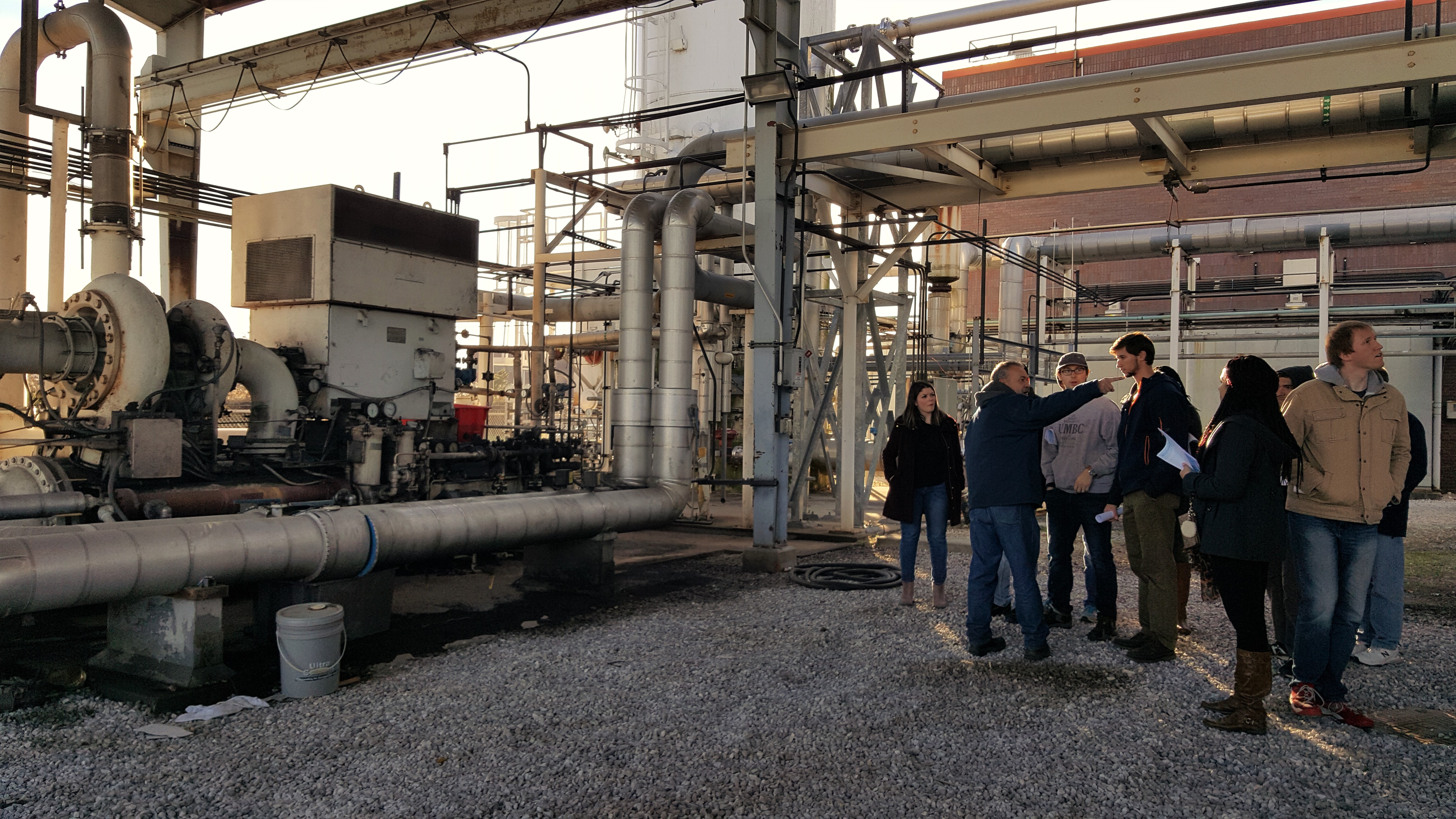
    <div class="html-content"><img src="http://cbee.umbc.edu/files/2016/12/20161122_151245.jpg" style="max-width: 100%; height: auto;"><br><br>CBEE students inspecting a cryogenic distillation unit for oxygen 
    production as part of a class tour to the Patapsco Wastewater Treatment 
    Plant in Baltimore.  Visible on the left is a 1500 HP air compressor and
     in the back one of two distillation columns, each with a 40 t/day 
    capacity of liquid oxygen production.</div>
]]>
</Body>
<Summary>CBEE students inspecting a cryogenic distillation unit for oxygen  production as part of a class tour to the Patapsco Wastewater Treatment  Plant in Baltimore.  Visible on the left is a 1500 HP...</Summary>
<TrackingUrl>https://beta.my.umbc.edu/api/v0/pixel/news/64387/guest@my.umbc.edu/eaf8a928c24c7661b052d85f58c99b26/api/pixel</TrackingUrl>
<Group token="cbee">Chemical, Biochemical and Environmental Engineering</Group>
<GroupUrl>https://beta.my.umbc.edu/groups/cbee</GroupUrl>
<AvatarUrl>https://assets4-beta.my.umbc.edu/system/shared/avatars/groups/000/000/771/b5e579e81b2e3624611890fa3ca2716a/xsmall.png?1746794587</AvatarUrl>
<AvatarUrl size="original">https://assets2-beta.my.umbc.edu/system/shared/avatars/groups/000/000/771/b5e579e81b2e3624611890fa3ca2716a/original.png?1746794587</AvatarUrl>
<AvatarUrl size="xxlarge">https://assets1-beta.my.umbc.edu/system/shared/avatars/groups/000/000/771/b5e579e81b2e3624611890fa3ca2716a/xxlarge.png?1746794587</AvatarUrl>
<AvatarUrl size="xlarge">https://assets2-beta.my.umbc.edu/system/shared/avatars/groups/000/000/771/b5e579e81b2e3624611890fa3ca2716a/xlarge.png?1746794587</AvatarUrl>
<AvatarUrl size="large">https://assets2-beta.my.umbc.edu/system/shared/avatars/groups/000/000/771/b5e579e81b2e3624611890fa3ca2716a/large.png?1746794587</AvatarUrl>
<AvatarUrl size="medium">https://assets4-beta.my.umbc.edu/system/shared/avatars/groups/000/000/771/b5e579e81b2e3624611890fa3ca2716a/medium.png?1746794587</AvatarUrl>
<AvatarUrl size="small">https://assets1-beta.my.umbc.edu/system/shared/avatars/groups/000/000/771/b5e579e81b2e3624611890fa3ca2716a/small.png?1746794587</AvatarUrl>
<AvatarUrl size="xsmall">https://assets4-beta.my.umbc.edu/system/shared/avatars/groups/000/000/771/b5e579e81b2e3624611890fa3ca2716a/xsmall.png?1746794587</AvatarUrl>
<AvatarUrl size="xxsmall">https://assets1-beta.my.umbc.edu/system/shared/avatars/groups/000/000/771/b5e579e81b2e3624611890fa3ca2716a/xxsmall.png?1746794587</AvatarUrl>
<Sponsor>Chemical, Biochemical and Environmental Engineering</Sponsor>
<PawCount>8</PawCount>
<CommentCount>0</CommentCount>
<CommentsAllowed>true</CommentsAllowed>
<PostedAt>Mon, 05 Dec 2016 09:54:40 -0500</PostedAt>
</NewsItem>

<NewsItem contentIssues="true" id="64045" important="false" status="posted" url="https://beta.my.umbc.edu/groups/cbee/posts/64045">
<Title>Savannah Steinly talks about environmental conservation</Title>
<Body>
<![CDATA[
    <div class="html-content">Savannah Steinly presents about the importance of her summer 2016 work in the Methow Valley through the <a href="http://uwconservationscholars.org/" rel="nofollow external" class="bo">Doris Duke Conservation Scholars Program</a> in the following video.<div><br></div><div><a href="https://vimeo.com/187721752">https://vimeo.com/187721752</a></div></div>
]]>
</Body>
<Summary>Savannah Steinly presents about the importance of her summer 2016 work in the Methow Valley through the Doris Duke Conservation Scholars Program in the following video.    https://vimeo.com/187721752</Summary>
<TrackingUrl>https://beta.my.umbc.edu/api/v0/pixel/news/64045/guest@my.umbc.edu/2260f8d04aa476231049d524e585a5e5/api/pixel</TrackingUrl>
<Group token="cbee">Chemical, Biochemical and Environmental Engineering</Group>
<GroupUrl>https://beta.my.umbc.edu/groups/cbee</GroupUrl>
<AvatarUrl>https://assets4-beta.my.umbc.edu/system/shared/avatars/groups/000/000/771/b5e579e81b2e3624611890fa3ca2716a/xsmall.png?1746794587</AvatarUrl>
<AvatarUrl size="original">https://assets2-beta.my.umbc.edu/system/shared/avatars/groups/000/000/771/b5e579e81b2e3624611890fa3ca2716a/original.png?1746794587</AvatarUrl>
<AvatarUrl size="xxlarge">https://assets1-beta.my.umbc.edu/system/shared/avatars/groups/000/000/771/b5e579e81b2e3624611890fa3ca2716a/xxlarge.png?1746794587</AvatarUrl>
<AvatarUrl size="xlarge">https://assets2-beta.my.umbc.edu/system/shared/avatars/groups/000/000/771/b5e579e81b2e3624611890fa3ca2716a/xlarge.png?1746794587</AvatarUrl>
<AvatarUrl size="large">https://assets2-beta.my.umbc.edu/system/shared/avatars/groups/000/000/771/b5e579e81b2e3624611890fa3ca2716a/large.png?1746794587</AvatarUrl>
<AvatarUrl size="medium">https://assets4-beta.my.umbc.edu/system/shared/avatars/groups/000/000/771/b5e579e81b2e3624611890fa3ca2716a/medium.png?1746794587</AvatarUrl>
<AvatarUrl size="small">https://assets1-beta.my.umbc.edu/system/shared/avatars/groups/000/000/771/b5e579e81b2e3624611890fa3ca2716a/small.png?1746794587</AvatarUrl>
<AvatarUrl size="xsmall">https://assets4-beta.my.umbc.edu/system/shared/avatars/groups/000/000/771/b5e579e81b2e3624611890fa3ca2716a/xsmall.png?1746794587</AvatarUrl>
<AvatarUrl size="xxsmall">https://assets1-beta.my.umbc.edu/system/shared/avatars/groups/000/000/771/b5e579e81b2e3624611890fa3ca2716a/xxsmall.png?1746794587</AvatarUrl>
<Sponsor>Chemical, Biochemical and Environmental Engineering</Sponsor>
<ThumbnailUrl size="xxlarge">https://assets4-beta.my.umbc.edu/system/shared/thumbnails/news/000/064/045/4b59f87d7a404223de629d8fcfc2e290/xxlarge.jpg?1479651329</ThumbnailUrl>
<ThumbnailUrl size="xlarge">https://assets4-beta.my.umbc.edu/system/shared/thumbnails/news/000/064/045/4b59f87d7a404223de629d8fcfc2e290/xlarge.jpg?1479651329</ThumbnailUrl>
<ThumbnailUrl size="large">https://assets1-beta.my.umbc.edu/system/shared/thumbnails/news/000/064/045/4b59f87d7a404223de629d8fcfc2e290/large.jpg?1479651329</ThumbnailUrl>
<ThumbnailUrl size="medium">https://assets4-beta.my.umbc.edu/system/shared/thumbnails/news/000/064/045/4b59f87d7a404223de629d8fcfc2e290/medium.jpg?1479651329</ThumbnailUrl>
<ThumbnailUrl size="small">https://assets4-beta.my.umbc.edu/system/shared/thumbnails/news/000/064/045/4b59f87d7a404223de629d8fcfc2e290/small.jpg?1479651329</ThumbnailUrl>
<ThumbnailUrl size="xsmall">https://assets2-beta.my.umbc.edu/system/shared/thumbnails/news/000/064/045/4b59f87d7a404223de629d8fcfc2e290/xsmall.jpg?1479651329</ThumbnailUrl>
<ThumbnailUrl size="xxsmall">https://assets1-beta.my.umbc.edu/system/shared/thumbnails/news/000/064/045/4b59f87d7a404223de629d8fcfc2e290/xxsmall.jpg?1479651329</ThumbnailUrl>
<PawCount>8</PawCount>
<CommentCount>0</CommentCount>
<CommentsAllowed>true</CommentsAllowed>
<PostedAt>Sun, 20 Nov 2016 09:27:49 -0500</PostedAt>
</NewsItem>

<NewsItem contentIssues="true" id="64032" important="false" status="posted" url="https://beta.my.umbc.edu/groups/cbee/posts/64032">
<Title>Meet the CBEE Presidents!</Title>
<Tagline>CBEE students lead the way in Engineering at UMBC</Tagline>
<Body>
<![CDATA[
    <div class="html-content">CBEE students are leading the way at UMBC! Presidents from six different engineering-related groups are students in the CBEE department. <div><br></div><div><span>Left to right: Sean Najmi, President of Tau Beta Pi (TBP); Aida Berhane, President of American Institute of Chemical Engineers (AIChE);  Dziedzorm Amenumey President of Engineers Without Borders (EWB); Naomi Mburu, President of National Society of Black Engineers (NSBE); Elizabeth Tan, President of Society of Women Engineers (SWE);  Daniel Ocasio, President of Society of Hispanic Professional Engineers (SHPE).</span></div></div>
]]>
</Body>
<Summary>CBEE students are leading the way at UMBC! Presidents from six different engineering-related groups are students in the CBEE department.     Left to right: Sean Najmi, President of Tau Beta Pi...</Summary>
<TrackingUrl>https://beta.my.umbc.edu/api/v0/pixel/news/64032/guest@my.umbc.edu/538cd787d1909b7eac07e902796b2899/api/pixel</TrackingUrl>
<Group token="cbee">Chemical, Biochemical and Environmental Engineering</Group>
<GroupUrl>https://beta.my.umbc.edu/groups/cbee</GroupUrl>
<AvatarUrl>https://assets4-beta.my.umbc.edu/system/shared/avatars/groups/000/000/771/b5e579e81b2e3624611890fa3ca2716a/xsmall.png?1746794587</AvatarUrl>
<AvatarUrl size="original">https://assets2-beta.my.umbc.edu/system/shared/avatars/groups/000/000/771/b5e579e81b2e3624611890fa3ca2716a/original.png?1746794587</AvatarUrl>
<AvatarUrl size="xxlarge">https://assets1-beta.my.umbc.edu/system/shared/avatars/groups/000/000/771/b5e579e81b2e3624611890fa3ca2716a/xxlarge.png?1746794587</AvatarUrl>
<AvatarUrl size="xlarge">https://assets2-beta.my.umbc.edu/system/shared/avatars/groups/000/000/771/b5e579e81b2e3624611890fa3ca2716a/xlarge.png?1746794587</AvatarUrl>
<AvatarUrl size="large">https://assets2-beta.my.umbc.edu/system/shared/avatars/groups/000/000/771/b5e579e81b2e3624611890fa3ca2716a/large.png?1746794587</AvatarUrl>
<AvatarUrl size="medium">https://assets4-beta.my.umbc.edu/system/shared/avatars/groups/000/000/771/b5e579e81b2e3624611890fa3ca2716a/medium.png?1746794587</AvatarUrl>
<AvatarUrl size="small">https://assets1-beta.my.umbc.edu/system/shared/avatars/groups/000/000/771/b5e579e81b2e3624611890fa3ca2716a/small.png?1746794587</AvatarUrl>
<AvatarUrl size="xsmall">https://assets4-beta.my.umbc.edu/system/shared/avatars/groups/000/000/771/b5e579e81b2e3624611890fa3ca2716a/xsmall.png?1746794587</AvatarUrl>
<AvatarUrl size="xxsmall">https://assets1-beta.my.umbc.edu/system/shared/avatars/groups/000/000/771/b5e579e81b2e3624611890fa3ca2716a/xxsmall.png?1746794587</AvatarUrl>
<Sponsor>Chemical, Biochemical and Environmental Engineering</Sponsor>
<ThumbnailUrl size="xxlarge">https://assets1-beta.my.umbc.edu/system/shared/thumbnails/news/000/064/032/f0ad49e5baeecfa63e7ce771efd2a6a2/xxlarge.jpg?1479505574</ThumbnailUrl>
<ThumbnailUrl size="xlarge">https://assets3-beta.my.umbc.edu/system/shared/thumbnails/news/000/064/032/f0ad49e5baeecfa63e7ce771efd2a6a2/xlarge.jpg?1479505574</ThumbnailUrl>
<ThumbnailUrl size="large">https://assets2-beta.my.umbc.edu/system/shared/thumbnails/news/000/064/032/f0ad49e5baeecfa63e7ce771efd2a6a2/large.jpg?1479505574</ThumbnailUrl>
<ThumbnailUrl size="medium">https://assets2-beta.my.umbc.edu/system/shared/thumbnails/news/000/064/032/f0ad49e5baeecfa63e7ce771efd2a6a2/medium.jpg?1479505574</ThumbnailUrl>
<ThumbnailUrl size="small">https://assets4-beta.my.umbc.edu/system/shared/thumbnails/news/000/064/032/f0ad49e5baeecfa63e7ce771efd2a6a2/small.jpg?1479505574</ThumbnailUrl>
<ThumbnailUrl size="xsmall">https://assets2-beta.my.umbc.edu/system/shared/thumbnails/news/000/064/032/f0ad49e5baeecfa63e7ce771efd2a6a2/xsmall.jpg?1479505574</ThumbnailUrl>
<ThumbnailUrl size="xxsmall">https://assets4-beta.my.umbc.edu/system/shared/thumbnails/news/000/064/032/f0ad49e5baeecfa63e7ce771efd2a6a2/xxsmall.jpg?1479505574</ThumbnailUrl>
<PawCount>30</PawCount>
<CommentCount>1</CommentCount>
<CommentsAllowed>true</CommentsAllowed>
<PostedAt>Fri, 18 Nov 2016 16:46:32 -0500</PostedAt>
<EditAt>Fri, 18 Nov 2016 16:47:49 -0500</EditAt>
</NewsItem>

<NewsItem contentIssues="false" id="63910" important="false" status="posted" url="https://beta.my.umbc.edu/groups/cbee/posts/63910">
<Title>Adil Zuber outreach project featured in Herald Mail</Title>
<Body>
<![CDATA[
    <div class="html-content">CBEE grad student Adil Zuber was recently quoted in a Herald Mail article and video featuring non-profit makerspace, Industrial Commons. Zuber acts as technical adviser for the group, which does scientific/STEM education and outreach and hosts equipment and supplies that members might not be able to afford individually. <br><br>Please see links below for full article and video. <br><div>
    <br>
    <a href="http://www.heraldmailmedia.com/news/local/high-tech-makerspace-at-hcc-celebrates-first-anniversary/article_73b908dc-a92a-11e6-ad2e-b7e75239eb59.html" rel="nofollow external" class="bo">Article</a><br>
    <br>
    <a href="http://www.heraldmailmedia.com/news/local/industrial-commons/video_49900cd2-a92e-11e6-959a-ffd3aa2f3556.html" rel="nofollow external" class="bo">Video</a><br>
    </div></div>
]]>
</Body>
<Summary>CBEE grad student Adil Zuber was recently quoted in a Herald Mail article and video featuring non-profit makerspace, Industrial Commons. Zuber acts as technical adviser for the group, which does...</Summary>
<TrackingUrl>https://beta.my.umbc.edu/api/v0/pixel/news/63910/guest@my.umbc.edu/743ec53055ad7fa24f600e8286f37680/api/pixel</TrackingUrl>
<Group token="cbee">Chemical, Biochemical and Environmental Engineering</Group>
<GroupUrl>https://beta.my.umbc.edu/groups/cbee</GroupUrl>
<AvatarUrl>https://assets4-beta.my.umbc.edu/system/shared/avatars/groups/000/000/771/b5e579e81b2e3624611890fa3ca2716a/xsmall.png?1746794587</AvatarUrl>
<AvatarUrl size="original">https://assets2-beta.my.umbc.edu/system/shared/avatars/groups/000/000/771/b5e579e81b2e3624611890fa3ca2716a/original.png?1746794587</AvatarUrl>
<AvatarUrl size="xxlarge">https://assets1-beta.my.umbc.edu/system/shared/avatars/groups/000/000/771/b5e579e81b2e3624611890fa3ca2716a/xxlarge.png?1746794587</AvatarUrl>
<AvatarUrl size="xlarge">https://assets2-beta.my.umbc.edu/system/shared/avatars/groups/000/000/771/b5e579e81b2e3624611890fa3ca2716a/xlarge.png?1746794587</AvatarUrl>
<AvatarUrl size="large">https://assets2-beta.my.umbc.edu/system/shared/avatars/groups/000/000/771/b5e579e81b2e3624611890fa3ca2716a/large.png?1746794587</AvatarUrl>
<AvatarUrl size="medium">https://assets4-beta.my.umbc.edu/system/shared/avatars/groups/000/000/771/b5e579e81b2e3624611890fa3ca2716a/medium.png?1746794587</AvatarUrl>
<AvatarUrl size="small">https://assets1-beta.my.umbc.edu/system/shared/avatars/groups/000/000/771/b5e579e81b2e3624611890fa3ca2716a/small.png?1746794587</AvatarUrl>
<AvatarUrl size="xsmall">https://assets4-beta.my.umbc.edu/system/shared/avatars/groups/000/000/771/b5e579e81b2e3624611890fa3ca2716a/xsmall.png?1746794587</AvatarUrl>
<AvatarUrl size="xxsmall">https://assets1-beta.my.umbc.edu/system/shared/avatars/groups/000/000/771/b5e579e81b2e3624611890fa3ca2716a/xxsmall.png?1746794587</AvatarUrl>
<Sponsor>Chemical, Biochemical and Environmental Engineering</Sponsor>
<PawCount>3</PawCount>
<CommentCount>0</CommentCount>
<CommentsAllowed>true</CommentsAllowed>
<PostedAt>Mon, 14 Nov 2016 15:30:14 -0500</PostedAt>
<EditAt>Tue, 29 Jun 2021 15:31:00 -0400</EditAt>
</NewsItem>

<NewsItem contentIssues="true" id="63445" important="false" status="posted" url="https://beta.my.umbc.edu/groups/cbee/posts/63445">
<Title>New paper co-authored by Szeto, Zhang in Nature Medicine</Title>
<Tagline>Cancer immunotherapy feat by Nature, MIT, GEN, FierceBiotech</Tagline>
<Body>
<![CDATA[
    <div class="html-content"><div><span>Research led by authors at MIT and co-authored by <strong>Dr. Greg Szeto</strong> and
     1st year PhD student <strong>Michael Zhang</strong> was recently published in Nature 
    Medicine and featured by multiple news outlets. In this work, both arms 
    of the immune system (innate and adaptive) were simultaneously triggered
     in a 4-pronged coordinated attack. The result was eradication of large 
    tumors in multiple mouse models, with survival &gt;75% and protection 
    from tumor recurrence. This study is a first demonstration that the 
    endogenous immune response can successfully mount an attack against 
    large immunosuppressive tumors. </span></div><span><div><br></div><div>It
     is also one of the first studies to identify a set of proteins that can
     predict tumor size after therapy. Ongoing studies in the <a href="http://gregoryszeto.com/" rel="nofollow external" class="bo">Szeto lab</a> are
     extending these findings into diverse tumor types and further refining 
    their predictive accuracy to one day predict therapeutic responses in 
    patients.</div><div><strong><br></strong></div><div><em>Image: T
     cells — immune cells that are targeted to find and destroy a particular
     antigen — are key to the adaptive immune response. In this image, the 
    top row shows few T cells in untreated mice, while the bottom rows show 
    many T cells produced after immunotherapy treatment. Courtesy of the 
    researchers</em></div></span><div><strong><br></strong></div><div><strong>Read more--</strong></div><div><strong>Nature Medicine:</strong> <a href="http://www.nature.com/nm/journal/vaop/ncurrent/full/nm.4200.html" rel="nofollow external" class="bo">Eradication of large established tumors in mice by combination immunotherapy that engages innate and adaptive immune responses</a></div><div><strong>MIT News</strong>: <a href="http://news.mit.edu/2016/fighting-cancer-power-immunity-1024" rel="nofollow external" class="bo">Fighting cancer with the power of immunity</a></div><div><strong>GEN:</strong> <a href="http://www.genengnews.com/gen-news-highlights/large-tumors-destroyed-by-innateadaptive-immunotherapy-combo/81253360" rel="nofollow external" class="bo">Large Tumors Destroyed by Innate/Adaptive Immunotherapy Combo</a></div><div><strong>FierceBiotech:</strong> <a href="http://www.fiercebiotech.com/research/targeting-both-immune-system-branches-could-be-key-for-cancer-immunotherapy" rel="nofollow external" class="bo">Targeting both immune system branches could be key for cancer immunotherapy</a></div><div><div><img src="https://ssl.gstatic.com/ui/v1/icons/mail/images/cleardot.gif" style="max-width: 100%; height: auto;"></div></div></div>
]]>
</Body>
<Summary>Research led by authors at MIT and co-authored by Dr. Greg Szeto and  1st year PhD student Michael Zhang was recently published in Nature  Medicine and featured by multiple news outlets. In this...</Summary>
<TrackingUrl>https://beta.my.umbc.edu/api/v0/pixel/news/63445/guest@my.umbc.edu/83558c2ed1acfbf2c0bdc0f992b74451/api/pixel</TrackingUrl>
<Group token="cbee">Chemical, Biochemical and Environmental Engineering</Group>
<GroupUrl>https://beta.my.umbc.edu/groups/cbee</GroupUrl>
<AvatarUrl>https://assets4-beta.my.umbc.edu/system/shared/avatars/groups/000/000/771/b5e579e81b2e3624611890fa3ca2716a/xsmall.png?1746794587</AvatarUrl>
<AvatarUrl size="original">https://assets2-beta.my.umbc.edu/system/shared/avatars/groups/000/000/771/b5e579e81b2e3624611890fa3ca2716a/original.png?1746794587</AvatarUrl>
<AvatarUrl size="xxlarge">https://assets1-beta.my.umbc.edu/system/shared/avatars/groups/000/000/771/b5e579e81b2e3624611890fa3ca2716a/xxlarge.png?1746794587</AvatarUrl>
<AvatarUrl size="xlarge">https://assets2-beta.my.umbc.edu/system/shared/avatars/groups/000/000/771/b5e579e81b2e3624611890fa3ca2716a/xlarge.png?1746794587</AvatarUrl>
<AvatarUrl size="large">https://assets2-beta.my.umbc.edu/system/shared/avatars/groups/000/000/771/b5e579e81b2e3624611890fa3ca2716a/large.png?1746794587</AvatarUrl>
<AvatarUrl size="medium">https://assets4-beta.my.umbc.edu/system/shared/avatars/groups/000/000/771/b5e579e81b2e3624611890fa3ca2716a/medium.png?1746794587</AvatarUrl>
<AvatarUrl size="small">https://assets1-beta.my.umbc.edu/system/shared/avatars/groups/000/000/771/b5e579e81b2e3624611890fa3ca2716a/small.png?1746794587</AvatarUrl>
<AvatarUrl size="xsmall">https://assets4-beta.my.umbc.edu/system/shared/avatars/groups/000/000/771/b5e579e81b2e3624611890fa3ca2716a/xsmall.png?1746794587</AvatarUrl>
<AvatarUrl size="xxsmall">https://assets1-beta.my.umbc.edu/system/shared/avatars/groups/000/000/771/b5e579e81b2e3624611890fa3ca2716a/xxsmall.png?1746794587</AvatarUrl>
<Sponsor>Chemical, Biochemical and Environmental Engineering</Sponsor>
<ThumbnailUrl size="xxlarge">https://assets2-beta.my.umbc.edu/system/shared/thumbnails/news/000/063/445/e2d1b47f21fd9baabc2bffb96ab217e3/xxlarge.jpg?1477511066</ThumbnailUrl>
<ThumbnailUrl size="xlarge">https://assets4-beta.my.umbc.edu/system/shared/thumbnails/news/000/063/445/e2d1b47f21fd9baabc2bffb96ab217e3/xlarge.jpg?1477511066</ThumbnailUrl>
<ThumbnailUrl size="large">https://assets1-beta.my.umbc.edu/system/shared/thumbnails/news/000/063/445/e2d1b47f21fd9baabc2bffb96ab217e3/large.jpg?1477511066</ThumbnailUrl>
<ThumbnailUrl size="medium">https://assets1-beta.my.umbc.edu/system/shared/thumbnails/news/000/063/445/e2d1b47f21fd9baabc2bffb96ab217e3/medium.jpg?1477511066</ThumbnailUrl>
<ThumbnailUrl size="small">https://assets3-beta.my.umbc.edu/system/shared/thumbnails/news/000/063/445/e2d1b47f21fd9baabc2bffb96ab217e3/small.jpg?1477511066</ThumbnailUrl>
<ThumbnailUrl size="xsmall">https://assets4-beta.my.umbc.edu/system/shared/thumbnails/news/000/063/445/e2d1b47f21fd9baabc2bffb96ab217e3/xsmall.jpg?1477511066</ThumbnailUrl>
<ThumbnailUrl size="xxsmall">https://assets4-beta.my.umbc.edu/system/shared/thumbnails/news/000/063/445/e2d1b47f21fd9baabc2bffb96ab217e3/xxsmall.jpg?1477511066</ThumbnailUrl>
<PawCount>8</PawCount>
<CommentCount>0</CommentCount>
<CommentsAllowed>true</CommentsAllowed>
<PostedAt>Wed, 26 Oct 2016 14:52:59 -0400</PostedAt>
<EditAt>Tue, 21 Jul 2020 13:40:03 -0400</EditAt>
</NewsItem>

<NewsItem contentIssues="false" id="63203" important="false" status="posted" url="https://beta.my.umbc.edu/groups/cbee/posts/63203">
<Title>Alum Kafui Dzirasa MD PhD (ChE'01, M8) panelist w/ POTUS</Title>
<Tagline>Brain sci @ White House Frontiers Conference in Pittsburgh</Tagline>
<Body>
<![CDATA[
    <div class="html-content"><div>UMBC CBEE alumnus and Duke neuroscientist Dr. Kafui Dzirasa (<a href="http://www.dzirasalabs.com/" rel="nofollow external" class="bo">lab website</a>; ChE'01, M8) recently spoke as part of a panel with President Barack Obama on Brain Science hosted during the recent White House Frontiers Conference in Pittsburgh. The conference was convened with a "...focus on building U.S. capacity in science, technology, and innovation, and the new technologies, challenges, and goals that will continue to shape the 21st century and beyond."</div><div><br></div><div><a href="http://news.umbc.edu/neuroscientist-kafui-dzirasa-to-receive-presidential-early-career-award-for-scientists-and-engineers-2/" rel="nofollow external" class="bo">Earlier this year</a>, Dr. Dzirasa was awarded the Presidential Early Career Award for Scientists and Engineers (PECASE).</div><div><br></div><div>Check out a video stream of the plenary discussion here:</div><div class="embed-container"><iframe src="https://www.youtube.com/embed/IAoy3ia2ivI" frameborder="0" webkitAllowFullScreen="webkitAllowFullScreen" mozallowfullscreen="mozallowfullscreen" allowFullScreen="allowFullScreen">[Video]</iframe></div><div><br></div><div>Read more about the conference at the White House link below, and in the POTUS guest-edited November issue of WIRED.</div></div>
]]>
</Body>
<Summary>UMBC CBEE alumnus and Duke neuroscientist Dr. Kafui Dzirasa (lab website; ChE'01, M8) recently spoke as part of a panel with President Barack Obama on Brain Science hosted during the recent White...</Summary>
<Website>https://www.presidency.ucsb.edu/documents/fact-sheet-harnessing-the-possibilities-science-technology-and-innovation</Website>
<TrackingUrl>https://beta.my.umbc.edu/api/v0/pixel/news/63203/guest@my.umbc.edu/7f4344ca07db63301002bb2dfac2bc8f/api/pixel</TrackingUrl>
<Group token="cbee">Chemical, Biochemical and Environmental Engineering</Group>
<GroupUrl>https://beta.my.umbc.edu/groups/cbee</GroupUrl>
<AvatarUrl>https://assets4-beta.my.umbc.edu/system/shared/avatars/groups/000/000/771/b5e579e81b2e3624611890fa3ca2716a/xsmall.png?1746794587</AvatarUrl>
<AvatarUrl size="original">https://assets2-beta.my.umbc.edu/system/shared/avatars/groups/000/000/771/b5e579e81b2e3624611890fa3ca2716a/original.png?1746794587</AvatarUrl>
<AvatarUrl size="xxlarge">https://assets1-beta.my.umbc.edu/system/shared/avatars/groups/000/000/771/b5e579e81b2e3624611890fa3ca2716a/xxlarge.png?1746794587</AvatarUrl>
<AvatarUrl size="xlarge">https://assets2-beta.my.umbc.edu/system/shared/avatars/groups/000/000/771/b5e579e81b2e3624611890fa3ca2716a/xlarge.png?1746794587</AvatarUrl>
<AvatarUrl size="large">https://assets2-beta.my.umbc.edu/system/shared/avatars/groups/000/000/771/b5e579e81b2e3624611890fa3ca2716a/large.png?1746794587</AvatarUrl>
<AvatarUrl size="medium">https://assets4-beta.my.umbc.edu/system/shared/avatars/groups/000/000/771/b5e579e81b2e3624611890fa3ca2716a/medium.png?1746794587</AvatarUrl>
<AvatarUrl size="small">https://assets1-beta.my.umbc.edu/system/shared/avatars/groups/000/000/771/b5e579e81b2e3624611890fa3ca2716a/small.png?1746794587</AvatarUrl>
<AvatarUrl size="xsmall">https://assets4-beta.my.umbc.edu/system/shared/avatars/groups/000/000/771/b5e579e81b2e3624611890fa3ca2716a/xsmall.png?1746794587</AvatarUrl>
<AvatarUrl size="xxsmall">https://assets1-beta.my.umbc.edu/system/shared/avatars/groups/000/000/771/b5e579e81b2e3624611890fa3ca2716a/xxsmall.png?1746794587</AvatarUrl>
<Sponsor>Chemical, Biochemical and Environmental Engineering</Sponsor>
<PawCount>3</PawCount>
<CommentCount>0</CommentCount>
<CommentsAllowed>true</CommentsAllowed>
<PostedAt>Mon, 17 Oct 2016 23:41:25 -0400</PostedAt>
<EditAt>Wed, 30 Jun 2021 12:45:13 -0400</EditAt>
</NewsItem>

<NewsItem contentIssues="true" id="63186" important="false" status="posted" url="https://beta.my.umbc.edu/groups/cbee/posts/63186">
<Title>CBEE students Zhang and Seas present at BMES</Title>
<Tagline>Record numbers at the 26th annual meeting of bioengineers</Tagline>
<Body>
<![CDATA[
    <div class="html-content"><div>CBEE 1st year PhD student Michael Zhang (<a href="http://gregoryszeto.com" rel="nofollow external" class="bo">Szeto lab</a>) and senior Andreas Seas presented their research at the annual <a href="http://bmes.org/" rel="nofollow external" class="bo">Biomedical Engineering Society</a> meeting in Minneapolis from Oct 5-8. </div><div><br></div><div>Michael gave a talk in the Cancer Immunoengineering session on Thursday (and was generously funded by a GSA travel award), while Andreas presented a poster on his work Saturday.</div><div><br></div><div>See below for a brief overview of their ongoing research!</div><div><br></div><div><img src="http://my.umbc.edu/groups/cbee/posts/63186/attachments/21970" style="max-width: 100%; height: auto;"></div><div><br></div><div><strong>Michael Zhang: </strong>Our lab is working on ways to more rapidly engineer immune cells to fight cancer. One technology currently being developed is the use of lipid-tailed molecules that rapidly insert into cell membranes. This passive loading process is efficient, doesn't hurt the cells, and can endow them with many new functions. By loading immune-modulating drugs directly onto and into cells isolated from the blood, we can specifically target drugs that would be potentially toxic or ineffective if injected systemically. Our data show that this method can provide signals to enhance the function of the carrier cell to make them impervious to suppressive effects in the body. Other signals can be provided that inactivate suppressive neighboring cells that carrier cells encounter while traveling in the body to kill tumor cells.</div><div><br></div><div><img src="http://my.umbc.edu/groups/cbee/posts/63186/attachments/21951" style="max-width: 100%; height: auto;"></div><div><br></div><div><strong>Andreas Seas: </strong>Peripheral Arterial Disease (PAD) is defined as the partial or total occlusion of the femoral artery in the leg. It is commonly treated through endovascular approaches (I.e. stent placement), yet these procedures have high rates of failure. In this work, artificial networks are introduced as possible tools to help in preoperative planning by providing insight into arterial pathology prior to surgery. It was shown that these networks are able to boost the predictive ability of a set of data beyond linear and multivariate models, as well as provide important insight into the most important factors in PAD development. Future work will involve prediction of mechanical properties using neural networks. </div></div>
]]>
</Body>
<Summary>CBEE 1st year PhD student Michael Zhang (Szeto lab) and senior Andreas Seas presented their research at the annual Biomedical Engineering Society meeting in Minneapolis from Oct 5-8.      Michael...</Summary>
<AttachmentKind>Image</AttachmentKind>
<AttachmentUrl>https://assets2-beta.my.umbc.edu/system/shared/attachments/c2955c0e0f36c2d85d7d33f84e12e4ed/69e56673/news/000/063/186/ae8bddcb177c34849249800dc684ac2c/IMG_2764.JPG?1476729568</AttachmentUrl>
<Attachments>
<Attachment kind="Image" url="https://beta.my.umbc.edu/groups/cbee/posts/63186/attachments/21951"></Attachment>
<Attachment kind="Image" url="https://beta.my.umbc.edu/groups/cbee/posts/63186/attachments/21970"></Attachment>
</Attachments>
<TrackingUrl>https://beta.my.umbc.edu/api/v0/pixel/news/63186/guest@my.umbc.edu/3e1d7716902f1efaf77a5ba9fa35afa6/api/pixel</TrackingUrl>
<Group token="cbee">Chemical, Biochemical and Environmental Engineering</Group>
<GroupUrl>https://beta.my.umbc.edu/groups/cbee</GroupUrl>
<AvatarUrl>https://assets4-beta.my.umbc.edu/system/shared/avatars/groups/000/000/771/b5e579e81b2e3624611890fa3ca2716a/xsmall.png?1746794587</AvatarUrl>
<AvatarUrl size="original">https://assets2-beta.my.umbc.edu/system/shared/avatars/groups/000/000/771/b5e579e81b2e3624611890fa3ca2716a/original.png?1746794587</AvatarUrl>
<AvatarUrl size="xxlarge">https://assets1-beta.my.umbc.edu/system/shared/avatars/groups/000/000/771/b5e579e81b2e3624611890fa3ca2716a/xxlarge.png?1746794587</AvatarUrl>
<AvatarUrl size="xlarge">https://assets2-beta.my.umbc.edu/system/shared/avatars/groups/000/000/771/b5e579e81b2e3624611890fa3ca2716a/xlarge.png?1746794587</AvatarUrl>
<AvatarUrl size="large">https://assets2-beta.my.umbc.edu/system/shared/avatars/groups/000/000/771/b5e579e81b2e3624611890fa3ca2716a/large.png?1746794587</AvatarUrl>
<AvatarUrl size="medium">https://assets4-beta.my.umbc.edu/system/shared/avatars/groups/000/000/771/b5e579e81b2e3624611890fa3ca2716a/medium.png?1746794587</AvatarUrl>
<AvatarUrl size="small">https://assets1-beta.my.umbc.edu/system/shared/avatars/groups/000/000/771/b5e579e81b2e3624611890fa3ca2716a/small.png?1746794587</AvatarUrl>
<AvatarUrl size="xsmall">https://assets4-beta.my.umbc.edu/system/shared/avatars/groups/000/000/771/b5e579e81b2e3624611890fa3ca2716a/xsmall.png?1746794587</AvatarUrl>
<AvatarUrl size="xxsmall">https://assets1-beta.my.umbc.edu/system/shared/avatars/groups/000/000/771/b5e579e81b2e3624611890fa3ca2716a/xxsmall.png?1746794587</AvatarUrl>
<Sponsor>Chemical, Biochemical and Environmental Engineering</Sponsor>
<PawCount>0</PawCount>
<CommentCount>0</CommentCount>
<CommentsAllowed>true</CommentsAllowed>
<PostedAt>Mon, 17 Oct 2016 23:15:59 -0400</PostedAt>
<EditAt>Mon, 17 Oct 2016 23:50:34 -0400</EditAt>
</NewsItem>

<NewsItem contentIssues="false" id="63074" important="false" status="posted" url="https://beta.my.umbc.edu/groups/cbee/posts/63074">
<Title>Lee Blaney and Govind Rao GRIT-X talks available on UMBCtube</Title>
<Body>
<![CDATA[
    <div class="html-content">As part of UMBC's 50th Anniversary Celebration Weekend, CBEE faculty members Lee Blaney and Govind Rao gave compelling GRIT-X talks to an enthusiastic audience. Videos of their presentations are available now on the University's YouTube channel, <a href="https://www.youtube.com/channel/UCblU02pAw9C5jnDZSGNs_Hw" rel="nofollow external" class="bo">UMBCtube</a>.<br><br>Lee Blaney – Assistant Professor, Chemical, Biochemical &amp; Environmental Engineering: <em>Our Environment is on Drugs<br></em>
    
    
    <div class="embed-container"><iframe src="https://www.youtube.com/embed/_bvCTiTeKmg" frameborder="0" webkitAllowFullScreen="webkitAllowFullScreen" mozallowfullscreen="mozallowfullscreen" allowFullScreen="allowFullScreen">[Video]</iframe></div>
    
    
    <br><br>Govind Rao – Director, Center for Advanced Sensor Technology (CAST) and 
    Professor, Chemical, Biochemical &amp; Environmental 
    Engineering: <em>Inventing Tomorrow at UMBC</em><br>
    
    
    <div class="embed-container"><iframe src="https://www.youtube.com/embed/K8pnsfGvWJI" frameborder="0" webkitAllowFullScreen="webkitAllowFullScreen" mozallowfullscreen="mozallowfullscreen" allowFullScreen="allowFullScreen">[Video]</iframe></div>


    <br> GRIT-X was a series of presentations to celebrate the achievements of 
    UMBC’s alumni and faculty. The program was structured as three distinct 
    30-minute sessions, where select groups of alumni and faculty 
    described interesting and important aspects of UMBC’s impact in the areas
     of research, scholarship and creative achievement. The event was organized 
    and sponsored by the Office of the Vice President for Research and the 
    Office of Institutional Advancement.</div>
]]>
</Body>
<Summary>As part of UMBC's 50th Anniversary Celebration Weekend, CBEE faculty members Lee Blaney and Govind Rao gave compelling GRIT-X talks to an enthusiastic audience. Videos of their presentations are...</Summary>
<TrackingUrl>https://beta.my.umbc.edu/api/v0/pixel/news/63074/guest@my.umbc.edu/6eb77fffb7aa33e9801c5b0b6e2cd964/api/pixel</TrackingUrl>
<Group token="cbee">Chemical, Biochemical and Environmental Engineering</Group>
<GroupUrl>https://beta.my.umbc.edu/groups/cbee</GroupUrl>
<AvatarUrl>https://assets4-beta.my.umbc.edu/system/shared/avatars/groups/000/000/771/b5e579e81b2e3624611890fa3ca2716a/xsmall.png?1746794587</AvatarUrl>
<AvatarUrl size="original">https://assets2-beta.my.umbc.edu/system/shared/avatars/groups/000/000/771/b5e579e81b2e3624611890fa3ca2716a/original.png?1746794587</AvatarUrl>
<AvatarUrl size="xxlarge">https://assets1-beta.my.umbc.edu/system/shared/avatars/groups/000/000/771/b5e579e81b2e3624611890fa3ca2716a/xxlarge.png?1746794587</AvatarUrl>
<AvatarUrl size="xlarge">https://assets2-beta.my.umbc.edu/system/shared/avatars/groups/000/000/771/b5e579e81b2e3624611890fa3ca2716a/xlarge.png?1746794587</AvatarUrl>
<AvatarUrl size="large">https://assets2-beta.my.umbc.edu/system/shared/avatars/groups/000/000/771/b5e579e81b2e3624611890fa3ca2716a/large.png?1746794587</AvatarUrl>
<AvatarUrl size="medium">https://assets4-beta.my.umbc.edu/system/shared/avatars/groups/000/000/771/b5e579e81b2e3624611890fa3ca2716a/medium.png?1746794587</AvatarUrl>
<AvatarUrl size="small">https://assets1-beta.my.umbc.edu/system/shared/avatars/groups/000/000/771/b5e579e81b2e3624611890fa3ca2716a/small.png?1746794587</AvatarUrl>
<AvatarUrl size="xsmall">https://assets4-beta.my.umbc.edu/system/shared/avatars/groups/000/000/771/b5e579e81b2e3624611890fa3ca2716a/xsmall.png?1746794587</AvatarUrl>
<AvatarUrl size="xxsmall">https://assets1-beta.my.umbc.edu/system/shared/avatars/groups/000/000/771/b5e579e81b2e3624611890fa3ca2716a/xxsmall.png?1746794587</AvatarUrl>
<Sponsor>Chemical, Biochemical and Environmental Engineering</Sponsor>
<PawCount>3</PawCount>
<CommentCount>0</CommentCount>
<CommentsAllowed>true</CommentsAllowed>
<PostedAt>Wed, 12 Oct 2016 13:37:01 -0400</PostedAt>
<EditAt>Wed, 12 Oct 2016 13:48:03 -0400</EditAt>
</NewsItem>

<NewsItem contentIssues="false" id="61777" important="false" status="posted" url="https://beta.my.umbc.edu/groups/cbee/posts/61777">
<Title>Erin Lavik presents research at ACS meeting in Philadelphia</Title>
<Tagline>Nanoparticles aid blood clotting; may someday save lives</Tagline>
<Body>
<![CDATA[
    <div class="html-content"><div>


    <div class="embed-container"><iframe src="https://www.youtube.com/embed/_V9RUi7aZPo" frameborder="0" webkitAllowFullScreen="webkitAllowFullScreen" mozallowfullscreen="mozallowfullscreen" allowFullScreen="allowFullScreen">[Video]</iframe></div>
    
                <div><h1><span>Nanoparticles that speed blood clotting may someday save lives</span></h1><p><br></p><div><strong>Streamed live on Aug 23, 2016</strong></div>Whether
     severe trauma occurs on the battlefield or the highway, saving lives 
    often comes down to stopping the bleeding as quickly as possible. Many 
    methods for controlling external bleeding exist, but at this point, only
     surgery can halt blood loss inside the body from injury to internal 
    organs. Now, researchers have developed nanoparticles that congregate 
    wherever injury occurs in the body to help it form blood clots, and 
    they’ve validated these particles in test tubes and in vivo.<br><br>----<br></div>
            
    </div>


                  <div>


    <div>
    
    <div><br><p>PHILADELPHIA, Aug. 22, 2016 — Whether severe trauma occurs on the 
    battlefield or the highway, saving lives often comes down to stopping 
    the bleeding as quickly as possible. Many methods for controlling 
    external bleeding exist, but at this point, only surgery can halt blood 
    loss inside the body from injury to internal organs. Now, researchers 
    have developed nanoparticles that congregate wherever injury occurs in 
    the body to help it form blood clots, and they’ve validated these 
    particles in test tubes and in vivo.</p>
    <p>The researchers will present their work today at the 252<sup>nd</sup>
     National Meeting &amp; Exposition of the American Chemical Society 
    (ACS). ACS, the world’s largest scientific society, is holding the 
    meeting here through Thursday. It features more than 9,000 presentations
     on a wide range of science topics.</p>
    <p>“When you have uncontrolled internal bleeding, that’s when these 
    particles could really make a difference,” says Erin B. Lavik, Sc.D. 
    “Compared to injuries that aren’t treated with the nanoparticles, we can
     cut bleeding time in half and reduce total blood loss.”</p>
    <p>Trauma remains a top killer of children and younger adults, and 
    doctors have few options for treating internal bleeding. To address this
     great need, Lavik’s team developed a nanoparticle that acts as a 
    bridge, binding to activated platelets and helping them join together to
     form clots. To do this, the nanoparticle is decorated with a molecule 
    that sticks to a glycoprotein found only on the activated platelets.</p>
    <p>Initial studies suggested that the nanoparticles, delivered 
    intravenously, helped keep rodents from bleeding out due to brain and 
    spinal injury, Lavik says. But, she acknowledges, there was still one 
    key question: “If you are a rodent, we can save your life, but will it 
    be safe for humans?”</p>
    <p>As a step toward assessing whether their approach would be safe in 
    humans, they tested the immune response toward the particles in pig’s 
    blood. If a treatment triggers an immune response, it would indicate 
    that the body is mounting a defense against the nanoparticle and that 
    side effects are likely. The team added their nanoparticles to pig’s 
    blood and watched for an uptick in complement, a key indicator of immune
     activation. The particles triggered complement in this experiment, so 
    the researchers set out to engineer around the problem.</p>
    <p>“We made a battery of particles with different charges and tested to 
    see which ones didn’t have this immune-response effect,” Lavik explains.
     “The best ones had a neutral charge.” But neutral nanoparticles had 
    their own problems. Without repulsive charge-charge interactions, the 
    nanoparticles have a propensity to aggregate even before being injected.
     To fix this issue, the researchers tweaked their nanoparticle storage 
    solution, adding a slippery polymer to keep the nanoparticles from 
    sticking to each other.</p>
    <p>Lavik also developed nanoparticles that are stable at higher 
    temperatures, up to 50 degrees Celsius (122 degrees Fahrenheit). This 
    would allow the particles to be stored in a hot ambulance or on a 
    sweltering battlefield.</p>
    <p>In future studies, the researchers will test whether the new 
    particles activate complement in human blood. Lavik also plans to 
    identify additional critical safety studies they can perform to move the
     research forward. For example, the team needs to be sure that the 
    nanoparticles do not cause non-specific clotting, which could lead to a 
    stroke. Lavik is hopeful though that they could develop a useful 
    clinical product in the next five to 10 years.</p>
    <p>Lavik acknowledges funding from the <a href="https://www.nih.gov/" rel="nofollow external" class="bo">National Institutes of Health</a> and the <a href="http://www.defense.gov/" rel="nofollow external" class="bo">U.S. Department of Defense</a>.</p>
    <p>The American Chemical Society is a nonprofit organization chartered 
    by the U.S. Congress. With nearly 157,000 members, ACS is the world’s 
    largest scientific society and a global leader in providing access to 
    chemistry-related research through its multiple databases, peer-reviewed
     journals and scientific conferences. Its main offices are in 
    Washington, D.C., and Columbus, Ohio.</p>
    
    </div>
    
    </div>
    </div>


        <p>To automatically receive news releases from the American Chemical Society, contact <a href="mailto:newsroom@acs.org" rel="nofollow external" class="bo">newsroom@acs.org</a>.</p>
    <p>###</p></div>
]]>
</Body>
<Summary>[Video]                 Nanoparticles that speed blood clotting may someday save lives     Streamed live on Aug 23, 2016 Whether  severe trauma occurs on the battlefield or the highway, saving...</Summary>
<Website>https://www.acs.org/content/acs/en/pressroom/newsreleases/2016/august/nanoparticles-that-speed-blood-clotting-may-someday-save-lives.html</Website>
<TrackingUrl>https://beta.my.umbc.edu/api/v0/pixel/news/61777/guest@my.umbc.edu/2069078ca099a8663d2cd3df26f36096/api/pixel</TrackingUrl>
<Group token="cbee">Chemical, Biochemical and Environmental Engineering</Group>
<GroupUrl>https://beta.my.umbc.edu/groups/cbee</GroupUrl>
<AvatarUrl>https://assets4-beta.my.umbc.edu/system/shared/avatars/groups/000/000/771/b5e579e81b2e3624611890fa3ca2716a/xsmall.png?1746794587</AvatarUrl>
<AvatarUrl size="original">https://assets2-beta.my.umbc.edu/system/shared/avatars/groups/000/000/771/b5e579e81b2e3624611890fa3ca2716a/original.png?1746794587</AvatarUrl>
<AvatarUrl size="xxlarge">https://assets1-beta.my.umbc.edu/system/shared/avatars/groups/000/000/771/b5e579e81b2e3624611890fa3ca2716a/xxlarge.png?1746794587</AvatarUrl>
<AvatarUrl size="xlarge">https://assets2-beta.my.umbc.edu/system/shared/avatars/groups/000/000/771/b5e579e81b2e3624611890fa3ca2716a/xlarge.png?1746794587</AvatarUrl>
<AvatarUrl size="large">https://assets2-beta.my.umbc.edu/system/shared/avatars/groups/000/000/771/b5e579e81b2e3624611890fa3ca2716a/large.png?1746794587</AvatarUrl>
<AvatarUrl size="medium">https://assets4-beta.my.umbc.edu/system/shared/avatars/groups/000/000/771/b5e579e81b2e3624611890fa3ca2716a/medium.png?1746794587</AvatarUrl>
<AvatarUrl size="small">https://assets1-beta.my.umbc.edu/system/shared/avatars/groups/000/000/771/b5e579e81b2e3624611890fa3ca2716a/small.png?1746794587</AvatarUrl>
<AvatarUrl size="xsmall">https://assets4-beta.my.umbc.edu/system/shared/avatars/groups/000/000/771/b5e579e81b2e3624611890fa3ca2716a/xsmall.png?1746794587</AvatarUrl>
<AvatarUrl size="xxsmall">https://assets1-beta.my.umbc.edu/system/shared/avatars/groups/000/000/771/b5e579e81b2e3624611890fa3ca2716a/xxsmall.png?1746794587</AvatarUrl>
<Sponsor>Chemical, Biochemical and Environmental Engineering</Sponsor>
<PawCount>3</PawCount>
<CommentCount>0</CommentCount>
<CommentsAllowed>true</CommentsAllowed>
<PostedAt>Mon, 29 Aug 2016 10:43:24 -0400</PostedAt>
<EditAt>Mon, 29 Aug 2016 10:43:37 -0400</EditAt>
</NewsItem>

<NewsItem contentIssues="false" id="61606" important="false" status="posted" url="https://beta.my.umbc.edu/groups/cbee/posts/61606">
<Title>Hennigan highlighted in UMBC Mag's "Bright Futures" feature</Title>
<Body>
<![CDATA[
    <div class="html-content"><h1>Bright Futures</h1>	
    								<div>August 16, 2016 · by <span><a href="http://magazine.umbc.edu/author/umbcalumni/" title="UMBC Alumni" rel="nofollow external" class="bo">UMBC Alumni</a></span> · in <span><a href="http://magazine.umbc.edu/category/stories/" rel="nofollow external" class="bo">Stories</a></span> </div>	
    								
    									
    									<p>UMBC’s growing reputation as a hub for research with 
    powerful impact isn’t founded on the achievements of renowned scholars 
    who have created laboratories or explored the limits of the arts, 
    humanities and social sciences at the university alone. It is also built
     on a growing number of impressive younger scholars who have found a 
    home for their work at UMBC.</p>
    <p>The pedigree of the scholars who will propel research and teaching at
     the university in its next 50 years can be measured in part by the 
    number of early career teaching and research awards these up-and-coming 
    faculty members have received.</p>
    <p>One of the most prestigious of these honors is the National Science 
    Foundation’s Early Career Development (CAREER) award, which was created 
    to support “junior faculty who exemplify the role of teacher-scholar 
    through outstanding research, excellent education, and the integration 
    of education and research within the context of the mission of their 
    organizations.” UMBC faculty members have received 29 NSF CAREER awards 
    over the last two decades.</p>
    <p><em>UMBC Magazine</em> would like to introduce you to some of the 
    faculty who represent the bright future for research and teaching at 
    UMBC – and how they are already making their mark on academia and the 
    world.</p>
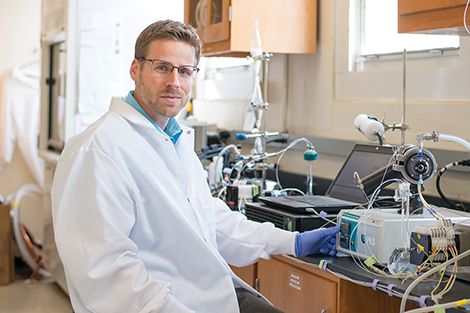
    <h3>Christopher Hennigan</h3>
    <p><a href="http://magazine.umbc.edu/wp-content/uploads/2016/08/Su16-brightfuture-hennigan.jpg" rel="nofollow external" class="bo"><img src="http://magazine.umbc.edu/wp-content/uploads/2016/08/Su16-brightfuture-hennigan.jpg" alt="Su16-brightfuture-hennigan" height="313" width="470" style="max-width: 100%; height: auto;"></a></p>
    <p>Everyone dreads a bad air day when it pops up on a weather forecast, 
    but knowing how those conditions are created is essential to finding 
    ways to ameliorate or prevent the damage to health and climate.</p>
    <p><strong>Christopher Hennigan</strong>, assistant professor of 
    chemical, biochemical, and environmental engineering, is at the 
    forefront of analyzing these issues. His work focuses on pollutants 
    known as particulate matter or aerosols—small particles in the air that 
    have detrimental effects on human health and important implications for 
    climate change.</p>
    <p>This work has come to the attention of the National Science 
    Foundation (NSF), which gave Hennigan a CAREER award of $524,606 to 
    characterize the effects of acid-catalyzed reactions on the atmospheric 
    transformation of volatile organic compounds into secondary organic 
    aerosol (SOA).</p>
    <p>SOA is an ubiquitous component in the atmosphere that contributes to 
    aerosol effects on human health and climate, but there has been 
    disagreement between laboratory studies and ambient readings on the role
     of particle acidity in its formation. So Hennigan and his team are 
    developing new methods to rapidly measure particle acidity through 
    automated system that provides the best combination of high time 
    resolution and accuracy.</p>
    <p>When Hennigan’s new technique is deployed, it will provide more 
    accurate models representing SOA formation, thus improving scientists’ 
    ability to make predictions related to ambient aerosol events.</p>
    <p>“The five-year duration of the CAREER award is especially 
    advantageous, as it will allow us to push the work forward in a highly 
    significant way,” says Hennigan.</p>
    <p><em>–Dinah Winnick</em></p></div>
]]>
</Body>
<Summary>Bright Futures            August 16, 2016 · by UMBC Alumni · in Stories                                 UMBC’s growing reputation as a hub for research with  powerful impact isn’t founded on the...</Summary>
<Website>http://magazine.umbc.edu/bright-futures/</Website>
<TrackingUrl>https://beta.my.umbc.edu/api/v0/pixel/news/61606/guest@my.umbc.edu/b5554672d8929f2463a069ac81073a3d/api/pixel</TrackingUrl>
<Group token="cbee">Chemical, Biochemical and Environmental Engineering</Group>
<GroupUrl>https://beta.my.umbc.edu/groups/cbee</GroupUrl>
<AvatarUrl>https://assets4-beta.my.umbc.edu/system/shared/avatars/groups/000/000/771/b5e579e81b2e3624611890fa3ca2716a/xsmall.png?1746794587</AvatarUrl>
<AvatarUrl size="original">https://assets2-beta.my.umbc.edu/system/shared/avatars/groups/000/000/771/b5e579e81b2e3624611890fa3ca2716a/original.png?1746794587</AvatarUrl>
<AvatarUrl size="xxlarge">https://assets1-beta.my.umbc.edu/system/shared/avatars/groups/000/000/771/b5e579e81b2e3624611890fa3ca2716a/xxlarge.png?1746794587</AvatarUrl>
<AvatarUrl size="xlarge">https://assets2-beta.my.umbc.edu/system/shared/avatars/groups/000/000/771/b5e579e81b2e3624611890fa3ca2716a/xlarge.png?1746794587</AvatarUrl>
<AvatarUrl size="large">https://assets2-beta.my.umbc.edu/system/shared/avatars/groups/000/000/771/b5e579e81b2e3624611890fa3ca2716a/large.png?1746794587</AvatarUrl>
<AvatarUrl size="medium">https://assets4-beta.my.umbc.edu/system/shared/avatars/groups/000/000/771/b5e579e81b2e3624611890fa3ca2716a/medium.png?1746794587</AvatarUrl>
<AvatarUrl size="small">https://assets1-beta.my.umbc.edu/system/shared/avatars/groups/000/000/771/b5e579e81b2e3624611890fa3ca2716a/small.png?1746794587</AvatarUrl>
<AvatarUrl size="xsmall">https://assets4-beta.my.umbc.edu/system/shared/avatars/groups/000/000/771/b5e579e81b2e3624611890fa3ca2716a/xsmall.png?1746794587</AvatarUrl>
<AvatarUrl size="xxsmall">https://assets1-beta.my.umbc.edu/system/shared/avatars/groups/000/000/771/b5e579e81b2e3624611890fa3ca2716a/xxsmall.png?1746794587</AvatarUrl>
<Sponsor>Chemical, Biochemical and Environmental Engineering</Sponsor>
<PawCount>2</PawCount>
<CommentCount>0</CommentCount>
<CommentsAllowed>true</CommentsAllowed>
<PostedAt>Fri, 19 Aug 2016 08:20:01 -0400</PostedAt>
</NewsItem>

</News>